About the Report
Base Year 2024Saudi Arabia Wearable Camera Market Overview
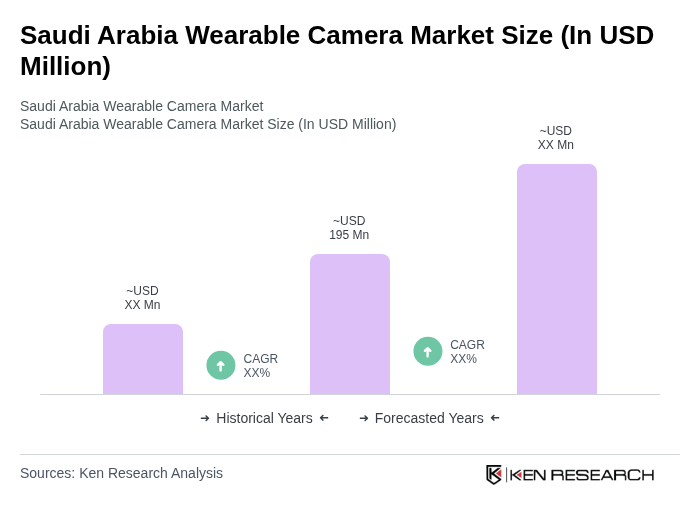
- The Saudi Arabia Wearable Camera Market is valued at USD 195 million, based on a five-year historical analysis. Growth is driven by rising demand for body cameras in sectors such as law enforcement, consumer wearables, and sports, augmented by technological advancements in AI analytics, 4K resolution, and cloud-based storage solutions.
- Key players in this market include global and regional electronics manufacturers, smart device producers, and wearable gadget innovators. The market benefits from increasing digital adoption and heightened demand for portable recording devices from both public and private sectors, supported by an ecosystem of wearable tech firms and security hardware suppliers.
- Government initiatives under Saudi Vision 2030 to bolster smart city infrastructure and surveillance frameworks indirectly support the wearable camera segment, particularly through investments in advanced electronics manufacturing and smart device ecosystems. For example, the launch of Alat, a Public Investment Fund-backed electronics hub targeting USD 9.3 billion contribution to GDP and 39,000 job creation across smart appliances and devices, supports the broader industry environment.
Saudi Arabia Wearable Camera Market Segmentation
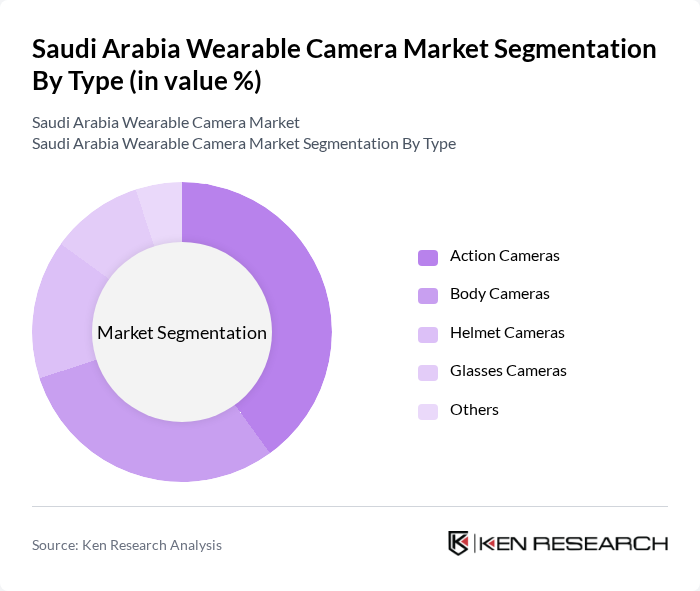
By Type:The wearable camera market is segmented into various types, including action cameras, body cameras, helmet cameras, glasses cameras, and others. Among these, action cameras are particularly popular due to their versatility and high-quality video capabilities, appealing to both amateur and professional users. Body cameras are gaining traction in law enforcement and security sectors, driven by the need for accountability and transparency. The demand for helmet and glasses cameras is also rising, especially in sports and adventure activities, where hands-free operation is essential.
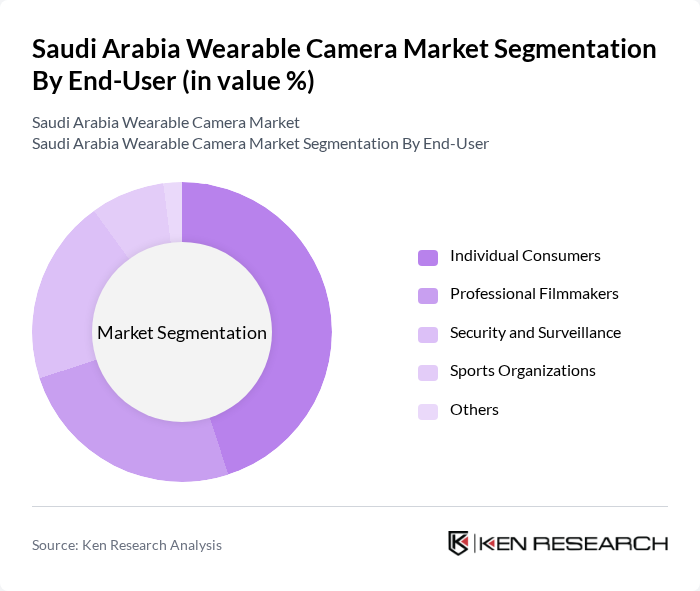
By End-User:The end-user segmentation includes individual consumers, professional filmmakers, security and surveillance, sports organizations, and others. Individual consumers dominate the market, driven by the popularity of action sports and vlogging. Professional filmmakers utilize high-end wearable cameras for their projects, while security and surveillance sectors increasingly adopt body cameras for enhanced safety and accountability. Sports organizations leverage wearable cameras for training and performance analysis, contributing to the overall growth of the market.
Saudi Arabia Wearable Camera Market Competitive Landscape
The Saudi Arabia Wearable Camera Market is characterized by a dynamic mix of regional and international players. Leading participants such as GoPro Inc., Sony Corporation, Garmin Ltd., DJI Technology Co., Ltd., Insta360, Olympus Corporation, Panasonic Corporation, Yi Technology, Vuze XR, Kodak, Ricoh Company, Ltd., Veho, SJCAM, Akaso, AEE Technology contribute to innovation, geographic expansion, and service delivery in this space.
Saudi Arabia Wearable Camera Market Industry Analysis
Growth Drivers
- Increasing Demand for Adventure Sports:The adventure sports sector in Saudi Arabia has seen a significant rise, with participation increasing by 30% from the previous year to the current year. This surge is driven by the government's initiatives to promote tourism and outdoor activities, such as the Saudi Seasons events, which attract over 10 million visitors annually. As more individuals engage in activities like hiking and diving, the demand for wearable cameras to capture experiences is expected to grow, enhancing market potential.
- Rising Popularity of Social Media:In the current year, Saudi Arabia had approximately 30 million active social media users, representing a penetration rate of 85%. This trend has fueled content creation, with users seeking high-quality visuals for platforms like Instagram and TikTok. The demand for wearable cameras that offer unique perspectives and high-definition recording capabilities is increasing, as content creators aim to enhance their storytelling and engagement with audiences, driving market growth.
- Technological Advancements:The wearable camera market is benefiting from rapid technological advancements, with features such as 4K video recording and image stabilization becoming standard. In the current year, the global market for camera technology was valued at $100 billion, with a projected growth rate of 5% annually. These innovations not only improve user experience but also attract tech-savvy consumers in Saudi Arabia, who are eager to adopt the latest gadgets for their adventures and content creation.
Market Challenges
- High Competition from Smartphone Cameras:The smartphone market in Saudi Arabia is highly competitive, with over 90% of the population owning smartphones equipped with advanced camera features. In the current year, smartphone sales reached 12 million units, significantly overshadowing wearable camera sales. This competition poses a challenge for wearable camera manufacturers, as consumers often prefer the convenience of multifunctional devices over specialized equipment, impacting market growth.
- Regulatory Restrictions:Regulatory frameworks in Saudi Arabia impose restrictions on camera usage in public spaces, particularly concerning privacy and security. In the current year, the government issued over 200 fines related to unauthorized filming in sensitive areas. These regulations can deter potential consumers from purchasing wearable cameras, as concerns about legal repercussions may overshadow the benefits of capturing personal experiences, thus hindering market expansion.
Saudi Arabia Wearable Camera Market Future Outlook
The future of the wearable camera market in Saudi Arabia appears promising, driven by the increasing integration of advanced technologies and the growing interest in outdoor activities. As the government continues to promote tourism and adventure sports, the demand for innovative camera solutions is likely to rise. Additionally, the trend towards eco-friendly products may lead to the development of sustainable wearable cameras, appealing to environmentally conscious consumers and enhancing market viability in the coming years.
Market Opportunities
- Expansion into Niche Markets:There is a significant opportunity for wearable cameras in niche markets such as sports and security. The Saudi sports sector is projected to grow by 20% annually, creating demand for specialized cameras that cater to athletes and security personnel. This expansion can enhance brand visibility and market share for manufacturers willing to innovate and target these segments effectively.
- Collaborations with Influencers:Collaborating with local influencers and content creators presents a lucrative opportunity for wearable camera brands. With over 1 million active influencers in Saudi Arabia, partnerships can drive brand awareness and consumer engagement. By leveraging influencer reach, companies can effectively promote their products, leading to increased sales and market penetration in a competitive landscape.
Scope of the Report
| Segment | Sub-Segments |
|---|---|
| By Type | Action Cameras Body Cameras Helmet Cameras Glasses Cameras Others |
| By End-User | Individual Consumers Professional Filmmakers Security and Surveillance Sports Organizations Others |
| By Distribution Channel | Online Retail Offline Retail Direct Sales Others |
| By Price Range | Budget Mid-Range Premium Others |
| By Feature | Video Quality Battery Life Connectivity Options Durability Others |
| By Region | Central Region Eastern Region Western Region Southern Region |
| By Application | Recreational Use Professional Use Educational Use Others |
Key Target Audience
Investors and Venture Capitalist Firms
Government and Regulatory Bodies (e.g., Saudi Communications and Information Technology Commission, Saudi Standards, Metrology and Quality Organization)
Manufacturers and Producers
Distributors and Retailers
Law Enforcement Agencies
Security and Surveillance Companies
Event Management Companies
Telecommunications Providers
Players Mentioned in the Report:
GoPro Inc.
Sony Corporation
Garmin Ltd.
DJI Technology Co., Ltd.
Insta360
Olympus Corporation
Panasonic Corporation
Yi Technology
Vuze XR
Kodak
Ricoh Company, Ltd.
Veho
SJCAM
Akaso
AEE Technology
Table of Contents
Market Assessment Phase
1. Executive Summary and Approach
2. Saudi Arabia Wearable Camera Market Overview
2.1 Key Insights and Strategic Recommendations
2.2 Saudi Arabia Wearable Camera Market Overview
2.3 Definition and Scope
2.4 Evolution of Market Ecosystem
2.5 Timeline of Key Regulatory Milestones
2.6 Value Chain & Stakeholder Mapping
2.7 Business Cycle Analysis
2.8 Policy & Incentive Landscape
3. Saudi Arabia Wearable Camera Market Analysis
3.1 Growth Drivers
3.1.1 Increasing demand for adventure sports and outdoor activities
3.1.2 Rising popularity of social media and content creation
3.1.3 Technological advancements in camera features
3.1.4 Growth in e-commerce and online retail platforms
3.2 Market Challenges
3.2.1 High competition from smartphone cameras
3.2.2 Regulatory restrictions on camera usage in public spaces
3.2.3 Limited awareness among potential consumers
3.2.4 Price sensitivity among target demographics
3.3 Market Opportunities
3.3.1 Expansion into niche markets like sports and security
3.3.2 Collaborations with influencers and content creators
3.3.3 Development of innovative features like live streaming
3.3.4 Increasing adoption in professional sectors like law enforcement
3.4 Market Trends
3.4.1 Growth of 360-degree cameras
3.4.2 Integration of AI and machine learning in camera functionalities
3.4.3 Rise of wearable technology in fitness and health monitoring
3.4.4 Shift towards eco-friendly and sustainable products
3.5 Government Regulation
3.5.1 Regulations on privacy and data protection
3.5.2 Licensing requirements for commercial use
3.5.3 Import tariffs on electronic devices
3.5.4 Standards for product safety and quality assurance
4. SWOT Analysis
5. Stakeholder Analysis
6. Porter's Five Forces Analysis
7. Saudi Arabia Wearable Camera Market Market Size, 2019-2024
7.1 By Value
7.2 By Volume
7.3 By Average Selling Price
8. Saudi Arabia Wearable Camera Market Segmentation
8.1 By Type
8.1.1 Action Cameras
8.1.2 Body Cameras
8.1.3 Helmet Cameras
8.1.4 Glasses Cameras
8.1.5 Others
8.2 By End-User
8.2.1 Individual Consumers
8.2.2 Professional Filmmakers
8.2.3 Security and Surveillance
8.2.4 Sports Organizations
8.2.5 Others
8.3 By Distribution Channel
8.3.1 Online Retail
8.3.2 Offline Retail
8.3.3 Direct Sales
8.3.4 Others
8.4 By Price Range
8.4.1 Budget
8.4.2 Mid-Range
8.4.3 Premium
8.4.4 Others
8.5 By Feature
8.5.1 Video Quality
8.5.2 Battery Life
8.5.3 Connectivity Options
8.5.4 Durability
8.5.5 Others
8.6 By Region
8.6.1 Central Region
8.6.2 Eastern Region
8.6.3 Western Region
8.6.4 Southern Region
8.7 By Application
8.7.1 Recreational Use
8.7.2 Professional Use
8.7.3 Educational Use
8.7.4 Others
9. Saudi Arabia Wearable Camera Market Competitive Analysis
9.1 Market Share of Key Players
9.2 Cross Comparison of Key Players
9.2.1 Company Name
9.2.2 Group Size (Large, Medium, or Small as per industry convention)
9.2.3 Revenue Growth Rate
9.2.4 Market Penetration Rate
9.2.5 Customer Retention Rate
9.2.6 Pricing Strategy
9.2.7 Product Innovation Rate
9.2.8 Distribution Efficiency
9.2.9 Brand Recognition Score
9.2.10 Customer Satisfaction Index
9.3 SWOT Analysis of Top Players
9.4 Pricing Analysis
9.5 Detailed Profile of Major Companies
9.5.1 GoPro Inc.
9.5.2 Sony Corporation
9.5.3 Garmin Ltd.
9.5.4 DJI Technology Co., Ltd.
9.5.5 Insta360
9.5.6 Olympus Corporation
9.5.7 Panasonic Corporation
9.5.8 Yi Technology
9.5.9 Vuze XR
9.5.10 Kodak
9.5.11 Ricoh Company, Ltd.
9.5.12 Veho
9.5.13 SJCAM
9.5.14 Akaso
9.5.15 AEE Technology
10. Saudi Arabia Wearable Camera Market End-User Analysis
10.1 Procurement Behavior of Key Ministries
10.1.1 Ministry of Interior
10.1.2 Ministry of Education
10.1.3 Ministry of Sports
10.1.4 Ministry of Tourism
10.2 Corporate Spend on Infrastructure & Energy
10.2.1 Investment in Security Infrastructure
10.2.2 Budget Allocation for Sports and Recreation
10.2.3 Funding for Educational Technology
10.3 Pain Point Analysis by End-User Category
10.3.1 Individual Consumers
10.3.2 Professional Users
10.3.3 Government Agencies
10.4 User Readiness for Adoption
10.4.1 Awareness Levels
10.4.2 Training and Support Needs
10.5 Post-Deployment ROI and Use Case Expansion
10.5.1 Evaluation of Effectiveness
10.5.2 Potential for New Applications
11. Saudi Arabia Wearable Camera Market Future Size, 2025-2030
11.1 By Value
11.2 By Volume
11.3 By Average Selling Price
Go-To-Market Strategy Phase
1. Whitespace Analysis + Business Model Canvas
1.1 Market Gaps Identification
1.2 Business Model Development
2. Marketing and Positioning Recommendations
2.1 Branding Strategies
2.2 Product USPs
3. Distribution Plan
3.1 Urban Retail vs Rural NGO Tie-ups
4. Channel & Pricing Gaps
4.1 Underserved Routes
4.2 Pricing Bands
5. Unmet Demand & Latent Needs
5.1 Category Gaps
5.2 Consumer Segments
6. Customer Relationship
6.1 Loyalty Programs
6.2 After-sales Service
7. Value Proposition
7.1 Sustainability
7.2 Integrated Supply Chains
8. Key Activities
8.1 Regulatory Compliance
8.2 Branding
8.3 Distribution Setup
9. Entry Strategy Evaluation
9.1 Domestic Market Entry Strategy
9.1.1 Product Mix
9.1.2 Pricing Band
9.1.3 Packaging
9.2 Export Entry Strategy
9.2.1 Target Countries
9.2.2 Compliance Roadmap
10. Entry Mode Assessment
10.1 JV
10.2 Greenfield
10.3 M&A
10.4 Distributor Model
11. Capital and Timeline Estimation
11.1 Capital Requirements
11.2 Timelines
12. Control vs Risk Trade-Off
12.1 Ownership vs Partnerships
13. Profitability Outlook
13.1 Breakeven Analysis
13.2 Long-term Sustainability
14. Potential Partner List
14.1 Distributors
14.2 JVs
14.3 Acquisition Targets
15. Execution Roadmap
15.1 Phased Plan for Market Entry
15.1.1 Market Setup
15.1.2 Market Entry
15.1.3 Growth Acceleration
15.1.4 Scale & Stabilize
15.2 Key Activities and Milestones
15.2.1 Activity Planning
15.2.2 Milestone Tracking
Research Methodology
Phase 1: Approach1
Desk Research
- Analysis of market reports from industry associations and government publications
- Review of academic journals and white papers on wearable technology trends
- Examination of online databases for sales data and consumer behavior studies
Primary Research
- Interviews with product managers at leading wearable camera manufacturers
- Surveys targeting end-users in sectors such as tourism, security, and sports
- Focus groups with technology enthusiasts and early adopters of wearable cameras
Validation & Triangulation
- Cross-validation of findings through multiple data sources including sales and consumer feedback
- Triangulation of insights from primary interviews with secondary data trends
- Sanity checks conducted through expert panels comprising industry veterans
Phase 2: Market Size Estimation1
Top-down Assessment
- Estimation of market size based on national electronics consumption statistics
- Segmentation by application areas such as personal use, professional use, and security
- Incorporation of growth rates from related technology sectors and consumer electronics
Bottom-up Modeling
- Collection of sales data from key retailers and e-commerce platforms
- Estimation of average selling prices and unit sales across different segments
- Analysis of consumer purchasing patterns and frequency of upgrades
Forecasting & Scenario Analysis
- Utilization of time-series analysis to project future market growth trends
- Scenario modeling based on technological advancements and regulatory impacts
- Development of best-case, worst-case, and most-likely market scenarios through 2030
Phase 3: CATI Sample Composition1
| Scope Item/Segment | Sample Size | Target Respondent Profiles |
|---|---|---|
| Consumer Electronics Retailers | 100 | Store Managers, Sales Representatives |
| Professional Users in Security | 75 | Security Personnel, Operations Managers |
| Tourism and Adventure Sports | 80 | Tour Guides, Adventure Sports Instructors |
| Technology Enthusiasts | 90 | Gadget Reviewers, Tech Bloggers |
| Healthcare Professionals | 60 | Medical Staff, Health Tech Innovators |
Frequently Asked Questions
What is the current value of the Saudi Arabia Wearable Camera Market?
The Saudi Arabia Wearable Camera Market is valued at approximately USD 195 million, reflecting a five-year historical analysis. This growth is attributed to increasing demand across various sectors, including law enforcement, consumer wearables, and sports.
What are the main types of wearable cameras available in Saudi Arabia?
Who are the key players in the Saudi Arabia Wearable Camera Market?
What factors are driving the growth of the wearable camera market in Saudi Arabia?
Other Regional/Country Reports
Indonesia Wearable Camera Market
Malaysia Wearable Camera Market
KSA Wearable Camera Market
APAC Wearable Camera Market
SEA Wearable Camera Market
Vietnam Wearable Camera Market
Other Adjacent Reports
Indonesia Smart Device Market
Philippines Consumer Electronics Market Size, Share & Forecast, By Product Type, Price Tier & Distribution Channel, 2025–2032Philippines Security and Surveillance Market
Malaysia Adventure Sports Equipment Market
USA Digital Content Creation Market Size, Share & Forecast, By Solution Type, Deployment Model & End-Use Industry, 2025–2032South Korea Social Media Technology Market
South Africa Cloud Storage Solutions Market
Bahrain AI Analytics Market
Saudi Arabia Smart City Infrastructure MarketSouth Africa Portable Recording Devices Market
Why Buy From Us?

What makes us stand out is that our consultants follow Robust, Refine and Result (RRR) methodology. Robust for clear definitions, approaches and sanity checking, Refine for differentiating respondents' facts and opinions, and Result for presenting data with story.

We have set a benchmark in the industry by offering our clients with syndicated and customized market research reports featuring coverage of entire market as well as meticulous research and analyst insights.

While we don't replace traditional research, we flip the method upside down. Our dual approach of Top Bottom & Bottom Top ensures quality deliverable by not just verifying company fundamentals but also looking at the sector and macroeconomic factors.

With one step in the future, our research team constantly tries to show you the bigger picture. We help with some of the tough questions you may encounter along the way: How is the industry positioned? Best marketing channel? KPI's of competitors? By aligning every element, we help maximize success.

Our report gives you instant access to the answers and sources that other companies might choose to hide. We elaborate each steps of research methodology we have used and showcase you the sample size to earn your trust.

If you need any support, we are here! We pride ourselves on universe strength, data quality, and quick, friendly, and professional service.