Region:Asia
Author(s):Rebecca
Product Code:KRAA6087
Pages:87
Published On:September 2025
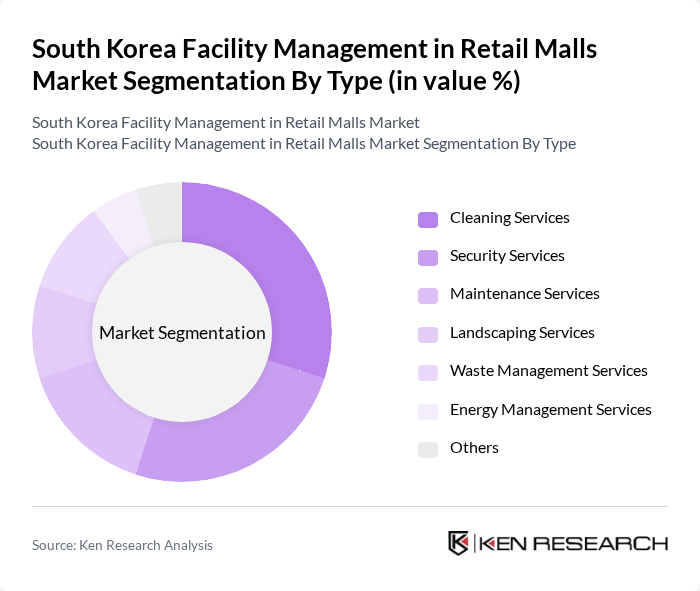
By Type:The facility management services in retail malls can be categorized into several types, including cleaning services, security services, maintenance services, landscaping services, waste management services, energy management services, and others. Among these, cleaning services are the most significant segment, driven by the need for hygiene and cleanliness in retail environments, especially post-pandemic. Security services also hold a substantial share due to increasing concerns over safety and theft in retail spaces.
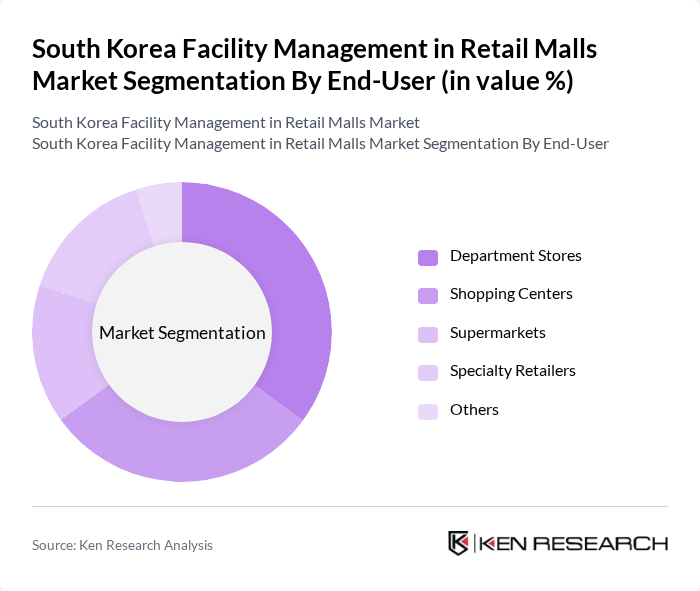
By End-User:The end-users of facility management services in retail malls include department stores, shopping centers, supermarkets, specialty retailers, and others. Department stores are the leading end-user segment, as they require comprehensive facility management solutions to maintain large retail spaces and ensure customer satisfaction. Shopping centers also represent a significant portion of the market, driven by the need for effective management of multiple retail outlets within a single location.
The South Korea Facility Management in Retail Malls Market is characterized by a dynamic mix of regional and international players. Leading participants such as Samsung C&T Corporation, SK E&C, GS Engineering & Construction, Hanwha Engineering & Construction, POSCO E&C, Daewoo Engineering & Construction, Hyundai Engineering & Construction, Lotte Engineering & Construction, Hanjin Heavy Industries & Construction, Doosan Heavy Industries & Construction, KT Corporation, LG CNS, S1 Corporation, AhnLab, Inc., CJ Logistics Corporation contribute to innovation, geographic expansion, and service delivery in this space.
The South Korea facility management market in retail malls is poised for significant transformation, driven by technological advancements and evolving consumer preferences. As smart technologies become more integrated, malls will increasingly adopt IoT solutions to enhance operational efficiency and customer engagement. Additionally, the focus on sustainability will shape facility management practices, with an emphasis on eco-friendly initiatives and compliance with environmental regulations, ensuring long-term viability and competitiveness in the market.
| Segment | Sub-Segments |
|---|---|
| By Type | Cleaning Services Security Services Maintenance Services Landscaping Services Waste Management Services Energy Management Services Others |
| By End-User | Department Stores Shopping Centers Supermarkets Specialty Retailers Others |
| By Service Model | Integrated Facility Management Bundled Services Single Service Providers Others |
| By Contract Type | Fixed-Term Contracts Open-Ended Contracts Project-Based Contracts Others |
| By Geographic Distribution | Urban Areas Suburban Areas Rural Areas Others |
| By Customer Segment | Large Retail Chains Independent Retailers Franchise Operations Others |
| By Pricing Model | Fixed Pricing Variable Pricing Performance-Based Pricing Others |
| Scope Item/Segment | Sample Size | Target Respondent Profiles |
|---|---|---|
| Facility Management in Luxury Malls | 100 | Facility Managers, Operations Directors |
| Maintenance Services in Mid-range Malls | 80 | Maintenance Supervisors, Retail Operations Managers |
| Security Management in Discount Malls | 70 | Security Managers, Risk Assessment Officers |
| Cleaning Services in High Foot Traffic Areas | 90 | Cleaning Supervisors, Facility Coordinators |
| Energy Management Practices in Retail Malls | 60 | Energy Managers, Sustainability Officers |
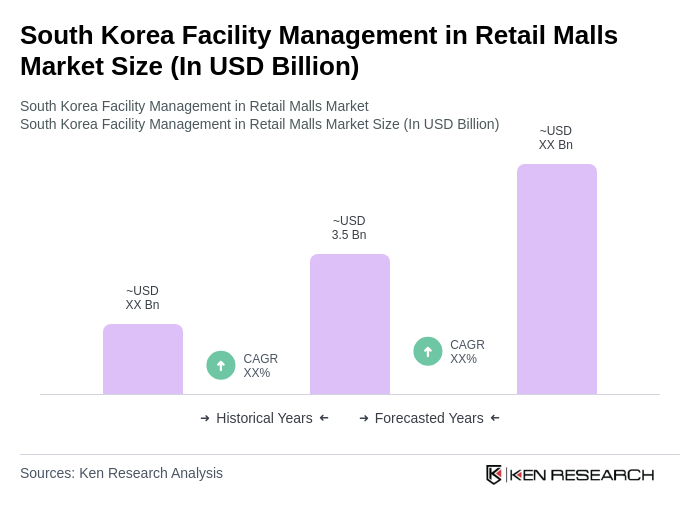
The South Korea Facility Management in Retail Malls Market is valued at approximately USD 3.5 billion, reflecting a five-year historical analysis. This growth is driven by increasing demand for efficient management services and rising consumer spending in retail environments.

What makes us stand out is that our consultants follow Robust, Refine and Result (RRR) methodology. Robust for clear definitions, approaches and sanity checking, Refine for differentiating respondents' facts and opinions, and Result for presenting data with story.

We have set a benchmark in the industry by offering our clients with syndicated and customized market research reports featuring coverage of entire market as well as meticulous research and analyst insights.

While we don't replace traditional research, we flip the method upside down. Our dual approach of Top Bottom & Bottom Top ensures quality deliverable by not just verifying company fundamentals but also looking at the sector and macroeconomic factors.

With one step in the future, our research team constantly tries to show you the bigger picture. We help with some of the tough questions you may encounter along the way: How is the industry positioned? Best marketing channel? KPI's of competitors? By aligning every element, we help maximize success.

Our report gives you instant access to the answers and sources that other companies might choose to hide. We elaborate each steps of research methodology we have used and showcase you the sample size to earn your trust.

If you need any support, we are here! We pride ourselves on universe strength, data quality, and quick, friendly, and professional service.













