Region:Asia
Author(s):Rebecca
Product Code:KRAB2907
Pages:89
Published On:October 2025
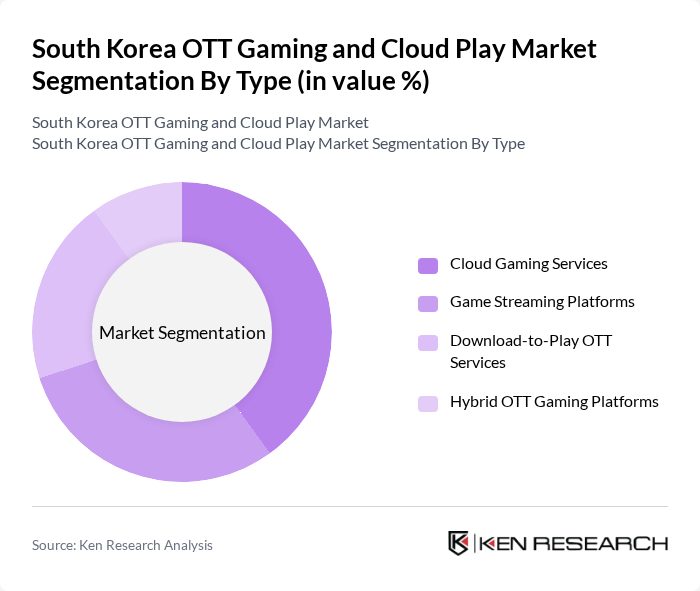
By Type:The market is segmented into various types, including Cloud Gaming Services, Game Streaming Platforms, Download-to-Play OTT Services, and Hybrid OTT Gaming Platforms. Among these, Cloud Gaming Services have gained significant traction due to their convenience and accessibility, allowing users to play high-quality games without the need for expensive hardware. Game Streaming Platforms are also popular, particularly for esports and live gaming events, attracting a large audience. Download-to-Play OTT Services cater to users who prefer owning their games, while Hybrid Platforms combine elements of both cloud and download services, appealing to a broader range of gamers .
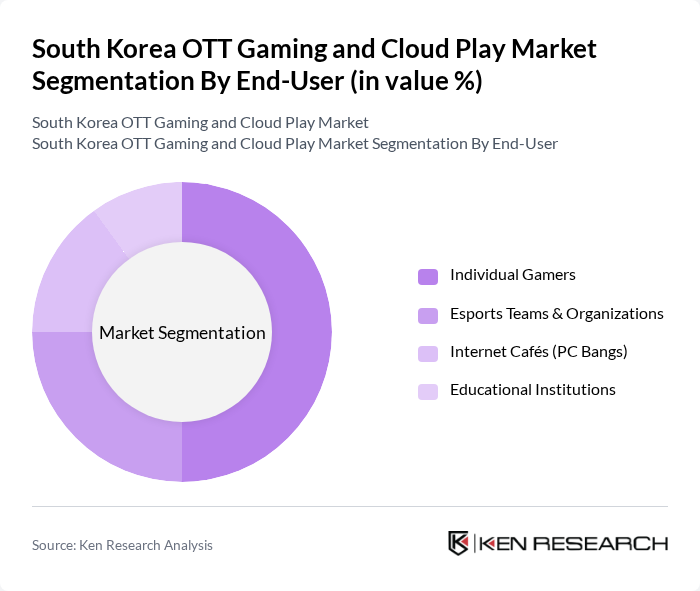
By End-User:The end-user segmentation includes Individual Gamers, Esports Teams & Organizations, Internet Cafés (PC Bangs), and Educational Institutions. Individual Gamers represent the largest segment, driven by the increasing number of casual and competitive players. Esports Teams & Organizations are also significant, as they contribute to the popularity of gaming through tournaments and sponsorships. Internet Cafés remain relevant, especially in urban areas, providing a social gaming environment. Educational Institutions are gradually adopting gaming for educational purposes, enhancing engagement and learning experiences .
The South Korea OTT Gaming and Cloud Play Market is characterized by a dynamic mix of regional and international players. Leading participants such as Nexon Co., Ltd., NCSoft Corporation, Krafton, Inc., Smilegate Holdings, Inc., Netmarble Corporation, Com2uS Holdings Corporation, Bluehole Studio, HanbitSoft Inc., Gamevil Inc., Kakao Games Corp., Pearl Abyss Corp., SK Telecom Co., Ltd. (5GX Cloud Game), LG Uplus Corp. (U+ GameLive), Neowiz Games, WeMade Co., Ltd. contribute to innovation, geographic expansion, and service delivery in this space.
The South Korean OTT gaming and cloud play market is poised for significant evolution, driven by technological advancements and changing consumer preferences. The integration of 5G technology is expected to enhance mobile gaming experiences, while the rise of esports will further engage younger audiences. Additionally, the increasing adoption of subscription models will likely reshape revenue streams, allowing companies to build sustainable business models. As the market matures, companies that prioritize user experience and innovation will thrive in this competitive landscape.
| Segment | Sub-Segments |
|---|---|
| By Type | Cloud Gaming Services Game Streaming Platforms Download-to-Play OTT Services Hybrid OTT Gaming Platforms |
| By End-User | Individual Gamers Esports Teams & Organizations Internet Cafés (PC Bangs) Educational Institutions |
| By Distribution Channel | App-Based Platforms Web-Based Platforms Telecom Operator Bundles Smart TV & Set-Top Box Integration |
| By Game Genre | Action Role-Playing (RPG) Sports & Racing Strategy Simulation Casual & Puzzle MOBA (Multiplayer Online Battle Arena) |
| By Payment Model | Subscription-Based Free-to-Play with In-Game Purchases Pay-Per-Play Ad-Supported |
| By Device Type | Mobile Devices (Smartphones & Tablets) PCs & Laptops Game Consoles Smart TVs & Streaming Devices |
| By User Engagement Level | Casual Players Regular Players Competitive/Esports Players |
| Scope Item/Segment | Sample Size | Target Respondent Profiles |
|---|---|---|
| OTT Gaming Users | 120 | Casual Gamers, Hardcore Gamers |
| Cloud Gaming Service Subscribers | 90 | Subscribers, Trial Users |
| Game Developers and Publishers | 60 | Product Managers, Marketing Directors |
| Technology Providers in Cloud Gaming | 50 | Technical Leads, Business Development Managers |
| Industry Experts and Analysts | 40 | Market Analysts, Research Directors |
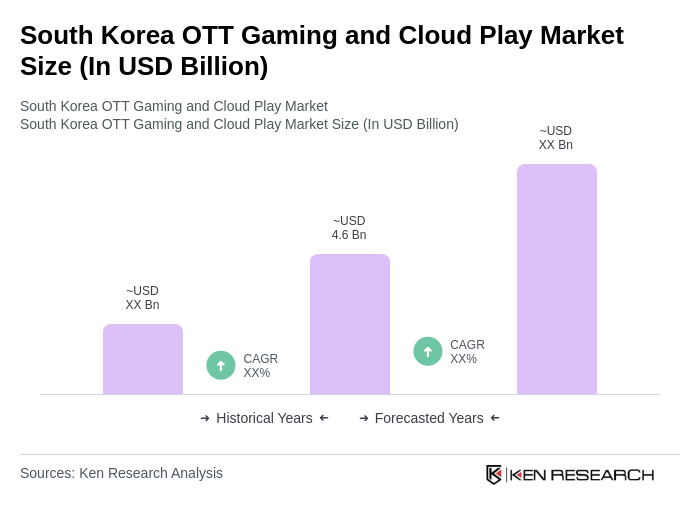
The South Korea OTT Gaming and Cloud Play Market is valued at approximately USD 4.6 billion, driven by high-speed internet adoption, mobile device proliferation, and a growing preference for on-demand gaming experiences, particularly among younger demographics.

What makes us stand out is that our consultants follow Robust, Refine and Result (RRR) methodology. Robust for clear definitions, approaches and sanity checking, Refine for differentiating respondents' facts and opinions, and Result for presenting data with story.

We have set a benchmark in the industry by offering our clients with syndicated and customized market research reports featuring coverage of entire market as well as meticulous research and analyst insights.

While we don't replace traditional research, we flip the method upside down. Our dual approach of Top Bottom & Bottom Top ensures quality deliverable by not just verifying company fundamentals but also looking at the sector and macroeconomic factors.

With one step in the future, our research team constantly tries to show you the bigger picture. We help with some of the tough questions you may encounter along the way: How is the industry positioned? Best marketing channel? KPI's of competitors? By aligning every element, we help maximize success.

Our report gives you instant access to the answers and sources that other companies might choose to hide. We elaborate each steps of research methodology we have used and showcase you the sample size to earn your trust.

If you need any support, we are here! We pride ourselves on universe strength, data quality, and quick, friendly, and professional service.













