Region:Europe
Author(s):Geetanshi
Product Code:KRAB4629
Pages:89
Published On:October 2025
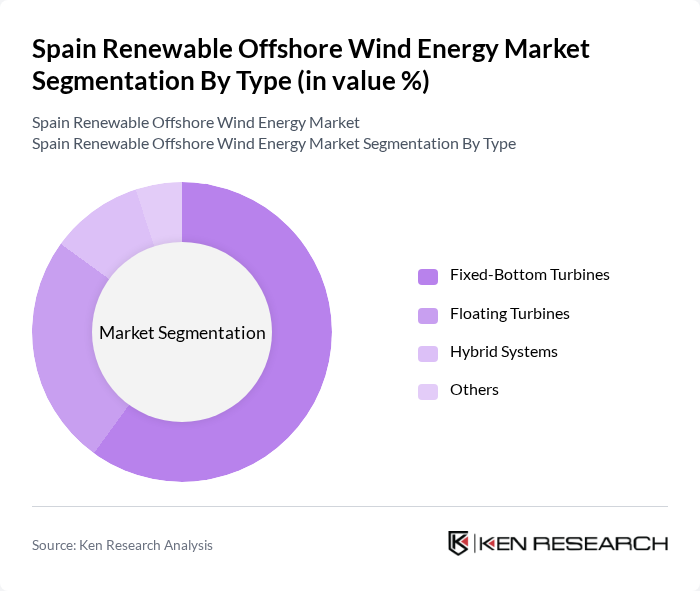
By Type:The market is segmented into Fixed-Bottom Turbines, Floating Turbines, Hybrid Systems, and Others. Fixed-Bottom Turbines remain the dominant segment due to mature technology and lower installation costs in shallow waters. Floating Turbines are gaining momentum as they enable deployment in deeper waters, unlocking new resource areas. Hybrid Systems integrate multiple technologies to optimize energy output, while the Others category includes emerging solutions such as airborne wind and modular platforms, which are still in early development .
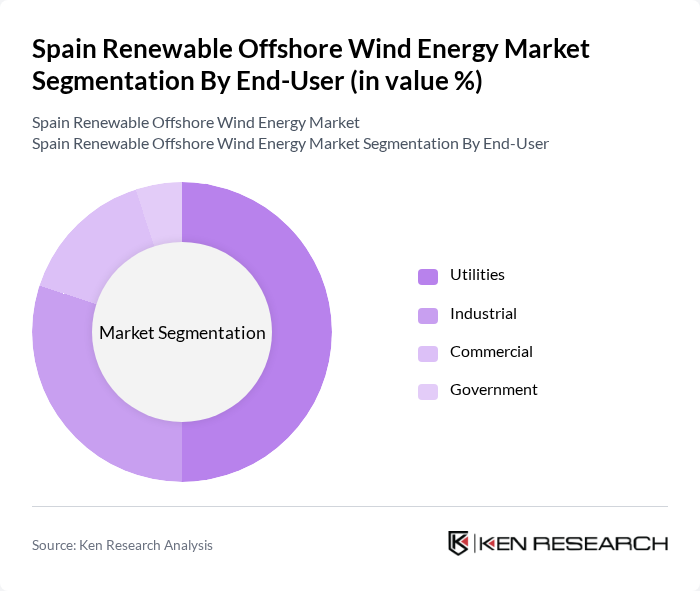
By End-User:The end-user segmentation includes Utilities, Industrial, Commercial, and Government sectors. Utilities lead the market, driven by large-scale energy production needs and grid integration requirements. The Industrial sector is expanding as manufacturers and heavy users seek to lower carbon emissions and energy costs. Commercial and Government segments are increasingly focused on sustainability and energy efficiency, with government procurement supporting public infrastructure and climate goals .
The Spain Renewable Offshore Wind Energy Market is characterized by a dynamic mix of regional and international players. Leading participants such as Iberdrola S.A., Acciona Energía S.A., Siemens Gamesa Renewable Energy S.A., Ocean Winds (EDP Renewables & ENGIE JV), Naturgy Energy Group S.A., Vestas Wind Systems A/S, Ørsted A/S, RWE Renewables GmbH, Nordex SE, GE Renewable Energy, Cobra Instalaciones y Servicios S.A., Capital Energy S.A., Sener Grupo de Ingeniería S.A., Saitec Offshore Technologies S.L., BlueFloat Energy contribute to innovation, geographic expansion, and service delivery in this space.
The future of Spain's renewable offshore wind energy market appears promising, driven by increasing energy demands and robust government support. In future, the market is expected to see significant advancements in turbine technology, enhancing efficiency and reducing costs. Additionally, the focus on sustainability and environmental initiatives will likely lead to further investments in offshore wind projects. As public awareness grows, the sector is poised for expansion, with a strong emphasis on innovation and collaboration among stakeholders to meet energy targets.
| Segment | Sub-Segments |
|---|---|
| By Type | Fixed-Bottom Turbines Floating Turbines Hybrid Systems Others |
| By End-User | Utilities Industrial Commercial Government |
| By Region | Galicia Andalusia Valencia Catalonia Canary Islands |
| By Technology | Direct Drive Gearbox-Based Advanced Control Systems Others |
| By Application | Power Generation Research and Development Energy Storage Others |
| By Investment Source | Private Investments Public Funding International Investments Others |
| By Policy Support | Subsidies Tax Incentives Renewable Energy Certificates (RECs) Others |
| Scope Item/Segment | Sample Size | Target Respondent Profiles |
|---|---|---|
| Offshore Wind Project Developers | 60 | Project Managers, Development Directors |
| Regulatory Bodies and Government Agencies | 50 | Regulatory Affairs Specialists, Compliance Officers |
| Environmental Consultants | 40 | Environmental Consultants, Sustainability Managers |
| Utility Companies and Energy Providers | 40 | Energy Analysts, Operations Managers |
| Technical Experts and Engineers | 40 | Technical Directors, Product Managers |
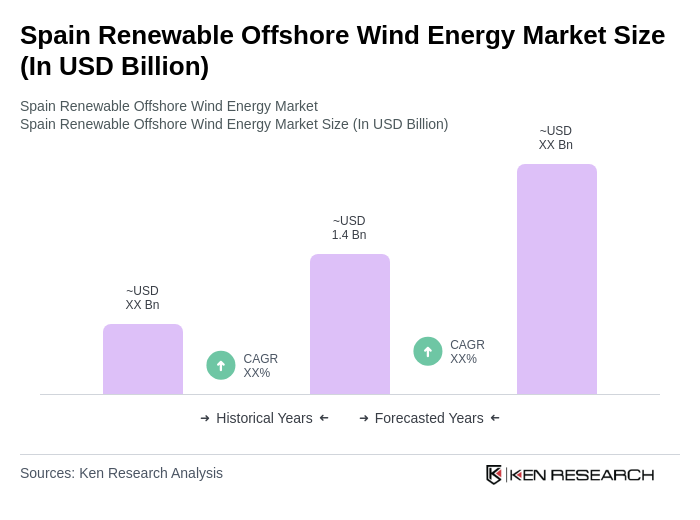
The Spain Renewable Offshore Wind Energy Market is valued at approximately USD 1.4 billion, reflecting significant growth driven by increasing demand for clean energy, government incentives, and advancements in offshore wind technology.

What makes us stand out is that our consultants follow Robust, Refine and Result (RRR) methodology. Robust for clear definitions, approaches and sanity checking, Refine for differentiating respondents' facts and opinions, and Result for presenting data with story.

We have set a benchmark in the industry by offering our clients with syndicated and customized market research reports featuring coverage of entire market as well as meticulous research and analyst insights.

While we don't replace traditional research, we flip the method upside down. Our dual approach of Top Bottom & Bottom Top ensures quality deliverable by not just verifying company fundamentals but also looking at the sector and macroeconomic factors.

With one step in the future, our research team constantly tries to show you the bigger picture. We help with some of the tough questions you may encounter along the way: How is the industry positioned? Best marketing channel? KPI's of competitors? By aligning every element, we help maximize success.

Our report gives you instant access to the answers and sources that other companies might choose to hide. We elaborate each steps of research methodology we have used and showcase you the sample size to earn your trust.

If you need any support, we are here! We pride ourselves on universe strength, data quality, and quick, friendly, and professional service.













