Region:Asia
Author(s):Geetanshi
Product Code:KRAE0779
Pages:91
Published On:February 2026
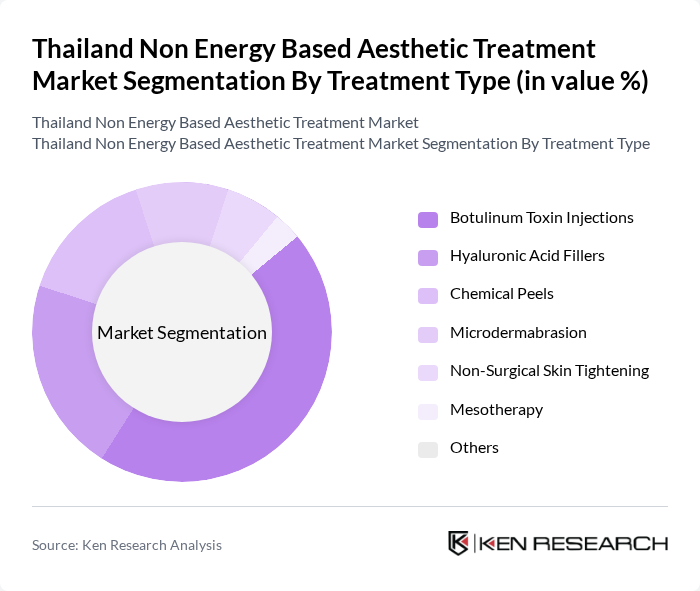
By Treatment Type:The treatment type segmentation includes various non-invasive procedures that cater to different aesthetic needs. The subsegments are Botulinum Toxin Injections, Hyaluronic Acid Fillers, Chemical Peels, Microdermabrasion, Non-Surgical Skin Tightening, Mesotherapy, and Others. Among these, Botulinum Toxin Injections have emerged as the leading subsegment due to their popularity for wrinkle reduction and facial contouring. The increasing acceptance of these treatments among younger demographics has further fueled their demand.
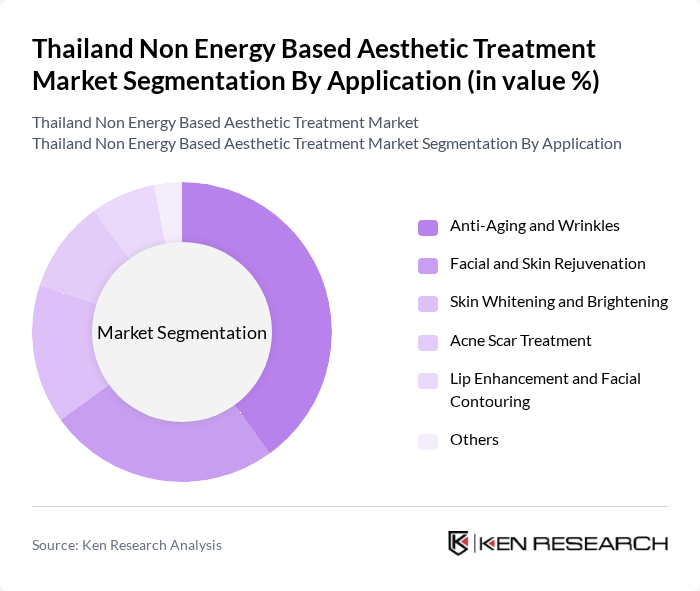
By Application:The application segmentation encompasses various aesthetic goals, including Anti-Aging and Wrinkles, Facial and Skin Rejuvenation, Skin Whitening and Brightening, Acne Scar Treatment, Lip Enhancement and Facial Contouring, and Others. The Anti-Aging and Wrinkles application dominates the market, driven by a growing aging population and increasing awareness of aesthetic treatments. Consumers are increasingly seeking solutions to maintain youthful appearances, leading to a surge in demand for these applications.
The Thailand Non Energy Based Aesthetic Treatment Market is characterized by a dynamic mix of regional and international players. Leading participants such as Bumrungrad International Hospital, Dr. Orawan Holistic Dermatology & Anti-Aging Institute, Nirunda International Aesthetic Clinic, BSL Clinic, Thai Medical Vacation, Dermaster Co., Ltd, Ipsen, Merz GmbH and Co. KGaA, Galderma, Medytox, AbbVie, Sisram Medical (Alma Lasers), Integra Candela Corporation, and Lutronic contribute to innovation, geographic expansion, and service delivery in this space.
The future of the Thailand non-energy-based aesthetic treatment market appears promising, driven by technological advancements and evolving consumer preferences. As the market adapts to the increasing demand for personalized treatments, clinics are likely to invest in innovative technologies that enhance service delivery. Additionally, the integration of telemedicine for consultations is expected to streamline access to aesthetic services, making them more convenient for consumers. This evolution will likely foster a more competitive and dynamic market landscape in future.
| Segment | Sub-Segments |
|---|---|
| By Treatment Type | Botulinum Toxin Injections Hyaluronic Acid Fillers Chemical Peels Microdermabrasion Non-Surgical Skin Tightening Mesotherapy Others |
| By Application | Anti-Aging and Wrinkles Facial and Skin Rejuvenation Skin Whitening and Brightening Acne Scar Treatment Lip Enhancement and Facial Contouring Others |
| By End-User | Hospitals Dermatology Clinics Aesthetic Clinics and Beauty Centers Medical Spas Others |
| By Geographic Distribution | Bangkok Chiang Mai Phuket Pattaya Others |
| By Customer Demographics | Age Group (18-25, 26-35, 36-50, 51+) Gender (Male, Female) Income Level (Low, Middle, High) |
| By Customer Type | Domestic Consumers Medical Tourists |
| Scope Item/Segment | Sample Size | Target Respondent Profiles |
|---|---|---|
| Injectable Treatments | 120 | Dermatologists, Aesthetic Practitioners |
| Skin Rejuvenation Procedures | 100 | Beauty Clinic Owners, Medical Directors |
| Patient Experience with Aesthetic Treatments | 150 | Patients who have undergone treatments |
| Market Trends and Consumer Preferences | 80 | Market Analysts, Industry Experts |
| Regulatory Impact on Aesthetic Treatments | 60 | Healthcare Policy Makers, Regulatory Officials |
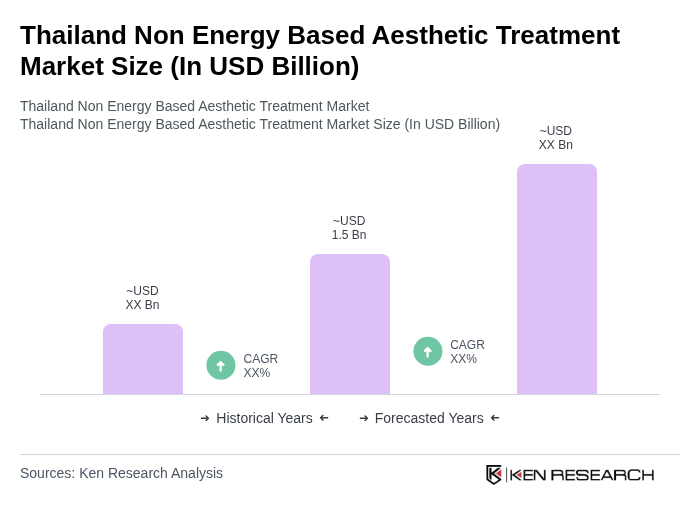
The Thailand Non Energy Based Aesthetic Treatment Market is valued at approximately USD 1.5 billion, reflecting significant growth driven by increased consumer awareness, rising disposable incomes, and the influence of social media on beauty standards.

What makes us stand out is that our consultants follow Robust, Refine and Result (RRR) methodology. Robust for clear definitions, approaches and sanity checking, Refine for differentiating respondents' facts and opinions, and Result for presenting data with story.

We have set a benchmark in the industry by offering our clients with syndicated and customized market research reports featuring coverage of entire market as well as meticulous research and analyst insights.

While we don't replace traditional research, we flip the method upside down. Our dual approach of Top Bottom & Bottom Top ensures quality deliverable by not just verifying company fundamentals but also looking at the sector and macroeconomic factors.

With one step in the future, our research team constantly tries to show you the bigger picture. We help with some of the tough questions you may encounter along the way: How is the industry positioned? Best marketing channel? KPI's of competitors? By aligning every element, we help maximize success.

Our report gives you instant access to the answers and sources that other companies might choose to hide. We elaborate each steps of research methodology we have used and showcase you the sample size to earn your trust.

If you need any support, we are here! We pride ourselves on universe strength, data quality, and quick, friendly, and professional service.













