Region:Middle East
Author(s):Geetanshi
Product Code:KRAE0773
Pages:100
Published On:February 2026
By Device Type:
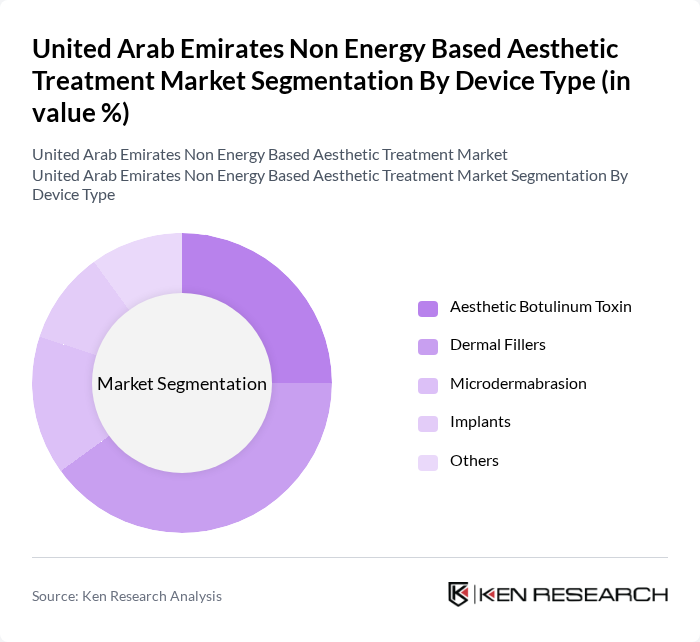
The device type segmentation includes Aesthetic Botulinum Toxin, Dermal Fillers, Microdermabrasion, Implants, and Others. Among these, Dermal Fillers dominate the market due to their versatility and immediate results, appealing to a wide range of consumers. The increasing popularity of facial rejuvenation procedures has led to a surge in demand for these products, as they are often perceived as less invasive and more effective for achieving youthful appearances. Additionally, the growing trend of social media influence on beauty standards has further propelled the use of dermal fillers in the UAE. Non-energy systems held a 55.63% share of the overall aesthetic devices market, underscoring the popularity of injectables and micro-cannula delivery kits.
By Application:
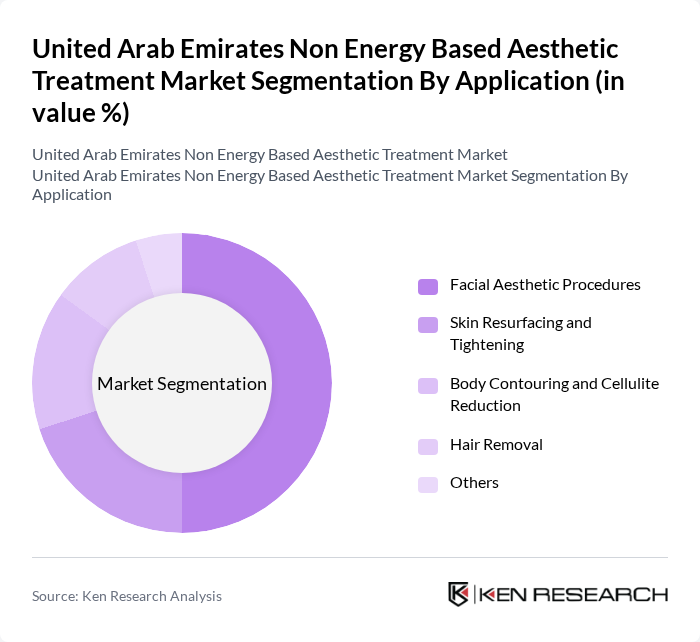
The application segmentation includes Facial Aesthetic Procedures, Skin Resurfacing and Tightening, Body Contouring and Cellulite Reduction, Hair Removal, and Others. Skin Resurfacing and Tightening accounted for 32.58% of revenues, reflecting the climatic need for photodamage repair and collagen stimulation. Fractional laser, RF microneedling, and plasma resurfacing deliver visible texture improvements, anchoring many clinic service menus. Body Contouring and Cellulite Reduction is emerging as the fastest-growing application segment, outpacing all other indications at a 15.89% CAGR. The rise of gym culture, exposure to global beauty standards, and social media visibility encourage consumers to pursue sculpted silhouettes. Non-invasive fat-reduction devices, such as cryolipolysis and high-intensity focused electromagnetic systems, appeal to time-pressed professionals.
The United Arab Emirates Non Energy Based Aesthetic Treatment Market is characterized by a dynamic mix of regional and international players. Leading participants such as Kaya Skin Clinic, Dubai Cosmetic Surgery, The White Room Clinic, CosmeSurge, Aesthetica Clinic, Dubai Aesthetic Surgery, The Plastic Surgery Clinic, Nova Clinic, American Hospital Dubai, Al Zahra Medical Center, Emirates Hospital, Mediclinic City Hospital, The Cosmetic Surgery Clinic, Dermatology and Aesthetic Center, Laser and Aesthetic Clinic Dubai contribute to innovation, geographic expansion, and service delivery in this space.
The future of the UAE's non-energy-based aesthetic treatment market appears promising, driven by ongoing technological advancements and a growing consumer base. As the demand for personalized and innovative treatments increases, providers are likely to invest in cutting-edge technologies and training. Additionally, the rise of telemedicine and online consultations is expected to enhance accessibility, allowing more individuals to explore aesthetic options. This evolving landscape will create new avenues for growth and engagement within the market.
| Segment | Sub-Segments |
|---|---|
| By Device Type | Aesthetic Botulinum Toxin Dermal Fillers Microdermabrasion Implants Others |
| By Application | Facial Aesthetic Procedures Skin Resurfacing and Tightening Body Contouring and Cellulite Reduction Hair Removal Others |
| By End User | Hospitals & Clinics Home Care Settings Medical Spas and Beauty Centers Dermatology Clinics Others |
| By Geographic Region | Abu Dhabi Dubai Sharjah Rest of UAE |
| Scope Item/Segment | Sample Size | Target Respondent Profiles |
|---|---|---|
| Injectable Treatments | 150 | Dermatologists, Aesthetic Practitioners |
| Skin Rejuvenation Procedures | 100 | Beauty Clinic Owners, Skin Care Specialists |
| Consumer Experience with Aesthetic Treatments | 120 | Recent Patients, Beauty Enthusiasts |
| Market Trends and Innovations | 80 | Industry Analysts, Market Researchers |
| Regulatory Impact on Aesthetic Treatments | 60 | Healthcare Policy Makers, Regulatory Experts |
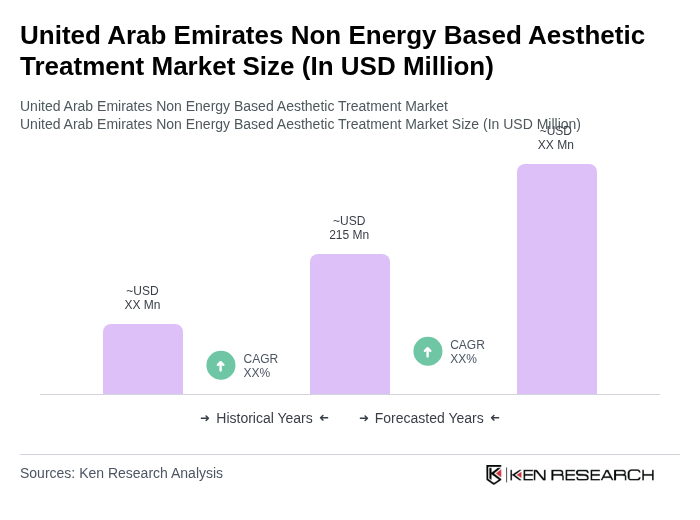
The United Arab Emirates Non Energy Based Aesthetic Treatment Market is valued at approximately USD 215 million, driven by increasing consumer demand for non-invasive procedures and rising disposable incomes among the population.

What makes us stand out is that our consultants follow Robust, Refine and Result (RRR) methodology. Robust for clear definitions, approaches and sanity checking, Refine for differentiating respondents' facts and opinions, and Result for presenting data with story.

We have set a benchmark in the industry by offering our clients with syndicated and customized market research reports featuring coverage of entire market as well as meticulous research and analyst insights.

While we don't replace traditional research, we flip the method upside down. Our dual approach of Top Bottom & Bottom Top ensures quality deliverable by not just verifying company fundamentals but also looking at the sector and macroeconomic factors.

With one step in the future, our research team constantly tries to show you the bigger picture. We help with some of the tough questions you may encounter along the way: How is the industry positioned? Best marketing channel? KPI's of competitors? By aligning every element, we help maximize success.

Our report gives you instant access to the answers and sources that other companies might choose to hide. We elaborate each steps of research methodology we have used and showcase you the sample size to earn your trust.

If you need any support, we are here! We pride ourselves on universe strength, data quality, and quick, friendly, and professional service.













