Region:North America
Author(s):Rebecca
Product Code:KRAC3241
Pages:85
Published On:October 2025
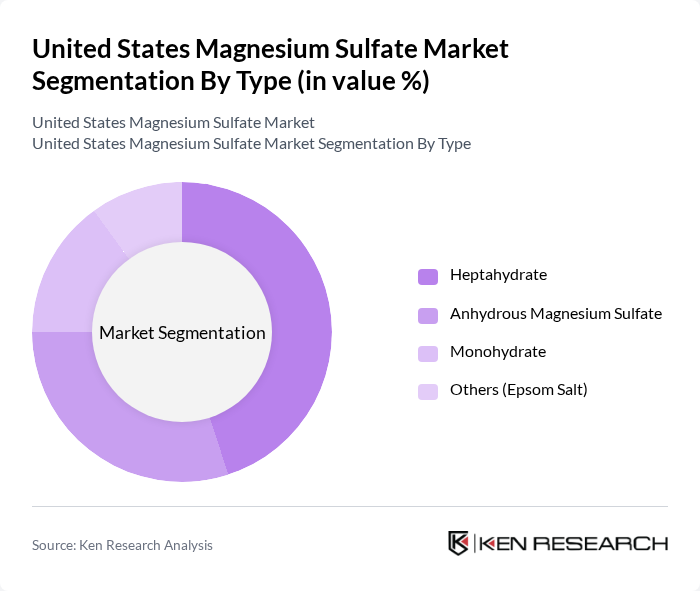
By Type:The market is segmented into Heptahydrate, Anhydrous Magnesium Sulfate, Monohydrate, and Others (Epsom Salt). Heptahydrate is the most widely used form, accounting for the largest share due to its high solubility and effectiveness in agricultural applications. Demand for Anhydrous Magnesium Sulfate is significant in industrial sectors where moisture content is a concern. Monohydrate and Epsom Salt are primarily utilized in niche markets, including personal care, wellness, and specialty formulations .
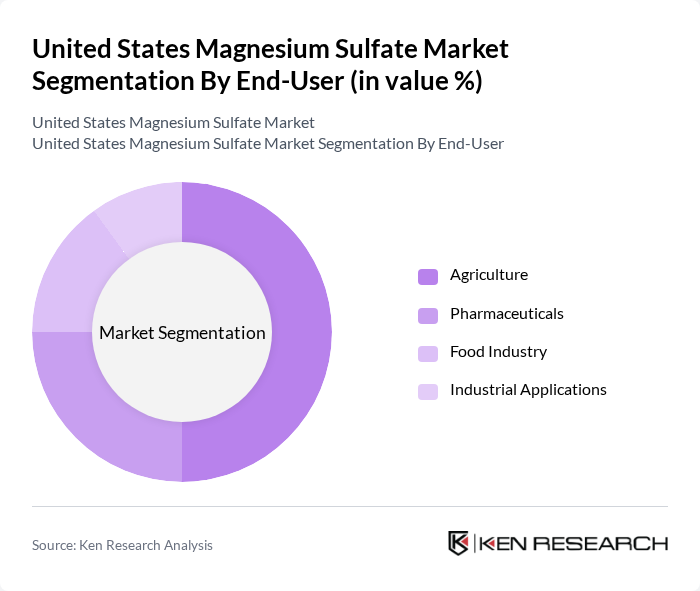
By End-User:The end-user segments include Agriculture, Pharmaceuticals, Food Industry, and Industrial Applications. Agriculture remains the leading end-user, driven by the need for effective fertilizers to enhance crop yield and address magnesium deficiencies in high-intensity cultivation. The pharmaceutical sector utilizes magnesium sulfate in medical therapies, including maternal healthcare and intravenous treatments. The food industry and industrial applications are expanding, with increased awareness of magnesium sulfate’s benefits in food preservation, manufacturing, and water treatment processes .
The United States Magnesium Sulfate Market is characterized by a dynamic mix of regional and international players. Leading participants such as Compass Minerals International, Inc., American Vanguard Corporation, K+S Aktiengesellschaft, Nutrien Ltd., The Mosaic Company, Sociedad Química y Minera de Chile S.A., Axiom Chemicals, Aglukon Spezialdünger GmbH, GAFSA Phosphate Company, Yara International ASA, Solvay S.A., Albemarle Corporation, FMC Corporation, SQM North America, and Haifa Group contribute to innovation, geographic expansion, and service delivery in this space.
The future of the magnesium sulfate market in the United States appears promising, driven by increasing applications across various sectors. The agricultural sector is expected to continue its growth trajectory, fueled by the rising demand for sustainable farming practices. Additionally, advancements in production technologies are likely to enhance efficiency and reduce costs, making magnesium sulfate more accessible. As awareness of its health benefits expands, the market is poised for further growth, particularly in pharmaceuticals and food applications, creating a robust landscape for innovation and investment.
| Segment | Sub-Segments |
|---|---|
| By Type | Heptahydrate Anhydrous Magnesium Sulfate Monohydrate Others (Epsom Salt) |
| By End-User | Agriculture Pharmaceuticals Food Industry Industrial Applications |
| By Application | Fertilizers Laxatives and Antacids Food Additives Water Treatment |
| By Distribution Channel | Direct Sales Online Retail Distributors Others |
| By Packaging Type | Bulk Packaging Retail Packaging Custom Packaging |
| By Region | Northeast Midwest South West |
| By Price Range | Low Medium High |
| Scope Item/Segment | Sample Size | Target Respondent Profiles |
|---|---|---|
| Agricultural Applications | 100 | Agronomists, Fertilizer Product Managers |
| Pharmaceutical Uses | 80 | Pharmacists, Medical Researchers |
| Industrial Applications | 60 | Manufacturing Engineers, Chemical Plant Managers |
| Environmental Impact Studies | 50 | Environmental Scientists, Regulatory Affairs Specialists |
| Market Distribution Channels | 40 | Supply Chain Managers, Sales Directors |
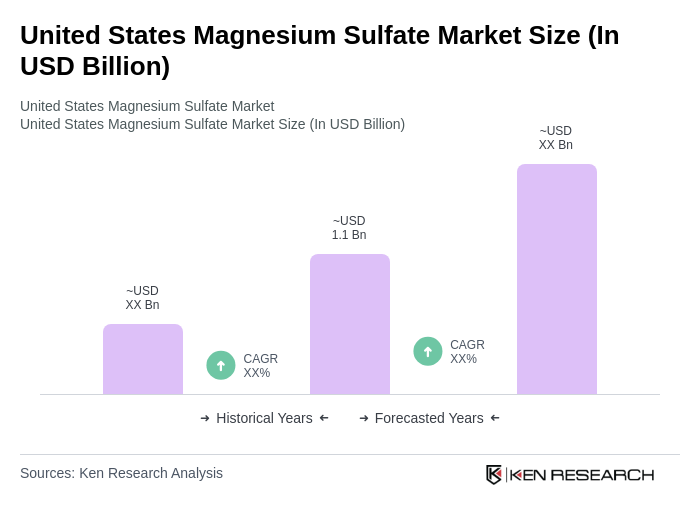
The United States Magnesium Sulfate Market is valued at approximately USD 1.1 billion, reflecting a five-year historical analysis. This growth is primarily driven by increasing demand in agriculture, pharmaceuticals, and industrial applications.

What makes us stand out is that our consultants follow Robust, Refine and Result (RRR) methodology. Robust for clear definitions, approaches and sanity checking, Refine for differentiating respondents' facts and opinions, and Result for presenting data with story.

We have set a benchmark in the industry by offering our clients with syndicated and customized market research reports featuring coverage of entire market as well as meticulous research and analyst insights.

While we don't replace traditional research, we flip the method upside down. Our dual approach of Top Bottom & Bottom Top ensures quality deliverable by not just verifying company fundamentals but also looking at the sector and macroeconomic factors.

With one step in the future, our research team constantly tries to show you the bigger picture. We help with some of the tough questions you may encounter along the way: How is the industry positioned? Best marketing channel? KPI's of competitors? By aligning every element, we help maximize success.

Our report gives you instant access to the answers and sources that other companies might choose to hide. We elaborate each steps of research methodology we have used and showcase you the sample size to earn your trust.

If you need any support, we are here! We pride ourselves on universe strength, data quality, and quick, friendly, and professional service.













