About the Report
Base Year 2024US Canoe Kayak Market Overview
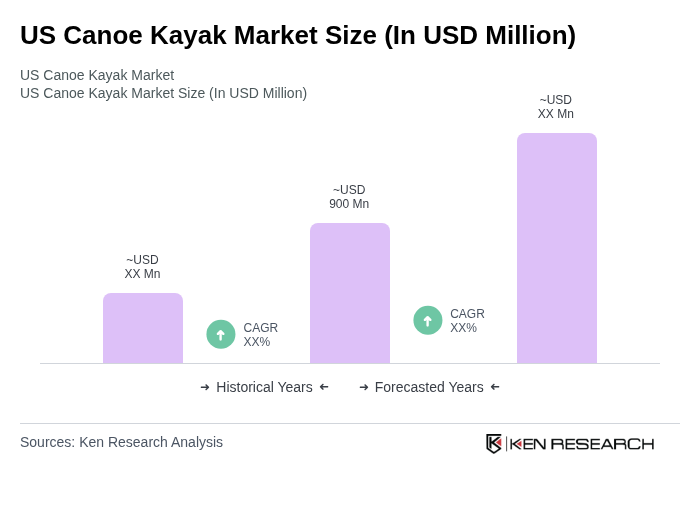
- The US Canoe Kayak Market is valued at USD 900 million, based on a five-year historical analysis. This growth is primarily driven by increasing participation in outdoor recreational activities, heightened awareness of health and fitness, and a growing trend towards eco-friendly transportation options. The market has seen a surge in demand for various types of kayaks and canoes, catering to diverse consumer preferences.
- Key demand regions in this market include states like California, Florida, and New York, which dominate due to their extensive waterways, favorable climates, and strong outdoor recreation culture. These regions have a high concentration of recreational enthusiasts and facilities that support canoeing and kayaking activities, contributing to their market leadership.
- Recent regulatory and safety initiatives and ongoing standards work (including life-jacket and small-craft safety guidance) continue to emphasize safe design and operation for small human-powered craft, reinforcing consumer confidence in the market.
US Canoe Kayak Market Segmentation
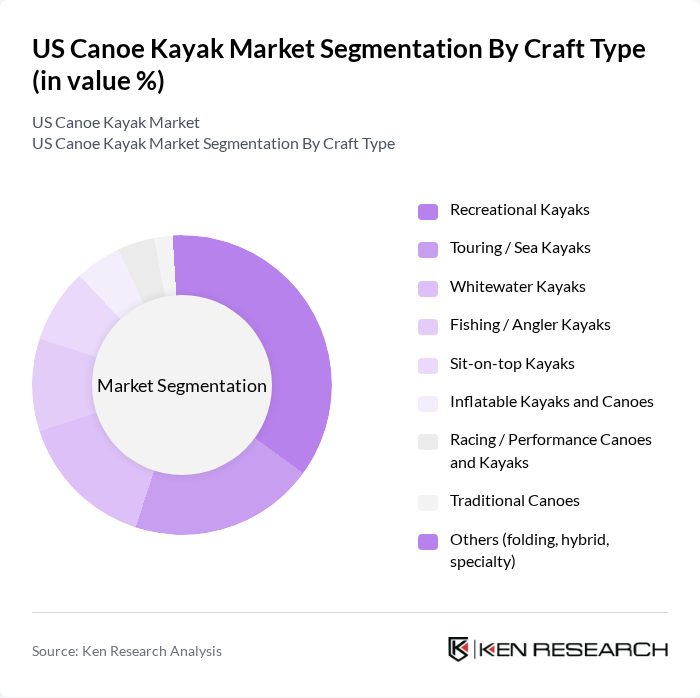
By Craft Type:The craft type segmentation includes various categories such as recreational kayaks, touring/sea kayaks, whitewater kayaks, fishing/angler kayaks, sit-on-top kayaks, inflatable kayaks and canoes, racing/performance canoes and kayaks, traditional canoes, and others (folding, hybrid, specialty). Among these, recreational kayaks are the most popular due to their versatility and ease of use, appealing to both beginners and experienced paddlers. The growing trend of outdoor activities has further fueled the demand for these craft types.
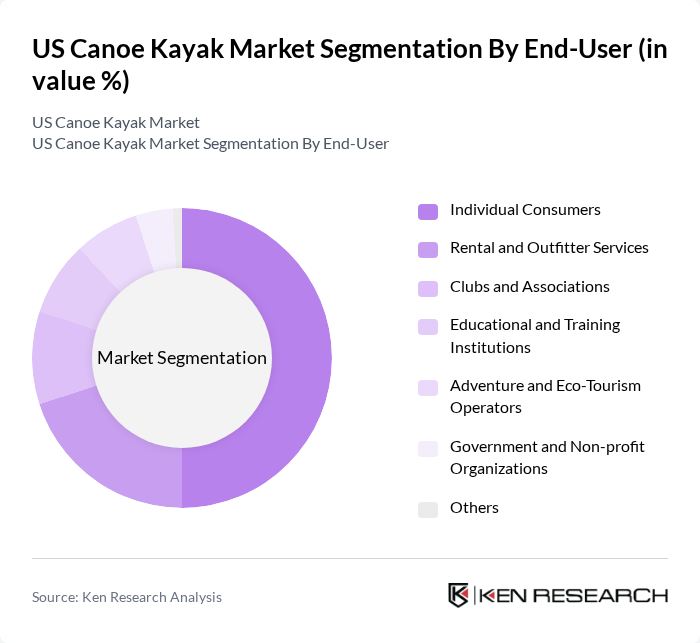
By End-User:The end-user segmentation encompasses individual consumers, rental and outfitter services, clubs and associations, educational and training institutions, adventure and eco-tourism operators, government and non-profit organizations, and others. Individual consumers represent the largest segment, driven by the increasing popularity of outdoor recreational activities and the growing trend of health and fitness. Rental services also play a significant role, particularly in tourist-heavy regions where access to kayaks and canoes is essential for visitors.
US Canoe Kayak Market Competitive Landscape
The US Canoe Kayak Market is characterized by a dynamic mix of regional and international players. Leading participants such as Old Town Canoe & Kayak (Johnson Outdoors Inc.), Ocean Kayak (Johnson Outdoors Inc.), Perception Kayaks (Confluence Outdoor), Wilderness Systems (Confluence Outdoor), Dagger Kayaks (Confluence Outdoor), Hobie Cat Company, Jackson Kayak, Pelican International Inc., Sea Eagle Boats Inc., Advanced Elements Inc., Emotion Kayaks (lifetime and legacy brands), Lifetime Products Inc., Riot Kayaks (Kayak Distribution Inc.), Aquabound Paddles (Branch Paddle Sports), NRS (Northwest River Supplies) contribute to innovation, geographic expansion, and service delivery in this space.
US Canoe Kayak Market Industry Analysis
Growth Drivers
- Increasing Popularity of Outdoor Recreational Activities:The US outdoor recreation economy generated $887 billion in the recent past, reflecting a growing trend towards outdoor activities, including canoeing and kayaking. This surge is driven by a 10% increase in participation rates, with over 50 million Americans engaging in water sports annually. The rise in disposable income, projected to reach $70,000 per household in the near future, further supports this trend, encouraging more individuals to invest in recreational activities.
- Rising Health Consciousness Among Consumers:The US health and wellness market is expected to reach $4.5 trillion in the near future, with a significant portion attributed to physical activities like kayaking. As consumers increasingly prioritize fitness, the demand for low-impact, enjoyable exercises grows. Kayaking, which burns approximately 500 calories per hour, appeals to health-conscious individuals seeking effective ways to stay active while enjoying nature, thus driving market growth.
- Growth in Eco-Tourism and Adventure Tourism:The eco-tourism sector in the US is projected to reach $1.2 trillion in the near future, with adventure tourism, including kayaking, playing a pivotal role. Approximately 50% of travelers express interest in eco-friendly activities, leading to increased demand for kayaking experiences. This trend is supported by a 20% annual growth rate in eco-tourism, highlighting the potential for kayak manufacturers to capitalize on this expanding market segment.
Market Challenges
- High Initial Investment Costs:The average cost of a quality kayak ranges from $500 to $3,500, which can deter potential buyers. Additionally, the expenses associated with safety gear, storage, and maintenance can exceed $1,200 annually. This financial barrier limits access for many consumers, particularly in economically disadvantaged regions, thereby constraining market growth and participation rates in kayaking activities.
- Seasonal Demand Fluctuations:The US canoe and kayak market experiences significant seasonal demand, with sales peaking during the summer months. For instance, approximately 75% of annual sales occur between May and August. This seasonality can lead to inventory management challenges and cash flow issues for retailers and manufacturers, impacting their ability to sustain operations throughout the year and invest in growth initiatives.
US Canoe Kayak Market Future Outlook
The US canoe kayak market is poised for significant evolution, driven by increasing consumer interest in sustainable practices and innovative technologies. As more individuals seek eco-friendly recreational options, manufacturers are likely to focus on developing biodegradable materials and energy-efficient production methods. Additionally, the integration of smart technology in kayaking gear, such as GPS and fitness tracking, will enhance user experience, attracting a broader audience and fostering long-term market growth.
Market Opportunities
- Expansion of Rental Services in Urban Areas:Urban areas are witnessing a surge in demand for kayak rental services, with cities like New York and San Francisco reporting a 30% increase in rentals since the recent past. This trend presents a lucrative opportunity for businesses to cater to urban dwellers seeking outdoor experiences without the commitment of ownership, potentially increasing overall participation in kayaking.
- Development of Electric-Powered Kayaks:The electric kayak segment is projected to grow significantly, with an estimated market value of $200 million in the near future. This innovation appeals to environmentally conscious consumers and those seeking enhanced convenience. As battery technology improves, manufacturers can capitalize on this trend, offering products that combine performance with sustainability, thus attracting a new customer base.
Scope of the Report
| Segment | Sub-Segments |
|---|---|
| By Craft Type | Recreational Kayaks Touring / Sea Kayaks Whitewater Kayaks Fishing / Angler Kayaks Sit-on-top Kayaks Inflatable Kayaks and Canoes Racing / Performance Canoes and Kayaks Traditional Canoes Others (folding, hybrid, specialty) |
| By End-User | Individual Consumers Rental and Outfitter Services Clubs and Associations Educational and Training Institutions Adventure and Eco-Tourism Operators Government and Non?profit Organizations Others |
| By Application | Recreational and Leisure Paddling Fishing Whitewater and Expedition Competitive and Racing Instruction, Training, and Safety Programs Commercial Tours and Rentals Others |
| By Hull Material | Rotomolded Plastic (Polyethylene) Thermoformed ABS and Composites Fiberglass and Composite Laminates Carbon Fiber and High?performance Composites Wood and Wood?core Inflatable PVC and Drop?stitch Materials Others |
| By Price Range | Entry-level / Budget Mid-Range Premium Enthusiast High?end / Professional Rental / Fleet-focused |
| By Distribution Channel | Online Direct-to-Consumer Online Marketplaces and Retailers Specialty Paddle Sports Retailers Outdoor and Sporting Goods Chains Mass Merchandisers Rental and Outfitter Sales Others |
| By Region | Northeast Midwest South West Alaska and Hawaii |
Key Target Audience
Investors and Venture Capitalist Firms
Government and Regulatory Bodies (e.g., U.S. Coast Guard, National Park Service)
Manufacturers and Producers
Distributors and Retailers
Outdoor Recreation Organizations
Event Organizers and Promoters
Tourism Boards and Agencies
Insurance Companies and Underwriters
Players Mentioned in the Report:
Old Town Canoe & Kayak (Johnson Outdoors Inc.)
Ocean Kayak (Johnson Outdoors Inc.)
Perception Kayaks (Confluence Outdoor)
Wilderness Systems (Confluence Outdoor)
Dagger Kayaks (Confluence Outdoor)
Hobie Cat Company
Jackson Kayak
Pelican International Inc.
Sea Eagle Boats Inc.
Advanced Elements Inc.
Emotion Kayaks (lifetime and legacy brands)
Lifetime Products Inc.
Riot Kayaks (Kayak Distribution Inc.)
Aquabound Paddles (Branch Paddle Sports)
NRS (Northwest River Supplies)
Table of Contents
Market Assessment Phase
1. Executive Summary and Approach
2. US Canoe Kayak Market Overview
2.1 Key Insights and Strategic Recommendations
2.2 US Canoe Kayak Market Overview
2.3 Definition and Scope
2.4 Evolution of Market Ecosystem
2.5 Timeline of Key Regulatory Milestones
2.6 Value Chain & Stakeholder Mapping
2.7 Business Cycle Analysis
2.8 Policy & Incentive Landscape
3. US Canoe Kayak Market Analysis
3.1 Growth Drivers
3.1.1 Increasing popularity of outdoor recreational activities
3.1.2 Rising health consciousness among consumers
3.1.3 Growth in eco-tourism and adventure tourism
3.1.4 Technological advancements in kayak and canoe design
3.2 Market Challenges
3.2.1 High initial investment costs
3.2.2 Seasonal demand fluctuations
3.2.3 Competition from alternative water sports
3.2.4 Environmental regulations impacting production
3.3 Market Opportunities
3.3.1 Expansion of rental services in urban areas
3.3.2 Development of electric-powered kayaks
3.3.3 Collaborations with tourism companies
3.3.4 Increasing interest in competitive kayaking events
3.4 Market Trends
3.4.1 Growth of social media influence on outdoor activities
3.4.2 Rise in sustainable and eco-friendly products
3.4.3 Customization and personalization of kayaks
3.4.4 Integration of smart technology in kayaking gear
3.5 Government Regulation
3.5.1 Safety regulations for watercraft
3.5.2 Environmental protection laws
3.5.3 Licensing requirements for rental services
3.5.4 Regulations on manufacturing materials
4. SWOT Analysis
5. Stakeholder Analysis
6. Porter's Five Forces Analysis
7. US Canoe Kayak Market Market Size, 2019-2024
7.1 By Value
7.2 By Volume
7.3 By Average Selling Price
8. US Canoe Kayak Market Segmentation
8.1 By Craft Type
8.1.1 Recreational Kayaks
8.1.2 Touring / Sea Kayaks
8.1.3 Whitewater Kayaks
8.1.4 Fishing / Angler Kayaks
8.1.5 Sit-on-top Kayaks
8.1.6 Inflatable Kayaks and Canoes
8.1.7 Racing / Performance Canoes and Kayaks
8.1.8 Traditional Canoes
8.1.9 Others (folding, hybrid, specialty)
8.2 By End-User
8.2.1 Individual Consumers
8.2.2 Rental and Outfitter Services
8.2.3 Clubs and Associations
8.2.4 Educational and Training Institutions
8.2.5 Adventure and Eco-Tourism Operators
8.2.6 Government and Non?profit Organizations
8.2.7 Others
8.3 By Application
8.3.1 Recreational and Leisure Paddling
8.3.2 Fishing
8.3.3 Whitewater and Expedition
8.3.4 Competitive and Racing
8.3.5 Instruction, Training, and Safety Programs
8.3.6 Commercial Tours and Rentals
8.3.7 Others
8.4 By Hull Material
8.4.1 Rotomolded Plastic (Polyethylene)
8.4.2 Thermoformed ABS and Composites
8.4.3 Fiberglass and Composite Laminates
8.4.4 Carbon Fiber and High?performance Composites
8.4.5 Wood and Wood?core
8.4.6 Inflatable PVC and Drop?stitch Materials
8.4.7 Others
8.5 By Price Range
8.5.1 Entry-level / Budget
8.5.2 Mid-Range
8.5.3 Premium Enthusiast
8.5.4 High?end / Professional
8.5.5 Rental / Fleet-focused
8.6 By Distribution Channel
8.6.1 Online Direct-to-Consumer
8.6.2 Online Marketplaces and Retailers
8.6.3 Specialty Paddle Sports Retailers
8.6.4 Outdoor and Sporting Goods Chains
8.6.5 Mass Merchandisers
8.6.6 Rental and Outfitter Sales
8.6.7 Others
8.7 By Region
8.7.1 Northeast
8.7.2 Midwest
8.7.3 South
8.7.4 West
8.7.5 Alaska and Hawaii
9. US Canoe Kayak Market Competitive Analysis
9.1 Market Share of Key Players
9.2 Cross Comparison of Key Players
9.2.1 Company Name
9.2.2 Company Size (by revenue and employee band)
9.2.3 US Canoe/Kayak Revenue and 3-year CAGR
9.2.4 US Market Share and Geographic Coverage
9.2.5 Product Portfolio Breadth (canoe vs kayak, segments served)
9.2.6 Average Selling Price Positioning
9.2.7 Channel Mix (D2C vs retail vs rental/outfitter)
9.2.8 Innovation and New Product Introduction Rate
9.2.9 Brand Awareness and Sponsorship Activity
9.2.10 Customer Satisfaction and Warranty/Service Metrics
9.2.11 Sustainability and Material Innovation Indicators
9.3 SWOT Analysis of Top Players
9.4 Pricing Analysis
9.5 Detailed Profile of Major Companies
9.5.1 Old Town Canoe & Kayak (Johnson Outdoors Inc.)
9.5.2 Ocean Kayak (Johnson Outdoors Inc.)
9.5.3 Perception Kayaks (Confluence Outdoor)
9.5.4 Wilderness Systems (Confluence Outdoor)
9.5.5 Dagger Kayaks (Confluence Outdoor)
9.5.6 Hobie Cat Company
9.5.7 Jackson Kayak
9.5.8 Pelican International Inc.
9.5.9 Sea Eagle Boats Inc.
9.5.10 Advanced Elements Inc.
9.5.11 Emotion Kayaks (lifetime and legacy brands)
9.5.12 Lifetime Products Inc.
9.5.13 Riot Kayaks (Kayak Distribution Inc.)
9.5.14 Aquabound Paddles (Branch Paddle Sports)
9.5.15 NRS (Northwest River Supplies)
10. US Canoe Kayak Market End-User Analysis
10.1 Procurement Behavior of Key Ministries
10.1.1 Government procurement policies
10.1.2 Budget allocation for recreational activities
10.1.3 Collaboration with local businesses
10.1.4 Environmental considerations in procurement
10.2 Corporate Spend on Infrastructure & Energy
10.2.1 Investment in recreational facilities
10.2.2 Funding for community programs
10.2.3 Partnerships with outdoor brands
10.2.4 Sponsorship of kayaking events
10.3 Pain Point Analysis by End-User Category
10.3.1 Accessibility to water bodies
10.3.2 Safety concerns for users
10.3.3 Quality and durability of products
10.3.4 Availability of training programs
10.4 User Readiness for Adoption
10.4.1 Awareness of kayaking benefits
10.4.2 Availability of resources and equipment
10.4.3 Community support for kayaking activities
10.4.4 Interest in learning and participation
10.5 Post-Deployment ROI and Use Case Expansion
10.5.1 User feedback and satisfaction
10.5.2 Opportunities for product upgrades
10.5.3 Expansion into new markets
10.5.4 Long-term engagement strategies
11. US Canoe Kayak Market Future Size, 2025-2030
11.1 By Value
11.2 By Volume
11.3 By Average Selling Price
Go-To-Market Strategy Phase
1. Whitespace Analysis + Business Model Canvas
1.1 Market gaps and opportunities
2. Marketing and Positioning Recommendations
2.1 Branding strategies
2.2 Product USPs
3. Distribution Plan
3.1 Urban retail vs rural NGO tie-ups
4. Channel & Pricing Gaps
4.1 Underserved routes
4.2 Pricing bands
5. Unmet Demand & Latent Needs
5.1 Category gaps
5.2 Consumer segments
6. Customer Relationship
6.1 Loyalty programs
6.2 After-sales service
7. Value Proposition
7.1 Sustainability
7.2 Integrated supply chains
8. Key Activities
8.1 Regulatory compliance
8.2 Branding
8.3 Distribution setup
9. Entry Strategy Evaluation
9.1 Domestic Market Entry Strategy
9.1.1 Product mix
9.1.2 Pricing band
9.1.3 Packaging
9.2 Export Entry Strategy
9.2.1 Target countries
9.2.2 Compliance roadmap
10. Entry Mode Assessment
10.1 JV
10.2 Greenfield
10.3 M&A
10.4 Distributor Model
11. Capital and Timeline Estimation
11.1 Capital requirements
11.2 Timelines
12. Control vs Risk Trade-Off
12.1 Ownership vs Partnerships
13. Profitability Outlook
13.1 Breakeven analysis
13.2 Long-term sustainability
14. Potential Partner List
14.1 Distributors
14.2 JVs
14.3 Acquisition targets
15. Execution Roadmap
15.1 Phased Plan for Market Entry
15.1.1 Market Setup
15.1.2 Market Entry
15.1.3 Growth Acceleration
15.1.4 Scale & Stabilize
15.2 Key Activities and Milestones
15.2.1 Milestone tracking
15.2.2 Activity scheduling
Research Methodology
Phase 1: Approach1
Desk Research
- Analysis of industry reports from the American Canoe Association and other relevant organizations
- Review of market trends and statistics from government publications such as the U.S. Census Bureau
- Examination of consumer behavior studies and recreational activity reports from outdoor recreation agencies
Primary Research
- Interviews with manufacturers and distributors of canoes and kayaks to gather insights on production and sales
- Surveys with retailers specializing in outdoor sports equipment to understand market demand and consumer preferences
- Field interviews with recreational paddlers and enthusiasts to capture firsthand experiences and trends
Validation & Triangulation
- Cross-validation of findings through comparison with historical sales data and growth rates
- Triangulation of insights from primary interviews with secondary data sources to ensure consistency
- Sanity checks conducted through expert panel reviews involving industry veterans and market analysts
Phase 2: Market Size Estimation1
Top-down Assessment
- Estimation of the total addressable market based on national outdoor recreation spending statistics
- Segmentation of the market by product type (e.g., canoes, kayaks, accessories) and consumer demographics
- Incorporation of growth projections from outdoor recreation participation trends and tourism data
Bottom-up Modeling
- Collection of sales data from leading canoe and kayak manufacturers to establish baseline figures
- Analysis of average selling prices and volume sold across different retail channels
- Estimation of market share distribution among key players based on sales volume and revenue
Forecasting & Scenario Analysis
- Multi-factor regression analysis incorporating variables such as economic indicators and consumer spending patterns
- Scenario modeling based on potential impacts of environmental regulations and sustainability trends
- Development of baseline, optimistic, and pessimistic forecasts through 2030 based on varying market conditions
Phase 3: CATI Sample Composition1
| Scope Item/Segment | Sample Size | Target Respondent Profiles |
|---|---|---|
| Canoe Retail Market | 100 | Store Managers, Sales Representatives |
| Kayak Manufacturing Insights | 90 | Production Managers, Quality Control Specialists |
| Outdoor Recreation Participation | 150 | Recreational Paddlers, Adventure Tour Operators |
| Accessory Sales Trends | 70 | Product Managers, Marketing Executives |
| Consumer Preferences in Paddling | 120 | Outdoor Enthusiasts, Survey Respondents |
Frequently Asked Questions
What is the current value of the US Canoe Kayak Market?
The US Canoe Kayak Market is valued at approximately USD 900 million, reflecting a significant growth trend driven by increased participation in outdoor recreational activities and a rising awareness of health and fitness among consumers.
Which regions in the US have the highest demand for canoes and kayaks?
What types of kayaks are most popular in the US market?
What are the main drivers of growth in the US Canoe Kayak Market?
Other Regional/Country Reports
Indonesia Canoe Kayak Market
Malaysia Canoe Kayak Market
KSA Canoe Kayak Market
APAC Canoe Kayak Market
SEA Canoe Kayak Market
Other Adjacent Reports
Oman Paddle Sports Equipment Market
South Africa Recreational Boating Market
Mexico Stand-Up Paddleboarding Market
Japan Fishing Gear Market
Global Outdoor Apparel Market Size, Share & Forecast, By Product Type, Activity Type, End User & Distribution Channel, 2026-2031UAE Adventure Tourism Market Size, Share & Forecast, By Activity Type, Traveler Type & Booking Channel, 2026–2032Egypt Eco-Tourism Services Market
Brazil Marine Safety Equipment Market
Philippines Inflatable Watercraft Market
Belgium Water Sports Accessories Market
Why Buy From Us?

What makes us stand out is that our consultants follow Robust, Refine and Result (RRR) methodology. Robust for clear definitions, approaches and sanity checking, Refine for differentiating respondents' facts and opinions, and Result for presenting data with story.

We have set a benchmark in the industry by offering our clients with syndicated and customized market research reports featuring coverage of entire market as well as meticulous research and analyst insights.

While we don't replace traditional research, we flip the method upside down. Our dual approach of Top Bottom & Bottom Top ensures quality deliverable by not just verifying company fundamentals but also looking at the sector and macroeconomic factors.

With one step in the future, our research team constantly tries to show you the bigger picture. We help with some of the tough questions you may encounter along the way: How is the industry positioned? Best marketing channel? KPI's of competitors? By aligning every element, we help maximize success.

Our report gives you instant access to the answers and sources that other companies might choose to hide. We elaborate each steps of research methodology we have used and showcase you the sample size to earn your trust.

If you need any support, we are here! We pride ourselves on universe strength, data quality, and quick, friendly, and professional service.