About the Report
Base Year 2024USA Intracranial Stenosis Stents Market Overview
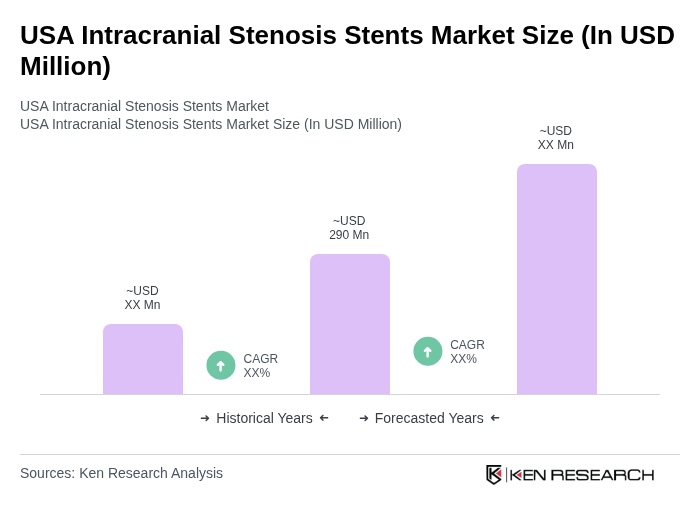
- The USA Intracranial Stenosis Stents Market is valued at USD 290 million, based on a five-year historical analysis. This growth is primarily driven by the increasing prevalence of neurological disorders, advancements in stent technology, and rising awareness regarding minimally invasive procedures. The market is also supported by the growing geriatric population, which is more susceptible to conditions requiring stenting interventions.
- Key players in this market include major metropolitan areas such as New York, Los Angeles, and Chicago, which dominate due to their advanced healthcare infrastructure, high patient volumes, and access to cutting-edge medical technologies. These cities are home to leading hospitals and research institutions that contribute to the development and adoption of innovative stenting solutions.
- The Premarket Approval (PMA) regulations issued by the FDA in 2012 under the Federal Food, Drug, and Cosmetic Act require enhanced clinical evidence for the approval of intracranial stents classified as Class III devices. This regulation mandates that manufacturers provide comprehensive data from pivotal clinical trials demonstrating long-term safety and efficacy, including restenosis rates below specified thresholds and device performance in high-risk patients, ensuring that only the most effective devices reach the market, thereby improving patient outcomes.
USA Intracranial Stenosis Stents Market Segmentation
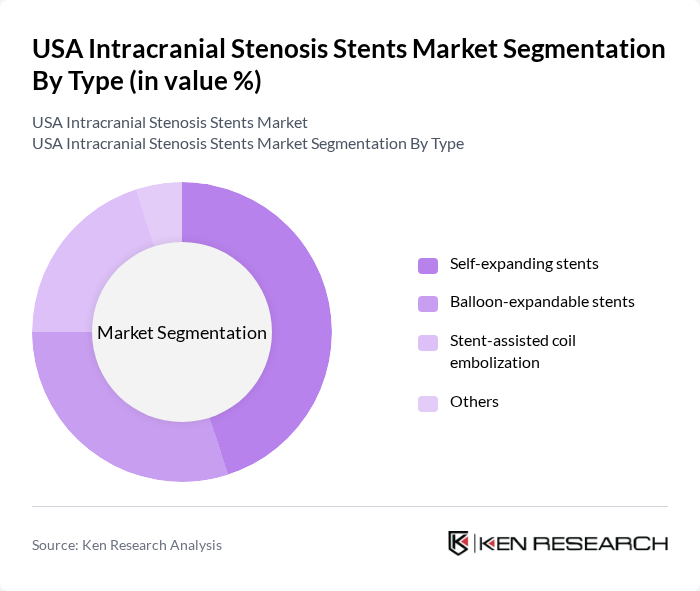
By Type:The market is segmented into various types of stents, including self-expanding stents, balloon-expandable stents, stent-assisted coil embolization, and others. Among these, self-expanding stents are gaining traction due to their ease of use and adaptability to different vessel diameters, making them a preferred choice for many clinicians. Balloon-expandable stents are also significant, particularly in acute settings where rapid deployment is crucial. The stent-assisted coil embolization segment is growing as it offers a combined approach for treating complex aneurysms.
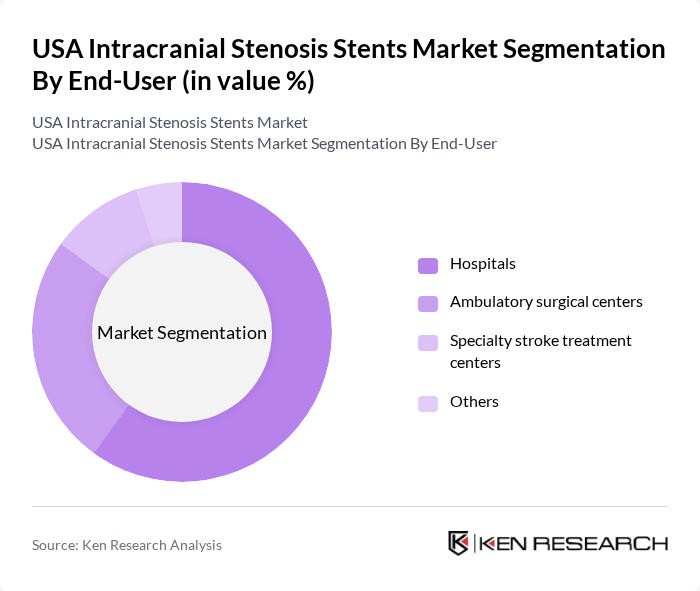
By End-User:The end-user segmentation includes hospitals, ambulatory surgical centers, specialty stroke treatment centers, and others. Hospitals are the dominant end-user segment due to their comprehensive facilities and access to advanced medical technologies. Ambulatory surgical centers are also witnessing growth as they provide cost-effective and efficient care for patients requiring stenting procedures. Specialty stroke treatment centers are increasingly recognized for their focused expertise in managing complex cases, further driving demand.
USA Intracranial Stenosis Stents Market Competitive Landscape
The USA Intracranial Stenosis Stents Market is characterized by a dynamic mix of regional and international players. Leading participants such as Medtronic, Boston Scientific, Stryker Corporation, Abbott Laboratories, Terumo Corporation, Johnson & Johnson, MicroVention (Terumo subsidiary), Penumbra, Inc., Cook Medical, B. Braun Melsungen AG, Cerenovus (Johnson & Johnson subsidiary), Asahi Intecc, Merit Medical Systems, Neuravi Limited, Endologix, Inc. contribute to innovation, geographic expansion, and service delivery in this space.
USA Intracranial Stenosis Stents Market Industry Analysis
Growth Drivers
- Increasing Prevalence of Intracranial Stenosis:The USA has seen a significant rise in intracranial stenosis cases, with approximately 1.6 million new diagnoses annually. This increase is attributed to factors such as hypertension and diabetes, which affect around 116 million and 37 million Americans, respectively. The growing patient population necessitates advanced treatment options, driving demand for intracranial stents. As healthcare providers seek effective solutions, the market for these stents is expected to expand significantly, addressing the urgent medical needs of affected individuals.
- Advancements in Stent Technology:Technological innovations in stent design and materials have enhanced the efficacy and safety of intracranial stents. For instance, the introduction of bioresorbable stents has shown promising results in clinical trials, with a 32% reduction in complications compared to traditional metal stents. Additionally, the integration of drug-eluting technologies has improved patient outcomes, leading to a projected increase in stent adoption rates. These advancements are crucial in meeting the growing demand for effective treatment options in the USA.
- Rising Geriatric Population:The geriatric population in the USA is projected to reach 85 million in future, significantly impacting healthcare needs. Older adults are at a higher risk for intracranial stenosis due to age-related vascular changes. In future, approximately 22% of the population will be over 65, increasing the demand for specialized medical interventions. This demographic shift is driving healthcare providers to invest in advanced stent technologies, ensuring that the market for intracranial stents continues to grow in response to the needs of an aging population.
Market Challenges
- High Cost of Stent Procedures:The financial burden associated with intracranial stent procedures poses a significant challenge. The average cost of a stent procedure can exceed $35,000, which is a barrier for many patients, especially those without adequate insurance coverage. This high cost limits access to necessary treatments, potentially leading to worse health outcomes. As healthcare systems grapple with budget constraints, the affordability of these procedures remains a critical issue that needs addressing to improve patient access.
- Regulatory Hurdles:Navigating the regulatory landscape for medical devices in the USA can be complex and time-consuming. The FDA's stringent approval processes require extensive clinical data, which can delay the introduction of innovative stent technologies. In future, the average time for FDA approval is approximately 14-20 months, which can hinder market entry for new products. These regulatory challenges can stifle innovation and limit the availability of advanced treatment options for patients suffering from intracranial stenosis.
USA Intracranial Stenosis Stents Market Future Outlook
The future of the USA intracranial stenosis stents market appears promising, driven by ongoing technological advancements and an increasing focus on patient-centered care. As healthcare providers adopt minimally invasive techniques, the demand for innovative stent designs is expected to rise. Furthermore, the integration of digital health technologies will enhance patient monitoring and outcomes. Collaborations between manufacturers and healthcare providers will likely foster the development of tailored solutions, ensuring that the market adapts to evolving patient needs and preferences in the coming years.
Market Opportunities
- Expansion of Healthcare Infrastructure:The ongoing expansion of healthcare facilities across the USA presents a significant opportunity for the intracranial stents market. With an estimated $250 billion investment in healthcare infrastructure in future, more hospitals and clinics will be equipped to offer advanced stent procedures, increasing patient access and driving market growth.
- Development of Innovative Stent Designs:There is a growing opportunity for manufacturers to invest in research and development of innovative stent designs. With an estimated $2 billion allocated for R&D in the medical device sector in future, advancements in materials and technology can lead to improved patient outcomes and increased adoption rates, further propelling market growth.
Scope of the Report
| Segment | Sub-Segments |
|---|---|
| By Type | Self-expanding stents Balloon-expandable stents Stent-assisted coil embolization Others |
| By End-User | Hospitals Ambulatory surgical centers Specialty stroke treatment centers Others |
| By Disease Indication | Intracranial stenosis (primary indication) Brain aneurysm Intracranial atherosclerotic disease Others |
| By Patient Demographics | Age group (Adult, Geriatric) Gender Comorbidities (hypertension, diabetes, high cholesterol) Others |
| By Distribution Channel | Direct sales to hospitals Medical device distributors Specialty neurovascular distributors Others |
| By Geography | Northeast Midwest South West |
| By Clinical Application | Ischemic stroke prevention and treatment Transient ischemic attack (TIA) Acute stroke intervention Others |
Key Target Audience
Investors and Venture Capitalist Firms
Government and Regulatory Bodies (e.g., Food and Drug Administration, Centers for Medicare & Medicaid Services)
Manufacturers and Producers of Stents
Medical Device Distributors
Healthcare Providers and Hospitals
Health Insurance Companies
Industry Associations (e.g., American Heart Association, Society of NeuroInterventional Surgery)
Pharmaceutical Companies involved in Neurology
Players Mentioned in the Report:
Medtronic
Boston Scientific
Stryker Corporation
Abbott Laboratories
Terumo Corporation
Johnson & Johnson
MicroVention (Terumo subsidiary)
Penumbra, Inc.
Cook Medical
B. Braun Melsungen AG
Cerenovus (Johnson & Johnson subsidiary)
Asahi Intecc
Merit Medical Systems
Neuravi Limited
Endologix, Inc.
Table of Contents
Market Assessment Phase
1. Executive Summary and Approach
2. USA Intracranial Stenosis Stents Market Overview
2.1 Key Insights and Strategic Recommendations
2.2 USA Intracranial Stenosis Stents Market Overview
2.3 Definition and Scope
2.4 Evolution of Market Ecosystem
2.5 Timeline of Key Regulatory Milestones
2.6 Value Chain & Stakeholder Mapping
2.7 Business Cycle Analysis
2.8 Policy & Incentive Landscape
3. USA Intracranial Stenosis Stents Market Analysis
3.1 Growth Drivers
3.1.1 Increasing prevalence of intracranial stenosis
3.1.2 Advancements in stent technology
3.1.3 Rising geriatric population
3.1.4 Growing awareness and diagnosis rates
3.2 Market Challenges
3.2.1 High cost of stent procedures
3.2.2 Regulatory hurdles
3.2.3 Limited reimbursement policies
3.2.4 Competition from alternative treatments
3.3 Market Opportunities
3.3.1 Expansion of healthcare infrastructure
3.3.2 Development of innovative stent designs
3.3.3 Increasing investment in R&D
3.3.4 Collaborations with healthcare providers
3.4 Market Trends
3.4.1 Shift towards minimally invasive procedures
3.4.2 Integration of digital health technologies
3.4.3 Focus on patient-centric care
3.4.4 Rise in personalized medicine approaches
3.5 Government Regulation
3.5.1 FDA approval processes
3.5.2 Quality control standards
3.5.3 Post-market surveillance requirements
3.5.4 Guidelines for clinical trials
4. SWOT Analysis
5. Stakeholder Analysis
6. Porter's Five Forces Analysis
7. USA Intracranial Stenosis Stents Market Size, 2019-2024
7.1 By Value
7.2 By Volume
7.3 By Average Selling Price
8. USA Intracranial Stenosis Stents Market Segmentation
8.1 By Type
8.1.1 Self-expanding stents
8.1.2 Balloon-expandable stents
8.1.3 Stent-assisted coil embolization
8.1.4 Others
8.2 By End-User
8.2.1 Hospitals
8.2.2 Ambulatory surgical centers
8.2.3 Specialty stroke treatment centers
8.2.4 Others
8.3 By Disease Indication
8.3.1 Intracranial stenosis (primary indication)
8.3.2 Brain aneurysm
8.3.3 Intracranial atherosclerotic disease
8.3.4 Others
8.4 By Patient Demographics
8.4.1 Age group (Adult, Geriatric)
8.4.2 Gender
8.4.3 Comorbidities (hypertension, diabetes, high cholesterol)
8.4.4 Others
8.5 By Distribution Channel
8.5.1 Direct sales to hospitals
8.5.2 Medical device distributors
8.5.3 Specialty neurovascular distributors
8.5.4 Others
8.6 By Geography
8.6.1 Northeast
8.6.2 Midwest
8.6.3 South
8.6.4 West
8.7 By Clinical Application
8.7.1 Ischemic stroke prevention and treatment
8.7.2 Transient ischemic attack (TIA)
8.7.3 Acute stroke intervention
8.7.4 Others
9. USA Intracranial Stenosis Stents Market Competitive Analysis
9.1 Market Share of Key Players
9.2 Cross Comparison of Key Players
9.2.1 Company Name
9.2.2 Company Size (Large, Medium, or Small)
9.2.3 Revenue Growth Rate (YoY %)
9.2.4 Market Penetration Rate (%)
9.2.5 FDA Approvals and Pipeline Status
9.2.6 Pricing Strategy (Premium/Mid-tier/Value)
9.2.7 Product Innovation Rate (New launches/year)
9.2.8 Hospital Network Coverage
9.2.9 Clinical Evidence Strength
9.2.10 Reimbursement Coverage Rate (%)
9.3 SWOT Analysis of Top Players
9.4 Pricing Analysis
9.5 Detailed Profile of Major Companies
9.5.1 Medtronic
9.5.2 Boston Scientific
9.5.3 Stryker Corporation
9.5.4 Abbott Laboratories
9.5.5 Terumo Corporation
9.5.6 Johnson & Johnson
9.5.7 MicroVention (Terumo subsidiary)
9.5.8 Penumbra, Inc.
9.5.9 Cook Medical
9.5.10 B. Braun Melsungen AG
9.5.11 Cerenovus (Johnson & Johnson subsidiary)
9.5.12 Asahi Intecc
9.5.13 Merit Medical Systems
9.5.14 Neuravi Limited
9.5.15 Endologix, Inc.
10. USA Intracranial Stenosis Stents Market End-User Analysis
10.1 Hospital Procurement Behavior
10.1.1 Budget allocation trends
10.1.2 Decision-making processes
10.1.3 Supplier selection criteria
10.1.4 Others
10.2 Healthcare Infrastructure Investment
10.2.1 Investment trends in neurovascular centers
10.2.2 Funding sources (Medicare, private insurance)
10.2.3 Project prioritization
10.2.4 Others
10.3 Pain Point Analysis by End-User Category
10.3.1 Access to advanced treatments
10.3.2 Cost management and reimbursement challenges
10.3.3 Quality of care and clinical outcomes
10.3.4 Others
10.4 User Readiness for Adoption
10.4.1 Training and education needs for interventionalists
10.4.2 Technology acceptance
10.4.3 Infrastructure readiness
10.4.4 Others
10.5 Post-Deployment ROI and Use Case Expansion
10.5.1 Performance metrics
10.5.2 Long-term benefits
10.5.3 Case studies
10.5.4 Others
11. USA Intracranial Stenosis Stents Market Future Size, 2025-2030
11.1 By Value
11.2 By Volume
11.3 By Average Selling Price
Go-To-Market Strategy Phase
1. Whitespace Analysis + Business Model Canvas
1.1 Market gaps identification
1.2 Value proposition development
1.3 Revenue model exploration
1.4 Others
2. Marketing and Positioning Recommendations
2.1 Branding strategies
2.2 Product USPs
3. Distribution Plan
3.1 Hospital networks vs ambulatory surgical centers
4. Channel & Pricing Gaps
4.1 Underserved hospital networks
4.2 Pricing bands
5. Unmet Demand & Latent Needs
5.1 Category gaps
5.2 Patient segments
6. Customer Relationship
6.1 Loyalty programs
6.2 After-sales service
7. Value Proposition
7.1 Clinical efficacy and safety
7.2 Integrated supply chains
8. Key Activities
8.1 Regulatory compliance
8.2 Branding
8.3 Distribution setup
9. Entry Strategy Evaluation
9.1 Domestic Market Entry Strategy
9.1.1 Product mix
9.1.2 Pricing band
9.1.3 Packaging
9.2 Export Entry Strategy
9.2.1 Target countries
9.2.2 Compliance roadmap
10. Entry Mode Assessment
10.1 JV
10.2 Greenfield
10.3 M&A
10.4 Distributor Model
11. Capital and Timeline Estimation
11.1 Capital requirements
11.2 Timelines
12. Control vs Risk Trade-Off
12.1 Ownership vs Partnerships
13. Profitability Outlook
13.1 Breakeven analysis
13.2 Long-term sustainability
14. Potential Partner List
14.1 Distributors
14.2 JVs
14.3 Acquisition targets
15. Execution Roadmap
15.1 Phased Plan for Market Entry
15.1.1 Market Setup
15.1.2 Market Entry
15.1.3 Growth Acceleration
15.1.4 Scale & Stabilize
15.2 Key Activities and Milestones
15.2.1 Milestone tracking
15.2.2 Activity scheduling
Research Methodology
Phase 1: Approach1
Desk Research
- Analysis of published market reports from healthcare organizations and industry associations
- Review of academic journals and clinical studies related to intracranial stenosis and stenting procedures
- Examination of regulatory documents and guidelines from the FDA and other relevant health authorities
Primary Research
- Interviews with interventional neurologists and neurosurgeons specializing in intracranial procedures
- Surveys conducted with hospital administrators regarding stent procurement and usage
- Focus groups with patients who have undergone stenting for intracranial stenosis
Validation & Triangulation
- Cross-validation of findings through multiple expert interviews and clinical insights
- Triangulation of data from market reports, expert opinions, and hospital records
- Sanity checks through peer reviews and feedback from industry stakeholders
Phase 2: Market Size Estimation1
Top-down Assessment
- Estimation of the total addressable market based on national healthcare expenditure on neurology
- Segmentation of market size by geographic regions and healthcare facilities
- Incorporation of trends in stent adoption rates and procedural volumes
Bottom-up Modeling
- Collection of data on stent sales from major medical device manufacturers
- Estimation of average selling prices and volume sold across different healthcare settings
- Analysis of patient demographics and incidence rates of intracranial stenosis
Forecasting & Scenario Analysis
- Utilization of historical growth rates to project future market trends through 2030
- Scenario modeling based on potential changes in healthcare policies and reimbursement rates
- Assessment of market dynamics influenced by technological advancements in stenting
Phase 3: CATI Sample Composition1
| Scope Item/Segment | Sample Size | Target Respondent Profiles |
|---|---|---|
| Interventional Neurology Practices | 100 | Interventional Neurologists, Neurosurgeons |
| Hospital Administration | 80 | Healthcare Administrators, Procurement Managers |
| Patient Experience and Outcomes | 75 | Patients with Intracranial Stents, Caregivers |
| Medical Device Distributors | 60 | Sales Representatives, Distribution Managers |
| Clinical Research Institutions | 50 | Clinical Researchers, Medical Directors |
Frequently Asked Questions
What is the current value of the USA Intracranial Stenosis Stents Market?
The USA Intracranial Stenosis Stents Market is valued at approximately USD 290 million, reflecting a significant growth driven by the rising prevalence of neurological disorders and advancements in stent technology.
What factors are driving the growth of the Intracranial Stenosis Stents Market in the USA?
Which cities are leading in the USA Intracranial Stenosis Stents Market?
What are the types of stents available in the USA Intracranial Stenosis Stents Market?
Other Regional/Country Reports
Indonesia Intracranial Stenosis Stents Market
Malaysia Intracranial Stenosis Stents Market
KSA Intracranial Stenosis Stents Market
APAC Intracranial Stenosis Stents Market
SEA Intracranial Stenosis Stents Market
Other Adjacent Reports
Singapore Stroke Management Market
Thailand Interventional Radiology Market
Mexico Cardiovascular Stents Market
Germany Endovascular Therapy Market
Thailand Medical Imaging Equipment Market
Belgium Balloon Angioplasty Market
Japan Aneurysm Coiling Market
Oman Neurosurgery Instruments Market
KSA Vascular Closure Devices Market
Why Buy From Us?

What makes us stand out is that our consultants follow Robust, Refine and Result (RRR) methodology. Robust for clear definitions, approaches and sanity checking, Refine for differentiating respondents' facts and opinions, and Result for presenting data with story.

We have set a benchmark in the industry by offering our clients with syndicated and customized market research reports featuring coverage of entire market as well as meticulous research and analyst insights.

While we don't replace traditional research, we flip the method upside down. Our dual approach of Top Bottom & Bottom Top ensures quality deliverable by not just verifying company fundamentals but also looking at the sector and macroeconomic factors.

With one step in the future, our research team constantly tries to show you the bigger picture. We help with some of the tough questions you may encounter along the way: How is the industry positioned? Best marketing channel? KPI's of competitors? By aligning every element, we help maximize success.

Our report gives you instant access to the answers and sources that other companies might choose to hide. We elaborate each steps of research methodology we have used and showcase you the sample size to earn your trust.

If you need any support, we are here! We pride ourselves on universe strength, data quality, and quick, friendly, and professional service.