Region:Asia
Author(s):Rebecca
Product Code:KRAA9327
Pages:87
Published On:November 2025
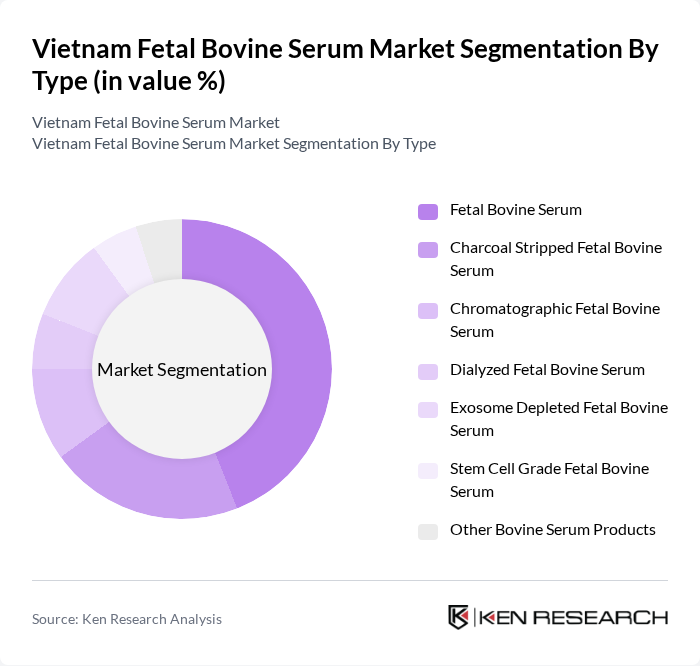
By Type:The market is segmented into various types of fetal bovine serum products, including Fetal Bovine Serum, Charcoal Stripped Fetal Bovine Serum, Chromatographic Fetal Bovine Serum, Dialyzed Fetal Bovine Serum, Exosome Depleted Fetal Bovine Serum, Stem Cell Grade Fetal Bovine Serum, and Other Bovine Serum Products. Among these, Fetal Bovine Serum is the most widely used due to its essential role in cell culture and research applications. The demand for high-quality serum is driven by its critical applications in drug discovery, vaccine production, and regenerative medicine, making it a dominant player in the market. The increasing adoption of advanced cell culture techniques in Vietnam’s expanding biotechnology and pharmaceutical sectors further fuels demand for specialized serum products .
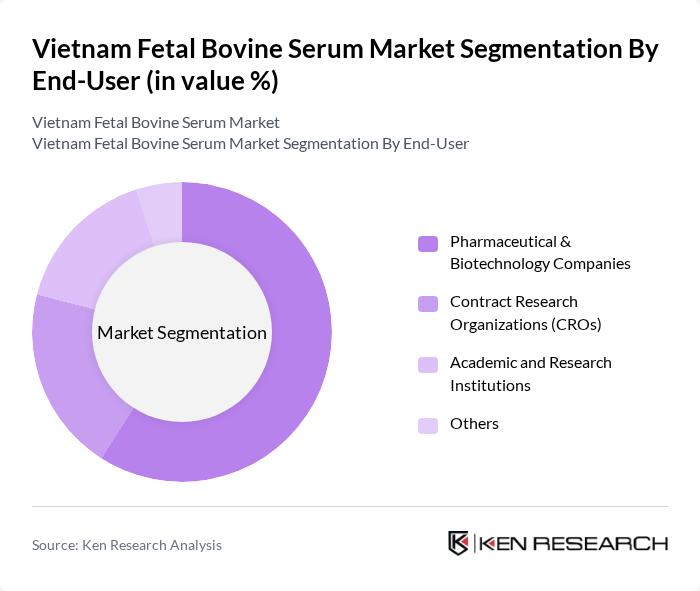
By End-User:The end-user segmentation includes Pharmaceutical & Biotechnology Companies, Contract Research Organizations (CROs), Academic and Research Institutions, and Others. Pharmaceutical and biotechnology companies are the leading end-users, driven by their need for high-quality fetal bovine serum for drug development and clinical research. The increasing investment in biopharmaceuticals and the growing number of clinical trials are propelling the demand for fetal bovine serum in these sectors. Academic and research institutions also contribute significantly, reflecting the rise in basic and translational research activities in Vietnam .
The Vietnam Fetal Bovine Serum Market is characterized by a dynamic mix of regional and international players. Leading participants such as Thermo Fisher Scientific, Merck KGaA (Sigma-Aldrich), GE Healthcare, Bovogen Biologicals, Corning Incorporated, HiMedia Laboratories, Biowest, Rocky Mountain Biologicals, Biological Industries, Cell Culture Technologies, Lonza Group, Bio-Techne, VWR International, PAN-Biotech, Nam Khoa Biotek (Vietnam), Viet My Biotech (Vietnam) contribute to innovation, geographic expansion, and service delivery in this space.
The future of the Vietnam fetal bovine serum market appears promising, driven by increasing biopharmaceutical demand and expanding R&D activities. As the government continues to support biotechnology initiatives, the market is likely to witness enhanced production capabilities and improved quality standards. Additionally, the shift towards ethical sourcing and sustainable practices will shape the industry landscape, encouraging innovation and collaboration among stakeholders. This evolving environment presents significant opportunities for growth and development in the future.
| Segment | Sub-Segments |
|---|---|
| By Type | Fetal Bovine Serum Charcoal Stripped Fetal Bovine Serum Chromatographic Fetal Bovine Serum Dialyzed Fetal Bovine Serum Exosome Depleted Fetal Bovine Serum Stem Cell Grade Fetal Bovine Serum Other Bovine Serum Products |
| By End-User | Pharmaceutical & Biotechnology Companies Contract Research Organizations (CROs) Academic and Research Institutions Others |
| By Application | Cell-based Research Drug Discovery Vaccine Production In-vitro Fertilization Diagnostics Others |
| By Source | Domestic Production Imports Others |
| By Quality Grade | Stem Cell Grade Standard Quality Grade Custom-Processed Grade Others |
| By Distribution Channel | Direct Sales Online Sales Distributors Others |
| By Region | Northern Vietnam Southern Vietnam Central Vietnam Others |
| Scope Item/Segment | Sample Size | Target Respondent Profiles |
|---|---|---|
| Biotechnology Research Institutions | 100 | Research Scientists, Lab Managers |
| Pharmaceutical Companies | 80 | Product Development Managers, Quality Assurance Officers |
| Veterinary Clinics and Hospitals | 50 | Veterinarians, Clinic Administrators |
| Academic Research Labs | 60 | Professors, Graduate Researchers |
| Fetal Bovine Serum Distributors | 40 | Sales Managers, Supply Chain Coordinators |
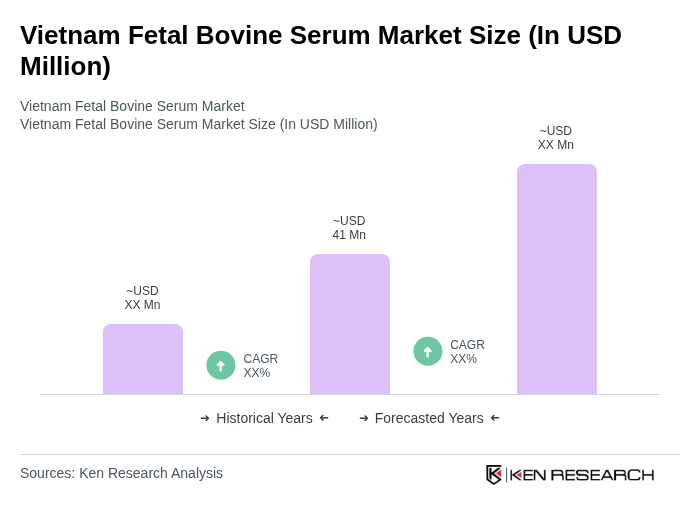
The Vietnam Fetal Bovine Serum Market is valued at approximately USD 41 million, reflecting a significant growth driven by the increasing demand for high-quality cell culture products in biotechnology and pharmaceutical sectors.

What makes us stand out is that our consultants follow Robust, Refine and Result (RRR) methodology. Robust for clear definitions, approaches and sanity checking, Refine for differentiating respondents' facts and opinions, and Result for presenting data with story.

We have set a benchmark in the industry by offering our clients with syndicated and customized market research reports featuring coverage of entire market as well as meticulous research and analyst insights.

While we don't replace traditional research, we flip the method upside down. Our dual approach of Top Bottom & Bottom Top ensures quality deliverable by not just verifying company fundamentals but also looking at the sector and macroeconomic factors.

With one step in the future, our research team constantly tries to show you the bigger picture. We help with some of the tough questions you may encounter along the way: How is the industry positioned? Best marketing channel? KPI's of competitors? By aligning every element, we help maximize success.

Our report gives you instant access to the answers and sources that other companies might choose to hide. We elaborate each steps of research methodology we have used and showcase you the sample size to earn your trust.

If you need any support, we are here! We pride ourselves on universe strength, data quality, and quick, friendly, and professional service.













