About the Report
Base Year 2024Listen to the audio summary
APAC Medical Spa Market Overview
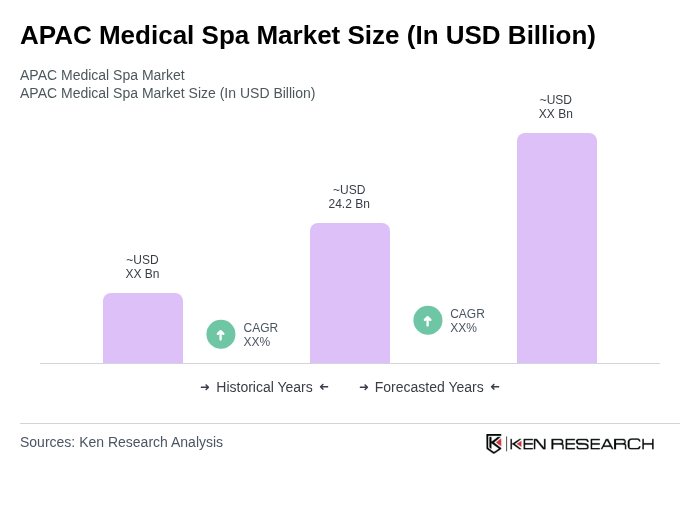
- The APAC Medical Spa Market is valued at USD 24.2 billion, based on a five-year historical analysis. This growth is primarily driven by increasing consumer demand for wellness and aesthetic treatments, rising disposable incomes, and a growing awareness of self-care. The market has seen a surge in popularity due to the integration of advanced technologies, such as AI-powered skin diagnostics and non-invasive procedures, and innovative treatment options that cater to diverse consumer needs. The region’s rapid urbanization and expansion of medical tourism corridors further accelerate market growth.
- Key players in this market include countries like China, Japan, and South Korea, which dominate due to their robust healthcare infrastructure, high consumer spending on beauty and wellness, and a strong cultural emphasis on aesthetics. These nations have established themselves as leaders in the medical spa industry, attracting both local and international clientele seeking high-quality services. China’s growing middle class, Japan’s technological leadership in aesthetic devices, and South Korea’s export of K-beauty protocols are central to the region’s market leadership.
- In 2023, the Indian government implemented the Clinical Establishments (Registration and Regulation) Rules, 2012, as amended by the Ministry of Health and Family Welfare, mandating that all medical spas must be registered as clinical establishments. This regulation requires compliance with prescribed health and safety standards, periodic inspections, and transparent service delivery, thereby enhancing consumer protection and elevating industry standards.
APAC Medical Spa Market Segmentation
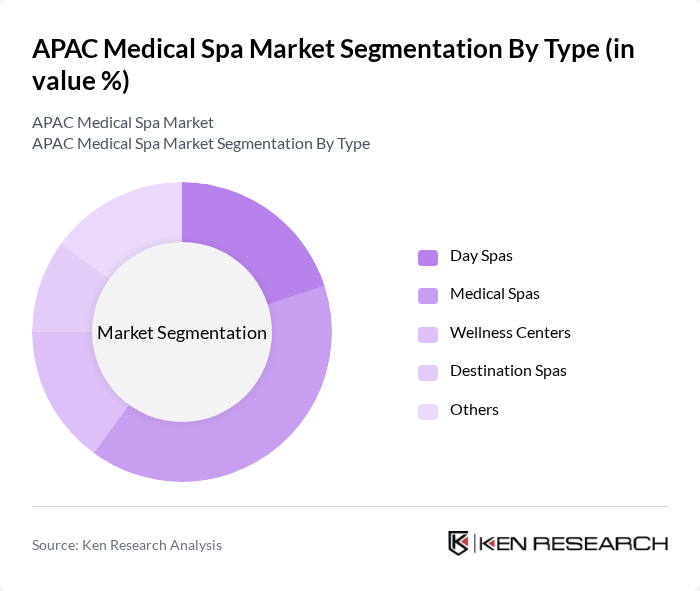
By Type:The market is segmented into Day Spas, Medical Spas, Wellness Centers, Destination Spas, and Others. Medical Spas are currently the leading segment, driven by the growing preference for non-invasive procedures, medical-grade aesthetic treatments, and hybrid wellness models. The increasing adoption of advanced technologies and the expansion of medical tourism have further contributed to the dominance of this segment.
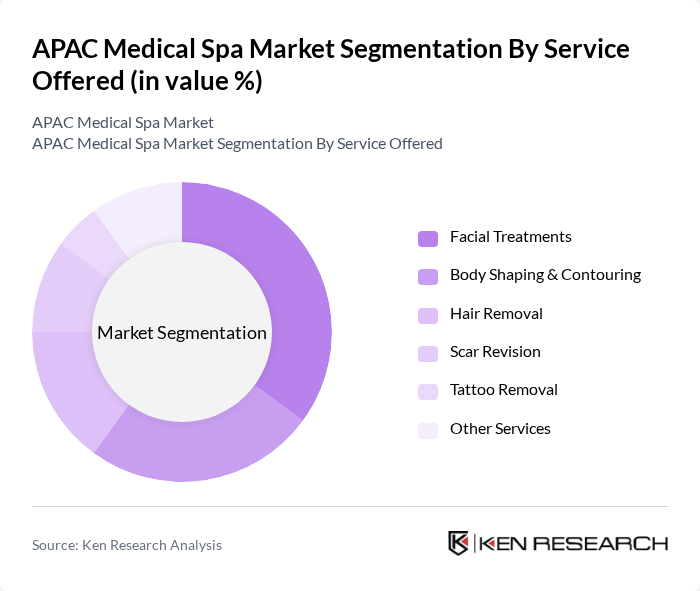
By Service Offered:The services offered in the market include Facial Treatments, Body Shaping & Contouring, Hair Removal, Scar Revision, Tattoo Removal, and Other Services. Facial Treatments are the most sought-after service, accounting for the largest share of revenue, driven by increasing demand for skincare solutions, anti-aging treatments, and preventative care. The influence of social media and the desire for aesthetic enhancement have led to a significant uptick in consumers opting for these services.
APAC Medical Spa Market Competitive Landscape
The APAC Medical Spa Market is characterized by a dynamic mix of regional and international players. Leading participants such as The Aivee Clinic, Spa Esprit Group, Oracle Medical Group, Dermaster Thailand, Kaya Skin Clinic, The DRx Clinic, Renewme Skin Clinic, The Spa at Mandarin Oriental, Mendis Aesthetics, The Spa at Four Seasons, Chiva-Som International Health Resort, The Spa at The Oberoi, Ananda in the Himalayas, The Spa at The St. Regis, Banyan Tree Spa contribute to innovation, geographic expansion, and service delivery in this space.
APAC Medical Spa Market Industry Analysis
Growth Drivers
- Increasing Demand for Non-Invasive Cosmetic Procedures:The APAC region has witnessed a significant rise in the demand for non-invasive cosmetic procedures, with the market valued at approximately USD 5.5 billion in future. This growth is driven by a 15% annual increase in procedures such as Botox and dermal fillers, as consumers seek effective yet less invasive options. The World Health Organization reported that 60% of individuals aged 25-45 are opting for these treatments, reflecting a cultural shift towards aesthetic enhancement.
- Rising Disposable Incomes in the APAC Region:The APAC region's disposable income is projected to reach USD 12 trillion in future, up from USD 10 trillion in future. This increase allows consumers to allocate more funds towards personal care and wellness services, including medical spas. Countries like China and India are leading this trend, with disposable incomes growing at rates of 8% and 7% respectively, enabling a broader demographic to access premium spa services and treatments.
- Growing Awareness of Wellness and Self-Care:The wellness industry in APAC is expected to grow to USD 1.5 trillion in future, reflecting a heightened awareness of self-care among consumers. This trend is particularly strong among millennials and Gen Z, who prioritize mental and physical well-being. Reports indicate that 70% of individuals in urban areas are investing in wellness services, including medical spas, as part of their lifestyle choices, further driving market growth.
Market Challenges
- Regulatory Hurdles and Compliance Issues:The medical spa industry in APAC faces significant regulatory challenges, with varying compliance requirements across countries. For instance, in India, the lack of standardized regulations has led to inconsistencies in service quality, affecting consumer trust. The World Bank estimates that compliance costs can account for up to 20% of operational expenses, hindering market entry for new players and limiting growth potential.
- High Competition Among Existing Players:The APAC medical spa market is characterized by intense competition, with over 5,000 established players in the region. This saturation leads to price wars and reduced profit margins, as companies strive to differentiate themselves. According to industry reports, the average profit margin for medical spas has decreased to 10% in future, down from 15% in future, making it challenging for new entrants to gain a foothold.
APAC Medical Spa Market Future Outlook
The APAC medical spa market is poised for transformative growth, driven by technological advancements and evolving consumer preferences. As personalized skincare treatments gain traction, businesses are expected to invest in innovative solutions that cater to individual needs. Additionally, the integration of teleconsultation services will enhance accessibility, allowing consumers to engage with professionals remotely. This shift towards convenience and customization will likely redefine service delivery, positioning the market for sustained expansion in the coming years.
Market Opportunities
- Introduction of Advanced Technologies in Treatments:The adoption of cutting-edge technologies, such as AI-driven skin analysis and virtual consultations, presents a significant opportunity for medical spas. By leveraging these innovations, spas can enhance treatment efficacy and customer satisfaction, potentially increasing client retention rates by up to 30%.
- Expansion into Untapped Rural Markets:With urban areas saturated, medical spas have the opportunity to expand into rural markets, where demand for wellness services is rising. Reports indicate that rural disposable income is increasing by 6% annually, creating a new customer base eager for accessible self-care options, thus driving growth in previously underserved regions.
Scope of the Report
| Segment | Sub-Segments |
|---|---|
| By Type | Day Spas Medical Spas Wellness Centers Destination Spas Others |
| By Service Offered | Facial Treatments Body Shaping & Contouring Hair Removal Scar Revision Tattoo Removal Other Services |
| By Customer Demographics | Age Group (18-30, 31-45, 46-60, 60+) Gender (Male, Female) Income Level (Low, Middle, High) Others |
| By Geographic Presence | China Japan India South Korea Singapore Malaysia Thailand Rest of Asia Pacific |
| By Treatment Type | Injectables (Botox, Fillers) Laser Treatments Chemical Peels Microdermabrasion Others |
| By Pricing Model | Package Deals Pay-Per-Service Membership Plans Others |
| By Marketing Channel | Online Marketing Social Media Promotions Traditional Advertising Referral Programs Others |
Key Target Audience
Investors and Venture Capitalist Firms
Government and Regulatory Bodies (e.g., Ministry of Health, Food and Drug Administration)
Manufacturers and Producers of Medical Spa Equipment
Distributors and Retailers of Aesthetic Products
Health Insurance Companies
Technology Providers for Medical Spa Solutions
Industry Associations (e.g., International Medical Spa Association)
Financial Institutions and Banks
Players Mentioned in the Report:
The Aivee Clinic
Spa Esprit Group
Oracle Medical Group
Dermaster Thailand
Kaya Skin Clinic
The DRx Clinic
Renewme Skin Clinic
The Spa at Mandarin Oriental
Mendis Aesthetics
The Spa at Four Seasons
Chiva-Som International Health Resort
The Spa at The Oberoi
Ananda in the Himalayas
The Spa at The St. Regis
Banyan Tree Spa
Table of Contents
Market Assessment Phase
1. Executive Summary and Approach
2. APAC Medical Spa Market Overview
2.1 Key Insights and Strategic Recommendations
2.2 APAC Medical Spa Market Overview
2.3 Definition and Scope
2.4 Evolution of Market Ecosystem
2.5 Timeline of Key Regulatory Milestones
2.6 Value Chain & Stakeholder Mapping
2.7 Business Cycle Analysis
2.8 Policy & Incentive Landscape
3. APAC Medical Spa Market Analysis
3.1 Growth Drivers
3.1.1 Increasing demand for non-invasive cosmetic procedures
3.1.2 Rising disposable incomes in the APAC region
3.1.3 Growing awareness of wellness and self-care
3.1.4 Expansion of medical tourism in APAC countries
3.2 Market Challenges
3.2.1 Regulatory hurdles and compliance issues
3.2.2 High competition among existing players
3.2.3 Limited consumer awareness in certain markets
3.2.4 Economic fluctuations affecting consumer spending
3.3 Market Opportunities
3.3.1 Introduction of advanced technologies in treatments
3.3.2 Expansion into untapped rural markets
3.3.3 Collaborations with wellness brands
3.3.4 Increasing popularity of holistic health approaches
3.4 Market Trends
3.4.1 Rise of personalized skincare treatments
3.4.2 Integration of technology in service delivery
3.4.3 Focus on sustainability and eco-friendly practices
3.4.4 Growth of online booking and teleconsultation services
3.5 Government Regulation
3.5.1 Licensing requirements for medical practitioners
3.5.2 Standards for equipment and facility safety
3.5.3 Advertising regulations for medical services
3.5.4 Patient privacy and data protection laws
4. SWOT Analysis
5. Stakeholder Analysis
6. Porter's Five Forces Analysis
7. APAC Medical Spa Market Market Size, 2019-2024
7.1 By Value
7.2 By Volume
7.3 By Average Selling Price
8. APAC Medical Spa Market Segmentation
8.1 By Type
8.1.1 Day Spas
8.1.2 Medical Spas
8.1.3 Wellness Centers
8.1.4 Destination Spas
8.1.5 Others
8.2 By Service Offered
8.2.1 Facial Treatments
8.2.2 Body Shaping & Contouring
8.2.3 Hair Removal
8.2.4 Scar Revision
8.2.5 Tattoo Removal
8.2.6 Other Services
8.3 By Customer Demographics
8.3.1 Age Group (18-30, 31-45, 46-60, 60+)
8.3.2 Gender (Male, Female)
8.3.3 Income Level (Low, Middle, High)
8.3.4 Others
8.4 By Geographic Presence
8.4.1 China
8.4.2 Japan
8.4.3 India
8.4.4 South Korea
8.4.5 Singapore
8.4.6 Malaysia
8.4.7 Thailand
8.4.8 Rest of Asia Pacific
8.5 By Treatment Type
8.5.1 Injectables (Botox, Fillers)
8.5.2 Laser Treatments
8.5.3 Chemical Peels
8.5.4 Microdermabrasion
8.5.5 Others
8.6 By Pricing Model
8.6.1 Package Deals
8.6.2 Pay-Per-Service
8.6.3 Membership Plans
8.6.4 Others
8.7 By Marketing Channel
8.7.1 Online Marketing
8.7.2 Social Media Promotions
8.7.3 Traditional Advertising
8.7.4 Referral Programs
8.7.5 Others
9. APAC Medical Spa Market Competitive Analysis
9.1 Market Share of Key Players
9.2 KPIs for Cross Comparison of Key Players
9.2.1 Company Name
9.2.2 Number of Locations (APAC)
9.2.3 Group Size (Large, Medium, Small)
9.2.4 Customer Retention Rate (%)
9.2.5 Average Revenue per Treatment (USD)
9.2.6 Pricing Strategy (Premium, Mid, Value)
9.2.7 Treatment Utilization Rate (%)
9.2.8 Customer Satisfaction Score (NPS or equivalent)
9.2.9 Market Penetration Rate (%)
9.2.10 Brand Awareness Index
9.2.11 Employee Training Hours per FTE
9.2.12 Share of Non-Invasive vs. Invasive Procedures (%)
9.2.13 Digital Engagement Rate (%)
9.2.14 Medical Tourism Revenue Share (%)
9.3 SWOT Analysis of Top Players
9.4 Pricing Analysis
9.5 Detailed Profile of Major Companies
9.5.1 The Aivee Clinic
9.5.2 Spa Esprit Group
9.5.3 Oracle Medical Group
9.5.4 Dermaster Thailand
9.5.5 Kaya Skin Clinic
9.5.6 The DRx Clinic
9.5.7 Renewme Skin Clinic
9.5.8 The Spa at Mandarin Oriental
9.5.9 Mendis Aesthetics
9.5.10 The Spa at Four Seasons
9.5.11 Chiva-Som International Health Resort
9.5.12 The Spa at The Oberoi
9.5.13 Ananda in the Himalayas
9.5.14 The Spa at The St. Regis
9.5.15 Banyan Tree Spa
10. APAC Medical Spa Market End-User Analysis
10.1 Procurement Behavior of Key Ministries
10.1.1 Budget Allocation for Health and Wellness
10.1.2 Preference for Local vs. International Providers
10.1.3 Evaluation Criteria for Service Providers
10.1.4 Contracting Processes and Timelines
10.2 Corporate Spend on Infrastructure & Energy
10.2.1 Investment in Wellness Facilities
10.2.2 Spending on Employee Wellness Programs
10.2.3 Budget for Aesthetic Treatments
10.2.4 Others
10.3 Pain Point Analysis by End-User Category
10.3.1 Accessibility of Services
10.3.2 Quality of Treatments
10.3.3 Affordability of Services
10.3.4 Availability of Information
10.4 User Readiness for Adoption
10.4.1 Awareness of Medical Spa Services
10.4.2 Willingness to Pay for Services
10.4.3 Trust in Providers
10.4.4 Others
10.5 Post-Deployment ROI and Use Case Expansion
10.5.1 Measurement of Treatment Effectiveness
10.5.2 Customer Feedback and Improvement
10.5.3 Expansion of Service Offerings
10.5.4 Others
11. APAC Medical Spa Market Future Size, 2025-2030
11.1 By Value
11.2 By Volume
11.3 By Average Selling Price
Go-To-Market Strategy Phase
1. Whitespace Analysis + Business Model Canvas
1.1 Market Gaps Identification
1.2 Business Model Development
2. Marketing and Positioning Recommendations
2.1 Branding Strategies
2.2 Product USPs
3. Distribution Plan
3.1 Urban Retail Strategies
3.2 Rural NGO Tie-Ups
4. Channel & Pricing Gaps
4.1 Underserved Routes
4.2 Pricing Bands
5. Unmet Demand & Latent Needs
5.1 Category Gaps
5.2 Consumer Segments
6. Customer Relationship
6.1 Loyalty Programs
6.2 After-Sales Service
7. Value Proposition
7.1 Sustainability
7.2 Integrated Supply Chains
8. Key Activities
8.1 Regulatory Compliance
8.2 Branding
8.3 Distribution Setup
9. Entry Strategy Evaluation
9.1 Domestic Market Entry Strategy
9.1.1 Product Mix
9.1.2 Pricing Band
9.1.3 Packaging
9.2 Export Entry Strategy
9.2.1 Target Countries
9.2.2 Compliance Roadmap
10. Entry Mode Assessment
10.1 JV
10.2 Greenfield
10.3 M&A
10.4 Distributor Model
11. Capital and Timeline Estimation
11.1 Capital Requirements
11.2 Timelines
12. Control vs Risk Trade-Off
12.1 Ownership vs Partnerships
13. Profitability Outlook
13.1 Breakeven Analysis
13.2 Long-Term Sustainability
14. Potential Partner List
14.1 Distributors
14.2 JVs
14.3 Acquisition Targets
15. Execution Roadmap
15.1 Phased Plan for Market Entry
15.1.1 Market Setup
15.1.2 Market Entry
15.1.3 Growth Acceleration
15.1.4 Scale & Stabilize
15.2 Key Activities and Milestones
15.2.1 Milestone Planning
15.2.2 Activity Tracking
Research Methodology
Phase 1: Approach1
Desk Research
- Industry reports from market research firms focusing on the APAC medical spa sector
- Government publications and health ministry reports on wellness and beauty regulations
- Market analysis articles from reputable journals and trade magazines in the beauty and wellness industry
Primary Research
- Interviews with owners and managers of leading medical spas across key APAC markets
- Surveys targeting clients of medical spas to understand consumer preferences and spending habits
- Focus group discussions with industry experts and practitioners in aesthetic medicine
Validation & Triangulation
- Cross-validation of findings through multiple data sources including trade associations and market surveys
- Triangulation of consumer insights with financial performance data from medical spa operators
- Sanity checks conducted through expert panel reviews and feedback from industry stakeholders
Phase 2: Market Size Estimation1
Top-down Assessment
- Analysis of overall healthcare spending trends in APAC countries to estimate potential market size
- Segmentation of the market by service type, including aesthetic treatments and wellness services
- Incorporation of demographic data to assess target market size and growth potential
Bottom-up Modeling
- Collection of revenue data from a sample of medical spas to establish average revenue per location
- Estimation of the number of medical spas operating in each APAC country based on local business registries
- Volume and pricing analysis of popular treatments to derive total market value
Forecasting & Scenario Analysis
- Utilization of historical growth rates to project future market trends through 2030
- Scenario modeling based on varying levels of economic growth and consumer spending behavior
- Assessment of potential impacts from regulatory changes and emerging wellness trends
Phase 3: CATI Sample Composition1
| Scope Item/Segment | Sample Size | Target Respondent Profiles |
|---|---|---|
| Medical Spa Client Satisfaction | 120 | Regular Clients, New Clients |
| Service Provider Insights | 80 | Medical Spa Owners, Aesthetic Practitioners |
| Market Trends in Aesthetic Treatments | 60 | Industry Analysts, Market Researchers |
| Consumer Behavior in Wellness Spending | 100 | Health and Wellness Enthusiasts, Spa Visitors |
| Regulatory Impact Assessment | 40 | Regulatory Officials, Compliance Officers |
Frequently Asked Questions
What is the current value of the APAC Medical Spa Market?
The APAC Medical Spa Market is valued at approximately USD 24.2 billion, driven by increasing consumer demand for wellness and aesthetic treatments, rising disposable incomes, and a growing awareness of self-care among consumers in the region.
Which countries dominate the APAC Medical Spa Market?
What are the key services offered in APAC medical spas?
What are the growth drivers of the APAC Medical Spa Market?
Other Regional/Country Reports
Indonesia Medical Spa Market
Malaysia Medical Spa Market
KSA Medical Spa Market
SEA Medical Spa Market
Vietnam Medical Spa Market
Other Adjacent Reports
Oman Cosmetic Surgery Market
Global wellness tourism market Size, Share, Growth Drivers, Trends, Opportunities & Forecast 2025–2030Belgium Dermatology Services Market
Mexico Anti-Aging Products Market
Belgium Beauty Devices Market
Bahrain Medical Tourism Market Report Size, Share, Growth Drivers, Trends, Opportunities & Forecast 2025–2030Egypt Spa Services Market
Vietnam Skincare Treatments Market
KSA Body Contouring Market
Why Buy From Us?

What makes us stand out is that our consultants follow Robust, Refine and Result (RRR) methodology. Robust for clear definitions, approaches and sanity checking, Refine for differentiating respondents' facts and opinions, and Result for presenting data with story.

We have set a benchmark in the industry by offering our clients with syndicated and customized market research reports featuring coverage of entire market as well as meticulous research and analyst insights.

While we don't replace traditional research, we flip the method upside down. Our dual approach of Top Bottom & Bottom Top ensures quality deliverable by not just verifying company fundamentals but also looking at the sector and macroeconomic factors.

With one step in the future, our research team constantly tries to show you the bigger picture. We help with some of the tough questions you may encounter along the way: How is the industry positioned? Best marketing channel? KPI's of competitors? By aligning every element, we help maximize success.

Our report gives you instant access to the answers and sources that other companies might choose to hide. We elaborate each steps of research methodology we have used and showcase you the sample size to earn your trust.

If you need any support, we are here! We pride ourselves on universe strength, data quality, and quick, friendly, and professional service.