Region:Asia
Author(s):Shubham
Product Code:KRAA8657
Pages:84
Published On:November 2025
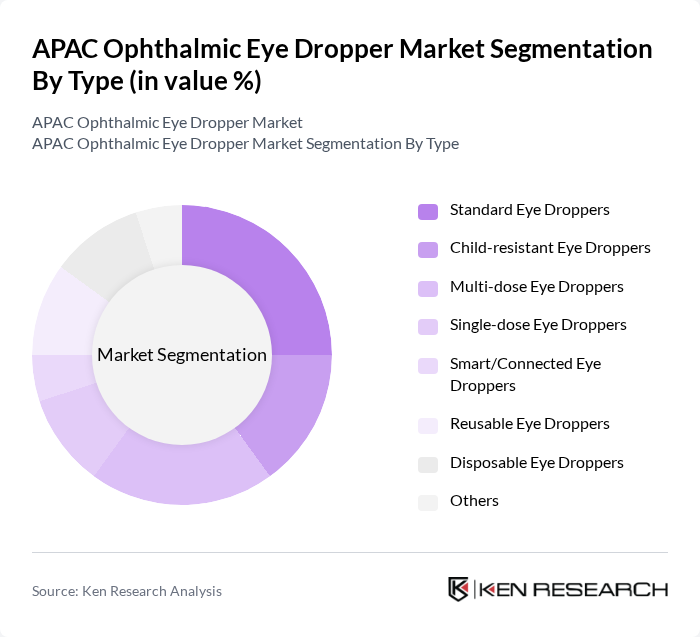
By Type:The market is segmented into various types of eye droppers, including Standard Eye Droppers, Child-resistant Eye Droppers, Multi-dose Eye Droppers, Single-dose Eye Droppers, Smart/Connected Eye Droppers, Reusable Eye Droppers, Disposable Eye Droppers, and Others. Each type serves specific consumer needs and preferences, influencing market dynamics. Multi-dose systems represent a significant segment, reflecting strong market demand for efficient, cost-effective delivery mechanisms across the region.
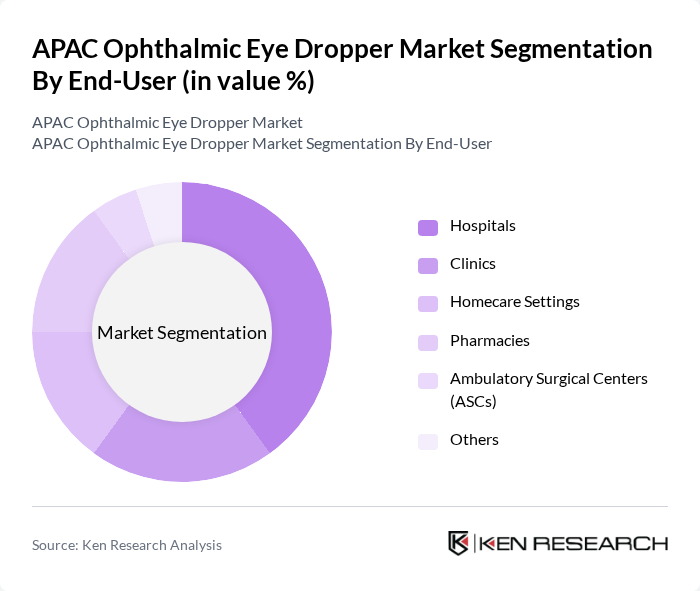
By End-User:The end-user segmentation includes Hospitals, Clinics, Homecare Settings, Pharmacies, Ambulatory Surgical Centers (ASCs), and Others. Each segment reflects the diverse applications of ophthalmic eye droppers across various healthcare settings. Hospitals maintain the largest share due to high-volume clinical usage and standardized procurement practices, while homecare settings are experiencing growth driven by increasing self-administration of ophthalmic medications among aging populations.
The APAC Ophthalmic Eye Dropper Market is characterized by a dynamic mix of regional and international players. Leading participants such as Alcon Laboratories, Inc., Bausch + Lomb, Johnson & Johnson Vision, Santen Pharmaceutical Co., Ltd., Novartis AG, Merck & Co., Inc., Pfizer Inc., AbbVie Inc., Ocular Therapeutix, Inc., Eyevance Pharmaceuticals, Sun Pharmaceutical Industries Ltd., Hikma Pharmaceuticals PLC, Aerie Pharmaceuticals, Inc., Bausch Health Companies Inc., Eyenovia, Inc., Aptar Pharma, Nemera, Gerresheimer AG, Nipro Corporation, Shandong Weigao Group Medical Polymer Co., Ltd. contribute to innovation, geographic expansion, and service delivery in this space.
The future of the APAC ophthalmic eye dropper market appears promising, driven by technological advancements and demographic shifts. As the prevalence of eye disorders continues to rise, the demand for innovative and effective drug delivery systems will likely increase. Additionally, the growing geriatric population will necessitate tailored solutions, fostering collaborations between manufacturers and healthcare providers. The market is expected to embrace digital health technologies, enhancing patient engagement and adherence to treatment regimens, ultimately improving health outcomes across the region.
| Segment | Sub-Segments |
|---|---|
| By Type | Standard Eye Droppers Child-resistant Eye Droppers Multi-dose Eye Droppers Single-dose Eye Droppers Smart/Connected Eye Droppers Reusable Eye Droppers Disposable Eye Droppers Others |
| By End-User | Hospitals Clinics Homecare Settings Pharmacies Ambulatory Surgical Centers (ASCs) Others |
| By Region | China Japan India South Korea Australia Southeast Asia Rest of APAC |
| By Application | Glaucoma Treatment Allergic Conjunctivitis Treatment Dry Eye Treatment Post-operative Care Others |
| By Material | Plastic Glass Silicone & Others |
| By Distribution Channel | Online Retail Offline Retail Hospitals and Clinics Others |
| By Packaging Type | Bulk Packaging Retail Packaging Unit-dose Packaging Multi-dose Packaging Others |
| Scope Item/Segment | Sample Size | Target Respondent Profiles |
|---|---|---|
| Ophthalmologists | 120 | Eye Care Specialists, Clinic Directors |
| Pharmaceutical Distributors | 80 | Sales Managers, Distribution Coordinators |
| Retail Pharmacies | 60 | Pharmacy Managers, Inventory Specialists |
| Healthcare Policy Makers | 40 | Health Administrators, Regulatory Affairs Officers |
| Patients using Ophthalmic Products | 100 | Regular Users, Caregivers |
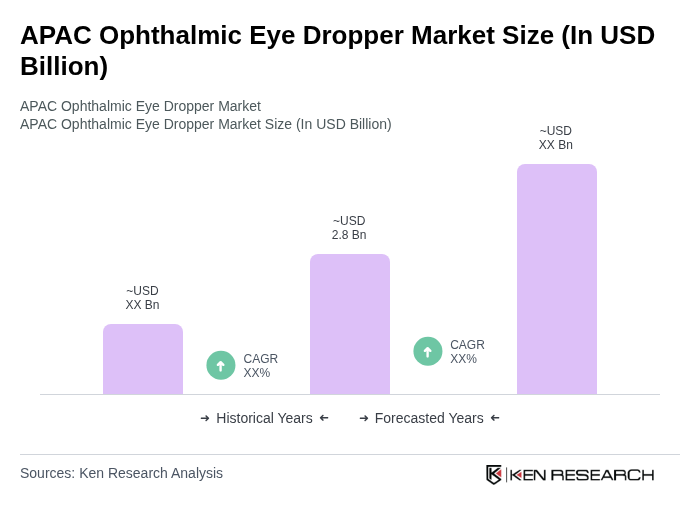
The APAC Ophthalmic Eye Dropper Market is valued at approximately USD 2.8 billion, driven by the increasing prevalence of eye disorders, a growing geriatric population, and advancements in drug delivery systems across the region.

What makes us stand out is that our consultants follow Robust, Refine and Result (RRR) methodology. Robust for clear definitions, approaches and sanity checking, Refine for differentiating respondents' facts and opinions, and Result for presenting data with story.

We have set a benchmark in the industry by offering our clients with syndicated and customized market research reports featuring coverage of entire market as well as meticulous research and analyst insights.

While we don't replace traditional research, we flip the method upside down. Our dual approach of Top Bottom & Bottom Top ensures quality deliverable by not just verifying company fundamentals but also looking at the sector and macroeconomic factors.

With one step in the future, our research team constantly tries to show you the bigger picture. We help with some of the tough questions you may encounter along the way: How is the industry positioned? Best marketing channel? KPI's of competitors? By aligning every element, we help maximize success.

Our report gives you instant access to the answers and sources that other companies might choose to hide. We elaborate each steps of research methodology we have used and showcase you the sample size to earn your trust.

If you need any support, we are here! We pride ourselves on universe strength, data quality, and quick, friendly, and professional service.













