Region:Asia
Author(s):Geetanshi
Product Code:KRAE0559
Pages:86
Published On:December 2025
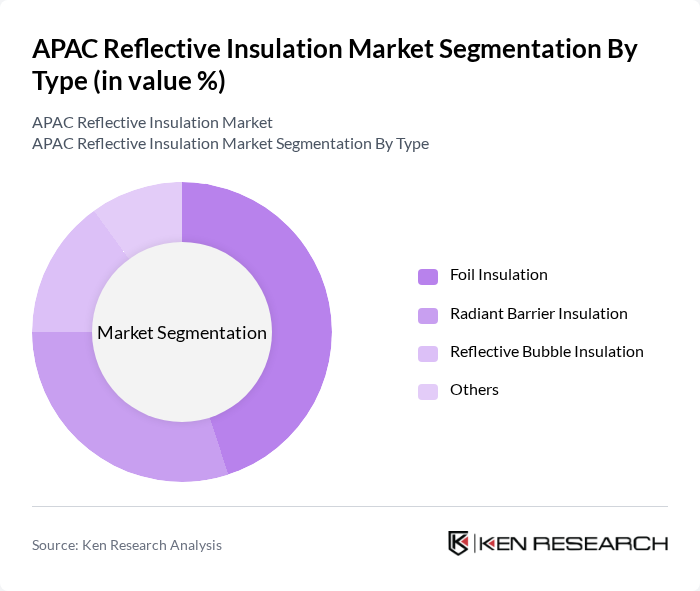
By Type:The reflective insulation market is segmented into various types, including Foil Insulation, Radiant Barrier Insulation, Reflective Bubble Insulation, and Others. Among these, Foil Insulation is the most dominant sub-segment due to its widespread application in residential and commercial buildings. It is favored for its high thermal resistance and cost-effectiveness, making it a popular choice among builders and homeowners. Radiant Barrier Insulation is also gaining traction, particularly in warmer climates, where it effectively reduces cooling costs. Reflective Bubble Insulation, while less common, is utilized in specific applications requiring lightweight and flexible insulation solutions.
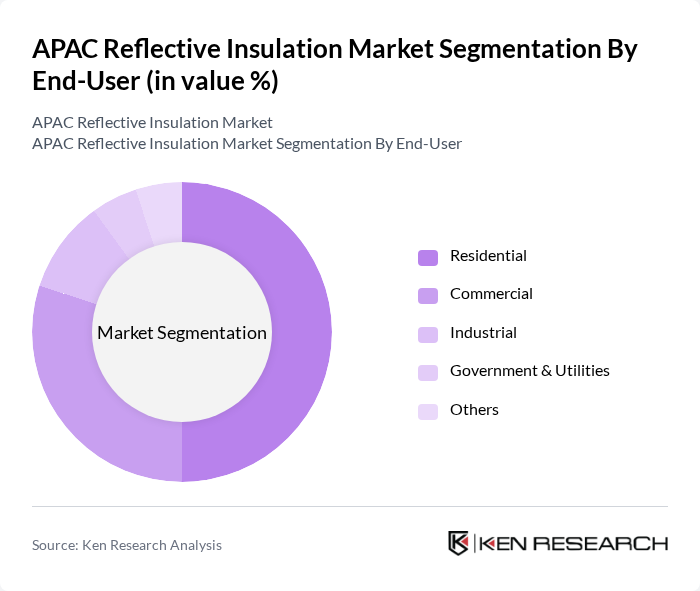
By End-User:The market is segmented by end-user into Residential, Commercial, Industrial, Government & Utilities, and Others. The Residential segment holds the largest share, driven by increasing consumer awareness of energy efficiency and rising energy costs. Homeowners are increasingly opting for reflective insulation to enhance comfort and reduce energy bills. The Commercial segment is also significant, as businesses seek to comply with energy regulations and improve sustainability. Industrial applications are growing, particularly in manufacturing facilities that require temperature control.
The APAC Reflective Insulation Market is characterized by a dynamic mix of regional and international players. Leading participants such as Reflective Insulation Technologies, EcoFoil Insulation, AtticFoil, RadiantGUARD, Reflectix, CertainTeed, Owens Corning, Johns Manville, 3M, Insulation Corporation of America, A. Richard Company, Green Insulation Group, Insulfoam, Kingspan Insulation, Rockwool International contribute to innovation, geographic expansion, and service delivery in this space.
The future of the APAC reflective insulation market appears promising, driven by increasing regulatory support for energy efficiency and sustainability. As governments continue to enforce stricter building codes and provide incentives for green construction, the adoption of reflective insulation is expected to rise. Additionally, the integration of smart technologies in building materials will likely enhance the performance and appeal of reflective insulation, making it a preferred choice for both new constructions and retrofitting projects in the region.
| Segment | Sub-Segments |
|---|---|
| By Type | Foil Insulation Radiant Barrier Insulation Reflective Bubble Insulation Others |
| By End-User | Residential Commercial Industrial Government & Utilities Others |
| By Region | North India South India East India West India |
| By Application | Roof Insulation Wall Insulation Floor Insulation Others |
| By Material Composition | Aluminum Foil Polyethylene Fiberglass Others |
| By Installation Method | DIY Installation Professional Installation Others |
| By Market Channel | Direct Sales Distributors Online Sales Others |
| Scope Item/Segment | Sample Size | Target Respondent Profiles |
|---|---|---|
| Residential Construction Projects | 150 | Home Builders, Architects, Project Managers |
| Commercial Building Insulation | 100 | Facility Managers, Construction Supervisors |
| Industrial Applications of Reflective Insulation | 80 | Plant Managers, Procurement Officers |
| Energy Efficiency Programs | 70 | Energy Auditors, Sustainability Consultants |
| Regulatory Compliance in Insulation | 60 | Regulatory Affairs Managers, Compliance Officers |
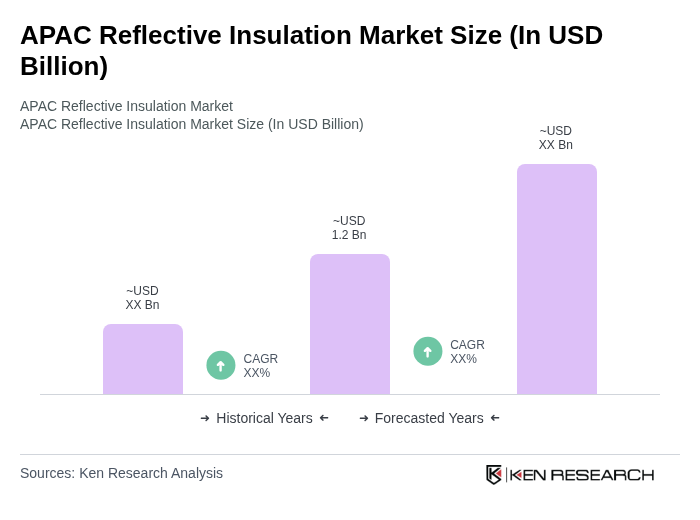
The APAC Reflective Insulation Market is valued at approximately USD 1.2 billion, driven by increasing energy efficiency regulations, rising construction activities, and a growing awareness of sustainable building practices across the region.

What makes us stand out is that our consultants follow Robust, Refine and Result (RRR) methodology. Robust for clear definitions, approaches and sanity checking, Refine for differentiating respondents' facts and opinions, and Result for presenting data with story.

We have set a benchmark in the industry by offering our clients with syndicated and customized market research reports featuring coverage of entire market as well as meticulous research and analyst insights.

While we don't replace traditional research, we flip the method upside down. Our dual approach of Top Bottom & Bottom Top ensures quality deliverable by not just verifying company fundamentals but also looking at the sector and macroeconomic factors.

With one step in the future, our research team constantly tries to show you the bigger picture. We help with some of the tough questions you may encounter along the way: How is the industry positioned? Best marketing channel? KPI's of competitors? By aligning every element, we help maximize success.

Our report gives you instant access to the answers and sources that other companies might choose to hide. We elaborate each steps of research methodology we have used and showcase you the sample size to earn your trust.

If you need any support, we are here! We pride ourselves on universe strength, data quality, and quick, friendly, and professional service.













