Region:Asia
Author(s):Dev
Product Code:KRAC4977
Pages:91
Published On:January 2026
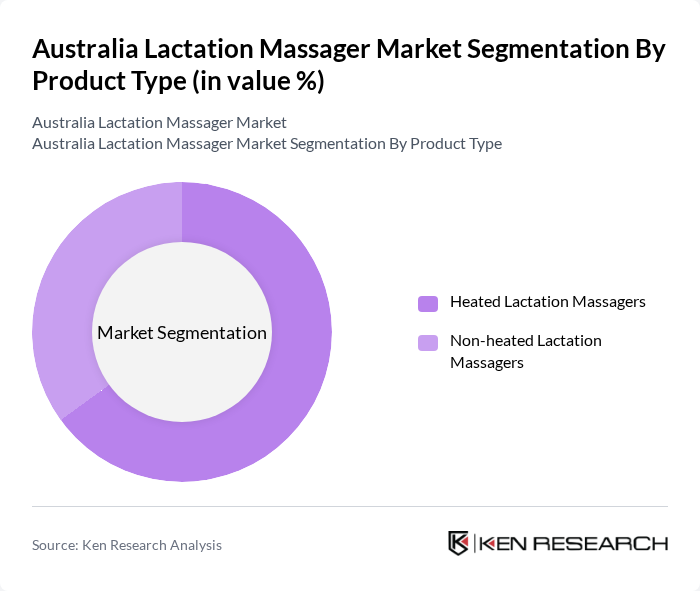
By Product Type:The market is segmented into heated lactation massagers and non-heated lactation massagers, in line with global industry segmentation. Heated lactation massagers are gaining popularity due to their ability to provide soothing warmth combined with vibration, which helps in relieving discomfort, improving let-down, and promoting milk flow. Non-heated lactation massagers, while still relevant, are often preferred for their simplicity, lower price points, and ease of use. The heated segment is currently leading the market globally and in developed markets such as Australia as consumers increasingly seek products that offer enhanced comfort, multifunctional features, and higher perceived efficacy.
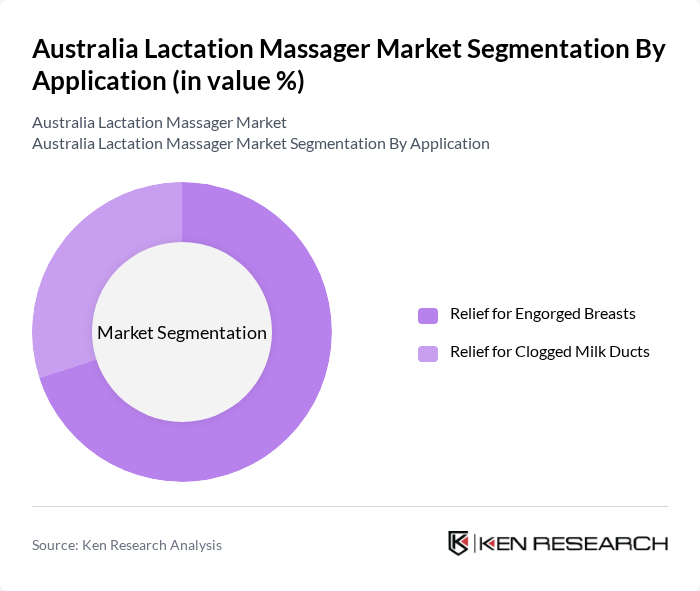
By Application:The applications of lactation massagers are primarily categorized into relief for engorged breasts and relief for clogged milk ducts, consistent with global market definitions. Relief for engorged breasts is the leading application, as many mothers experience this issue during the early stages of breastfeeding or when feeding patterns change, and massagers are used to soften breast tissue and improve milk flow. The demand for products that can effectively alleviate this discomfort drives the market. Relief for clogged milk ducts is also significant, as targeted vibration and massage help break up blockages and can support the management of mastitis risk, but it tends to be a secondary concern for many mothers, making it a smaller segment in comparison.
The Australia Lactation Massager Market is characterized by a dynamic mix of regional and international players. Leading participants such as Medela, Lansinoh, Philips Avent, Haakaa, Spectra Baby Australia, Elvie, LaVie, Fridababy, Momcozy, Lactamo (Australia), NatureBond, Tommee Tippee, NUK, Chicco, Munchkin contribute to innovation, geographic expansion, and service delivery in this space.
The Australia lactation massager market is poised for significant growth, driven by increasing awareness of breastfeeding benefits and technological advancements. As maternal health continues to gain prominence, companies are likely to innovate and expand their product lines. Additionally, the rise of e-commerce platforms will facilitate greater accessibility for consumers, particularly in rural areas. Collaborations with healthcare providers will further enhance product credibility, ensuring that lactation massagers become integral to postpartum care strategies across Australia.
| Segment | Sub-Segments |
|---|---|
| By Product Type | Heated Lactation Massagers Non-heated Lactation Massagers |
| By Application | Relief for Engorged Breasts Relief for Clogged Milk Ducts |
| By Distribution Channel | E-commerce Platforms Pharmacies & Drugstores Specialty Maternity & Baby Stores Hospitals & Lactation Clinics |
| By Price Range | Economy (Sub-AUD 60) Mid-range (AUD 60–120) Premium (Above AUD 120) |
| By Technology / Feature Set | Heat-only Devices Vibration-only Devices Heat & Vibration Combination Devices App-connected / Smart Devices |
| By Usage Setting | At-home / Personal Use Professional Use (Lactation Consultants, Hospitals) |
| Scope Item/Segment | Sample Size | Target Respondent Profiles |
|---|---|---|
| Healthcare Professionals | 90 | Lactation Consultants, Pediatricians |
| New Mothers | 140 | First-time Mothers, Mothers with Infants under 12 months |
| Retailers of Lactation Products | 70 | Store Managers, Product Buyers |
| Breastfeeding Support Groups | 60 | Group Leaders, Active Participants |
| Maternal Health Organizations | 50 | Program Coordinators, Health Educators |
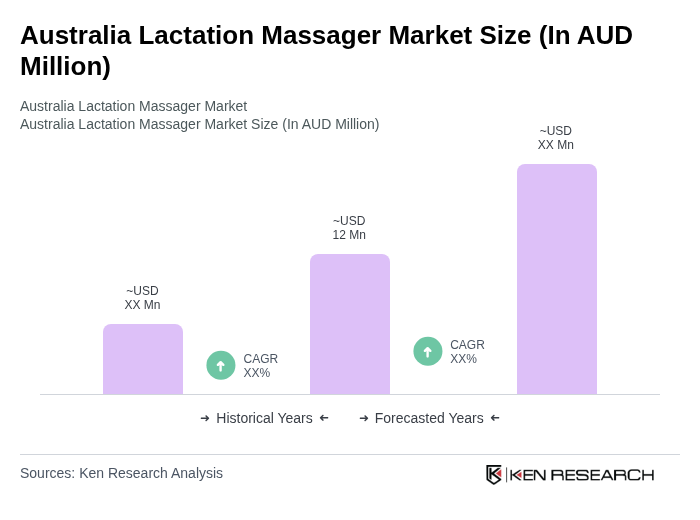
The Australia Lactation Massager Market is valued at approximately AUD 12 million, reflecting its share within the global lactation massager industry and the broader breastfeeding accessories market.

What makes us stand out is that our consultants follow Robust, Refine and Result (RRR) methodology. Robust for clear definitions, approaches and sanity checking, Refine for differentiating respondents' facts and opinions, and Result for presenting data with story.

We have set a benchmark in the industry by offering our clients with syndicated and customized market research reports featuring coverage of entire market as well as meticulous research and analyst insights.

While we don't replace traditional research, we flip the method upside down. Our dual approach of Top Bottom & Bottom Top ensures quality deliverable by not just verifying company fundamentals but also looking at the sector and macroeconomic factors.

With one step in the future, our research team constantly tries to show you the bigger picture. We help with some of the tough questions you may encounter along the way: How is the industry positioned? Best marketing channel? KPI's of competitors? By aligning every element, we help maximize success.

Our report gives you instant access to the answers and sources that other companies might choose to hide. We elaborate each steps of research methodology we have used and showcase you the sample size to earn your trust.

If you need any support, we are here! We pride ourselves on universe strength, data quality, and quick, friendly, and professional service.













