Region:Asia
Author(s):Dev
Product Code:KRAC4979
Pages:82
Published On:January 2026
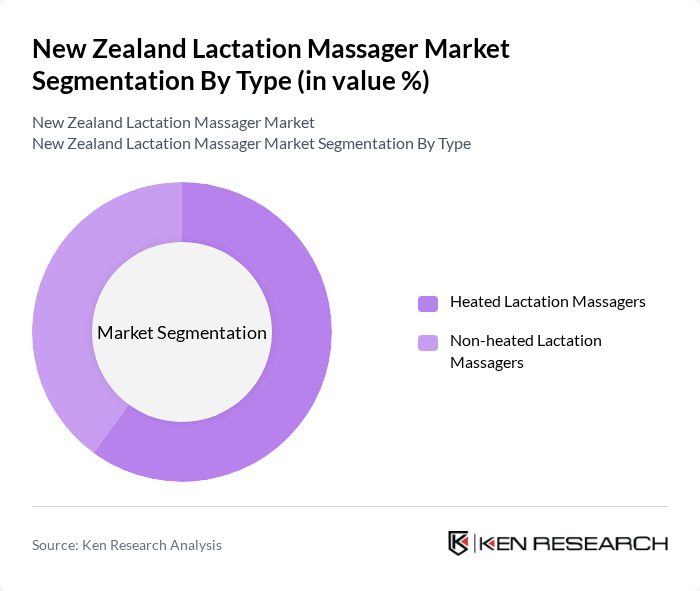
By Type:The market is segmented into two main types: Heated Lactation Massagers and Non-heated Lactation Massagers. Heated Lactation Massagers are gaining popularity globally due to their ability to combine warmth with vibration to relieve engorgement and assist with milk let-down, and this preference is reflected in New Zealand as consumers increasingly adopt premium, multi-function electric massagers. Non-heated Lactation Massagers, while still significant, are often preferred for their lower price, simplicity, and ease of cleaning, including manual or silicone-based designs from brands such as Haakaa that are widely available through online and pharmacy channels. The demand for heated options is on the rise as more mothers seek clinically recommended solutions for stubborn clogged ducts and as social media and lactation consultants highlight the benefits of combined heat and massage for breastfeeding comfort.
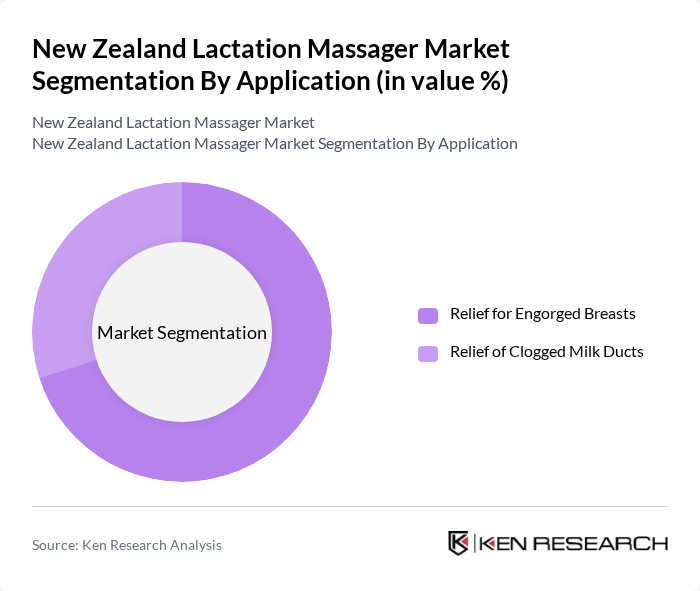
By Application:The applications of lactation massagers are primarily categorized into Relief for Engorged Breasts and Relief of Clogged Milk Ducts. Relief for Engorged Breasts is the leading application, as engorgement and painful breasts are commonly reported reasons for early breastfeeding discontinuation in developed markets, and targeted massage helps soften the breast and improve milk removal. The effectiveness of lactation massagers in alleviating swelling and discomfort alongside proper latch and feeding techniques drives their popularity among both first-time and experienced mothers. Relief of Clogged Milk Ducts is also significant, as devices designed with focused vibration patterns are used to help break up blockages and support milk flow, addressing a key concern associated with mastitis risk and thereby further supporting the demand for these products.
The New Zealand Lactation Massager Market is characterized by a dynamic mix of regional and international players. Leading participants such as Haakaa, LaVie Mom, MammaEase, Momcozy, Fridababy LLC, Crane USA, Autumnz, Bellababy, Zomee Breast Pumps, Mon Lait, Munchkin, Inc., Spectra Baby, Milk Mate, Jolly Bean Baby & Co., Other Emerging New Zealand and APAC Brands contribute to innovation, geographic expansion, and service delivery in this space.
The New Zealand lactation massager market is poised for growth, driven by increasing awareness of breastfeeding benefits and technological advancements. As new mothers become more health-conscious, the demand for effective lactation aids will likely rise. Additionally, the expansion of e-commerce platforms will facilitate easier access to these products. Collaborations with healthcare providers can further enhance product credibility, leading to increased adoption among consumers seeking reliable solutions for breastfeeding challenges.
| Segment | Sub-Segments |
|---|---|
| By Type | Heated Lactation Massagers Non-heated Lactation Massagers |
| By Application | Relief for Engorged Breasts Relief of Clogged Milk Ducts |
| By Distribution Channel | Retail Pharmacies & Baby Stores E-commerce Platforms Hospital & Clinic Sales Others |
| By End-User | Home Use Healthcare Facilities (Hospitals, Maternity Clinics) Lactation Consultants & Midwives Others |
| By Price Range | Economy Mid-Range Premium |
| By Region (New Zealand) | North Island South Island Others |
| Scope Item/Segment | Sample Size | Target Respondent Profiles |
|---|---|---|
| Healthcare Professionals | 80 | Lactation Consultants, Midwives, Pediatricians |
| New Mothers | 120 | First-time Mothers, Mothers with Multiple Children |
| Retailers of Lactation Products | 60 | Store Managers, Product Buyers |
| Breastfeeding Support Groups | 50 | Group Leaders, Active Participants |
| Maternal Health Organizations | 40 | Program Coordinators, Health Educators |
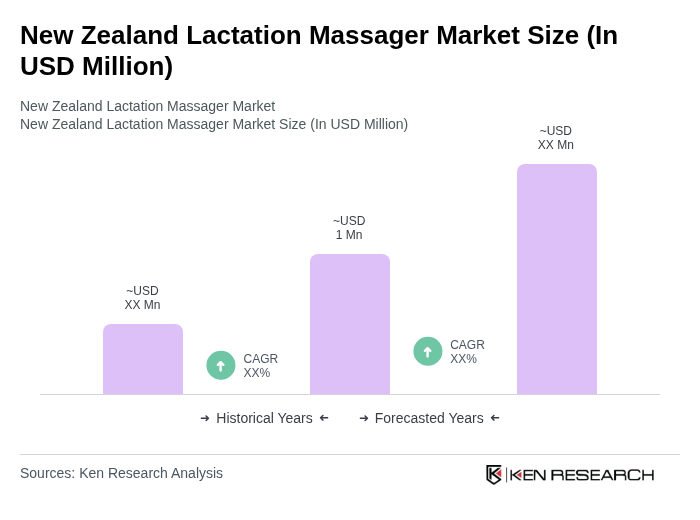
The New Zealand Lactation Massager Market is valued at approximately USD 1 million, reflecting a small share of the global market, which is in the low tens of millions of USD. This valuation is based on historical analysis and sales extrapolation.

What makes us stand out is that our consultants follow Robust, Refine and Result (RRR) methodology. Robust for clear definitions, approaches and sanity checking, Refine for differentiating respondents' facts and opinions, and Result for presenting data with story.

We have set a benchmark in the industry by offering our clients with syndicated and customized market research reports featuring coverage of entire market as well as meticulous research and analyst insights.

While we don't replace traditional research, we flip the method upside down. Our dual approach of Top Bottom & Bottom Top ensures quality deliverable by not just verifying company fundamentals but also looking at the sector and macroeconomic factors.

With one step in the future, our research team constantly tries to show you the bigger picture. We help with some of the tough questions you may encounter along the way: How is the industry positioned? Best marketing channel? KPI's of competitors? By aligning every element, we help maximize success.

Our report gives you instant access to the answers and sources that other companies might choose to hide. We elaborate each steps of research methodology we have used and showcase you the sample size to earn your trust.

If you need any support, we are here! We pride ourselves on universe strength, data quality, and quick, friendly, and professional service.













