Region:Middle East
Author(s):Dev
Product Code:KRAC4976
Pages:86
Published On:January 2026
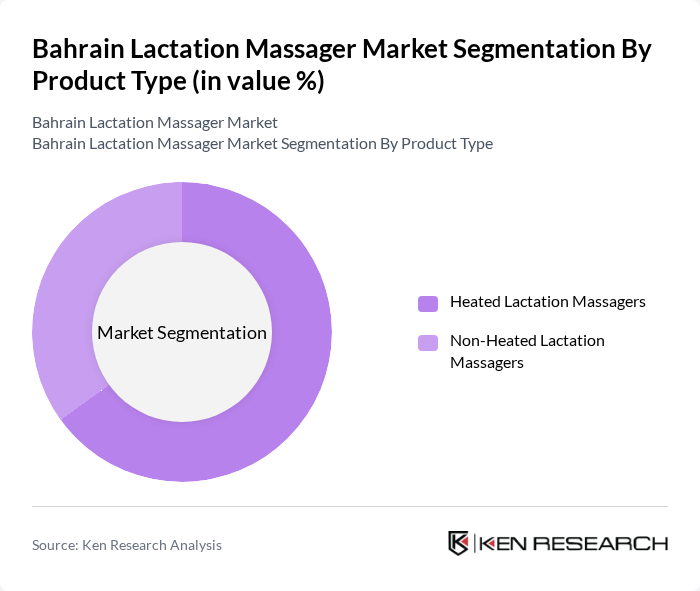
By Product Type:The market is segmented into heated and non-heated lactation massagers. Heated lactation massagers are increasingly adopted due to their ability to combine vibration and gentle warmth, which helps in relieving engorgement, softening breast tissue, and improving milk flow, aligning with clinical advice that warmth and massage can assist in managing breastfeeding complications such as plugged ducts. Non-heated options remain widely used, particularly for their portability, lower price points, and ease of use for routine massage. The heated lactation massagers are currently leading the market, as they offer additional therapeutic benefits and are perceived as more effective for mothers experiencing recurrent engorgement or duct blockage, especially in urban settings with higher product awareness.
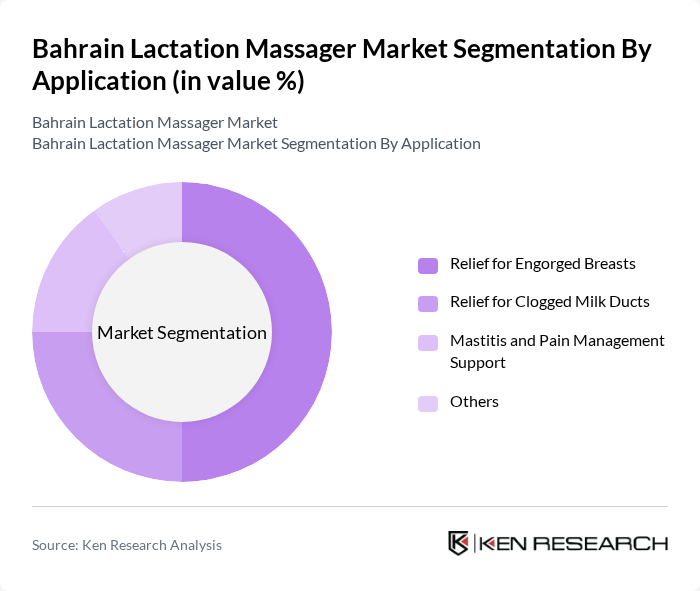
By Application:The applications of lactation massagers include relief for engorged breasts, relief for clogged milk ducts, mastitis and pain management support, and others. Relief for engorged breasts is the most significant application, as engorgement is common in the early postpartum period and is frequently reported as a leading cause of breastfeeding discomfort and early cessation when not properly managed. The growing awareness, through national breastfeeding promotion and health education programs, of the importance of addressing engorgement, duct blockage, and mastitis to sustain exclusive breastfeeding has led to increased demand for lactation massagers for targeted therapeutic use.
The Bahrain Lactation Massager Market is characterized by a dynamic mix of regional and international players. Leading participants such as Medela AG, Lansinoh Laboratories Inc., Spectra Baby USA, Philips Avent, Haakaa, Elvie, Frida Mom (Fridababy), Momcozy, Belly Bandit, Tommee Tippee, NUK, Munchkin, Chicco, Baby Buddha, and other emerging regional brands contribute to innovation, geographic expansion, and service delivery in this space, leveraging their broader portfolios in breast pumps and breastfeeding accessories to build awareness and distribution for lactation massage products.
The Bahrain lactation massager market is poised for significant growth, driven by increasing awareness of breastfeeding benefits and the rising number of working mothers. As technological advancements continue to shape product offerings, manufacturers are likely to focus on integrating smart features that cater to the needs of modern mothers. Additionally, collaborations with healthcare providers can enhance credibility and promote the adoption of lactation massagers, ensuring that more mothers have access to effective breastfeeding support solutions in the coming years.
| Segment | Sub-Segments |
|---|---|
| By Product Type | Heated Lactation Massagers Non-Heated Lactation Massagers |
| By Application | Relief for Engorged Breasts Relief for Clogged Milk Ducts Mastitis and Pain Management Support Others |
| By Distribution Channel | Pharmacies & Drug Stores Mother & Baby Specialty Stores Hospital & Clinic Retail Desks E-commerce Platforms Others |
| By Price Range | Economy Mid-Range Premium |
| By End-User | Individual Home Users Hospitals & Maternity Clinics Lactation Consultants & Postnatal Care Centers Others |
| By Buyer Type | First-Time Mothers Experienced Mothers Working Mothers High-Risk / Special Care Mothers |
| By Sales Channel Ownership | Organized Retail Unorganized Retail Direct-to-Consumer (D2C) Brands |
| Scope Item/Segment | Sample Size | Target Respondent Profiles |
|---|---|---|
| Healthcare Professionals | 80 | Lactation Consultants, Pediatricians |
| New Mothers | 120 | First-time Mothers, Caregivers |
| Retailers of Lactation Products | 60 | Store Managers, Product Buyers |
| Breastfeeding Support Groups | 50 | Group Leaders, Active Participants |
| Health Policy Makers | 40 | Government Officials, Health Advocates |
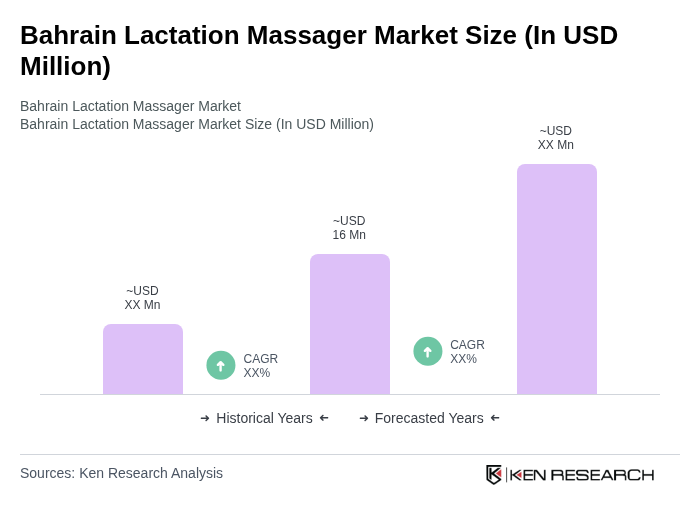
The Bahrain Lactation Massager Market is valued at approximately USD 16 million, reflecting a growing demand driven by increased awareness of breastfeeding benefits and national initiatives promoting breastfeeding as optimal infant nutrition.

What makes us stand out is that our consultants follow Robust, Refine and Result (RRR) methodology. Robust for clear definitions, approaches and sanity checking, Refine for differentiating respondents' facts and opinions, and Result for presenting data with story.

We have set a benchmark in the industry by offering our clients with syndicated and customized market research reports featuring coverage of entire market as well as meticulous research and analyst insights.

While we don't replace traditional research, we flip the method upside down. Our dual approach of Top Bottom & Bottom Top ensures quality deliverable by not just verifying company fundamentals but also looking at the sector and macroeconomic factors.

With one step in the future, our research team constantly tries to show you the bigger picture. We help with some of the tough questions you may encounter along the way: How is the industry positioned? Best marketing channel? KPI's of competitors? By aligning every element, we help maximize success.

Our report gives you instant access to the answers and sources that other companies might choose to hide. We elaborate each steps of research methodology we have used and showcase you the sample size to earn your trust.

If you need any support, we are here! We pride ourselves on universe strength, data quality, and quick, friendly, and professional service.













