Region:Middle East
Author(s):Dev
Product Code:KRAA3809
Pages:82
Published On:January 2026
By System Type:
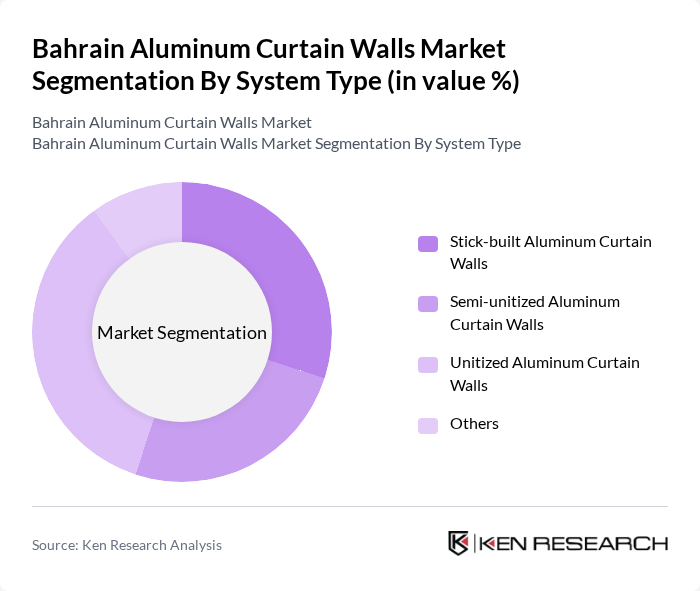
The system type segment is dominated by Unitized Aluminum Curtain Walls, which are preferred for their ease of installation and superior performance in high-rise and large commercial buildings, in line with broader regional and global trends where unitized systems represent a leading share of aluminum curtain wall adoption. This segment has gained traction due to the increasing trend of modular and off-site prefabricated construction and the need for faster project completion times, reduced site labor, and better quality control. Additionally, the aesthetic appeal, design flexibility, and energy efficiency of unitized systems—facilitating integration of high-performance glazing, shading devices, and advanced sealant systems—align with modern architectural demands, making them a popular choice among developers, architects, and façade contractors in Bahrain’s premium commercial and mixed-use projects.
By End-Use:
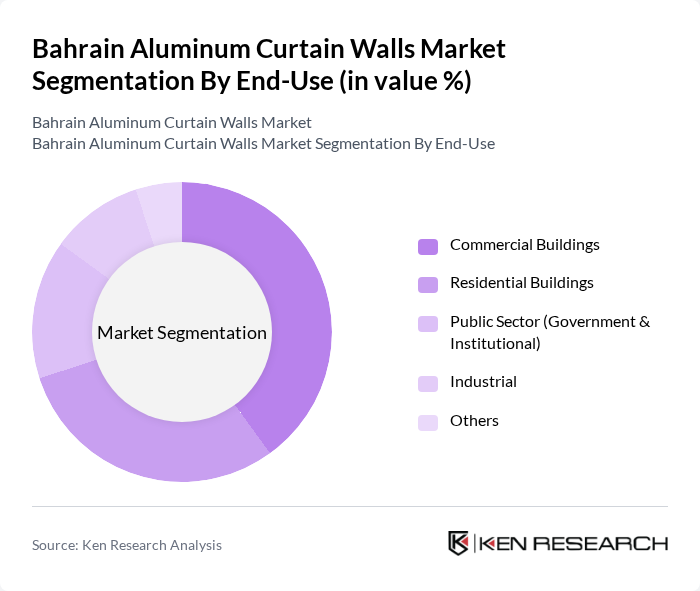
The commercial buildings segment leads the market, driven by the rapid growth of office spaces, retail centers, hospitality, and mixed-use developments in Bahrain, supported by broader Middle East investments in commercial and tourism infrastructure. The demand for modern and energy-efficient facades in commercial projects is a significant factor contributing to this dominance, as developers seek high-performance glazing, shading-integrated curtain walls, and iconic glass-and-aluminum façades to attract tenants and enhance asset value. Additionally, the increasing focus on green building certifications, lifecycle energy cost reduction, and visually appealing urban skylines has further solidified the position of commercial buildings as the primary end-use for aluminum curtain walls.
The Bahrain Aluminum Curtain Walls Market is characterized by a dynamic mix of regional and international players. Leading participants such as Gulf Glass Factory, Reynaers Middle East, Technical Glass & Aluminium Company, Bahrain Aluminum Extrusion Company (BALEXCO), Kooheji Contractors, Al Mannai Construction, Nass Contracting Co., Mohammed Jalal & Sons – Construction Division, AluK Middle East, Schüco Middle East, Gulf Asia Contracting Company, Al Ghanah Group, Mohammed Fakhroo & Bros., Almoayyed International Group – Construction, Al Abbar Group contribute to innovation, geographic expansion, and service delivery in this space, leveraging advanced façade systems, tailored design support, and partnerships with developers and consultants across Bahrain and the wider Gulf region.
The future of the Bahrain aluminum curtain walls market appears promising, driven by increasing urbanization and a strong focus on sustainable construction practices. As the government continues to invest in infrastructure, the demand for innovative building solutions will likely rise. Additionally, advancements in technology and materials will enhance the performance and aesthetic appeal of curtain walls, making them more attractive to developers. The integration of smart technologies will further revolutionize building designs, ensuring energy efficiency and sustainability remain at the forefront of construction trends.
| Segment | Sub-Segments |
|---|---|
| By System Type | Stick-built Aluminum Curtain Walls Semi-unitized Aluminum Curtain Walls Unitized Aluminum Curtain Walls Others |
| By End-Use | Commercial Buildings Residential Buildings Public Sector (Government & Institutional) Industrial Others |
| By Application | High-rise Buildings Shopping Malls & Retail Office Spaces Hospitality (Hotels & Mixed-use) Others |
| By Material | Aluminum Frames Glass Infill Composite & Other Infill Panels Others |
| By Design Type | Curtain Wall Facade Systems Panel & Cladding Facade Systems Others |
| By Installation Type | New Construction Retrofit & Renovation Others |
| By Region | Northern Governorate Southern Governorate Capital Governorate Muharraq Governorate Others |
| Scope Item/Segment | Sample Size | Target Respondent Profiles |
|---|---|---|
| Commercial Building Projects | 100 | Project Managers, Architects |
| Residential Developments | 80 | Developers, Construction Supervisors |
| Industrial Facility Installations | 60 | Facility Managers, Procurement Officers |
| Public Infrastructure Projects | 70 | Government Officials, Urban Planners |
| Architectural Design Firms | 90 | Lead Designers, Structural Engineers |
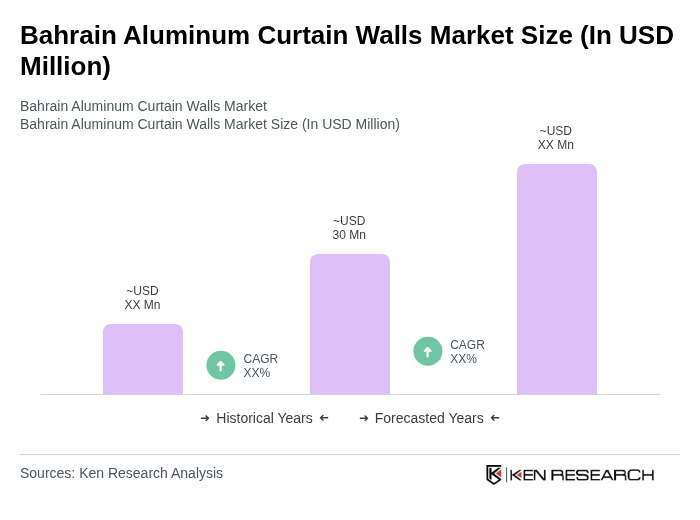
The Bahrain Aluminum Curtain Walls Market is valued at approximately USD 30 million, driven by the growth in the construction sector and the increasing demand for energy-efficient building facades.

What makes us stand out is that our consultants follow Robust, Refine and Result (RRR) methodology. Robust for clear definitions, approaches and sanity checking, Refine for differentiating respondents' facts and opinions, and Result for presenting data with story.

We have set a benchmark in the industry by offering our clients with syndicated and customized market research reports featuring coverage of entire market as well as meticulous research and analyst insights.

While we don't replace traditional research, we flip the method upside down. Our dual approach of Top Bottom & Bottom Top ensures quality deliverable by not just verifying company fundamentals but also looking at the sector and macroeconomic factors.

With one step in the future, our research team constantly tries to show you the bigger picture. We help with some of the tough questions you may encounter along the way: How is the industry positioned? Best marketing channel? KPI's of competitors? By aligning every element, we help maximize success.

Our report gives you instant access to the answers and sources that other companies might choose to hide. We elaborate each steps of research methodology we have used and showcase you the sample size to earn your trust.

If you need any support, we are here! We pride ourselves on universe strength, data quality, and quick, friendly, and professional service.













