Region:Middle East
Author(s):Dev
Product Code:KRAC1270
Pages:88
Published On:December 2025
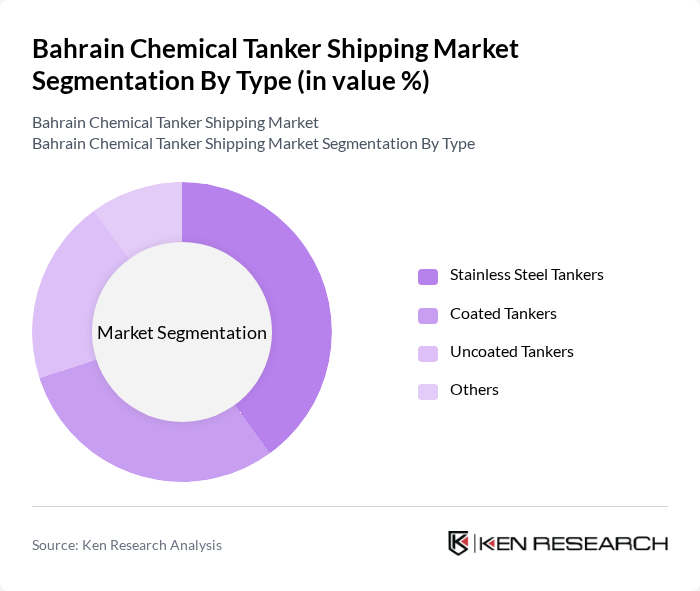
By Type:The market is segmented into various types of tankers, including stainless steel tankers, coated tankers, uncoated tankers, and others. Among these, stainless steel tankers are gaining traction due to their durability and resistance to corrosion, making them ideal for transporting a wide range of chemicals. Coated tankers also hold a significant share as they provide additional protection against chemical reactions, while uncoated tankers are preferred for less corrosive materials. The demand for these tankers is driven by the need for safe and efficient transportation of chemicals across the region.
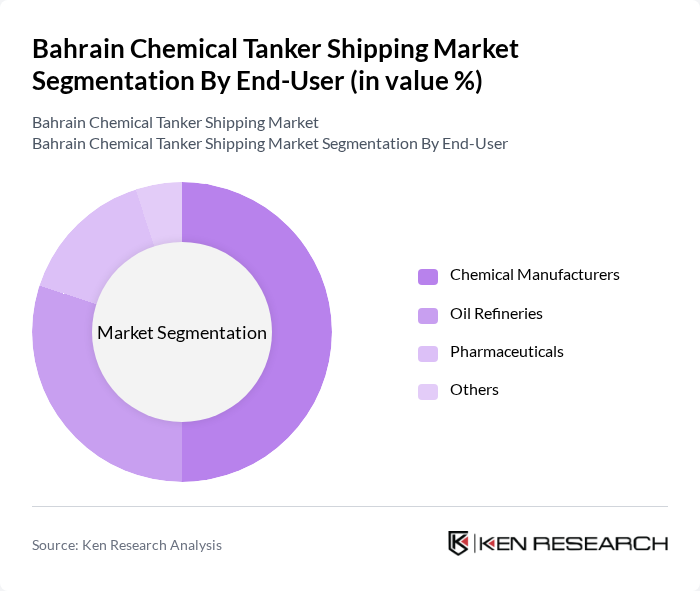
By End-User:The end-user segmentation includes chemical manufacturers, oil refineries, pharmaceuticals, and others. Chemical manufacturers dominate the market due to their extensive need for transporting raw materials and finished products. Oil refineries also represent a significant portion of the market as they require chemical tankers for transporting various petroleum products. The pharmaceutical sector is growing, driven by the need for specialized transportation of sensitive chemicals, while other industries contribute to the overall demand.
The Bahrain Chemical Tanker Shipping Market is characterized by a dynamic mix of regional and international players. Leading participants such as Gulf Navigation Holding, National Shipping Company of Saudi Arabia (Bahri), Arab Maritime Petroleum Transport Company (AMPTC), Bahri Chemical, Qatar Navigation (Milaha), Oman Shipping Company, KOTC (Kuwait Oil Tanker Company), Vela International Marine Limited, Teekay Corporation, Stolt-Nielsen Limited, AET Tankers, MISC Berhad, Hapag-Lloyd AG, and Maersk Tankers contribute to innovation, geographic expansion, and service delivery in this space.
The future of the Bahrain chemical tanker shipping market appears promising, driven by ongoing infrastructure investments and the adoption of advanced technologies. The National Maritime Strategy aims to enhance digitalization and smart logistics, optimizing operations and improving efficiency. Additionally, the modernization of key transport infrastructure, such as the Khalifa Bin Salman Port, is expected to facilitate increased shipping volumes, positioning Bahrain as a regional hub for chemical transportation.
| Segment | Sub-Segments |
|---|---|
| By Type | Stainless Steel Tankers Coated Tankers Uncoated Tankers Others |
| By End-User | Chemical Manufacturers Oil Refineries Pharmaceuticals Others |
| By Cargo Type | Liquid Chemicals Gases Specialty Chemicals Others |
| By Fleet Size | Large Fleet Operators Medium Fleet Operators Small Fleet Operators Others |
| By Shipping Route | Regional Routes International Routes Short Sea Shipping Others |
| By Ownership Structure | Owned Fleet Charter Fleet Leased Fleet Others |
| By Policy Support | Government Subsidies Tax Exemptions Regulatory Support Others |
| Scope Item/Segment | Sample Size | Target Respondent Profiles |
|---|---|---|
| Chemical Tanker Operations | 100 | Shipping Managers, Fleet Operators |
| Regulatory Compliance in Shipping | 75 | Compliance Officers, Legal Advisors |
| Logistics and Supply Chain Management | 90 | Supply Chain Managers, Logistics Coordinators |
| Market Trends in Chemical Shipping | 80 | Market Analysts, Industry Consultants |
| Environmental Regulations Impact | 70 | Sustainability Managers, Environmental Compliance Officers |
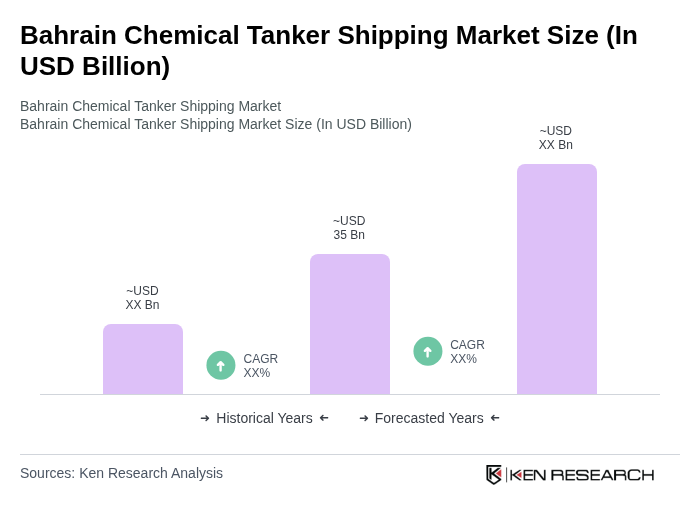
The Bahrain Chemical Tanker Shipping Market is valued at approximately USD 35 billion, reflecting a robust growth trajectory driven by increasing demand for specialty chemicals and the expansion of global trade.

What makes us stand out is that our consultants follow Robust, Refine and Result (RRR) methodology. Robust for clear definitions, approaches and sanity checking, Refine for differentiating respondents' facts and opinions, and Result for presenting data with story.

We have set a benchmark in the industry by offering our clients with syndicated and customized market research reports featuring coverage of entire market as well as meticulous research and analyst insights.

While we don't replace traditional research, we flip the method upside down. Our dual approach of Top Bottom & Bottom Top ensures quality deliverable by not just verifying company fundamentals but also looking at the sector and macroeconomic factors.

With one step in the future, our research team constantly tries to show you the bigger picture. We help with some of the tough questions you may encounter along the way: How is the industry positioned? Best marketing channel? KPI's of competitors? By aligning every element, we help maximize success.

Our report gives you instant access to the answers and sources that other companies might choose to hide. We elaborate each steps of research methodology we have used and showcase you the sample size to earn your trust.

If you need any support, we are here! We pride ourselves on universe strength, data quality, and quick, friendly, and professional service.













