Region:Middle East
Author(s):Rebecca
Product Code:KRAC9660
Pages:82
Published On:November 2025
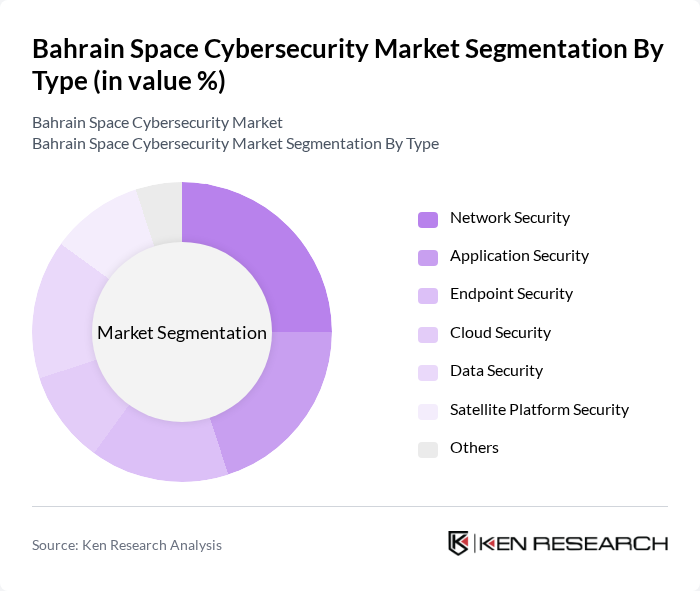
By Type:The market is segmented into various types of cybersecurity solutions, including Network Security, Application Security, Endpoint Security, Cloud Security, Data Security, Satellite Platform Security, and Others. Each segment addresses specific vulnerabilities in the space sector: for example, Network Security focuses on protecting satellite communication links; Application Security targets mission-critical software; Endpoint Security covers ground stations and connected devices; Cloud Security safeguards data storage and analytics platforms; Data Security ensures the confidentiality and integrity of transmitted information; and Satellite Platform Security addresses threats to onboard satellite systems.
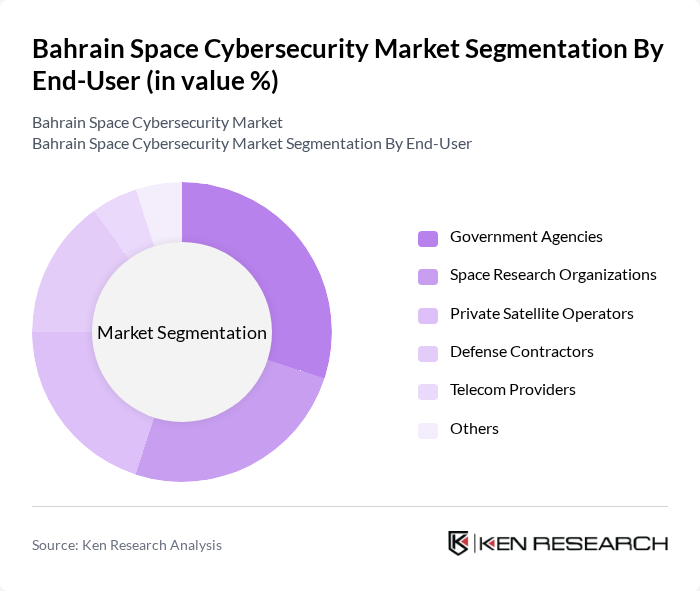
By End-User:The end-user segmentation includes Government Agencies, Space Research Organizations, Private Satellite Operators, Defense Contractors, Telecom Providers, and Others. Each end-user group has distinct cybersecurity requirements: Government Agencies prioritize national security and regulatory compliance; Space Research Organizations focus on protecting intellectual property and mission data; Private Satellite Operators require secure commercial operations; Defense Contractors emphasize secure command and control; Telecom Providers need to safeguard satellite-based communication networks; and Others include academic and commercial entities with unique operational risks.
The Bahrain Space Cybersecurity Market is characterized by a dynamic mix of regional and international players. Leading participants such as Thales Group, Northrop Grumman Corporation, Raytheon Technologies, Lockheed Martin Corporation, BAE Systems plc, Airbus Defence and Space, IBM Security, Cisco Systems Inc., Palo Alto Networks, Fortinet Inc., Beyon Cyber, CTM360, Resecurity Inc., NGN International, Gulf Business Machines (GBM) Bahrain, Kalaam Telecom Cyber Security Division, SecureWorld, Ampcus Cyber contribute to innovation, geographic expansion, and service delivery in this space.
The Bahrain Space Cybersecurity Market is poised for significant evolution, driven by technological advancements and increasing collaboration between public and private sectors. As the government implements national cybersecurity frameworks, the focus on integrating AI and machine learning into cybersecurity practices will enhance threat detection and response capabilities. Additionally, the rise of private space ventures will create new opportunities for innovative cybersecurity solutions, fostering a more secure space environment in Bahrain.
| Segment | Sub-Segments |
|---|---|
| By Type | Network Security Application Security Endpoint Security Cloud Security Data Security Satellite Platform Security Others |
| By End-User | Government Agencies Space Research Organizations Private Satellite Operators Defense Contractors Telecom Providers Others |
| By Application | Satellite Communication Security Ground Station Security Data Transmission Security Spacecraft Security Earth Observation Data Security Others |
| By Deployment Model | On-Premises Cloud-Based Hybrid Edge/Decentralized Others |
| By Service Type | Managed Security Services Consulting Services Incident Response Services Threat Intelligence Services Others |
| By Technology | Artificial Intelligence Machine Learning Blockchain Quantum Encryption Zero Trust Architecture Others |
| By Policy Support | Government Grants Tax Incentives Regulatory Compliance Support International Collaboration Agreements Others |
| Scope Item/Segment | Sample Size | Target Respondent Profiles |
|---|---|---|
| Government Space Agencies | 45 | Policy Makers, Cybersecurity Directors |
| Private Space Enterprises | 40 | CTOs, Cybersecurity Analysts |
| Defense Contractors | 35 | Project Managers, Security Engineers |
| Academic Institutions | 30 | Research Scholars, Professors in Cybersecurity |
| Consulting Firms | 40 | Industry Analysts, Cybersecurity Consultants |
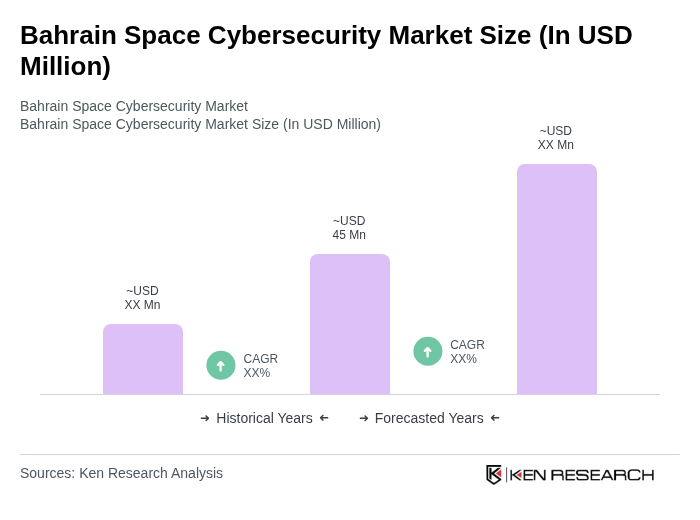
The Bahrain Space Cybersecurity Market is valued at approximately USD 45 million, reflecting the specialized cybersecurity segment focused on space assets, satellite operations, and related infrastructure, driven by increasing reliance on satellite technology and growing cybersecurity threats.

What makes us stand out is that our consultants follow Robust, Refine and Result (RRR) methodology. Robust for clear definitions, approaches and sanity checking, Refine for differentiating respondents' facts and opinions, and Result for presenting data with story.

We have set a benchmark in the industry by offering our clients with syndicated and customized market research reports featuring coverage of entire market as well as meticulous research and analyst insights.

While we don't replace traditional research, we flip the method upside down. Our dual approach of Top Bottom & Bottom Top ensures quality deliverable by not just verifying company fundamentals but also looking at the sector and macroeconomic factors.

With one step in the future, our research team constantly tries to show you the bigger picture. We help with some of the tough questions you may encounter along the way: How is the industry positioned? Best marketing channel? KPI's of competitors? By aligning every element, we help maximize success.

Our report gives you instant access to the answers and sources that other companies might choose to hide. We elaborate each steps of research methodology we have used and showcase you the sample size to earn your trust.

If you need any support, we are here! We pride ourselves on universe strength, data quality, and quick, friendly, and professional service.













