About the Report
Base Year 2024Listen to the audio summary
Europe Recreational Vehicle Market Overview
- The Europe Recreational Vehicle market is valued at USD 30 billion, based on a five-year historical analysis. This growth is primarily driven by increasing consumer interest in outdoor activities, a rise in disposable income, and a growing trend towards road trips and camping vacations. The market has seen a significant uptick in demand for both motorized and towable recreational vehicles, reflecting a shift in consumer preferences towards mobile living and travel experiences. Technological advancements, such as improved fuel efficiency, smart connectivity features, and enhanced comfort, are further accelerating adoption, while the popularity of sustainable and eco-friendly travel options is shaping new product development .
- Countries such as Germany, the United Kingdom, and France dominate the Europe Recreational Vehicle market due to their strong tourism infrastructure, extensive road networks, and a culture that embraces outdoor leisure activities. Germany, in particular, holds the largest market share, supported by robust manufacturing capabilities and a high number of registered RVs. The UK and France benefit from a large number of campsites and scenic routes that attract RV enthusiasts, with France also experiencing a surge in millennial tourists and increased use of rental RVs .
- In recent years, the European Union has implemented regulations aimed at reducing emissions from recreational vehicles, mandating that all new RVs meet stringent environmental standards. These measures are part of a broader initiative to promote sustainable tourism and reduce the carbon footprint of travel, encouraging manufacturers to innovate and produce more eco-friendly models. The regulatory environment continues to evolve, with increasing emphasis on electrification, alternative fuels, and advanced emission control technologies .

Europe Recreational Vehicle Market Segmentation
By Type:The market is segmented into various types of recreational vehicles, including motorhomes, campervans, caravans (travel trailers), fifth-wheel trailers, pop-up campers, truck campers, toy haulers, and others. Among these, motorhomes and caravans are particularly popular due to their versatility, comfort, and suitability for both short and extended trips. The increasing trend of road trips, outdoor activities, and the appeal of flexible travel experiences has led to a surge in demand for these vehicles, making them the leading subsegments in the market. Advancements such as modular interiors, smart controls, and enhanced safety features are further driving consumer preference for these categories .

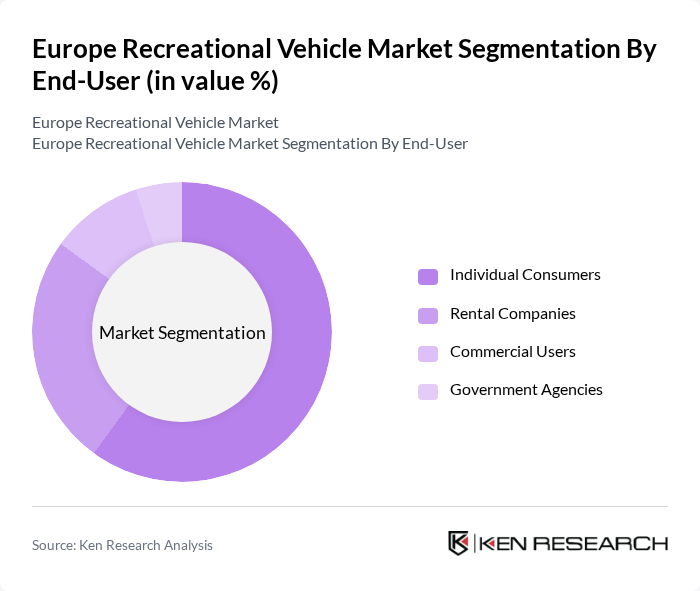
By End-User:The end-user segmentation includes individual consumers, rental companies, commercial users, and government agencies. Individual consumers represent the largest segment, driven by the growing popularity of RV travel for leisure, family vacations, and long-term touring. Rental companies are also seeing increased demand as more people opt for renting RVs for short trips and experiential travel, while commercial users and government agencies utilize RVs for a variety of operational and service-related needs. The trend towards flexible, experience-driven travel continues to significantly boost the individual consumer segment, making it the market leader .
Europe Recreational Vehicle Market Competitive Landscape
The Europe Recreational Vehicle Market is characterized by a dynamic mix of regional and international players. Leading participants such as Dethleffs GmbH & Co. KG, Hymer GmbH & Co. KG, Knaus Tabbert AG, Adria Mobil d.o.o., Trigano S.A., Thor Industries, Inc., Winnebago Industries, Inc., Forest River, Inc., Rapido Group, Laika Caravans S.p.A., Bürstner GmbH & Co. KG, Carthago Reisemobilbau GmbH, Challenger (Groupe Trigano), Eura Mobil GmbH, Pilote Group contribute to innovation, geographic expansion, and service delivery in this space.
Europe Recreational Vehicle Market Industry Analysis
Growth Drivers
- Increasing Demand for Outdoor Recreational Activities:The European outdoor recreation market is projected to reach €200 billion in future, driven by a growing interest in activities such as camping, hiking, and road trips. This trend is supported by a 15% increase in outdoor participation rates since 2020, as reported by the European Outdoor Group. The rise in health consciousness and the desire for nature-based experiences are key factors fueling this demand, leading to a surge in recreational vehicle (RV) usage.
- Rise in Disposable Income Among Consumers:In future, the average disposable income in Europe is expected to rise to €30,000 per capita, reflecting a 3% increase from the previous year. This increase allows consumers to allocate more funds towards leisure activities, including RV purchases and rentals. The European Commission reports that 60% of households plan to spend more on travel and outdoor experiences, further driving the demand for recreational vehicles as a preferred mode of travel.
- Growth in Tourism and Travel Trends:The European tourism sector is anticipated to generate €1 trillion in revenue in future, with a significant portion attributed to domestic travel. The European Travel Commission indicates that 70% of travelers prefer road trips, which boosts the RV market. Additionally, the rise of "staycations" and local tourism has led to increased interest in RVs, as they offer flexibility and comfort for exploring local attractions and natural landscapes.
Market Challenges
- High Initial Investment Costs:The average cost of a new recreational vehicle in Europe is approximately €60,000, which poses a significant barrier for many potential buyers. This high initial investment can deter consumers, especially in a post-pandemic economy where financial caution prevails. According to the European Automobile Manufacturers Association, financing options are limited, making it challenging for first-time buyers to enter the market, thus impacting overall sales.
- Regulatory Compliance and Safety Standards:The RV industry in Europe faces stringent regulatory requirements, including compliance with the EU's General Safety Regulation. Manufacturers must adhere to complex safety standards, which can increase production costs by up to 15%. Additionally, the need for continuous updates to meet evolving regulations can strain resources for smaller manufacturers, limiting their ability to compete effectively in the market.
Europe Recreational Vehicle Market Future Outlook
The future of the European recreational vehicle market appears promising, driven by evolving consumer preferences and technological advancements. The shift towards electric and hybrid RVs is expected to gain momentum, aligning with sustainability goals. Furthermore, the integration of smart technologies will enhance user experience, making RVs more appealing. As the RV lifestyle continues to gain traction, manufacturers will likely focus on customization options to cater to diverse consumer needs, fostering a vibrant market landscape.
Market Opportunities
- Expansion of Rental Services for Recreational Vehicles:The RV rental market in Europe is projected to grow significantly, with revenues expected to reach €1 billion in future. This growth is driven by the increasing popularity of short-term rentals, particularly among younger consumers seeking flexible travel options. The rise of digital platforms facilitates easy access to rental services, making RV travel more accessible and appealing to a broader audience.
- Development of Eco-Friendly Vehicle Options:With environmental concerns on the rise, the demand for eco-friendly RVs is expected to increase. The European market is projected to see a 25% growth in electric RV models in future, driven by consumer preferences for sustainable travel options. Manufacturers are investing in research and development to create innovative, low-emission vehicles, aligning with the EU's Green Deal objectives and attracting environmentally conscious consumers.
Scope of the Report
| Segment | Sub-Segments |
|---|---|
| By Type | Motorhomes Campervans Caravans (Travel Trailers) Fifth-Wheel Trailers Pop-up Campers Truck Campers Toy Haulers Others |
| By End-User | Individual Consumers Rental Companies Commercial Users Government Agencies |
| By Price Range | Budget Mid-Range Luxury |
| By Distribution Channel | Direct Sales Dealerships Online Platforms |
| By Region | Germany United Kingdom France Italy Netherlands Spain Norway Rest of Europe |
| By Usage Type | Recreational Use Commercial Use Emergency Use |
| By Fuel Type | Gasoline Diesel Electric Hybrid |
Key Target Audience
Investors and Venture Capitalist Firms
Government and Regulatory Bodies (e.g., European Commission, National Transport Authorities)
Manufacturers and Producers
Distributors and Retailers
Tourism Boards and Agencies
Insurance Companies
Automotive Component Suppliers
Leasing and Rental Companies
Players Mentioned in the Report:
Dethleffs GmbH & Co. KG
Hymer GmbH & Co. KG
Knaus Tabbert AG
Adria Mobil d.o.o.
Trigano S.A.
Thor Industries, Inc.
Winnebago Industries, Inc.
Forest River, Inc.
Rapido Group
Laika Caravans S.p.A.
Burstner GmbH & Co. KG
Carthago Reisemobilbau GmbH
Challenger (Groupe Trigano)
Eura Mobil GmbH
Pilote Group
Table of Contents
Market Assessment Phase
1. Executive Summary and Approach
2. Europe Recreational Vehicle Market Overview
2.1 Key Insights and Strategic Recommendations
2.2 Europe Recreational Vehicle Market Overview
2.3 Definition and Scope
2.4 Evolution of Market Ecosystem
2.5 Timeline of Key Regulatory Milestones
2.6 Value Chain & Stakeholder Mapping
2.7 Business Cycle Analysis
2.8 Policy & Incentive Landscape
3. Europe Recreational Vehicle Market Analysis
3.1 Growth Drivers
3.1.1 Increasing demand for outdoor recreational activities
3.1.2 Rise in disposable income among consumers
3.1.3 Growth in tourism and travel trends
3.1.4 Technological advancements in vehicle design
3.2 Market Challenges
3.2.1 High initial investment costs
3.2.2 Regulatory compliance and safety standards
3.2.3 Limited availability of parking and camping sites
3.2.4 Environmental concerns and sustainability issues
3.3 Market Opportunities
3.3.1 Expansion of rental services for recreational vehicles
3.3.2 Development of eco-friendly vehicle options
3.3.3 Growth in digital platforms for RV sales
3.3.4 Increasing interest in RV lifestyle and community
3.4 Market Trends
3.4.1 Shift towards electric and hybrid recreational vehicles
3.4.2 Customization and personalization of RVs
3.4.3 Integration of smart technology in vehicles
3.4.4 Rise of social media influence on RV travel
3.5 Government Regulation
3.5.1 Emission standards for recreational vehicles
3.5.2 Safety regulations for vehicle manufacturing
3.5.3 Licensing requirements for RV operators
3.5.4 Incentives for electric vehicle adoption
4. SWOT Analysis
5. Stakeholder Analysis
6. Porter's Five Forces Analysis
7. Europe Recreational Vehicle Market Market Size, 2019-2024
7.1 By Value
7.2 By Volume
7.3 By Average Selling Price
8. Europe Recreational Vehicle Market Segmentation
8.1 By Type
8.1.1 Motorhomes
8.1.2 Campervans
8.1.3 Caravans (Travel Trailers)
8.1.4 Fifth-Wheel Trailers
8.1.5 Pop-up Campers
8.1.6 Truck Campers
8.1.7 Toy Haulers
8.1.8 Others
8.2 By End-User
8.2.1 Individual Consumers
8.2.2 Rental Companies
8.2.3 Commercial Users
8.2.4 Government Agencies
8.3 By Price Range
8.3.1 Budget
8.3.2 Mid-Range
8.3.3 Luxury
8.4 By Distribution Channel
8.4.1 Direct Sales
8.4.2 Dealerships
8.4.3 Online Platforms
8.5 By Region
8.5.1 Germany
8.5.2 United Kingdom
8.5.3 France
8.5.4 Italy
8.5.5 Netherlands
8.5.6 Spain
8.5.7 Norway
8.5.8 Rest of Europe
8.6 By Usage Type
8.6.1 Recreational Use
8.6.2 Commercial Use
8.6.3 Emergency Use
8.7 By Fuel Type
8.7.1 Gasoline
8.7.2 Diesel
8.7.3 Electric
8.7.4 Hybrid
9. Europe Recreational Vehicle Market Competitive Analysis
9.1 Market Share of Key Players
9.2 Cross Comparison of Key Players
9.2.1 Company Name
9.2.2 Group Size (Large, Medium, or Small as per industry convention)
9.2.3 Revenue (EUR/USD, latest available year)
9.2.4 Revenue Growth Rate (CAGR %)
9.2.5 Market Share (%)
9.2.6 Market Penetration Rate (Units Sold/Market Presence)
9.2.7 Product Portfolio Breadth (Number of Models/Segments)
9.2.8 Geographic Coverage (Number of Countries/Regions)
9.2.9 R&D Investment (% of Revenue)
9.2.10 Brand Recognition Index (Survey/Ranking)
9.2.11 Distribution Network Strength (Dealers/Partners)
9.2.12 Customer Satisfaction Score (NPS or Equivalent)
9.3 SWOT Analysis of Top Players
9.4 Pricing Analysis
9.5 Detailed Profile of Major Companies
9.5.1 Dethleffs GmbH & Co. KG
9.5.2 Hymer GmbH & Co. KG
9.5.3 Knaus Tabbert AG
9.5.4 Adria Mobil d.o.o.
9.5.5 Trigano S.A.
9.5.6 Thor Industries, Inc.
9.5.7 Winnebago Industries, Inc.
9.5.8 Forest River, Inc.
9.5.9 Rapido Group
9.5.10 Laika Caravans S.p.A.
9.5.11 Bürstner GmbH & Co. KG
9.5.12 Carthago Reisemobilbau GmbH
9.5.13 Challenger (Groupe Trigano)
9.5.14 Eura Mobil GmbH
9.5.15 Pilote Group
10. Europe Recreational Vehicle Market End-User Analysis
10.1 Procurement Behavior of Key Ministries
10.1.1 Budget Allocation Trends
10.1.2 Decision-Making Processes
10.1.3 Preferred Suppliers
10.2 Corporate Spend on Infrastructure & Energy
10.2.1 Investment Priorities
10.2.2 Spending Patterns
10.2.3 Impact of Economic Conditions
10.3 Pain Point Analysis by End-User Category
10.3.1 Cost Management
10.3.2 Maintenance Challenges
10.3.3 Regulatory Compliance Issues
10.4 User Readiness for Adoption
10.4.1 Awareness Levels
10.4.2 Training Needs
10.4.3 Adoption Barriers
10.5 Post-Deployment ROI and Use Case Expansion
10.5.1 Performance Metrics
10.5.2 User Satisfaction Levels
10.5.3 Future Use Cases
11. Europe Recreational Vehicle Market Future Size, 2025-2030
11.1 By Value
11.2 By Volume
11.3 By Average Selling Price
Go-To-Market Strategy Phase
1. Whitespace Analysis + Business Model Canvas
1.1 Market Gaps Identification
1.2 Value Proposition Development
1.3 Revenue Streams Analysis
1.4 Cost Structure Evaluation
1.5 Key Partnerships Exploration
1.6 Customer Segmentation
1.7 Channels of Distribution
2. Marketing and Positioning Recommendations
2.1 Branding Strategies
2.2 Product USPs
3. Distribution Plan
3.1 Urban Retail vs Rural NGO Tie-ups
4. Channel & Pricing Gaps
4.1 Underserved Routes
4.2 Pricing Bands
5. Unmet Demand & Latent Needs
5.1 Category Gaps
5.2 Consumer Segments
6. Customer Relationship
6.1 Loyalty Programs
6.2 After-sales Service
7. Value Proposition
7.1 Sustainability
7.2 Integrated Supply Chains
8. Key Activities
8.1 Regulatory Compliance
8.2 Branding
8.3 Distribution Setup
9. Entry Strategy Evaluation
9.1 Domestic Market Entry Strategy
9.1.1 Product Mix
9.1.2 Pricing Band
9.1.3 Packaging
9.2 Export Entry Strategy
9.2.1 Target Countries
9.2.2 Compliance Roadmap
10. Entry Mode Assessment
10.1 JV
10.2 Greenfield
10.3 M&A
10.4 Distributor Model
11. Capital and Timeline Estimation
11.1 Capital Requirements
11.2 Timelines
12. Control vs Risk Trade-Off
12.1 Ownership vs Partnerships
13. Profitability Outlook
13.1 Breakeven Analysis
13.2 Long-term Sustainability
14. Potential Partner List
14.1 Distributors
14.2 JVs
14.3 Acquisition Targets
15. Execution Roadmap
15.1 Phased Plan for Market Entry
15.1.1 Market Setup
15.1.2 Market Entry
15.1.3 Growth Acceleration
15.1.4 Scale & Stabilize
15.2 Key Activities and Milestones
15.2.1 Milestone Planning
15.2.2 Activity Tracking
Research Methodology
Phase 1: Approach1
Desk Research
- Analysis of industry reports from European recreational vehicle associations
- Review of market statistics from Eurostat and national transport agencies
- Examination of consumer behavior studies published by travel and leisure organizations
Primary Research
- Interviews with manufacturers and dealers of recreational vehicles across Europe
- Surveys targeting RV owners to gather insights on usage patterns and preferences
- Focus groups with travel enthusiasts to understand trends in recreational travel
Validation & Triangulation
- Cross-validation of findings with data from industry conferences and trade shows
- Triangulation of insights from primary interviews with secondary data sources
- Sanity checks through expert panels comprising industry veterans and analysts
Phase 2: Market Size Estimation1
Top-down Assessment
- Estimation of total market size based on overall tourism and travel expenditure in Europe
- Segmentation of the market by vehicle type, including motorhomes, campervans, and trailers
- Incorporation of growth rates from historical data and projected tourism trends
Bottom-up Modeling
- Collection of sales data from leading RV manufacturers and dealers
- Estimation of average selling prices and unit sales across different regions
- Analysis of rental market dynamics and their contribution to overall market size
Forecasting & Scenario Analysis
- Multi-variable forecasting using factors such as economic growth, fuel prices, and consumer confidence
- Scenario analysis based on potential regulatory changes affecting RV usage
- Development of baseline, optimistic, and pessimistic market growth scenarios through 2030
Phase 3: CATI Sample Composition1
| Scope Item/Segment | Sample Size | Target Respondent Profiles |
|---|---|---|
| Motorhome Owners | 100 | Individual RV Owners, Family Travelers |
| Campervan Rental Services | 60 | Rental Company Managers, Customer Experience Managers |
| RV Dealerships | 50 | Sales Managers, Marketing Directors |
| Travel Enthusiasts | 80 | Frequent Travelers, Adventure Seekers |
| Industry Experts | 40 | Market Analysts, Industry Consultants |
Frequently Asked Questions
What is the current value of the Europe Recreational Vehicle market?
The Europe Recreational Vehicle market is valued at approximately USD 30 billion, reflecting a significant growth trend driven by increased consumer interest in outdoor activities, higher disposable incomes, and a rising preference for road trips and camping vacations.
Which countries dominate the Europe Recreational Vehicle market?
What types of recreational vehicles are popular in Europe?
What are the main drivers of growth in the Europe Recreational Vehicle market?
Other Regional/Country Reports
Indonesia Recreational Vehicle Market
Malaysia Recreational Vehicle Market
Why Buy From Us?

What makes us stand out is that our consultants follow Robust, Refine and Result (RRR) methodology. Robust for clear definitions, approaches and sanity checking, Refine for differentiating respondents' facts and opinions, and Result for presenting data with story.

We have set a benchmark in the industry by offering our clients with syndicated and customized market research reports featuring coverage of entire market as well as meticulous research and analyst insights.

While we don't replace traditional research, we flip the method upside down. Our dual approach of Top Bottom & Bottom Top ensures quality deliverable by not just verifying company fundamentals but also looking at the sector and macroeconomic factors.

With one step in the future, our research team constantly tries to show you the bigger picture. We help with some of the tough questions you may encounter along the way: How is the industry positioned? Best marketing channel? KPI's of competitors? By aligning every element, we help maximize success.

Our report gives you instant access to the answers and sources that other companies might choose to hide. We elaborate each steps of research methodology we have used and showcase you the sample size to earn your trust.

If you need any support, we are here! We pride ourselves on universe strength, data quality, and quick, friendly, and professional service.