About the Report
Base Year 2024France Luxury Hotels and Resorts Market Overview
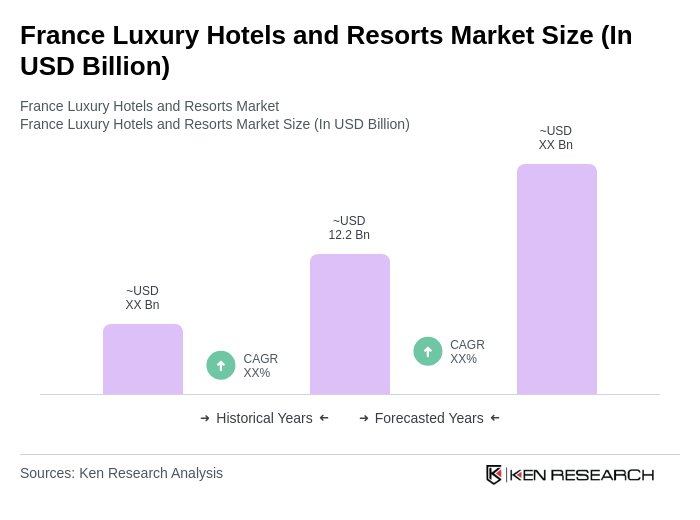
- The France Luxury Hotels and Resorts Market is valued at USD 12.2 billion, based on a five-year historical analysis. This growth is primarily driven by the increasing influx of international tourists, a rising demand for high-end accommodations, and the expansion of luxury travel experiences. The market has seen a significant rebound post-pandemic, with travelers seeking unique and personalized services in luxurious settings. The sector is further buoyed by rising average daily rates, a surge in ultra-luxury hotel investments, and the entry of iconic luxury brands into hospitality, all contributing to robust performance and innovation in the market .
- Key cities dominating this market include Paris, Nice, and Lyon. Paris, as a global fashion and cultural hub, attracts millions of tourists annually, while Nice and Lyon offer a blend of historical charm and modern luxury, making them preferred destinations for affluent travelers. The concentration of luxury brands and high-end services in these cities further solidifies their dominance in the luxury hotel sector .
- In 2023, the French government implemented regulations aimed at enhancing the sustainability of the hospitality sector. This includes mandatory energy efficiency standards for luxury hotels, requiring them to reduce energy consumption by 20% over the next five years. These requirements are enforced under the “Loi Climat et Résilience, 2021” issued by the French Ministry for the Ecological Transition, mandating hotels above a certain size to improve energy performance and report annual progress. Such regulations are designed to promote eco-friendly practices and improve the overall sustainability of the tourism industry in France .
France Luxury Hotels and Resorts Market Segmentation
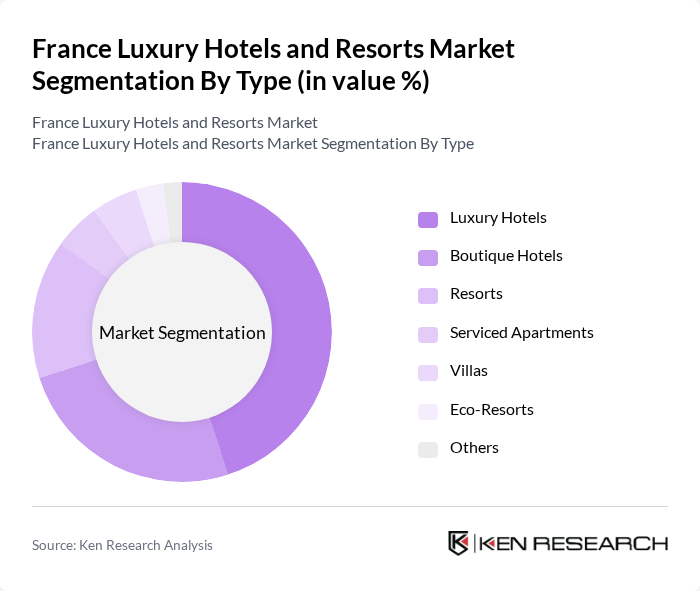
By Type:The luxury hotels and resorts market is segmented into various types, including luxury hotels, boutique hotels, resorts, serviced apartments, villas, eco-resorts, and others. Among these, luxury hotels are the most dominant segment, driven by their ability to offer unparalleled services, exclusive amenities, and prime locations. Boutique hotels are gaining traction due to their unique designs and personalized experiences, appealing to travelers seeking authenticity. The demand for eco-resorts is also on the rise as sustainability becomes a priority for many travelers. The segment’s growth is further supported by the expansion of branded luxury hotel portfolios and the integration of wellness and experiential offerings .
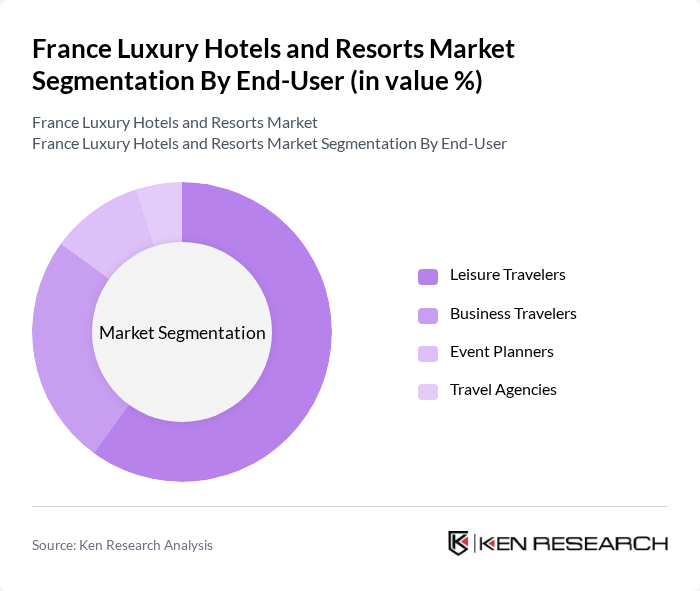
By End-User:The market is also segmented by end-user categories, including leisure travelers, business travelers, event planners, and travel agencies. Leisure travelers represent the largest segment, as they seek luxury accommodations for vacations and special occasions. Business travelers follow closely, driven by the need for high-quality services and amenities during corporate trips. Event planners and travel agencies play a crucial role in promoting luxury hotels, particularly for conferences and group bookings. The rise of remote work and extended-stay demand has also contributed to the growing importance of serviced apartments and flexible luxury accommodations .
France Luxury Hotels and Resorts Market Competitive Landscape
The France Luxury Hotels and Resorts Market is characterized by a dynamic mix of regional and international players. Leading participants such as AccorHotels, Marriott International, Hilton Worldwide, Four Seasons Hotels and Resorts, InterContinental Hotels Group (IHG), The Ritz-Carlton Hotel Company, Mandarin Oriental Hotel Group, Hyatt Hotels Corporation, Relais & Châteaux, The Leading Hotels of the World, Belmond Ltd., Rosewood Hotels & Resorts, Shangri-La Hotels and Resorts, Kempinski Hotels, Small Luxury Hotels of the World, Barrière Group, Louvre Hotels Group, Groupe Lucien Barrière, Evok Hotels Collection, Airelles Collection contribute to innovation, geographic expansion, and service delivery in this space .
France Luxury Hotels and Resorts Market Industry Analysis
Growth Drivers
- Increase in High-Net-Worth Individuals:The number of high-net-worth individuals (HNWIs) in France reached approximately750,000in future, a significant increase from2.3 millionin the previous period. This growth is driven by rising asset values and favorable economic conditions, leading to increased spending on luxury accommodations. According to the Capgemini World Wealth Report, HNWIs are expected to contribute over€30 billionto the luxury hotel sector in future, enhancing demand for premium services and exclusive experiences.
- Rise in International Tourism:France welcomed over79 millioninternational tourists in future, marking a10%increase from the previous period. The tourism sector is projected to generate approximately€57 billionin revenue for the luxury hotel market in future. Factors such as improved travel accessibility and the allure of cultural experiences are driving this growth. The French government aims to attract100 milliontourists in future, further boosting the luxury hospitality sector's prospects.
- Growing Demand for Unique Experiences:A shift towards experiential travel has been noted, with70%of luxury travelers in France seeking unique and personalized experiences. This trend is supported by a15%increase in bookings for boutique hotels and luxury resorts that offer tailored services. The luxury hotel market is adapting by enhancing offerings such as culinary experiences and local cultural immersions, which are expected to drive an additional€10 billionin revenue by future.
Market Challenges
- Economic Uncertainty:The French economy is projected to grow at a modest rate ofaround 1%in future, influenced by global economic conditions and inflationary pressures. This uncertainty can lead to reduced discretionary spending among consumers, impacting luxury hotel bookings. Additionally, the ongoing geopolitical tensions may deter international travelers, further challenging the luxury hotel sector's recovery and growth in the coming period.
- Intense Competition:The luxury hotel market in France is characterized by fierce competition, with over340luxury hotels vying for market share. Major players like Accor and Marriott dominate, making it challenging for smaller boutique hotels to attract clientele. The competitive landscape is expected to intensify in future, as new entrants emerge and existing brands expand their offerings, necessitating innovative marketing strategies to maintain market position.
France Luxury Hotels and Resorts Market Future Outlook
The future of the luxury hotel market in France appears promising, driven by increasing disposable incomes and a growing preference for personalized travel experiences. As the economy stabilizes, luxury hotels are likely to invest in enhancing their service offerings and sustainability practices. Additionally, the integration of technology in hospitality services will cater to evolving consumer expectations, ensuring that the sector remains competitive and appealing to both domestic and international travelers.
Market Opportunities
- Development of Eco-Friendly Resorts:With sustainability becoming a priority for travelers, the demand for eco-friendly resorts is on the rise. In future,60%of luxury travelers expressed a preference for sustainable accommodations. This trend presents an opportunity for hotels to invest in green technologies and practices, potentially increasing market share and attracting environmentally conscious consumers.
- Technological Innovations in Hospitality:The adoption of advanced technologies, such as AI and IoT, is transforming the luxury hotel experience. In future, hotels that implement smart room technologies and personalized digital services are expected to enhance guest satisfaction. This innovation can lead to increased loyalty and repeat bookings, providing a competitive edge in the luxury market.
Scope of the Report
| Segment | Sub-Segments |
|---|---|
| By Type | Luxury Hotels Boutique Hotels Resorts Serviced Apartments Villas Eco-Resorts Others |
| By End-User | Leisure Travelers Business Travelers Event Planners Travel Agencies |
| By Price Range | Premium Ultra-Premium Budget Luxury Others |
| By Location | Urban Centers Coastal Areas Countryside Ski Resorts |
| By Service Type | Full-Service Hotels Limited-Service Hotels All-Inclusive Resorts |
| By Distribution Channel | Direct Booking Online Travel Agencies Travel Agents Others |
| By Customer Demographics | Families Couples Solo Travelers |
Key Target Audience
Investors and Venture Capitalist Firms
Government and Regulatory Bodies (e.g., Ministry of Economy and Finance, Ministry of Culture)
Luxury Hotel Management Companies
Real Estate Developers
Tourism Boards and Agencies (e.g., Atout France)
Hospitality Technology Providers
Luxury Travel Agencies
Financial Institutions and Banks
Players Mentioned in the Report:
AccorHotels
Marriott International
Hilton Worldwide
Four Seasons Hotels and Resorts
InterContinental Hotels Group (IHG)
The Ritz-Carlton Hotel Company
Mandarin Oriental Hotel Group
Hyatt Hotels Corporation
Relais & Chateaux
The Leading Hotels of the World
Belmond Ltd.
Rosewood Hotels & Resorts
Shangri-La Hotels and Resorts
Kempinski Hotels
Small Luxury Hotels of the World
Barriere Group
Louvre Hotels Group
Groupe Lucien Barriere
Evok Hotels Collection
Airelles Collection
Table of Contents
Market Assessment Phase
1. Executive Summary and Approach
2. France Luxury Hotels and Resorts Market Overview
2.1 Key Insights and Strategic Recommendations
2.2 France Luxury Hotels and Resorts Market Overview
2.3 Definition and Scope
2.4 Evolution of Market Ecosystem
2.5 Timeline of Key Regulatory Milestones
2.6 Value Chain & Stakeholder Mapping
2.7 Business Cycle Analysis
2.8 Policy & Incentive Landscape
3. France Luxury Hotels and Resorts Market Analysis
3.1 Growth Drivers
3.1.1 Increase in High-Net-Worth Individuals
3.1.2 Rise in International Tourism
3.1.3 Growing Demand for Unique Experiences
3.1.4 Expansion of Luxury Brands
3.2 Market Challenges
3.2.1 Economic Uncertainty
3.2.2 Intense Competition
3.2.3 Regulatory Compliance Costs
3.2.4 Seasonal Demand Fluctuations
3.3 Market Opportunities
3.3.1 Development of Eco-Friendly Resorts
3.3.2 Technological Innovations in Hospitality
3.3.3 Expansion into Emerging Markets
3.3.4 Personalized Luxury Services
3.4 Market Trends
3.4.1 Wellness Tourism Growth
3.4.2 Digital Transformation in Booking
3.4.3 Focus on Sustainability
3.4.4 Experiential Travel Preferences
3.5 Government Regulation
3.5.1 Health and Safety Regulations
3.5.2 Environmental Protection Laws
3.5.3 Labor Laws and Employment Standards
3.5.4 Taxation Policies for Luxury Services
4. SWOT Analysis
5. Stakeholder Analysis
6. Porter's Five Forces Analysis
7. France Luxury Hotels and Resorts Market Market Size, 2019-2024
7.1 By Value
7.2 By Volume
7.3 By Average Selling Price
8. France Luxury Hotels and Resorts Market Segmentation
8.1 By Type
8.1.1 Luxury Hotels
8.1.2 Boutique Hotels
8.1.3 Resorts
8.1.4 Serviced Apartments
8.1.5 Villas
8.1.6 Eco-Resorts
8.1.7 Others
8.2 By End-User
8.2.1 Leisure Travelers
8.2.2 Business Travelers
8.2.3 Event Planners
8.2.4 Travel Agencies
8.3 By Price Range
8.3.1 Premium
8.3.2 Ultra-Premium
8.3.3 Budget Luxury
8.3.4 Others
8.4 By Location
8.4.1 Urban Centers
8.4.2 Coastal Areas
8.4.3 Countryside
8.4.4 Ski Resorts
8.5 By Service Type
8.5.1 Full-Service Hotels
8.5.2 Limited-Service Hotels
8.5.3 All-Inclusive Resorts
8.6 By Distribution Channel
8.6.1 Direct Booking
8.6.2 Online Travel Agencies
8.6.3 Travel Agents
8.6.4 Others
8.7 By Customer Demographics
8.7.1 Families
8.7.2 Couples
8.7.3 Solo Travelers
9. France Luxury Hotels and Resorts Market Competitive Analysis
9.1 Market Share of Key Players
9.2 KPIs for Cross Comparison of Key Players
9.2.1 Company Name
9.2.2 Group Size (Large, Medium, or Small as per industry convention)
9.2.3 Number of Properties in France
9.2.4 Number of Rooms (France)
9.2.5 Occupancy Rate (%)
9.2.6 Average Daily Rate (ADR, €)
9.2.7 Revenue Per Available Room (RevPAR, €)
9.2.8 Customer Satisfaction Score (e.g., Net Promoter Score)
9.2.9 Market Penetration Rate
9.2.10 Brand Recognition Index
9.2.11 Loyalty Program Membership (France)
9.2.12 Sustainability Certification/Initiatives
9.3 SWOT Analysis of Top Players
9.4 Pricing Analysis
9.5 List of Major Companies
9.5.1 AccorHotels
9.5.2 Marriott International
9.5.3 Hilton Worldwide
9.5.4 Four Seasons Hotels and Resorts
9.5.5 InterContinental Hotels Group (IHG)
9.5.6 The Ritz-Carlton Hotel Company
9.5.7 Mandarin Oriental Hotel Group
9.5.8 Hyatt Hotels Corporation
9.5.9 Relais & Châteaux
9.5.10 The Leading Hotels of the World
9.5.11 Belmond Ltd.
9.5.12 Rosewood Hotels & Resorts
9.5.13 Shangri-La Hotels and Resorts
9.5.14 Kempinski Hotels
9.5.15 Small Luxury Hotels of the World
9.5.16 Barrière Group
9.5.17 Louvre Hotels Group
9.5.18 Groupe Lucien Barrière
9.5.19 Evok Hotels Collection
9.5.20 Airelles Collection
10. France Luxury Hotels and Resorts Market End-User Analysis
10.1 Procurement Behavior of Key Ministries
10.1.1 Government Contracts
10.1.2 Event Hosting Preferences
10.1.3 Budget Allocation Trends
10.2 Corporate Spend on Infrastructure & Energy
10.2.1 Investment in Luxury Facilities
10.2.2 Energy Efficiency Initiatives
10.2.3 Infrastructure Upgrades
10.3 Pain Point Analysis by End-User Category
10.3.1 Service Quality Expectations
10.3.2 Pricing Sensitivity
10.3.3 Accessibility Issues
10.4 User Readiness for Adoption
10.4.1 Technology Adoption Rates
10.4.2 Customer Feedback Mechanisms
10.4.3 Training and Support Needs
10.5 Post-Deployment ROI and Use Case Expansion
10.5.1 Performance Metrics Tracking
10.5.2 Customer Retention Rates
10.5.3 Upselling Opportunities
11. France Luxury Hotels and Resorts Market Future Size, 2025-2030
11.1 By Value
11.2 By Volume
11.3 By Average Selling Price
Go-To-Market Strategy Phase
1. Whitespace Analysis + Business Model Canvas
1.1 Market Gaps Identification
1.2 Business Model Framework
2. Marketing and Positioning Recommendations
2.1 Branding Strategies
2.2 Product USPs
3. Distribution Plan
3.1 Urban Retail Strategies
3.2 Rural NGO Tie-Ups
4. Channel & Pricing Gaps
4.1 Underserved Routes
4.2 Pricing Bands
5. Unmet Demand & Latent Needs
5.1 Category Gaps
5.2 Consumer Segments
6. Customer Relationship
6.1 Loyalty Programs
6.2 After-Sales Service
7. Value Proposition
7.1 Sustainability Initiatives
7.2 Integrated Supply Chains
8. Key Activities
8.1 Regulatory Compliance
8.2 Branding Efforts
8.3 Distribution Setup
9. Entry Strategy Evaluation
9.1 Domestic Market Entry Strategy
9.1.1 Product Mix Considerations
9.1.2 Pricing Band Analysis
9.1.3 Packaging Strategies
9.2 Export Entry Strategy
9.2.1 Target Countries
9.2.2 Compliance Roadmap
10. Entry Mode Assessment
10.1 Joint Ventures
10.2 Greenfield Investments
10.3 Mergers & Acquisitions
10.4 Distributor Model
11. Capital and Timeline Estimation
11.1 Capital Requirements
11.2 Timelines for Implementation
12. Control vs Risk Trade-Off
12.1 Ownership Considerations
12.2 Partnerships Evaluation
13. Profitability Outlook
13.1 Breakeven Analysis
13.2 Long-Term Sustainability
14. Potential Partner List
14.1 Distributors
14.2 Joint Ventures
14.3 Acquisition Targets
15. Execution Roadmap
15.1 Phased Plan for Market Entry
15.1.1 Market Setup
15.1.2 Market Entry
15.1.3 Growth Acceleration
15.1.4 Scale & Stabilize
15.2 Key Activities and Milestones
15.2.1 Milestone Tracking
15.2.2 Activity Scheduling
Research Methodology
Phase 1: Approach1
Desk Research
- Analysis of industry reports from hospitality associations and tourism boards in France
- Review of market trends and consumer behavior studies published by luxury travel magazines
- Examination of government tourism statistics and economic reports related to the luxury sector
Primary Research
- Interviews with hotel managers and executives from leading luxury hotel chains in France
- Surveys conducted with high-net-worth individuals regarding their travel preferences and spending habits
- Focus groups with travel agents specializing in luxury travel to gather insights on market dynamics
Validation & Triangulation
- Cross-validation of findings through multiple data sources, including consumer surveys and industry reports
- Triangulation of qualitative insights from interviews with quantitative data from market analysis
- Sanity checks through expert panel reviews comprising industry veterans and market analysts
Phase 2: Market Size Estimation1
Top-down Assessment
- Estimation of total luxury hotel revenue based on national tourism expenditure data
- Segmentation of market size by region, type of accommodation, and customer demographics
- Incorporation of growth rates from historical data and projected tourism trends
Bottom-up Modeling
- Collection of occupancy rates and average daily rates from a sample of luxury hotels
- Analysis of revenue per available room (RevPAR) metrics across different hotel categories
- Estimation of ancillary revenue streams such as dining, spa services, and event hosting
Forecasting & Scenario Analysis
- Multi-factor regression analysis incorporating economic indicators, travel trends, and consumer confidence
- Scenario modeling based on potential impacts of global events, such as pandemics or economic downturns
- Development of baseline, optimistic, and pessimistic forecasts through 2030
Phase 3: CATI Sample Composition1
| Scope Item/Segment | Sample Size | Target Respondent Profiles |
|---|---|---|
| Luxury Hotel Managers | 60 | General Managers, Operations Directors |
| High-Net-Worth Individuals | 100 | Affluent Travelers, Luxury Lifestyle Influencers |
| Travel Agents Specializing in Luxury | 50 | Luxury Travel Advisors, Agency Owners |
| Hospitality Industry Experts | 40 | Consultants, Market Analysts |
| Luxury Service Providers | 40 | Concierge Managers, Spa Directors |
Frequently Asked Questions
What is the current value of the France Luxury Hotels and Resorts Market?
The France Luxury Hotels and Resorts Market is valued at approximately USD 12.2 billion, reflecting a significant rebound post-pandemic, driven by increased international tourism and demand for high-end accommodations.
Which cities are the main hubs for luxury hotels in France?
What are the main types of accommodations in the France Luxury Hotels and Resorts Market?
How has the French government influenced the luxury hotel sector?
Other Regional/Country Reports
Indonesia Luxury Hotels and Resorts Market
Malaysia Luxury Hotels and Resorts Market
Other Adjacent Reports
Singapore Boutique Hotels Market
Malaysia Spa and Wellness Market
Japan Fine Dining Market
Egypt Event Planning Market
Malaysia Hospitality Technology Market
South Korea Sustainable Tourism Market
Germany Private Villas Market
KSA High-End Retail Market
Vietnam Cultural Tourism Market
Why Buy From Us?

What makes us stand out is that our consultants follow Robust, Refine and Result (RRR) methodology. Robust for clear definitions, approaches and sanity checking, Refine for differentiating respondents' facts and opinions, and Result for presenting data with story.

We have set a benchmark in the industry by offering our clients with syndicated and customized market research reports featuring coverage of entire market as well as meticulous research and analyst insights.

While we don't replace traditional research, we flip the method upside down. Our dual approach of Top Bottom & Bottom Top ensures quality deliverable by not just verifying company fundamentals but also looking at the sector and macroeconomic factors.

With one step in the future, our research team constantly tries to show you the bigger picture. We help with some of the tough questions you may encounter along the way: How is the industry positioned? Best marketing channel? KPI's of competitors? By aligning every element, we help maximize success.

Our report gives you instant access to the answers and sources that other companies might choose to hide. We elaborate each steps of research methodology we have used and showcase you the sample size to earn your trust.

If you need any support, we are here! We pride ourselves on universe strength, data quality, and quick, friendly, and professional service.