Region:Middle East
Author(s):Dev
Product Code:KRAE0221
Pages:86
Published On:December 2025
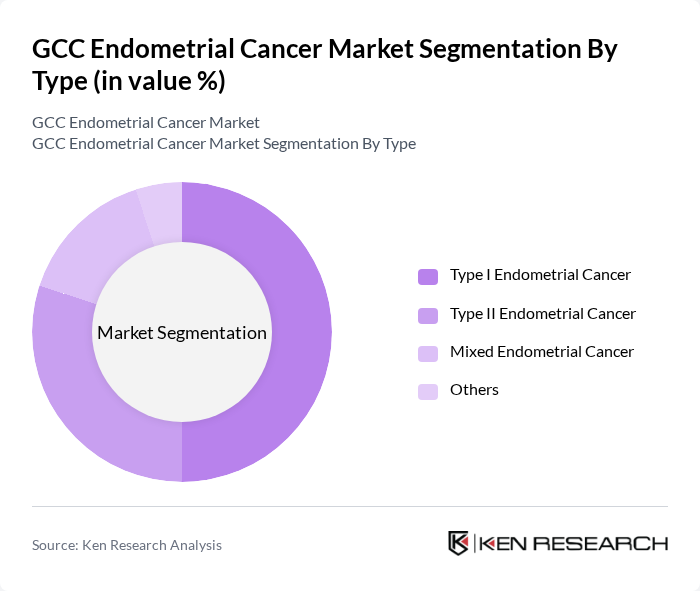
By Type:The segmentation of the market by type includes Type I Endometrial Cancer, Type II Endometrial Cancer, Mixed Endometrial Cancer, and Others. Type I Endometrial Cancer is the most prevalent, accounting for a significant portion of cases due to its association with obesity and hormonal factors. Type II Endometrial Cancer, while less common, is often diagnosed at a more advanced stage, leading to a higher mortality rate. The mixed type and other categories also contribute to the overall market but to a lesser extent.
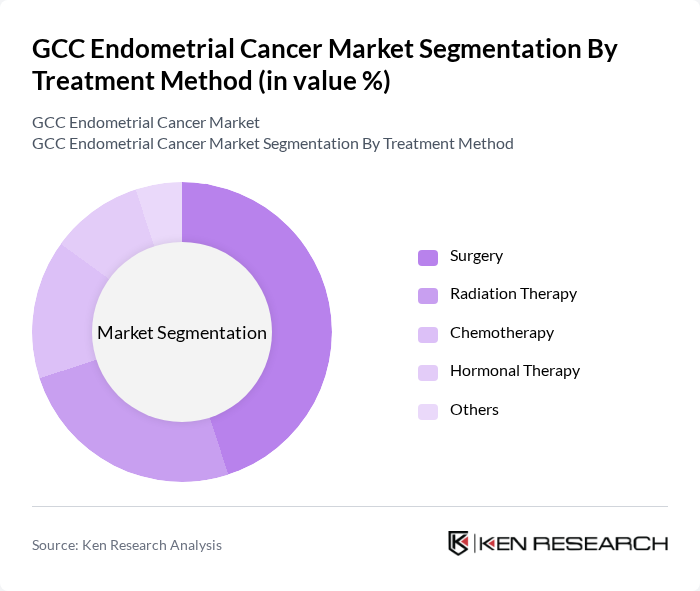
By Treatment Method:This segmentation includes Surgery, Radiation Therapy, Chemotherapy, Hormonal Therapy, and Others. Surgery remains the dominant treatment method due to its effectiveness in early-stage cancers. Radiation therapy is often used as an adjunct treatment, while chemotherapy and hormonal therapy are increasingly adopted for advanced cases. The "Others" category includes emerging therapies and clinical trials that are gaining traction in the market.
The GCC Endometrial Cancer Market is characterized by a dynamic mix of regional and international players. Leading participants such as AstraZeneca, Merck & Co., Roche, Novartis, Pfizer, GSK (GlaxoSmithKline), Eli Lilly and Company, Amgen, Bayer, Sanofi, Teva Pharmaceutical Industries, AbbVie, Astellas Pharma, Ipsen, Boehringer Ingelheim contribute to innovation, geographic expansion, and service delivery in this space.
The future of the GCC endometrial cancer market is poised for transformation, driven by technological advancements and increased healthcare investments. With a projected increase in healthcare spending to $100 billion in the future, the region is likely to see enhanced cancer care infrastructure. Additionally, the growing trend towards personalized medicine and telehealth services will facilitate better patient outcomes. As awareness continues to rise, the market is expected to adapt, focusing on innovative treatment modalities and patient-centric care models to meet evolving healthcare demands.
| Segment | Sub-Segments |
|---|---|
| By Type | Type I Endometrial Cancer Type II Endometrial Cancer Mixed Endometrial Cancer Others |
| By Treatment Method | Surgery Radiation Therapy Chemotherapy Hormonal Therapy Others |
| By Stage of Cancer | Stage I Stage II Stage III Stage IV |
| By Age Group | 30 Years 40 Years 50 Years Years and Above |
| By Geographic Distribution | GCC Countries Urban vs Rural Distribution Others |
| By Healthcare Provider Type | Public Hospitals Private Hospitals Specialty Clinics Others |
| By Patient Demographics | Socioeconomic Status Education Level Others |
| Scope Item/Segment | Sample Size | Target Respondent Profiles |
|---|---|---|
| Oncologists in GCC Hospitals | 100 | Medical Oncologists, Gynecologic Oncologists |
| Healthcare Administrators | 80 | Hospital Administrators, Cancer Center Directors |
| Patients with Endometrial Cancer | 75 | Current Patients, Survivors |
| Pharmaceutical Representatives | 60 | Sales Representatives, Product Managers |
| Health Insurance Providers | 50 | Claims Analysts, Policy Underwriters |
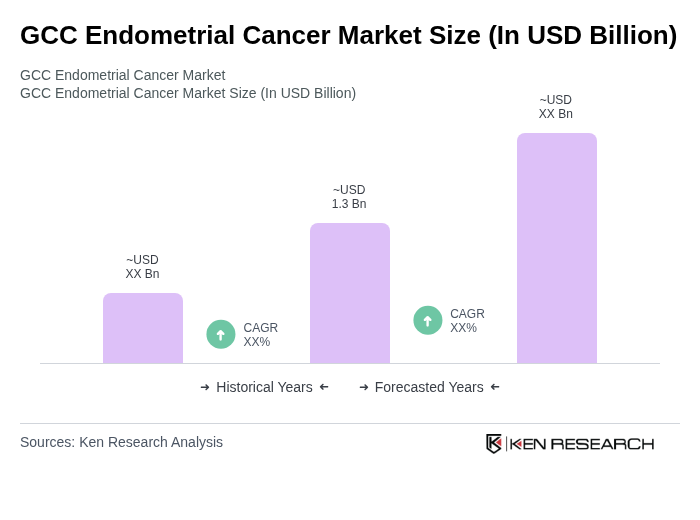
The GCC Endometrial Cancer Market is valued at approximately USD 1.3 billion, reflecting a significant growth trend driven by increasing cancer incidence, advancements in healthcare infrastructure, and the adoption of innovative therapies in the region.

What makes us stand out is that our consultants follow Robust, Refine and Result (RRR) methodology. Robust for clear definitions, approaches and sanity checking, Refine for differentiating respondents' facts and opinions, and Result for presenting data with story.

We have set a benchmark in the industry by offering our clients with syndicated and customized market research reports featuring coverage of entire market as well as meticulous research and analyst insights.

While we don't replace traditional research, we flip the method upside down. Our dual approach of Top Bottom & Bottom Top ensures quality deliverable by not just verifying company fundamentals but also looking at the sector and macroeconomic factors.

With one step in the future, our research team constantly tries to show you the bigger picture. We help with some of the tough questions you may encounter along the way: How is the industry positioned? Best marketing channel? KPI's of competitors? By aligning every element, we help maximize success.

Our report gives you instant access to the answers and sources that other companies might choose to hide. We elaborate each steps of research methodology we have used and showcase you the sample size to earn your trust.

If you need any support, we are here! We pride ourselves on universe strength, data quality, and quick, friendly, and professional service.













