About the Report
Base Year 2024GCC Fast Food Quick Service Restaurants Market Overview
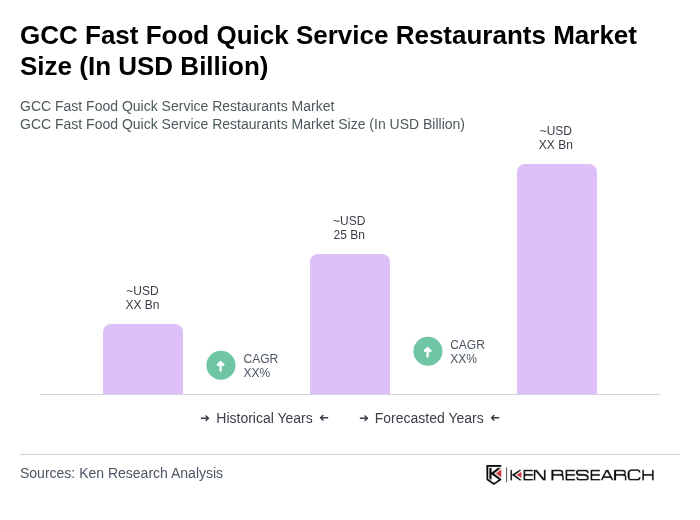
- The GCC Fast Food Quick Service Restaurants Market is valued at USD 25 billion, based on a five-year historical analysis. This growth is primarily driven by increasing urbanization, a rising population, higher disposable incomes, and changing consumer lifestyles that favor convenience and quick meal options. The market has seen a significant shift towards digital ordering and delivery services, with mobile and online channels becoming primary transaction modes, further enhancing its appeal to a tech-savvy consumer base. The expansion of international brands, menu localization, and the adoption of real-time tracking and loyalty programs have also contributed to market growth .
- Key players in this market include the United Arab Emirates and Saudi Arabia, which dominate due to their large expatriate populations, strong culture of dining out, and high tourist influx. The UAE, particularly Dubai, is recognized for its diverse culinary scene and rapid adoption of digital food delivery. Saudi Arabia's growing youth demographic and increasing disposable incomes are driving fast food consumption, making these regions pivotal in the market's expansion. The surge in tourism, especially in Saudi Arabia and the UAE, has further boosted demand for quick service restaurants .
- In 2023, the Saudi Food and Drug Authority (SFDA) issued the "Regulation for the Display of Nutritional Information in Food Establishments, 2023," mandating that all fast food restaurants must display nutritional information on their menus. This regulation aims to combat rising obesity rates and encourage healthier eating habits among consumers by requiring clear calorie and nutrient disclosures at the point of sale .
GCC Fast Food Quick Service Restaurants Market Segmentation
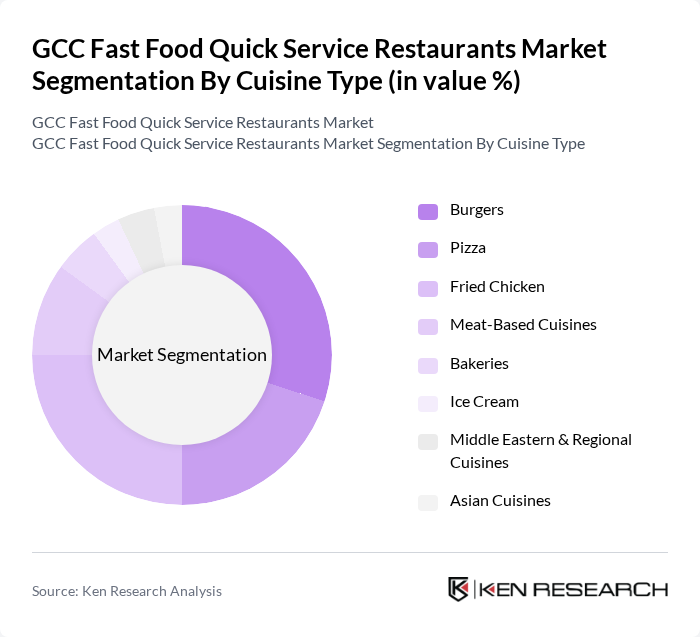
By Cuisine Type:The cuisine type segmentation includes various popular food categories that cater to diverse consumer preferences. The subsegments are Burgers, Pizza, Fried Chicken, Meat-Based Cuisines, Bakeries, Ice Cream, Middle Eastern & Regional Cuisines, and Asian Cuisines. Among these, Burgers and Fried Chicken are particularly dominant due to their widespread appeal and the presence of major international chains that have established a strong foothold in the region. The trend towards customization, gourmet options, and menu localization in these categories has further fueled their popularity .
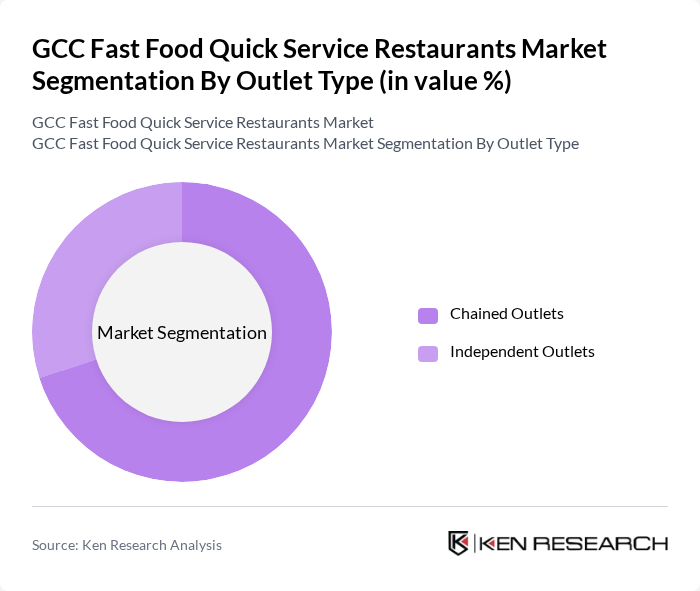
By Outlet Type:The outlet type segmentation distinguishes between Chained Outlets and Independent Outlets. Chained outlets dominate the market due to their established brand recognition, standardized quality, and extensive marketing strategies. Consumers often prefer these outlets for their reliability and familiarity, which is crucial in a fast-paced environment. Independent outlets, while offering unique and localized options, face challenges in competing with the extensive reach, digital infrastructure, and resources of larger chains .
GCC Fast Food Quick Service Restaurants Market Competitive Landscape
The GCC Fast Food Quick Service Restaurants Market is characterized by a dynamic mix of regional and international players. Leading participants such as McDonald's Corporation, KFC (Yum! Brands), Burger King, Domino's Pizza, Starbucks Corporation, ALBAIK, Americana Restaurants, Alshaya Group, Zaatar w Zeit, Pickl, BonBird, TGI Friday's, Hardee's, Subway, Pizza Hut contribute to innovation, geographic expansion, and service delivery in this space.
GCC Fast Food Quick Service Restaurants Market Industry Analysis
Growth Drivers
- Increasing Urbanization:The GCC region is experiencing rapid urbanization, with urban populations projected to reach 90% in future. This shift is driving demand for quick service restaurants (QSRs) as urban dwellers seek convenient dining options. In cities like Dubai, the number of fast food outlets has increased by 15% over the past three years, reflecting the growing preference for accessible dining solutions. Urbanization not only boosts foot traffic but also enhances the visibility of QSR brands, contributing to their growth.
- Rising Disposable Incomes:The average disposable income in the GCC is expected to rise to $30,000 per capita in future, fostering increased consumer spending on dining out. As families have more disposable income, they are more likely to indulge in fast food, which is often perceived as affordable and convenient. This trend is particularly evident in Saudi Arabia, where fast food sales have surged by 20% in the last year, driven by higher disposable incomes and changing consumer preferences.
- Expansion of Delivery Services:The growth of food delivery services in the GCC is transforming the fast food landscape. In future, the online food delivery market is projected to reach $1.5 billion, with a 25% increase in demand for QSRs. Companies like Talabat and Zomato are expanding their reach, making it easier for consumers to access fast food. This convenience is attracting a younger demographic, who prefer ordering online, thus driving sales for QSRs and enhancing their market presence.
Market Challenges
- Intense Competition:The GCC fast food market is characterized by fierce competition, with over 1,500 QSR brands vying for consumer attention. Major players like McDonald's and KFC face pressure from local chains and new entrants, leading to aggressive pricing strategies. This competition can erode profit margins, as brands invest heavily in marketing and promotions to capture market share. In future, the competitive landscape is expected to intensify, making differentiation crucial for survival.
- Health Consciousness Among Consumers:A growing trend towards health consciousness is challenging traditional fast food offerings. In future, 60% of consumers in the GCC are expected to prioritize healthier food options, impacting sales of conventional fast food. This shift is prompting QSRs to rethink their menus and incorporate healthier alternatives. Failure to adapt could result in a decline in customer loyalty and market share, as health-focused consumers seek out brands that align with their dietary preferences.
GCC Fast Food Quick Service Restaurants Market Future Outlook
The GCC fast food quick service restaurant market is poised for significant transformation driven by evolving consumer preferences and technological advancements. As urbanization continues, QSRs will increasingly focus on enhancing customer experiences through digital ordering and delivery services. Additionally, the demand for healthier menu options will compel brands to innovate, ensuring they meet the expectations of health-conscious consumers. Sustainability practices will also gain traction, influencing operational strategies and brand loyalty in the coming years.
Market Opportunities
- Growth of Online Ordering:The surge in online ordering presents a lucrative opportunity for QSRs. In future, with the online food delivery market projected to reach $1.5 billion, brands can capitalize on this trend by enhancing their digital platforms and optimizing delivery logistics. This shift not only increases sales but also improves customer engagement and retention through personalized marketing strategies.
- Introduction of Healthier Menu Options:As consumer preferences shift towards healthier eating, QSRs have the opportunity to innovate their menus. By introducing plant-based and low-calorie options, brands can attract health-conscious consumers. This strategy not only meets market demand but also enhances brand reputation, potentially increasing market share in a competitive landscape focused on health and wellness.
Scope of the Report
| Segment | Sub-Segments |
|---|---|
| By Cuisine Type | Burgers Pizza Fried Chicken Meat-Based Cuisines Bakeries Ice Cream Middle Eastern & Regional Cuisines Asian Cuisines |
| By Outlet Type | Chained Outlets Independent Outlets |
| By Service Channel | Dine-In Takeaway Delivery Drive-Thru Cloud Kitchens |
| By Location Type | Standalone Retail Centers Leisure & Entertainment Lodging Facilities Travel Hubs |
| By Country | United Arab Emirates Saudi Arabia Qatar Kuwait Oman Bahrain |
| By Price Segment | Budget Mid-Range Premium |
| By Consumer Demographics | Age Group (13-25, 26-40, 40+) Income Level Expatriate vs Local Population Lifestyle Preferences |
Key Target Audience
Investors and Venture Capitalist Firms
Government and Regulatory Bodies (e.g., Ministry of Health, Food Safety Authority)
Manufacturers and Producers of Food Ingredients
Distributors and Retailers of Fast Food Products
Franchise Owners and Operators
Food Delivery Service Providers
Industry Associations (e.g., GCC Food and Beverage Association)
Financial Institutions and Banks
Players Mentioned in the Report:
McDonald's Corporation
KFC (Yum! Brands)
Burger King
Domino's Pizza
Starbucks Corporation
ALBAIK
Americana Restaurants
Alshaya Group
Zaatar w Zeit
Pickl
BonBird
TGI Friday's
Hardee's
Subway
Pizza Hut
Table of Contents
Market Assessment Phase
1. Executive Summary and Approach
2. GCC Fast Food Quick Service Restaurants Market Overview
2.1 Key Insights and Strategic Recommendations
2.2 GCC Fast Food Quick Service Restaurants Market Overview
2.3 Definition and Scope
2.4 Evolution of Market Ecosystem
2.5 Timeline of Key Regulatory Milestones
2.6 Value Chain & Stakeholder Mapping
2.7 Business Cycle Analysis
2.8 Policy & Incentive Landscape
3. GCC Fast Food Quick Service Restaurants Market Analysis
3.1 Growth Drivers
3.1.1 Increasing Urbanization
3.1.2 Rising Disposable Incomes
3.1.3 Changing Consumer Lifestyles
3.1.4 Expansion of Delivery Services
3.2 Market Challenges
3.2.1 Intense Competition
3.2.2 Health Consciousness Among Consumers
3.2.3 Regulatory Compliance Costs
3.2.4 Supply Chain Disruptions
3.3 Market Opportunities
3.3.1 Growth of Online Ordering
3.3.2 Introduction of Healthier Menu Options
3.3.3 Expansion into Untapped Markets
3.3.4 Collaborations with Food Delivery Platforms
3.4 Market Trends
3.4.1 Increasing Demand for Plant-Based Options
3.4.2 Adoption of Technology in Ordering
3.4.3 Focus on Sustainability Practices
3.4.4 Customization of Menu Offerings
3.5 Government Regulation
3.5.1 Food Safety Standards
3.5.2 Labor Laws and Employment Regulations
3.5.3 Environmental Regulations
3.5.4 Taxation Policies on Fast Food
4. SWOT Analysis
5. Stakeholder Analysis
6. Porter's Five Forces Analysis
7. GCC Fast Food Quick Service Restaurants Market Market Size, 2019-2024
7.1 By Value
7.2 By Volume
7.3 By Average Selling Price
8. GCC Fast Food Quick Service Restaurants Market Segmentation
8.1 By Cuisine Type
8.1.1 Burgers
8.1.2 Pizza
8.1.3 Fried Chicken
8.1.4 Meat-Based Cuisines
8.1.5 Bakeries
8.1.6 Ice Cream
8.1.7 Middle Eastern & Regional Cuisines
8.1.8 Asian Cuisines
8.2 By Outlet Type
8.2.1 Chained Outlets
8.2.2 Independent Outlets
8.3 By Service Channel
8.3.1 Dine-In
8.3.2 Takeaway
8.3.3 Delivery
8.3.4 Drive-Thru
8.3.5 Cloud Kitchens
8.4 By Location Type
8.4.1 Standalone
8.4.2 Retail Centers
8.4.3 Leisure & Entertainment
8.4.4 Lodging Facilities
8.4.5 Travel Hubs
8.5 By Country
8.5.1 United Arab Emirates
8.5.2 Saudi Arabia
8.5.3 Qatar
8.5.4 Kuwait
8.5.5 Oman
8.5.6 Bahrain
8.6 By Price Segment
8.6.1 Budget
8.6.2 Mid-Range
8.6.3 Premium
8.7 By Consumer Demographics
8.7.1 Age Group (13-25, 26-40, 40+)
8.7.2 Income Level
8.7.3 Expatriate vs Local Population
8.7.4 Lifestyle Preferences
9. GCC Fast Food Quick Service Restaurants Market Competitive Analysis
9.1 Market Share of Key Players
9.2 Cross Comparison of Key Players
9.2.1 Company Name
9.2.2 Company Size (Large, Medium, or Small)
9.2.3 Year-on-Year Revenue Growth Rate (%)
9.2.4 Number of Outlets in GCC
9.2.5 Average Transaction Value (AED/SAR)
9.2.6 Pricing Strategy (Budget/Mid-Range/Premium)
9.2.7 Market Penetration Rate by Country (%)
9.2.8 Brand Recognition Score (1-10)
9.2.9 Menu Diversification Index (Cuisine Types Offered)
9.2.10 Digital Integration Score (Online Ordering, App, Delivery)
9.3 SWOT Analysis of Top Players
9.4 Pricing Analysis
9.5 Detailed Profile of Major Companies
9.5.1 McDonald's Corporation
9.5.2 KFC (Yum! Brands)
9.5.3 Burger King
9.5.4 Domino's Pizza
9.5.5 Starbucks Corporation
9.5.6 ALBAIK
9.5.7 Americana Restaurants
9.5.8 Alshaya Group
9.5.9 Zaatar w Zeit
9.5.10 Pickl
9.5.11 BonBird
9.5.12 TGI Friday's
9.5.13 Hardee's
9.5.14 Subway
9.5.15 Pizza Hut
10. GCC Fast Food Quick Service Restaurants Market End-User Analysis
10.1 Consumer Behavior & Preferences
10.1.1 Frequency of Fast Food Consumption
10.1.2 Preferred Cuisines & Menu Items
10.1.3 Channel Preferences (Dine-In vs Delivery)
10.1.4 Price Sensitivity Analysis
10.2 Corporate & Institutional Procurement
10.2.1 Bulk Catering Orders
10.2.2 Corporate Partnerships
10.2.3 Educational Institution Contracts
10.2.4 Government Sector Engagement
10.3 Pain Point Analysis by Consumer Segment
10.3.1 Quality & Food Safety Concerns
10.3.2 Menu Variety & Customization
10.3.3 Pricing & Value for Money
10.3.4 Delivery Speed & Service Quality
10.4 Technology Adoption & Digital Readiness
10.4.1 Mobile App Usage
10.4.2 Online Ordering Preferences
10.4.3 Payment Method Preferences
10.4.4 Loyalty Program Engagement
10.5 Post-Purchase Satisfaction & Retention
10.5.1 Customer Satisfaction Metrics
10.5.2 Repeat Purchase Rates
10.5.3 Net Promoter Score (NPS)
10.5.4 Customer Lifetime Value
11. GCC Fast Food Quick Service Restaurants Market Future Size, 2025-2030
11.1 By Value
11.2 By Volume
11.3 By Average Selling Price
Go-To-Market Strategy Phase
1. Whitespace Analysis + Business Model Canvas
1.1 Market Gaps Identification
1.2 Business Model Framework
2. Marketing and Positioning Recommendations
2.1 Branding Strategies
2.2 Product USPs
3. Distribution Plan
3.1 Urban Retail Strategies
3.2 Rural NGO Tie-Ups
4. Channel & Pricing Gaps
4.1 Underserved Routes
4.2 Pricing Bands
5. Unmet Demand & Latent Needs
5.1 Category Gaps
5.2 Consumer Segments
6. Customer Relationship
6.1 Loyalty Programs
6.2 After-Sales Service
7. Value Proposition
7.1 Sustainability Initiatives
7.2 Integrated Supply Chains
8. Key Activities
8.1 Regulatory Compliance
8.2 Branding Efforts
8.3 Distribution Setup
9. Entry Strategy Evaluation
9.1 Domestic Market Entry Strategy
9.1.1 Product Mix
9.1.2 Pricing Band
9.1.3 Packaging Strategies
9.2 Export Entry Strategy
9.2.1 Target Countries
9.2.2 Compliance Roadmap
10. Entry Mode Assessment
10.1 Joint Ventures
10.2 Greenfield Investments
10.3 Mergers & Acquisitions
10.4 Distributor Model
11. Capital and Timeline Estimation
11.1 Capital Requirements
11.2 Timelines
12. Control vs Risk Trade-Off
12.1 Ownership vs Partnerships
13. Profitability Outlook
13.1 Breakeven Analysis
13.2 Long-Term Sustainability
14. Potential Partner List
14.1 Distributors
14.2 Joint Ventures
14.3 Acquisition Targets
15. Execution Roadmap
15.1 Phased Plan for Market Entry
15.1.1 Market Setup
15.1.2 Market Entry
15.1.3 Growth Acceleration
15.1.4 Scale & Stabilize
15.2 Key Activities and Milestones
15.2.1 Milestone Planning
15.2.2 Activity Tracking
Research Methodology
Phase 1: Approach1
Desk Research
- Analysis of industry reports from local and international market research firms
- Review of government publications and economic data from GCC countries
- Examination of consumer behavior studies and fast food consumption trends
Primary Research
- Interviews with franchise owners and managers of leading quick service restaurants
- Surveys targeting consumers to understand preferences and spending habits
- Focus groups with food industry experts and nutritionists to gauge market trends
Validation & Triangulation
- Cross-validation of findings with sales data from major fast food chains
- Triangulation of consumer insights with industry expert opinions
- Sanity checks through feedback from a panel of market analysts
Phase 2: Market Size Estimation1
Top-down Assessment
- Estimation of market size based on national GDP contribution from the food service sector
- Segmentation of the market by country within the GCC and by type of cuisine
- Incorporation of demographic data to assess potential customer base growth
Bottom-up Modeling
- Collection of sales data from a sample of fast food outlets across the GCC
- Estimation of average transaction values and customer footfall metrics
- Calculation of market size based on aggregate data from individual restaurant performance
Forecasting & Scenario Analysis
- Utilization of historical growth rates to project future market trends
- Scenario modeling based on economic conditions and consumer behavior shifts
- Development of best-case, worst-case, and most-likely market scenarios through 2030
Phase 3: CATI Sample Composition1
| Scope Item/Segment | Sample Size | Target Respondent Profiles |
|---|---|---|
| Consumer Preferences in Fast Food | 120 | Regular Fast Food Consumers, Age 18-45 |
| Franchise Operations Insights | 80 | Franchise Owners, Restaurant Managers |
| Market Trends and Innovations | 60 | Food Industry Analysts, Trend Forecasters |
| Health and Nutrition Perspectives | 50 | Nutritionists, Health Advocates |
| Impact of Economic Factors on Fast Food | 70 | Economists, Market Researchers |
Frequently Asked Questions
What is the current value of the GCC Fast Food Quick Service Restaurants Market?
The GCC Fast Food Quick Service Restaurants Market is valued at approximately USD 25 billion, driven by factors such as urbanization, rising disposable incomes, and changing consumer lifestyles that favor convenience and quick meal options.
What are the main growth drivers for the GCC Fast Food Market?
Which countries dominate the GCC Fast Food Market?
What regulatory changes are impacting the GCC Fast Food Market?
Other Regional/Country Reports
Indonesia Fast Food Quick Service Restaurants Market
Malaysia Fast Food Quick Service Restaurants Market
KSA Fast Food Quick Service Restaurants Market
APAC Fast Food Quick Service Restaurants Market
SEA Fast Food Quick Service Restaurants Market
Vietnam Fast Food Quick Service Restaurants Market
Other Adjacent Reports
Malaysia Food Delivery Services Market
Thailand Online Ordering Platforms Market
Indonesia Cloud Kitchens MarketKSA Restaurant Technology Market
Bahrain Healthy Eating Alternatives Market
Kuwait Beverage Dispensing Equipment Market
Vietnam Franchise Management Services Market
Bahrain Hospitality Supply Chain Market
Bahrain digital payment solutions market size, share, growth drivers, trends, opportunities & forecast 2025–2030Saudi Arabia Culinary Tourism Market Report Size, Share, Growth Drivers, Trends, Opportunities & Forecast 2025–2030Why Buy From Us?

What makes us stand out is that our consultants follow Robust, Refine and Result (RRR) methodology. Robust for clear definitions, approaches and sanity checking, Refine for differentiating respondents' facts and opinions, and Result for presenting data with story.

We have set a benchmark in the industry by offering our clients with syndicated and customized market research reports featuring coverage of entire market as well as meticulous research and analyst insights.

While we don't replace traditional research, we flip the method upside down. Our dual approach of Top Bottom & Bottom Top ensures quality deliverable by not just verifying company fundamentals but also looking at the sector and macroeconomic factors.

With one step in the future, our research team constantly tries to show you the bigger picture. We help with some of the tough questions you may encounter along the way: How is the industry positioned? Best marketing channel? KPI's of competitors? By aligning every element, we help maximize success.

Our report gives you instant access to the answers and sources that other companies might choose to hide. We elaborate each steps of research methodology we have used and showcase you the sample size to earn your trust.

If you need any support, we are here! We pride ourselves on universe strength, data quality, and quick, friendly, and professional service.