Gcc Location Based Entertainment Market Size, Share, Growth Drivers, Trends, Opportunities & Forecast 2025–2030

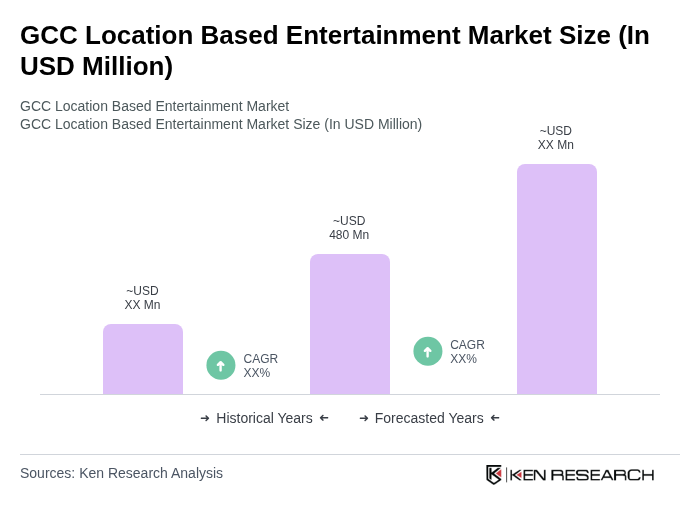
The GCC Location Based Entertainment Market, valued at USD 480 million, is growing due to increasing demand for immersive experiences, family leisure, and investments in entertainment infrastructure.

Region:Middle East

Author(s):Rebecca

Product Code:KRAD1411

Pages:98

Published On:November 2025
About the Report

Base Year 2024

GCC Location Based Entertainment Market Overview

  • The GCC Location Based Entertainment Market is valued at USD 480 million, based on a five-year historical analysis. This growth is primarily driven by increasing disposable incomes, a rising population, and a growing demand for leisure activities among families and tourists. The market has seen significant investments in infrastructure and technology, including the adoption of immersive and interactive experiences, advanced virtual reality, and AI-driven attractions, all enhancing the overall consumer experience in entertainment venues.
  • Key players in this market include the United Arab Emirates and Saudi Arabia, which dominate due to their robust tourism sectors, high levels of investment in entertainment infrastructure, and a strong cultural emphasis on family-oriented leisure activities. The UAE, particularly Dubai, is known for its world-class attractions, while Saudi Arabia is rapidly expanding its entertainment offerings as part of its Vision 2030 initiative. Recent trends include the integration of hybrid digital-physical experiences and a focus on sustainability and eco-friendly entertainment venues.
  • In 2023, the Saudi Arabian government implemented the “Regulation for the Establishment and Operation of Entertainment Facilities” issued by the General Entertainment Authority. This binding instrument sets forth licensing requirements, safety and security standards, and operational compliance for all entertainment venues, supporting the country’s broader economic diversification goals and aiming to attract foreign investment.
GCC Location Based Entertainment Market Size

GCC Location Based Entertainment Market Segmentation

By Type:The market is segmented into various types of entertainment venues, including amusement parks, virtual reality experiences, escape rooms, themed attractions, arcade centers, family entertainment centers, cinemas, interactive museums & edutainment venues, and others. Each type caters to different consumer preferences and demographics, contributing to the overall market growth. Amusement parks and themed attractions remain the largest segments, while virtual reality experiences and interactive museums are rapidly gaining popularity due to technological advancements and demand for immersive entertainment.
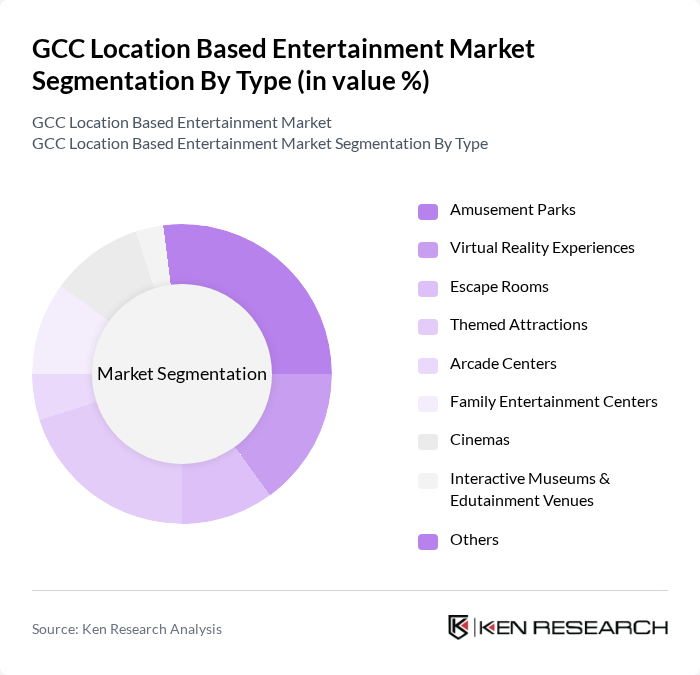
GCC Location Based Entertainment Market segmentation by Type.

By End-User:The end-user segmentation includes families, tourists, corporates, schools and educational institutions, event organizers, youth & young adults, and others. Each segment has unique needs and preferences, influencing the types of entertainment venues that thrive in the GCC region. Families and tourists represent the largest end-user groups, driven by the region’s focus on family-oriented and tourism-centric entertainment development.
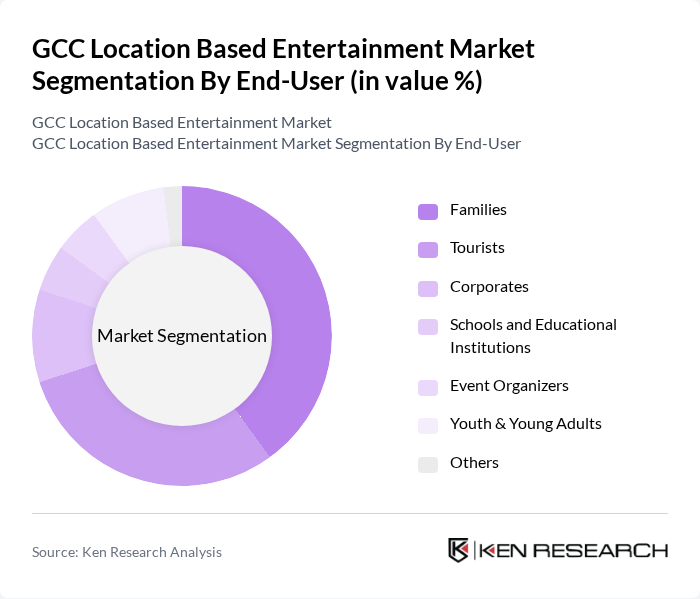
GCC Location Based Entertainment Market segmentation by End-User.

GCC Location Based Entertainment Market Competitive Landscape

The GCC Location Based Entertainment Market is characterized by a dynamic mix of regional and international players. Leading participants such as Majid Al Futtaim Entertainment, Emaar Entertainment, Dubai Parks and Resorts, Fun City, KidZania, IMG Worlds of Adventure, Warner Bros. World Abu Dhabi, SeaWorld Abu Dhabi, Adventure HQ, Bounce, VR Park, The Green Planet, Ski Dubai, Legoland Dubai, The Dubai Mall Aquarium & Underwater Zoo, Hub Zero, Magic Planet, Trampo Extreme, CLYMB Abu Dhabi, Motiongate Dubai, Ferrari World Abu Dhabi, Dreamscape, Hysteria Dubai Mall, Jumble Dubai contribute to innovation, geographic expansion, and service delivery in this space.

Majid Al Futtaim Entertainment

1992

Dubai, UAE

Emaar Entertainment

2008

Dubai, UAE

Dubai Parks and Resorts

2014

Dubai, UAE

Fun City

1999

Dubai, UAE

KidZania

1999

Mexico City, Mexico

Company

Establishment Year

Headquarters

Group Size (Large, Medium, or Small as per industry convention)

Revenue Growth Rate (YoY %)

Customer Retention Rate (%)

Market Penetration Rate (regional venue count, % of GCC market)

Pricing Strategy (premium, value, freemium, etc.)

Average Customer Spend (USD per visit)

GCC Location Based Entertainment Market Industry Analysis

Growth Drivers

  • Increasing Disposable Income:The GCC region has witnessed a significant rise in disposable income, with average household income projected to reach $70,000 in future. This increase allows families to allocate more funds towards leisure activities, including location-based entertainment. The World Bank reports that the region's GDP per capita is expected to grow by 4.2% in future, further enhancing consumer spending power and driving demand for entertainment options that offer unique experiences.
  • Rising Demand for Immersive Experiences:As consumers seek more engaging and immersive entertainment options, the GCC market is responding with innovative offerings. The global virtual reality market is projected to reach $57.5 billion in future, indicating a strong trend towards immersive experiences. Local entertainment venues are increasingly incorporating AR and VR technologies, catering to the growing consumer preference for interactive and memorable experiences that go beyond traditional entertainment formats.
  • Expansion of Tourism and Entertainment Sectors:The GCC region is experiencing a tourism boom, with visitor numbers expected to exceed 70 million in future. This influx is driven by government initiatives to diversify economies and promote tourism. Major events, such as Expo 2020 in Dubai, have spurred investments in entertainment infrastructure. The entertainment sector is projected to contribute $50 billion to the region's GDP in future, highlighting the potential for growth in location-based entertainment offerings.

Market Challenges

  • High Initial Investment Costs:Establishing location-based entertainment facilities requires substantial capital investment, often exceeding $15 million for large-scale projects. This financial barrier can deter new entrants and limit the expansion of existing operators. Additionally, the long payback period, typically ranging from 4 to 6 years, poses a significant risk for investors, particularly in a competitive market where consumer preferences can shift rapidly.
  • Regulatory Hurdles:The GCC region has complex regulatory frameworks that can impede the growth of location-based entertainment. Licensing requirements vary significantly across countries, with some regions imposing stringent regulations that can delay project approvals. For instance, obtaining necessary permits can take up to 10 months, creating uncertainty for investors. Navigating these regulatory landscapes requires expertise and can increase operational costs, impacting overall profitability.

GCC Location Based Entertainment Market Future Outlook

The future of the GCC location-based entertainment market appears promising, driven by technological advancements and evolving consumer preferences. As immersive technologies like AR and VR become more accessible, entertainment venues are likely to adopt these innovations to enhance visitor experiences. Additionally, the growing emphasis on sustainability will encourage operators to develop eco-friendly attractions, aligning with global trends. The market is poised for growth as stakeholders adapt to these changes and capitalize on emerging opportunities in family-oriented entertainment and themed attractions.

Market Opportunities

  • Growth in Family-Oriented Entertainment:There is a notable shift towards family-friendly entertainment options, with the number of family-oriented attractions projected to increase by 25% in future. This trend reflects changing consumer preferences, as families seek activities that cater to all age groups, creating opportunities for operators to develop diverse offerings that enhance family engagement and satisfaction.
  • Integration of AR/VR Technologies:The integration of AR and VR technologies presents a significant opportunity for the GCC location-based entertainment market. With the global AR market expected to reach $250 billion in future, local operators can leverage these technologies to create unique experiences. This innovation can attract tech-savvy consumers and enhance the overall appeal of entertainment venues, driving increased foot traffic and revenue.

Scope of the Report

SegmentSub-Segments
By Type

Amusement Parks

Virtual Reality Experiences

Escape Rooms

Themed Attractions

Arcade Centers

Family Entertainment Centers

Cinemas

Interactive Museums & Edutainment Venues

Others

By End-User

Families

Tourists

Corporates

Schools and Educational Institutions

Event Organizers

Youth & Young Adults

Others

By Region

United Arab Emirates

Saudi Arabia

Qatar

Kuwait

Oman

Bahrain

By Technology

Augmented Reality (AR)

Virtual Reality (VR)

Interactive Gaming Platforms

Motion Simulation & 4D/5D Experiences

Cloud Merged Reality (CMR)

Others

By Application

Entertainment

Education

Corporate Events

Marketing Activations

Tourism Promotion

Others

By Investment Source

Private Investments

Government Funding

Public-Private Partnerships

Foreign Direct Investment

Venture Capital & Start-up Funding

Others

By Policy Support

Subsidies for Infrastructure Development

Tax Incentives for New Ventures

Grants for Innovation in Entertainment

Fast-track Licensing for Tech-driven Venues

Others

Key Target Audience

Investors and Venture Capitalist Firms

Government and Regulatory Bodies (e.g., Ministry of Culture and Knowledge Development, Saudi Arabian General Investment Authority)

Theme Park Operators

Entertainment Venue Owners

Technology Providers (e.g., VR/AR Developers)

Event Management Companies

Tourism Boards and Agencies

Real Estate Developers

Players Mentioned in the Report:

Majid Al Futtaim Entertainment

Emaar Entertainment

Dubai Parks and Resorts

Fun City

KidZania

IMG Worlds of Adventure

Warner Bros. World Abu Dhabi

SeaWorld Abu Dhabi

Adventure HQ

Bounce

VR Park

The Green Planet

Ski Dubai

Legoland Dubai

The Dubai Mall Aquarium & Underwater Zoo

Hub Zero

Magic Planet

Trampo Extreme

CLYMB Abu Dhabi

Motiongate Dubai

Ferrari World Abu Dhabi

Dreamscape

Hysteria Dubai Mall

Jumble Dubai

Table of Contents

Market Assessment Phase

1. Executive Summary and Approach


2. GCC Location Based Entertainment Market Overview

2.1 Key Insights and Strategic Recommendations

2.2 GCC Location Based Entertainment Market Overview

2.3 Definition and Scope

2.4 Evolution of Market Ecosystem

2.5 Timeline of Key Regulatory Milestones

2.6 Value Chain & Stakeholder Mapping

2.7 Business Cycle Analysis

2.8 Policy & Incentive Landscape


3. GCC Location Based Entertainment Market Analysis

3.1 Growth Drivers

3.1.1 Increasing disposable income
3.1.2 Rising demand for immersive experiences
3.1.3 Expansion of tourism and entertainment sectors
3.1.4 Technological advancements in entertainment

3.2 Market Challenges

3.2.1 High initial investment costs
3.2.2 Regulatory hurdles
3.2.3 Competition from home entertainment options
3.2.4 Fluctuating consumer preferences

3.3 Market Opportunities

3.3.1 Growth in family-oriented entertainment
3.3.2 Integration of AR/VR technologies
3.3.3 Development of themed attractions
3.3.4 Partnerships with local businesses

3.4 Market Trends

3.4.1 Rise of experiential marketing
3.4.2 Increased focus on sustainability
3.4.3 Growth of mobile-based entertainment solutions
3.4.4 Emergence of hybrid entertainment models

3.5 Government Regulation

3.5.1 Licensing requirements for operators
3.5.2 Safety and health regulations
3.5.3 Tax incentives for entertainment investments
3.5.4 Local content regulations

4. SWOT Analysis


5. Stakeholder Analysis


6. Porter's Five Forces Analysis


7. GCC Location Based Entertainment Market Market Size, 2019-2024

7.1 By Value

7.2 By Volume

7.3 By Average Selling Price


8. GCC Location Based Entertainment Market Segmentation

8.1 By Type

8.1.1 Amusement Parks
8.1.2 Virtual Reality Experiences
8.1.3 Escape Rooms
8.1.4 Themed Attractions
8.1.5 Arcade Centers
8.1.6 Family Entertainment Centers
8.1.7 Cinemas
8.1.8 Interactive Museums & Edutainment Venues
8.1.9 Others

8.2 By End-User

8.2.1 Families
8.2.2 Tourists
8.2.3 Corporates
8.2.4 Schools and Educational Institutions
8.2.5 Event Organizers
8.2.6 Youth & Young Adults
8.2.7 Others

8.3 By Region

8.3.1 United Arab Emirates
8.3.2 Saudi Arabia
8.3.3 Qatar
8.3.4 Kuwait
8.3.5 Oman
8.3.6 Bahrain

8.4 By Technology

8.4.1 Augmented Reality (AR)
8.4.2 Virtual Reality (VR)
8.4.3 Interactive Gaming Platforms
8.4.4 Motion Simulation & 4D/5D Experiences
8.4.5 Cloud Merged Reality (CMR)
8.4.6 Others

8.5 By Application

8.5.1 Entertainment
8.5.2 Education
8.5.3 Corporate Events
8.5.4 Marketing Activations
8.5.5 Tourism Promotion
8.5.6 Others

8.6 By Investment Source

8.6.1 Private Investments
8.6.2 Government Funding
8.6.3 Public-Private Partnerships
8.6.4 Foreign Direct Investment
8.6.5 Venture Capital & Start-up Funding
8.6.6 Others

8.7 By Policy Support

8.7.1 Subsidies for Infrastructure Development
8.7.2 Tax Incentives for New Ventures
8.7.3 Grants for Innovation in Entertainment
8.7.4 Fast-track Licensing for Tech-driven Venues
8.7.5 Others

9. GCC Location Based Entertainment Market Competitive Analysis

9.1 Market Share of Key Players

9.2 Cross Comparison of Key Players

9.2.1 Company Name
9.2.2 Group Size (Large, Medium, or Small as per industry convention)
9.2.3 Revenue Growth Rate (YoY %)
9.2.4 Customer Retention Rate (%)
9.2.5 Market Penetration Rate (regional venue count, % of GCC market)
9.2.6 Pricing Strategy (premium, value, freemium, etc.)
9.2.7 Average Customer Spend (USD per visit)
9.2.8 Brand Recognition Score (survey-based index)
9.2.9 Innovation Index (number of new experiences launched, tech adoption)
9.2.10 Customer Satisfaction Score (NPS or equivalent)
9.2.11 Digital Engagement Rate (app downloads, social media followers)
9.2.12 Utilization Rate (venue occupancy %)
9.2.13 Safety & Compliance Record

9.3 SWOT Analysis of Top Players

9.4 Pricing Analysis

9.5 Detailed Profile of Major Companies

9.5.1 Majid Al Futtaim Entertainment
9.5.2 Emaar Entertainment
9.5.3 Dubai Parks and Resorts
9.5.4 Fun City
9.5.5 KidZania
9.5.6 IMG Worlds of Adventure
9.5.7 Warner Bros. World Abu Dhabi
9.5.8 SeaWorld Abu Dhabi
9.5.9 Adventure HQ
9.5.10 Bounce
9.5.11 VR Park
9.5.12 The Green Planet
9.5.13 Ski Dubai
9.5.14 Legoland Dubai
9.5.15 The Dubai Mall Aquarium & Underwater Zoo
9.5.16 Hub Zero
9.5.17 Magic Planet
9.5.18 Trampo Extreme
9.5.19 CLYMB Abu Dhabi
9.5.20 Motiongate Dubai
9.5.21 Ferrari World Abu Dhabi
9.5.22 Dreamscape
9.5.23 Hysteria Dubai Mall
9.5.24 Jumble Dubai

10. GCC Location Based Entertainment Market End-User Analysis

10.1 Procurement Behavior of Key Ministries

10.1.1 Engagement with Local Vendors
10.1.2 Budget Allocation for Entertainment Projects
10.1.3 Compliance with Local Regulations
10.1.4 Evaluation of Proposals

10.2 Corporate Spend on Infrastructure & Energy

10.2.1 Investment in New Attractions
10.2.2 Maintenance of Existing Facilities
10.2.3 Technology Upgrades
10.2.4 Marketing and Promotion Budgets

10.3 Pain Point Analysis by End-User Category

10.3.1 Accessibility Issues
10.3.2 Safety Concerns
10.3.3 Pricing Sensitivity
10.3.4 Quality of Experience

10.4 User Readiness for Adoption

10.4.1 Awareness of New Technologies
10.4.2 Willingness to Pay for Experiences
10.4.3 Feedback Mechanisms
10.4.4 Engagement with Marketing Campaigns

10.5 Post-Deployment ROI and Use Case Expansion

10.5.1 Measurement of Customer Engagement
10.5.2 Analysis of Revenue Streams
10.5.3 Expansion into New Markets
10.5.4 Customer Feedback Integration

11. GCC Location Based Entertainment Market Future Size, 2025-2030

11.1 By Value

11.2 By Volume

11.3 By Average Selling Price


Go-To-Market Strategy Phase

1. Whitespace Analysis + Business Model Canvas

1.1 Market Gaps Identification

1.2 Value Proposition Development

1.3 Revenue Model Structuring

1.4 Customer Segmentation

1.5 Competitive Landscape Overview

1.6 Key Partnerships

1.7 Risk Assessment


2. Marketing and Positioning Recommendations

2.1 Branding Strategies

2.2 Product USPs

2.3 Target Audience Identification

2.4 Marketing Channels Selection

2.5 Campaign Development


3. Distribution Plan

3.1 Urban Retail Strategies

3.2 Rural NGO Tie-ups

3.3 Online vs Offline Distribution

3.4 Logistics and Supply Chain Management


4. Channel & Pricing Gaps

4.1 Underserved Routes

4.2 Pricing Bands Analysis

4.3 Competitor Pricing Strategies

4.4 Customer Price Sensitivity


5. Unmet Demand & Latent Needs

5.1 Category Gaps Identification

5.2 Consumer Segments Analysis

5.3 Emerging Trends Exploration

5.4 Future Demand Projections


6. Customer Relationship

6.1 Loyalty Programs Development

6.2 After-sales Service Strategies

6.3 Customer Feedback Mechanisms

6.4 Community Engagement Initiatives


7. Value Proposition

7.1 Sustainability Initiatives

7.2 Integrated Supply Chains

7.3 Customer-Centric Offerings

7.4 Innovation in Service Delivery


8. Key Activities

8.1 Regulatory Compliance

8.2 Branding Initiatives

8.3 Distribution Setup

8.4 Training and Development


9. Entry Strategy Evaluation

9.1 Domestic Market Entry Strategy

9.1.1 Product Mix Considerations
9.1.2 Pricing Band Analysis
9.1.3 Packaging Strategies

9.2 Export Entry Strategy

9.2.1 Target Countries Identification
9.2.2 Compliance Roadmap Development

10. Entry Mode Assessment

10.1 Joint Ventures

10.2 Greenfield Investments

10.3 Mergers & Acquisitions

10.4 Distributor Model Evaluation


11. Capital and Timeline Estimation

11.1 Capital Requirements Analysis

11.2 Timelines for Implementation


12. Control vs Risk Trade-Off

12.1 Ownership vs Partnerships

12.2 Risk Mitigation Strategies


13. Profitability Outlook

13.1 Breakeven Analysis

13.2 Long-term Sustainability Strategies


14. Potential Partner List

14.1 Distributors Identification

14.2 Joint Ventures Opportunities

14.3 Acquisition Targets


15. Execution Roadmap

15.1 Phased Plan for Market Entry

15.1.1 Market Setup
15.1.2 Market Entry
15.1.3 Growth Acceleration
15.1.4 Scale & Stabilize

15.2 Key Activities and Milestones

15.2.1 Milestone Planning
15.2.2 Activity Tracking

Research Methodology

ApproachModellingSample

Phase 1: Approach1

Desk Research

  • Industry reports from regional entertainment associations and market research firms
  • Government publications on tourism and entertainment trends in the GCC
  • Analysis of existing location-based entertainment facilities and their performance metrics

Primary Research

  • Interviews with executives from leading location-based entertainment companies in the GCC
  • Surveys targeting visitors of entertainment venues to gather consumer preferences
  • Focus groups with families and young adults to understand engagement levels and expectations

Validation & Triangulation

  • Cross-validation of findings through multiple data sources including tourism statistics and entertainment revenue reports
  • Triangulation of consumer insights with industry expert opinions
  • Sanity checks through feedback from a panel of industry veterans and analysts

Phase 2: Market Size Estimation1

Top-down Assessment

  • Analysis of overall entertainment spending in the GCC region to estimate market potential
  • Segmentation of the market by type of entertainment (e.g., VR experiences, theme parks, arcades)
  • Incorporation of demographic trends and tourism growth projections

Bottom-up Modeling

  • Estimation of revenue per venue based on average ticket prices and visitor numbers
  • Assessment of operational costs and profit margins for different entertainment formats
  • Aggregation of data from various entertainment facilities to create a comprehensive market model

Forecasting & Scenario Analysis

  • Multi-factor analysis considering economic indicators, population growth, and urbanization rates
  • Scenario planning based on potential regulatory changes and technological advancements
  • Development of baseline, optimistic, and pessimistic forecasts through 2030

Phase 3: CATI Sample Composition1

Scope Item/SegmentSample SizeTarget Respondent Profiles
Theme Park Visitors120Families, Young Adults
VR Experience Users100Tech Enthusiasts, Gamers
Arcade Patrons80Teenagers, Young Adults
Event Attendees (Concerts, Festivals)120Music Lovers, Event Goers
Family Entertainment Center Visitors90Parents, Children

Frequently Asked Questions

What is the current value of the GCC Location Based Entertainment Market?

The GCC Location Based Entertainment Market is valued at approximately USD 480 million, driven by increasing disposable incomes, a growing population, and heightened demand for leisure activities among families and tourists.

Which countries dominate the GCC Location Based Entertainment Market?

What types of entertainment venues are included in the GCC market?

What are the main growth drivers for the GCC Location Based Entertainment Market?

Other Adjacent Reports

Middle East theme park market report size, share, growth drivers, trends, opportunities & forecast 2025–2030

Oman Virtual Reality Technology Market

Belgium Augmented Reality Application Market

Indonesia Family Entertainment Center Market

South Africa Tourism and Hospitality Market

Bahrain event management market report Size, Share, Growth Drivers, Trends, Opportunities & Forecast 2025–2030

Bahrain Interactive Gaming Market

Egypt Cinema and Theater Market

South Korea Adventure Sports Market

UAE Edutainment Market

Why Buy From Us?

Refine Robust Result (RRR) Framework

What makes us stand out is that our consultants follow Robust, Refine and Result (RRR) methodology. Robust for clear definitions, approaches and sanity checking, Refine for differentiating respondents' facts and opinions, and Result for presenting data with story.

Our Reach Is Unmatched

We have set a benchmark in the industry by offering our clients with syndicated and customized market research reports featuring coverage of entire market as well as meticulous research and analyst insights.

Shifting the Research Paradigm

While we don't replace traditional research, we flip the method upside down. Our dual approach of Top Bottom & Bottom Top ensures quality deliverable by not just verifying company fundamentals but also looking at the sector and macroeconomic factors.

More Insights-Better Decisions

With one step in the future, our research team constantly tries to show you the bigger picture. We help with some of the tough questions you may encounter along the way: How is the industry positioned? Best marketing channel? KPI's of competitors? By aligning every element, we help maximize success.

Transparency and Trust

Our report gives you instant access to the answers and sources that other companies might choose to hide. We elaborate each steps of research methodology we have used and showcase you the sample size to earn your trust.

Round the Clock Support

If you need any support, we are here! We pride ourselves on universe strength, data quality, and quick, friendly, and professional service.

Why Clients Choose Us?

400000+
Reports in repository
150+
Consulting projects a year
100+
Analysts
8000+
Client Queries in 2022








