Region:Middle East
Author(s):Rebecca
Product Code:KRAC2968
Pages:94
Published On:January 2026
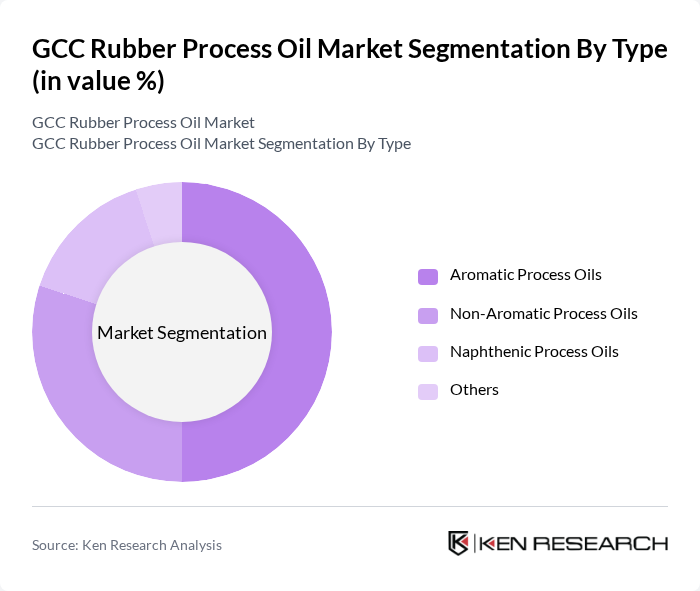
By Type:The market is segmented into various types of rubber process oils, including aromatic, non-aromatic, naphthenic, and others. Aromatic process oils are widely used due to their excellent performance in enhancing the properties of rubber products. Non-aromatic oils are gaining popularity for their lower toxicity and environmental impact. Naphthenic oils are preferred for their high solvency and compatibility with various rubber compounds. The "Others" category includes specialty oils that cater to niche applications.
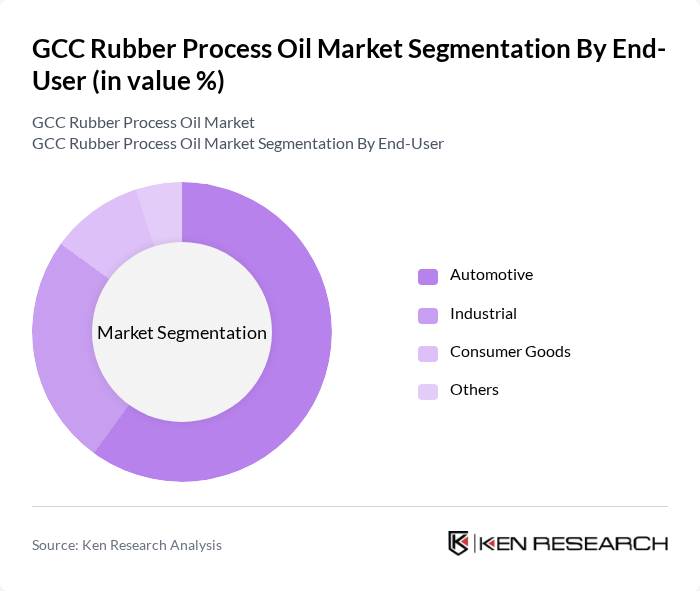
By End-User:The rubber process oil market is segmented based on end-users, including automotive, industrial, consumer goods, and others. The automotive sector is the largest consumer, driven by the demand for tires and rubber components in vehicles. The industrial segment follows, utilizing rubber oils in manufacturing processes. Consumer goods also represent a significant portion, as rubber is essential in various household products. The "Others" category includes applications in construction and electronics.
The GCC Rubber Process Oil Market is characterized by a dynamic mix of regional and international players. Leading participants such as ExxonMobil, Shell Chemicals, TotalEnergies, Repsol, Chevron Phillips Chemical, Nynas AB, Idemitsu Kosan Co., Ltd., Fuchs Petrolub SE, Avista Oil AG, Petronas Chemicals Group Berhad, Phillips 66, H&R Group, Kraton Corporation, Afton Chemical Corporation, Lanxess AG contribute to innovation, geographic expansion, and service delivery in this space.
The GCC rubber process oil market is poised for significant transformation, driven by a shift towards sustainable practices and increased investment in research and development. As manufacturers prioritize eco-friendly products, the demand for bio-based oils is expected to rise, aligning with global sustainability trends. Additionally, digital transformation in manufacturing processes will enhance operational efficiency, enabling companies to meet evolving consumer preferences. These trends will shape the market landscape, fostering innovation and growth opportunities in the coming years.
| Segment | Sub-Segments |
|---|---|
| By Type | Aromatic Process Oils Non-Aromatic Process Oils Naphthenic Process Oils Others |
| By End-User | Automotive Industrial Consumer Goods Others |
| By Application | Tire Manufacturing Rubber Goods Production Coatings and Adhesives Others |
| By Source | Petrochemical Sources Bio-based Sources Recycled Sources Others |
| By Region | Saudi Arabia UAE Qatar Others |
| By Distribution Channel | Direct Sales Distributors Online Sales Others |
| By Product Formulation | Blended Oils Specialty Oils Standard Oils Others |
| Scope Item/Segment | Sample Size | Target Respondent Profiles |
|---|---|---|
| Automotive Rubber Products | 100 | Product Managers, Procurement Specialists |
| Industrial Rubber Applications | 80 | Operations Managers, Supply Chain Analysts |
| Consumer Goods Rubber Usage | 70 | Brand Managers, Marketing Directors |
| Construction Sector Rubber Products | 60 | Project Managers, Material Engineers |
| Rubber Processing Equipment Suppliers | 50 | Sales Executives, Technical Support Managers |
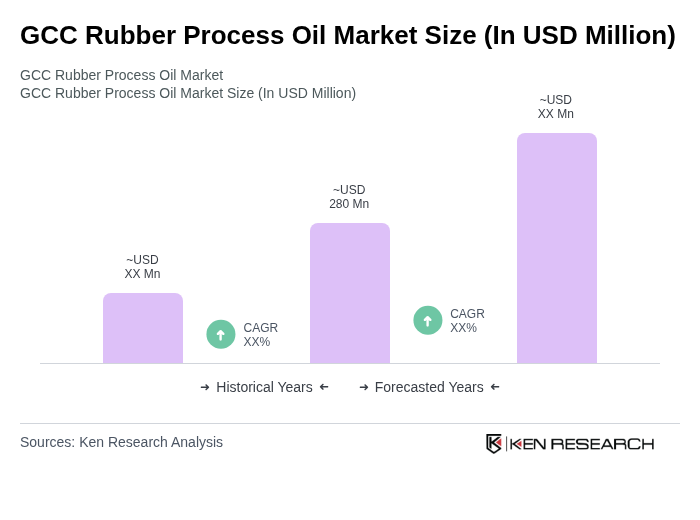
The GCC Rubber Process Oil Market is valued at approximately USD 280 million, driven by increasing demand for rubber in industries such as automotive and consumer goods, along with the rising production of tires and rubber products.

What makes us stand out is that our consultants follow Robust, Refine and Result (RRR) methodology. Robust for clear definitions, approaches and sanity checking, Refine for differentiating respondents' facts and opinions, and Result for presenting data with story.

We have set a benchmark in the industry by offering our clients with syndicated and customized market research reports featuring coverage of entire market as well as meticulous research and analyst insights.

While we don't replace traditional research, we flip the method upside down. Our dual approach of Top Bottom & Bottom Top ensures quality deliverable by not just verifying company fundamentals but also looking at the sector and macroeconomic factors.

With one step in the future, our research team constantly tries to show you the bigger picture. We help with some of the tough questions you may encounter along the way: How is the industry positioned? Best marketing channel? KPI's of competitors? By aligning every element, we help maximize success.

Our report gives you instant access to the answers and sources that other companies might choose to hide. We elaborate each steps of research methodology we have used and showcase you the sample size to earn your trust.

If you need any support, we are here! We pride ourselves on universe strength, data quality, and quick, friendly, and professional service.













