Region:Global
Author(s):Shubham
Product Code:KRAA2485
Pages:87
Published On:August 2025
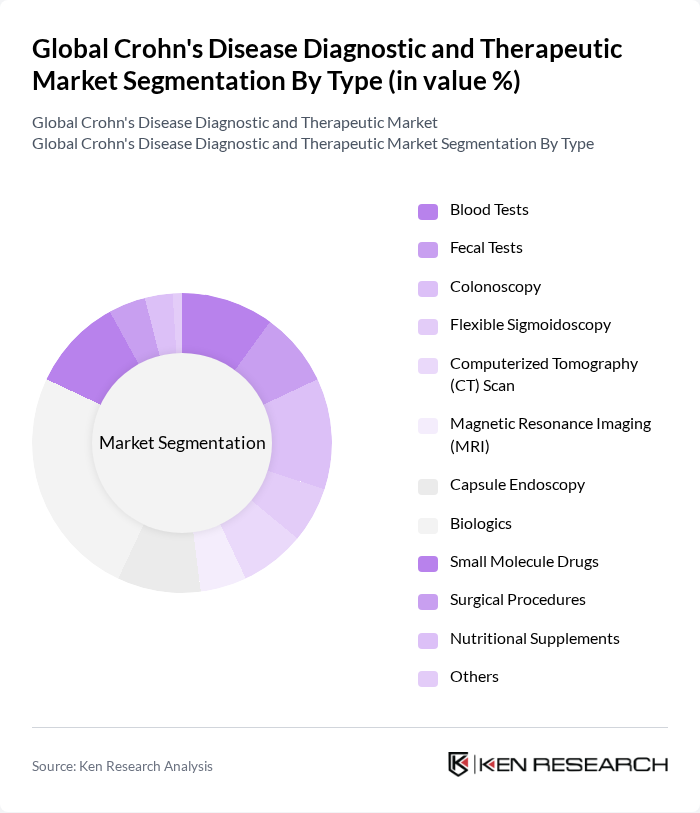
By Type:The market is segmented into various diagnostic and therapeutic types, including blood tests, fecal tests, colonoscopy, flexible sigmoidoscopy, computerized tomography (CT) scan, magnetic resonance imaging (MRI), capsule endoscopy, biologics, small molecule drugs, surgical procedures, nutritional supplements, and others. Among these,biologicshave emerged as the leading sub-segment due to their effectiveness in managing moderate to severe cases of Crohn's disease, driving significant market growth. The emergence of biosimilars and anti-cytokine agents is further shaping the therapeutic landscape.
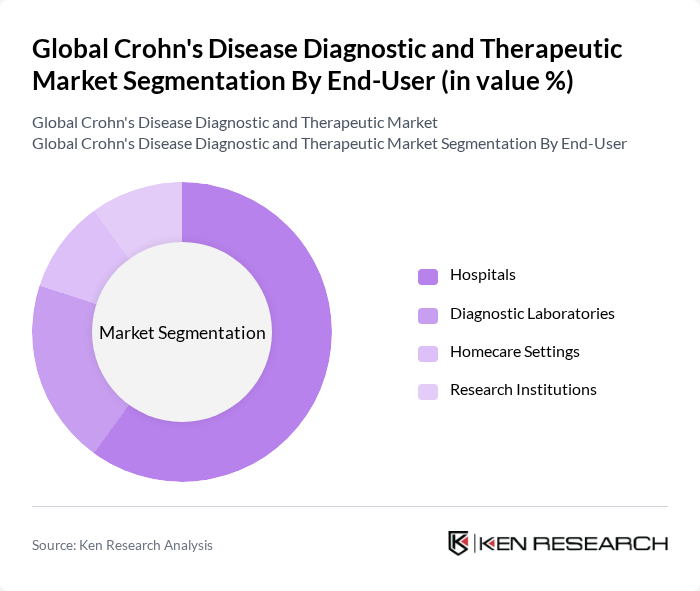
By End-User:The end-user segmentation includes hospitals, diagnostic laboratories, homecare settings, and research institutions.Hospitalsare the dominant end-user segment, primarily due to their comprehensive facilities for diagnosis and treatment, as well as the increasing number of patients seeking specialized care for Crohn's disease. Diagnostic laboratories and research institutions are also experiencing growth due to the rising demand for advanced testing and clinical trials.
The Global Crohn's Disease Diagnostic and Therapeutic Market is characterized by a dynamic mix of regional and international players. Leading participants such as AbbVie Inc., Johnson & Johnson (Janssen Pharmaceuticals), Takeda Pharmaceutical Company Limited, Pfizer Inc., Amgen Inc., Merck & Co., Inc., Bristol-Myers Squibb Company, Gilead Sciences, Inc., Ferring Pharmaceuticals, Sandoz International GmbH, Celgene Corporation, UCB S.A., Biogen Inc., Eli Lilly and Company, Novartis AG, Takeda Pharmaceuticals USA, Inc., Janssen Biotech, Inc., Samsung Bioepis Co., Ltd., Celltrion Healthcare Co., Ltd., Galapagos NV contribute to innovation, geographic expansion, and service delivery in this space.
The future of the Crohn's disease diagnostic and therapeutic market is poised for significant transformation, driven by technological advancements and a shift towards personalized medicine. As healthcare systems increasingly adopt telemedicine, patient access to specialists will improve, enhancing early diagnosis and treatment options. Furthermore, the integration of digital health technologies is expected to streamline patient management, fostering a more efficient healthcare delivery model that prioritizes patient-centric care and improved outcomes.
| Segment | Sub-Segments |
|---|---|
| By Type | Blood Tests Fecal Tests Colonoscopy Flexible Sigmoidoscopy Computerized Tomography (CT) Scan Magnetic Resonance Imaging (MRI) Capsule Endoscopy Biologics Small Molecule Drugs Surgical Procedures Nutritional Supplements Others |
| By End-User | Hospitals Diagnostic Laboratories Homecare Settings Research Institutions |
| By Distribution Channel | Direct Sales Online Pharmacies Retail Pharmacies Hospitals and Clinics |
| By Region | North America (United States, Canada, Mexico) Europe (United Kingdom, Germany, France, Italy, Spain, Russia, Benelux, Nordics, Rest of Europe) Asia-Pacific (China, India, Japan, South Korea, ASEAN, Oceania, Rest of Asia Pacific) Latin America (Brazil, Argentina, Rest of South America) Middle East & Africa (Turkey, Israel, GCC, North Africa, South Africa, Rest of Middle East & Africa) |
| By Patient Demographics | Age Group Gender Socioeconomic Status |
| By Treatment Stage | Induction Therapy Maintenance Therapy Surgical Intervention |
| By Severity of Disease | Mild Moderate Severe Others |
| Scope Item/Segment | Sample Size | Target Respondent Profiles |
|---|---|---|
| Gastroenterology Clinics | 80 | Gastroenterologists, Nurse Practitioners |
| Patient Support Groups | 60 | Patients with Crohn's Disease, Caregivers |
| Pharmaceutical Sales Representatives | 40 | Sales Managers, Product Specialists |
| Diagnostic Laboratories | 40 | Laboratory Managers, Clinical Pathologists |
| Health Insurance Providers | 40 | Policy Analysts, Medical Directors |
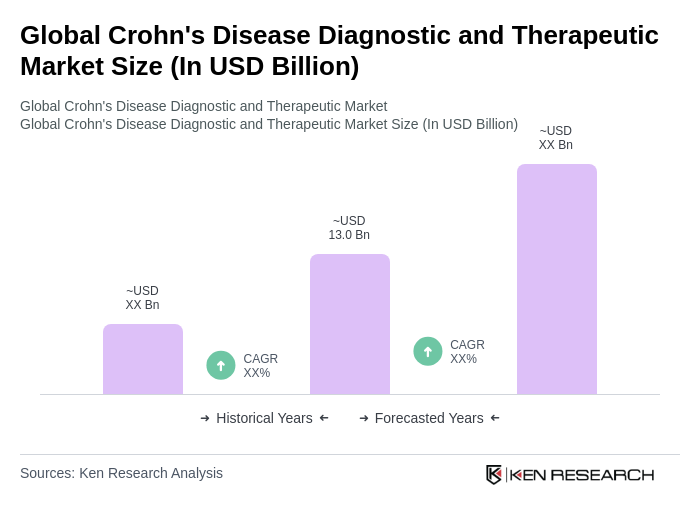
The Global Crohn's Disease Diagnostic and Therapeutic Market is valued at approximately USD 13.0 billion, reflecting significant growth driven by the increasing prevalence of Crohn's disease and advancements in treatment options.

What makes us stand out is that our consultants follow Robust, Refine and Result (RRR) methodology. Robust for clear definitions, approaches and sanity checking, Refine for differentiating respondents' facts and opinions, and Result for presenting data with story.

We have set a benchmark in the industry by offering our clients with syndicated and customized market research reports featuring coverage of entire market as well as meticulous research and analyst insights.

While we don't replace traditional research, we flip the method upside down. Our dual approach of Top Bottom & Bottom Top ensures quality deliverable by not just verifying company fundamentals but also looking at the sector and macroeconomic factors.

With one step in the future, our research team constantly tries to show you the bigger picture. We help with some of the tough questions you may encounter along the way: How is the industry positioned? Best marketing channel? KPI's of competitors? By aligning every element, we help maximize success.

Our report gives you instant access to the answers and sources that other companies might choose to hide. We elaborate each steps of research methodology we have used and showcase you the sample size to earn your trust.

If you need any support, we are here! We pride ourselves on universe strength, data quality, and quick, friendly, and professional service.













