Region:Global
Author(s):Shubham
Product Code:KRAD1363
Pages:83
Published On:December 2025
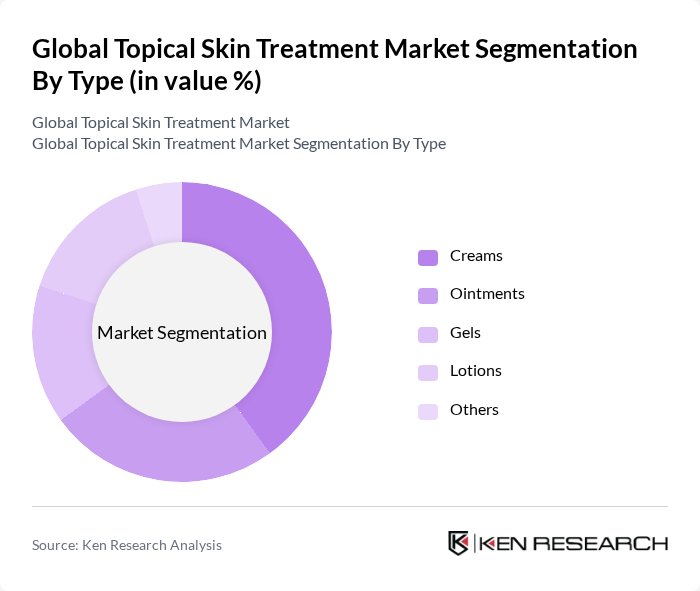
By Type:The topical skin treatment market is segmented into various types, including creams, ointments, gels, lotions, and others. Among these, creams are the most dominant due to their versatility and effectiveness in treating a wide range of skin conditions. They are preferred for their ease of application and ability to provide hydration and protection to the skin. Ointments and gels also hold significant market shares, particularly for targeted treatments, while lotions are favored for their lightweight texture, making them popular among consumers seeking non-greasy options.
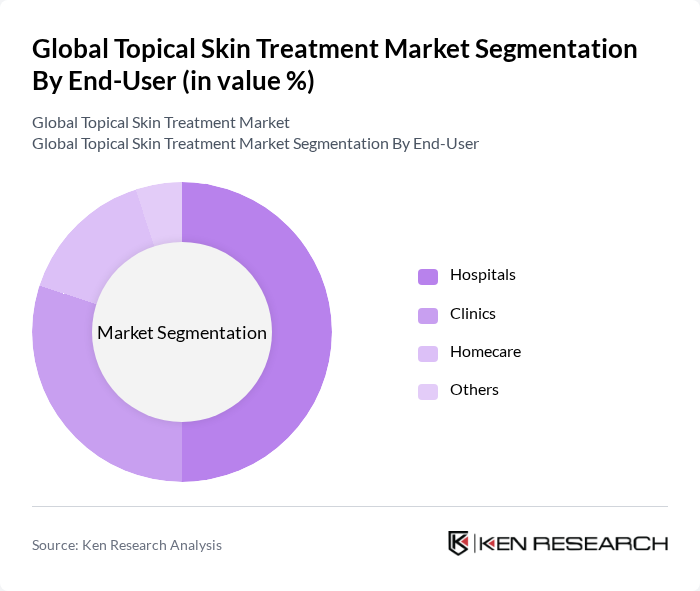
By End-User:The end-user segmentation includes hospitals, clinics, homecare, and others. Hospitals are the leading end-users due to their capacity to provide comprehensive care and access to advanced treatment options. Clinics also play a significant role, particularly in outpatient care, while homecare is gaining traction as more consumers prefer self-treatment options for minor skin issues. The growing trend of telemedicine is further enhancing the homecare segment, allowing patients to receive consultations and prescriptions remotely.
The Global Topical Skin Treatment Market is characterized by a dynamic mix of regional and international players. Leading participants such as Johnson & Johnson, Procter & Gamble, GlaxoSmithKline, Bayer AG, L'Oréal, Unilever, Beiersdorf AG, Merck & Co., AbbVie Inc., Amgen Inc., Galderma, Aclaris Therapeutics, Revance Therapeutics, Dermira, Sientra contribute to innovation, geographic expansion, and service delivery in this space.
The future of the topical skin treatment market is poised for significant transformation, driven by technological advancements and evolving consumer preferences. The integration of AI-powered personalization tools is expected to enhance product offerings, allowing for tailored skincare solutions that meet individual needs. Additionally, the focus on sustainable packaging and eco-design will likely shape product development, aligning with consumer demand for environmentally friendly options. These trends indicate a dynamic market landscape that prioritizes innovation and sustainability.
| Segment | Sub-Segments |
|---|---|
| By Type | Creams Ointments Gels Lotions Others |
| By End-User | Hospitals Clinics Homecare Others |
| By Distribution Channel | Online Retail Pharmacies Supermarkets/Hypermarkets Specialty Stores Others |
| By Ingredient Type | Synthetic Ingredients Natural Ingredients Biotech Ingredients Others |
| By Application | Acne Treatment Anti-Aging Psoriasis Treatment Eczema Treatment Others |
| By Packaging Type | Tubes Jars Pumps Others |
| By Region | North America Europe Asia-Pacific Latin America Middle East & Africa |
| Scope Item/Segment | Sample Size | Target Respondent Profiles |
|---|---|---|
| Dermatologist Insights | 100 | Board-Certified Dermatologists, Skin Care Specialists |
| Patient Experience Surveys | 150 | Patients using topical treatments for acne, eczema, and psoriasis |
| Pharmacist Feedback | 80 | Community Pharmacists, Pharmacy Managers |
| Healthcare Provider Interviews | 70 | General Practitioners, Nurse Practitioners |
| Market Trend Analysis | 60 | Healthcare Analysts, Market Researchers |
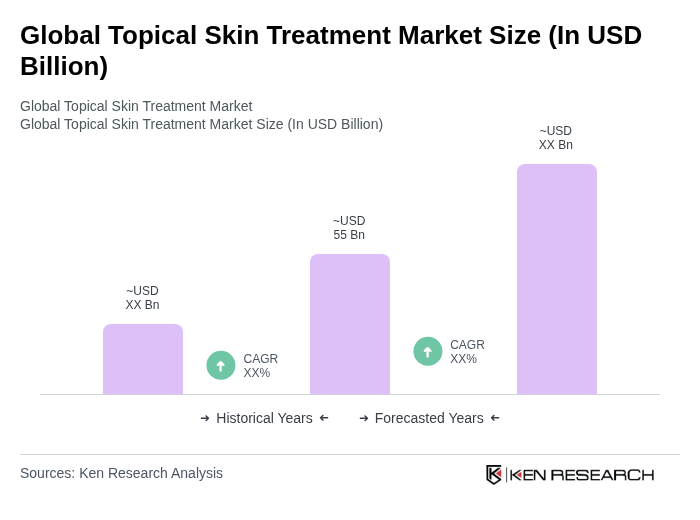
The Global Topical Skin Treatment Market is valued at approximately USD 55 billion, driven by the increasing prevalence of skin conditions and advancements in formulation technologies that enhance treatment efficacy and patient adherence.

What makes us stand out is that our consultants follow Robust, Refine and Result (RRR) methodology. Robust for clear definitions, approaches and sanity checking, Refine for differentiating respondents' facts and opinions, and Result for presenting data with story.

We have set a benchmark in the industry by offering our clients with syndicated and customized market research reports featuring coverage of entire market as well as meticulous research and analyst insights.

While we don't replace traditional research, we flip the method upside down. Our dual approach of Top Bottom & Bottom Top ensures quality deliverable by not just verifying company fundamentals but also looking at the sector and macroeconomic factors.

With one step in the future, our research team constantly tries to show you the bigger picture. We help with some of the tough questions you may encounter along the way: How is the industry positioned? Best marketing channel? KPI's of competitors? By aligning every element, we help maximize success.

Our report gives you instant access to the answers and sources that other companies might choose to hide. We elaborate each steps of research methodology we have used and showcase you the sample size to earn your trust.

If you need any support, we are here! We pride ourselves on universe strength, data quality, and quick, friendly, and professional service.













