Region:Asia
Author(s):Rebecca
Product Code:KRAB0843
Pages:80
Published On:December 2025
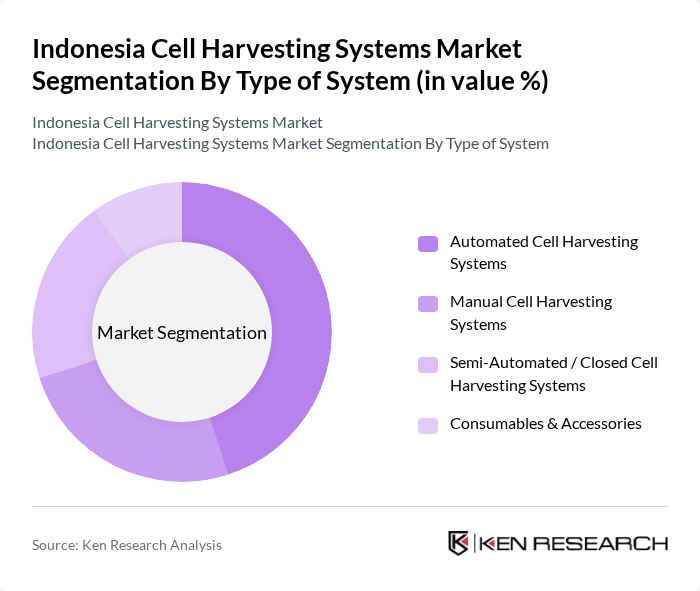
By Type of System:The market is segmented into various types of cell harvesting systems, including automated, manual, semi-automated, and consumables & accessories. Among these, automated cell harvesting systems are gaining traction due to their efficiency, lowered contamination risk, and ability to minimize human error, making them the preferred choice in clinical settings. The demand for consumables and accessories is also significant, as they are essential for the operation of harvesting systems.
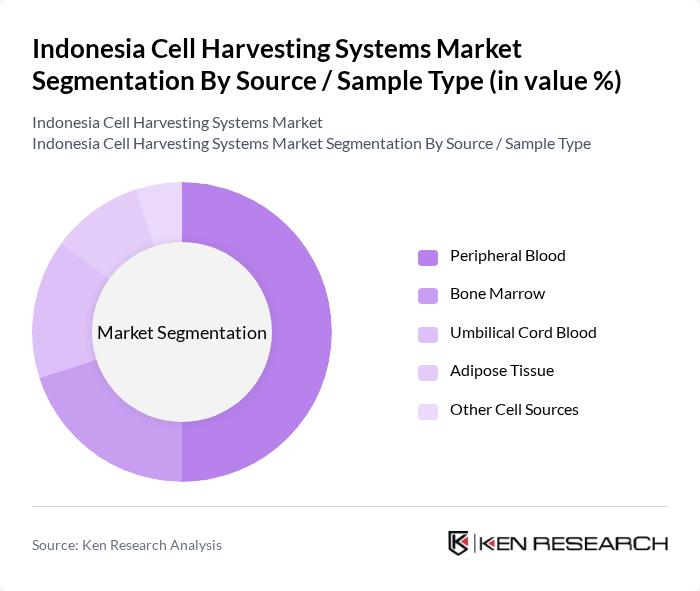
By Source / Sample Type:The market is further categorized based on the source or sample type, including peripheral blood, bone marrow, umbilical cord blood, adipose tissue, and other cell sources. Peripheral blood is the leading source due to its non-invasive collection process and the increasing prevalence of blood-related disorders, which drives demand for stem cell therapies derived from this source.
The Indonesia Cell Harvesting Systems Market is characterized by a dynamic mix of regional and international players. Leading participants such as PT Bio Farma (Persero), PT Kalbe Farma Tbk, PT Indofarma Tbk, PT Kimia Farma Tbk, PT Medikaloka Hermina Tbk, PT Siloam International Hospitals Tbk, PT Mitra Keluarga Karyasehat Tbk, PT Sejahteraraya Anugrahjaya Tbk (Mayapada Hospitals), PT Prodia Widyahusada Tbk, PT Enseval Putera Megatrading Tbk, PT Itama Ranoraya Tbk, PT Enseval Medika Prima, PT Genetika Science, PT Phapros Tbk, PT IDS Medical Systems Indonesia contribute to innovation, geographic expansion, and service delivery in this space.
The future of the Indonesia cell harvesting systems market appears promising, driven by emerging biotech innovations and government support. The biotech industry is projected to exceed USD 2 billion in future, bolstered by initiatives like the Biomedical & Genome Science Initiative (BGSi). Additionally, the integration of AI and digital transformation in healthcare is gaining momentum, with the government promoting the use of AI and robotics, which could enhance the efficiency and effectiveness of cell harvesting processes in clinical settings.
| Segment | Sub-Segments |
|---|---|
| By Type of System | Automated Cell Harvesting Systems Manual Cell Harvesting Systems Semi-Automated / Closed Cell Harvesting Systems Consumables & Accessories |
| By Source / Sample Type | Peripheral Blood Bone Marrow Umbilical Cord Blood Adipose Tissue Other Cell Sources |
| By Application | Stem Cell Transplantation Regenerative Medicine & Cell Therapy Oncology & Hematology Clinical Research & Trials Others |
| By End-User | Hospitals & Transplant Centers Clinics & Specialty Centers Academic & Research Institutes Biopharmaceutical & Biotechnology Companies Contract Research & Manufacturing Organizations (CROs/CMOs) |
| By Technology | Centrifugation-based Systems Filtration-based Systems Magnetic Separation-based Systems Microfluidics and Other Emerging Technologies |
| By Region | Java Sumatra Bali & Nusa Tenggara Kalimantan Sulawesi Papua & Maluku |
| Scope Item/Segment | Sample Size | Target Respondent Profiles |
|---|---|---|
| Biotechnology Research Institutions | 100 | Research Scientists, Lab Managers |
| Healthcare Providers Utilizing Cell Therapies | 80 | Clinical Directors, Medical Researchers |
| Manufacturers of Cell Harvesting Equipment | 70 | Product Managers, Sales Executives |
| Regulatory Bodies and Compliance Experts | 50 | Regulatory Affairs Specialists, Compliance Officers |
| Investors in Biotechnology Startups | 60 | Venture Capitalists, Angel Investors |
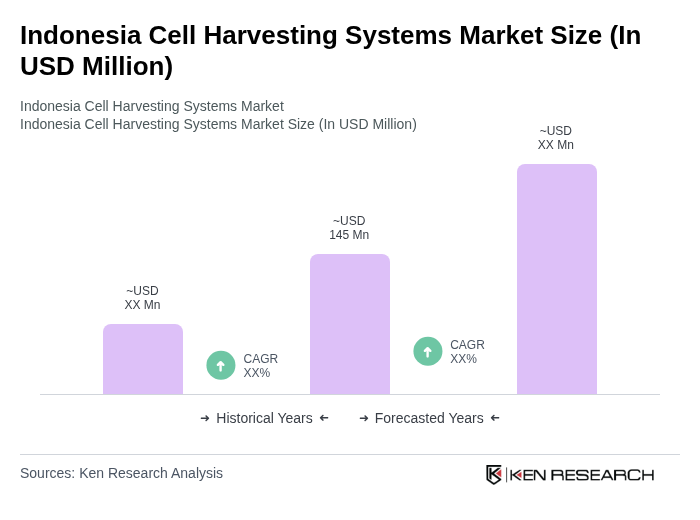
The Indonesia Cell Harvesting Systems Market is valued at approximately USD 7.2 billion, driven by the increasing demand for regenerative medicine, advancements in automation, and the rising prevalence of chronic diseases.

What makes us stand out is that our consultants follow Robust, Refine and Result (RRR) methodology. Robust for clear definitions, approaches and sanity checking, Refine for differentiating respondents' facts and opinions, and Result for presenting data with story.

We have set a benchmark in the industry by offering our clients with syndicated and customized market research reports featuring coverage of entire market as well as meticulous research and analyst insights.

While we don't replace traditional research, we flip the method upside down. Our dual approach of Top Bottom & Bottom Top ensures quality deliverable by not just verifying company fundamentals but also looking at the sector and macroeconomic factors.

With one step in the future, our research team constantly tries to show you the bigger picture. We help with some of the tough questions you may encounter along the way: How is the industry positioned? Best marketing channel? KPI's of competitors? By aligning every element, we help maximize success.

Our report gives you instant access to the answers and sources that other companies might choose to hide. We elaborate each steps of research methodology we have used and showcase you the sample size to earn your trust.

If you need any support, we are here! We pride ourselves on universe strength, data quality, and quick, friendly, and professional service.













