About the Report
Base Year 2024Indonesia Glass Curtain Wall Market Overview
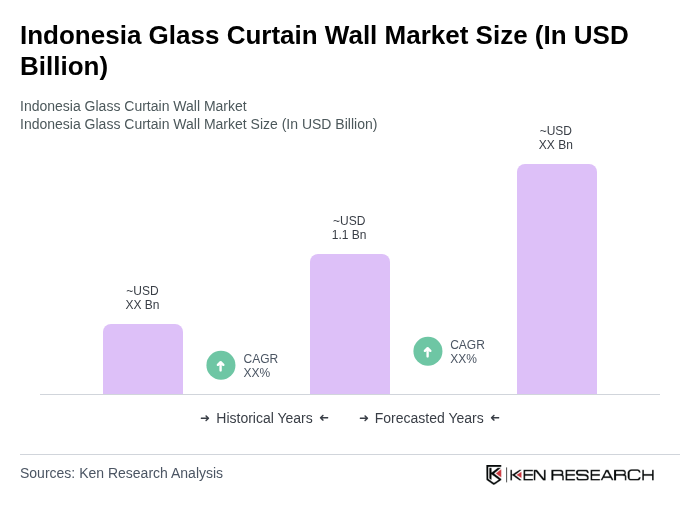
- The Indonesia Glass Curtain Wall Market is valued at USD 1.1 billion, based on a five-year historical analysis and its share within the expanding Asia Pacific and global glass curtain wall market. This growth is primarily driven by rapid urbanization, increasing demand for energy-efficient buildings, and a surge in commercial and high-rise construction activities across the country. The market has seen a significant rise in the adoption of glass curtain walls due to their aesthetic appeal and functional benefits, such as improved thermal performance, daylighting, acoustic comfort, and alignment with green building certifications used across Asia Pacific.
- Key cities dominating the market include Jakarta, Surabaya, and Bandung. Jakarta, as the capital and primary business hub, leads due to its extensive commercial office, mixed-use, retail, and high-end residential development projects. Surabaya and Bandung follow closely, benefiting from regional urbanization corridors, transit-oriented development, and growing investment in hotels, shopping centers, and institutional buildings. The concentration of economic activities, population growth, and a strong pipeline of mid- to high-rise projects in these cities further fuels the demand for modern façade solutions like glass curtain walls, particularly for premium commercial, hospitality, and retail assets.
- In 2023, the Indonesian government strengthened the energy performance framework for buildings through instruments such as the Guidelines for Green Buildings issued by the Ministry of Public Works and Housing and local green building regulations in Jakarta, which mandate or incentivize minimum energy efficiency standards, building envelope performance, and solar heat gain control for new large commercial and public buildings. These requirements encourage the use of high-performance glazing, low?emissivity glass, and optimized curtain wall designs to reduce cooling loads and promote sustainable construction practices, thereby enhancing the market's growth potential. Compliance with these standards and green building certification schemes is expected to drive the adoption of advanced glazing technologies, including double- and triple-glazed curtain wall systems, shading-integrated façades, and thermally broken framing in the construction sector.
Indonesia Glass Curtain Wall Market Segmentation
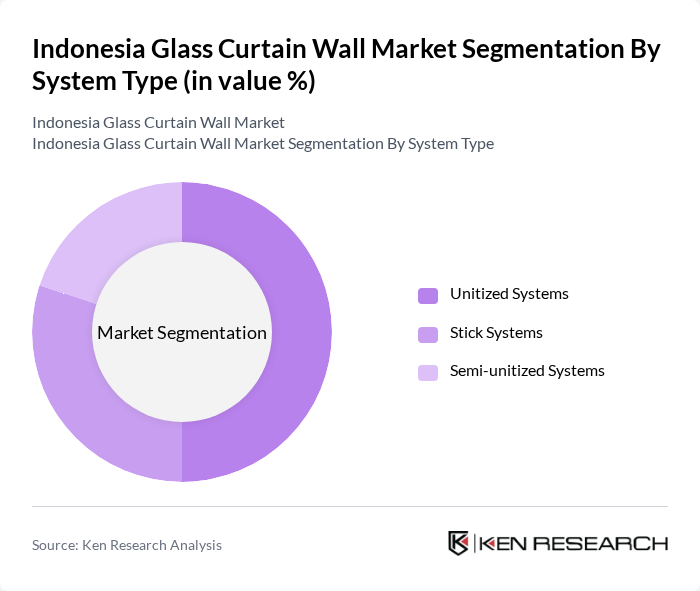
By System Type:The system type segmentation includes Unitized Systems, Stick Systems, and Semi-unitized Systems. Among these, Unitized Systems are gaining traction due to their ease of installation, reduced on-site labor, better quality control in factory fabrication, and suitability for high-rise and fast-track projects, aligning with broader Asia Pacific trends. Stick Systems, while traditional, are still prevalent in low- to mid-rise buildings and projects requiring on-site customization, complex geometries, or phased construction. Semi-unitized Systems offer a balance between the two, combining factory-assembled components with on-site framing, and are increasingly adopted in projects seeking both installation speed and design flexibility. The preference for Unitized Systems is further driven by the growing trend towards prefabrication, tighter construction timelines, and rising labor costs in major Indonesian cities.
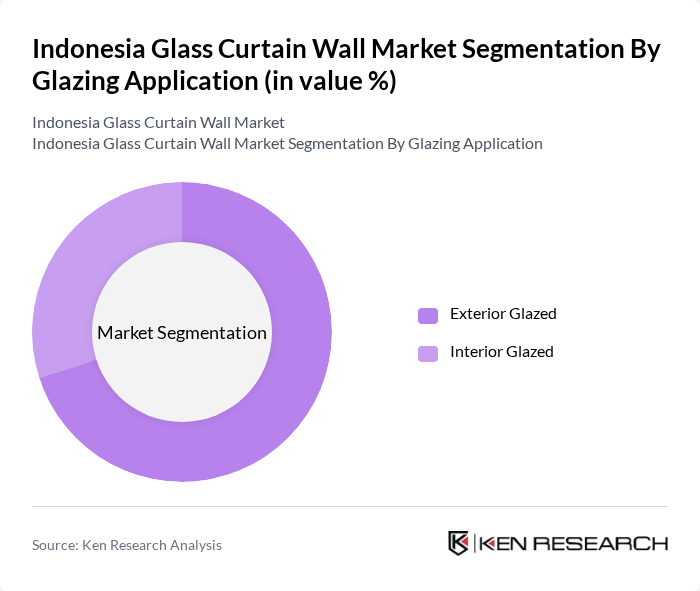
By Glazing Application:The glazing application segmentation consists of Exterior Glazed and Interior Glazed. Exterior Glazed applications dominate the market due to their significant role in enhancing building aesthetics, improving façade energy performance, and enabling larger glazed areas commonly specified in commercial, office, hotel, and mixed-use developments across Asia Pacific, including Indonesia. The trend towards contemporary architecture, skyline-defining towers, and the increasing focus on natural light utilization to improve occupant well?being further bolster the demand for exterior glazing. Interior Glazed applications, while important, are primarily used for internal partitions, atriums, and lobby enclosures and therefore account for a smaller share of overall curtain wall demand, with more limited impact on total market value relative to exterior façades.
Indonesia Glass Curtain Wall Market Competitive Landscape
The Indonesia Glass Curtain Wall Market is characterized by a dynamic mix of regional and international players. Leading participants such as PT Asahimas Flat Glass Tbk, PT Mulia Glass, PT Triniti Dynamic, PT Nikko Steel & Glass, PT YKK AP Indonesia, PT Alcomex Indo, PT Betonjaya Manunggal Tbk (façade and structural partners), PT Pilar Mas Sakti, PT Sinar Mas Multiartha (relevant construction/real-estate affiliates), PT Schüco Indonesia (through regional operations), PT Saint-Gobain Indonesia, PT Pilkington / NSG Group Indonesia, PT Total Bangun Persada Tbk (EPC/facade integrator), PT Acset Indonusa Tbk, Selected Emerging Local Curtain Wall Fabricators contribute to innovation, geographic expansion, and service delivery in this space.
Indonesia Glass Curtain Wall Market Industry Analysis
Growth Drivers
- Increasing Urbanization:Indonesia's urban population is projected to reach 57% by the future, up from 56% in 2020, according to the World Bank. This rapid urbanization drives the demand for modern infrastructure, including glass curtain walls, as urban areas expand. The construction of high-rise buildings and commercial spaces in cities like Jakarta and Surabaya is expected to increase significantly, with an estimated 1,200 new skyscrapers planned in the future, further boosting the glass curtain wall market.
- Rising Demand for Energy Efficiency:The Indonesian government aims to reduce energy consumption by 20% by the future, promoting energy-efficient building designs. Glass curtain walls, known for their thermal insulation properties, are increasingly favored in new constructions. The Ministry of Energy and Mineral Resources reported that energy-efficient buildings can save up to 30% on energy costs, making them attractive to developers and investors looking to comply with sustainability standards and reduce operational expenses.
- Government Infrastructure Initiatives:The Indonesian government has allocated approximately $400 billion for infrastructure development from 2020 to the future, focusing on urban development and public facilities. This investment includes the construction of commercial buildings and public infrastructure, which often utilize glass curtain walls for aesthetic and functional benefits. The government's commitment to improving infrastructure is expected to create a favorable environment for the glass curtain wall market, driving growth in the coming years.
Market Challenges
- High Initial Investment Costs:The installation of glass curtain walls involves significant upfront costs, often exceeding $200 per square meter. This high initial investment can deter developers, especially in a market where budget constraints are common. Additionally, the long payback period associated with energy-efficient designs may discourage some investors, limiting the market's growth potential despite the long-term savings on energy costs.
- Regulatory Compliance Issues:Navigating Indonesia's complex regulatory landscape poses challenges for glass curtain wall manufacturers and installers. Compliance with local building codes and environmental regulations can be cumbersome, often requiring extensive documentation and approvals. The Ministry of Public Works and Housing has reported that delays in obtaining necessary permits can extend project timelines by up to 30%, impacting overall project feasibility and increasing costs for developers.
Indonesia Glass Curtain Wall Market Future Outlook
The Indonesia glass curtain wall market is poised for significant growth, driven by urbanization and a shift towards energy-efficient building practices. As the government continues to invest in infrastructure, the demand for modern architectural solutions will rise. Additionally, advancements in smart glass technologies and sustainable building practices will further enhance market dynamics. The integration of IoT in building management systems is expected to streamline operations, making glass curtain walls more appealing to developers and investors alike.
Market Opportunities
- Expansion in Commercial Real Estate:The commercial real estate sector in Indonesia is projected to grow by 15% annually, driven by increasing foreign investments. This growth presents a significant opportunity for glass curtain wall manufacturers, as modern office buildings and retail spaces increasingly adopt glass facades for their aesthetic appeal and energy efficiency.
- Adoption of Smart Glass Technologies:The market for smart glass technologies is expected to reach $1.5 billion in the future in Indonesia. This trend offers opportunities for manufacturers to innovate and provide advanced solutions that enhance energy efficiency and user comfort, positioning themselves as leaders in the evolving glass curtain wall market.
Scope of the Report
| Segment | Sub-Segments |
|---|---|
| By System Type | Unitized Systems Stick Systems Semi-unitized Systems |
| By Glazing Application | Exterior Glazed Interior Glazed |
| By End-User | Commercial Public Residential |
| By Construction Type | New Construction Refurbishment / Retrofit |
| By Glazing Configuration | Single Glazed Double Glazed Triple Glazed |
| By Region | Java Sumatra Kalimantan Sulawesi Bali & Nusa Tenggara Others |
Key Target Audience
Investors and Venture Capitalist Firms
Government and Regulatory Bodies (e.g., Ministry of Public Works and Housing, Ministry of Trade)
Manufacturers and Producers
Distributors and Retailers
Architectural Firms
Construction Companies
Real Estate Developers
Financial Institutions
Players Mentioned in the Report:
PT Asahimas Flat Glass Tbk
PT Mulia Glass
PT Triniti Dynamic
PT Nikko Steel & Glass
PT YKK AP Indonesia
PT Alcomex Indo
PT Betonjaya Manunggal Tbk (facade and structural partners)
PT Pilar Mas Sakti
PT Sinar Mas Multiartha (relevant construction/real-estate affiliates)
PT Schuco Indonesia (through regional operations)
PT Saint-Gobain Indonesia
PT Pilkington / NSG Group Indonesia
PT Total Bangun Persada Tbk (EPC/facade integrator)
PT Acset Indonusa Tbk
Selected Emerging Local Curtain Wall Fabricators
Table of Contents
Market Assessment Phase
1. Executive Summary and Approach
2. Indonesia Glass Curtain Wall Market Overview
2.1 Key Insights and Strategic Recommendations
2.2 Indonesia Glass Curtain Wall Market Overview
2.3 Definition and Scope
2.4 Evolution of Market Ecosystem
2.5 Timeline of Key Regulatory Milestones
2.6 Value Chain & Stakeholder Mapping
2.7 Business Cycle Analysis
2.8 Policy & Incentive Landscape
3. Indonesia Glass Curtain Wall Market Analysis
3.1 Growth Drivers
3.1.1 Increasing Urbanization
3.1.2 Rising Demand for Energy Efficiency
3.1.3 Government Infrastructure Initiatives
3.1.4 Technological Advancements in Glass Manufacturing
3.2 Market Challenges
3.2.1 High Initial Investment Costs
3.2.2 Regulatory Compliance Issues
3.2.3 Competition from Alternative Building Materials
3.2.4 Fluctuating Raw Material Prices
3.3 Market Opportunities
3.3.1 Expansion in Commercial Real Estate
3.3.2 Adoption of Smart Glass Technologies
3.3.3 Sustainable Building Practices
3.3.4 Growth in Green Building Certifications
3.4 Market Trends
3.4.1 Increasing Use of Prefabricated Glass Panels
3.4.2 Integration of IoT in Building Management
3.4.3 Focus on Aesthetic and Functional Design
3.4.4 Shift Towards Local Sourcing of Materials
3.5 Government Regulation
3.5.1 Building Code Compliance
3.5.2 Environmental Impact Assessments
3.5.3 Energy Efficiency Standards
3.5.4 Import Tariffs on Glass Products
4. SWOT Analysis
5. Stakeholder Analysis
6. Porter's Five Forces Analysis
7. Indonesia Glass Curtain Wall Market Market Size, 2019-2024
7.1 By Value
7.2 By Volume
7.3 By Average Selling Price
8. Indonesia Glass Curtain Wall Market Segmentation
8.1 By System Type
8.1.1 Unitized Systems
8.1.2 Stick Systems
8.1.3 Semi-unitized Systems
8.2 By Glazing Application
8.2.1 Exterior Glazed
8.2.2 Interior Glazed
8.3 By End-User
8.3.1 Commercial
8.3.2 Public
8.3.3 Residential
8.4 By Construction Type
8.4.1 New Construction
8.4.2 Refurbishment / Retrofit
8.5 By Glazing Configuration
8.5.1 Single Glazed
8.5.2 Double Glazed
8.5.3 Triple Glazed
8.6 By Region
8.6.1 Java
8.6.2 Sumatra
8.6.3 Kalimantan
8.6.4 Sulawesi
8.6.5 Bali & Nusa Tenggara
8.6.6 Others
9. Indonesia Glass Curtain Wall Market Competitive Analysis
9.1 Market Share of Key Players
9.2 Cross Comparison of Key Players
9.2.1 Company Name
9.2.2 Group Size (Large, Medium, or Small as per industry convention)
9.2.3 Indonesia Glass Curtain Wall Revenue (IDR / USD)
9.2.4 Indonesia Glass Curtain Wall Revenue Growth Rate (%)
9.2.5 Indonesia Market Share (%)
9.2.6 Order Backlog / Book-to-Bill Ratio
9.2.7 EBITDA Margin (%)
9.2.8 Return on Invested Capital (ROIC) / ROCE (%)
9.2.9 Average Project Size (Value per Project)
9.2.10 Project Win Rate (%) in Tenders
9.2.11 Capacity Utilization Rate (%)
9.2.12 On-time Project Delivery Rate (%)
9.2.13 R&D / Capex Intensity (% of Revenue)
9.2.14 Days Sales Outstanding (DSO)
9.2.15 Safety Performance (e.g., LTIFR)
9.3 SWOT Analysis of Top Players
9.4 Pricing Analysis
9.5 Detailed Profile of Major Companies
9.5.1 PT Asahimas Flat Glass Tbk
9.5.2 PT Mulia Glass
9.5.3 PT Triniti Dynamic
9.5.4 PT Nikko Steel & Glass
9.5.5 PT YKK AP Indonesia
9.5.6 PT Alcomex Indo
9.5.7 PT Betonjaya Manunggal Tbk (façade and structural partners)
9.5.8 PT Pilar Mas Sakti
9.5.9 PT Sinar Mas Multiartha (relevant construction/real-estate affiliates)
9.5.10 PT Schüco Indonesia (through regional operations)
9.5.11 PT Saint-Gobain Indonesia
9.5.12 PT Pilkington / NSG Group Indonesia
9.5.13 PT Total Bangun Persada Tbk (EPC/facade integrator)
9.5.14 PT Acset Indonusa Tbk
9.5.15 Selected Emerging Local Curtain Wall Fabricators
10. Indonesia Glass Curtain Wall Market End-User Analysis
10.1 Procurement Behavior of Key Ministries
10.1.1 Ministry of Public Works
10.1.2 Ministry of Housing
10.1.3 Ministry of Environment
10.1.4 Ministry of Trade
10.2 Corporate Spend on Infrastructure & Energy
10.2.1 Investment Trends in Infrastructure
10.2.2 Corporate Sustainability Initiatives
10.2.3 Budget Allocation for Energy Efficiency
10.2.4 Partnerships with Construction Firms
10.3 Pain Point Analysis by End-User Category
10.3.1 Cost Management
10.3.2 Quality Assurance
10.3.3 Timely Delivery
10.3.4 Compliance with Regulations
10.4 User Readiness for Adoption
10.4.1 Awareness of Glass Curtain Wall Benefits
10.4.2 Training and Skill Development
10.4.3 Financial Readiness
10.4.4 Technological Adaptability
10.5 Post-Deployment ROI and Use Case Expansion
10.5.1 Performance Metrics
10.5.2 Long-term Maintenance Costs
10.5.3 User Satisfaction Surveys
10.5.4 Opportunities for Upgrades
11. Indonesia Glass Curtain Wall Market Future Size, 2025-2030
11.1 By Value
11.2 By Volume
11.3 By Average Selling Price
Go-To-Market Strategy Phase
1. Whitespace Analysis + Business Model Canvas
1.1 Market Gaps Identification
1.2 Value Proposition Development
1.3 Revenue Streams
1.4 Cost Structure Analysis
1.5 Key Partnerships
1.6 Customer Segments
1.7 Channels
2. Marketing and Positioning Recommendations
2.1 Branding Strategies
2.2 Product USPs
3. Distribution Plan
3.1 Urban Retail vs Rural NGO Tie-ups
4. Channel & Pricing Gaps
4.1 Underserved Routes
4.2 Pricing Bands
5. Unmet Demand & Latent Needs
5.1 Category Gaps
5.2 Consumer Segments
6. Customer Relationship
6.1 Loyalty Programs
6.2 After-sales Service
7. Value Proposition
7.1 Sustainability
7.2 Integrated Supply Chains
8. Key Activities
8.1 Regulatory Compliance
8.2 Branding
8.3 Distribution Setup
9. Entry Strategy Evaluation
9.1 Domestic Market Entry Strategy
9.1.1 Product Mix
9.1.2 Pricing Band
9.1.3 Packaging
9.2 Export Entry Strategy
9.2.1 Target Countries
9.2.2 Compliance Roadmap
10. Entry Mode Assessment
10.1 JV
10.2 Greenfield
10.3 M&A
10.4 Distributor Model
11. Capital and Timeline Estimation
11.1 Capital Requirements
11.2 Timelines
12. Control vs Risk Trade-Off
12.1 Ownership vs Partnerships
13. Profitability Outlook
13.1 Breakeven Analysis
13.2 Long-term Sustainability
14. Potential Partner List
14.1 Distributors
14.2 JVs
14.3 Acquisition Targets
15. Execution Roadmap
15.1 Phased Plan for Market Entry
15.1.1 Market Setup
15.1.2 Market Entry
15.1.3 Growth Acceleration
15.1.4 Scale & Stabilize
15.2 Key Activities and Milestones
15.2.1 Activity Timeline
15.2.2 Milestone Tracking
Research Methodology
Phase 1: Approach1
Desk Research
- Industry reports from government agencies and trade associations related to construction and architecture
- Market analysis publications focusing on glass curtain wall technologies and trends in Indonesia
- Statistical data from national and regional construction databases, including project completions and investments
Primary Research
- Interviews with architects and designers specializing in commercial building projects
- Surveys with construction project managers and contractors involved in curtain wall installations
- Field interviews with suppliers and manufacturers of glass and aluminum components
Validation & Triangulation
- Cross-validation of findings through multiple data sources, including trade publications and expert opinions
- Triangulation of market size estimates using historical growth rates and current project pipelines
- Sanity checks through expert panel discussions with industry veterans and market analysts
Phase 2: Market Size Estimation1
Top-down Assessment
- Analysis of national construction spending trends and their impact on the glass curtain wall market
- Segmentation of the market by building type, including commercial, residential, and institutional projects
- Incorporation of government infrastructure initiatives and urban development plans
Bottom-up Modeling
- Estimation of market size based on the number of projects and average installation costs of curtain walls
- Volume estimates derived from historical data on glass usage in construction
- Cost analysis based on material prices and labor rates specific to the Indonesian market
Forecasting & Scenario Analysis
- Multi-factor regression analysis incorporating economic indicators, urbanization rates, and construction activity
- Scenario modeling based on potential regulatory changes and sustainability trends in building materials
- Development of baseline, optimistic, and pessimistic forecasts through 2030
Phase 3: CATI Sample Composition1
| Scope Item/Segment | Sample Size | Target Respondent Profiles |
|---|---|---|
| Commercial Building Projects | 120 | Architects, Project Managers |
| Residential Developments | 90 | Contractors, Developers |
| Institutional Buildings | 70 | Facility Managers, Urban Planners |
| Glass and Aluminum Suppliers | 60 | Sales Managers, Product Engineers |
| Regulatory Bodies and Associations | 50 | Policy Makers, Industry Experts |
Frequently Asked Questions
What is the current value of the Indonesia Glass Curtain Wall Market?
The Indonesia Glass Curtain Wall Market is valued at approximately USD 1.1 billion, reflecting significant growth driven by urbanization, energy-efficient building demand, and increased commercial construction activities across the country.
What factors are driving the growth of the glass curtain wall market in Indonesia?
Which cities are the primary markets for glass curtain walls in Indonesia?
What are the different system types available in the Indonesia Glass Curtain Wall Market?
Other Regional/Country Reports
Other Adjacent Reports
Singapore Building Facade Market
Qatar Energy-Efficient Windows Market Size, Share, Growth Trends & Forecast 2025–2030Saudi Arabia smart glass market size, share, growth drivers, trends, opportunities & forecast 2025–2030Belgium Aluminum Extrusions Market
Netherlands Green Building Materials Market Size, Share & Forecast, By Material Type, End User & Application, 2026-2031US Commercial Construction MarketGermany High-Rise Building Market
Indonesia Structural Glazing Market
GCC Building Envelope MarketWhy Buy From Us?

What makes us stand out is that our consultants follow Robust, Refine and Result (RRR) methodology. Robust for clear definitions, approaches and sanity checking, Refine for differentiating respondents' facts and opinions, and Result for presenting data with story.

We have set a benchmark in the industry by offering our clients with syndicated and customized market research reports featuring coverage of entire market as well as meticulous research and analyst insights.

While we don't replace traditional research, we flip the method upside down. Our dual approach of Top Bottom & Bottom Top ensures quality deliverable by not just verifying company fundamentals but also looking at the sector and macroeconomic factors.

With one step in the future, our research team constantly tries to show you the bigger picture. We help with some of the tough questions you may encounter along the way: How is the industry positioned? Best marketing channel? KPI's of competitors? By aligning every element, we help maximize success.

Our report gives you instant access to the answers and sources that other companies might choose to hide. We elaborate each steps of research methodology we have used and showcase you the sample size to earn your trust.

If you need any support, we are here! We pride ourselves on universe strength, data quality, and quick, friendly, and professional service.