Region:Asia
Author(s):Shubham
Product Code:KRAC2249
Pages:82
Published On:October 2025
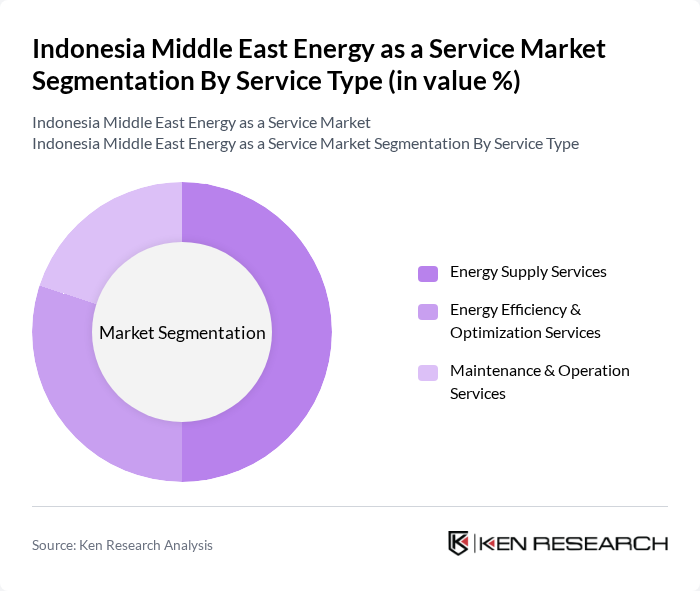
By Service Type:The service type segmentation includes Energy Supply Services, Energy Efficiency & Optimization Services, and Maintenance & Operation Services. Energy Supply Services are essential as they deliver reliable and often renewable energy to consumers. Energy Efficiency & Optimization Services focus on reducing energy consumption, operational costs, and carbon emissions through advanced monitoring, analytics, and automation. Maintenance & Operation Services ensure the continuous, reliable, and efficient functioning of energy systems, minimizing downtime and extending asset lifespans .
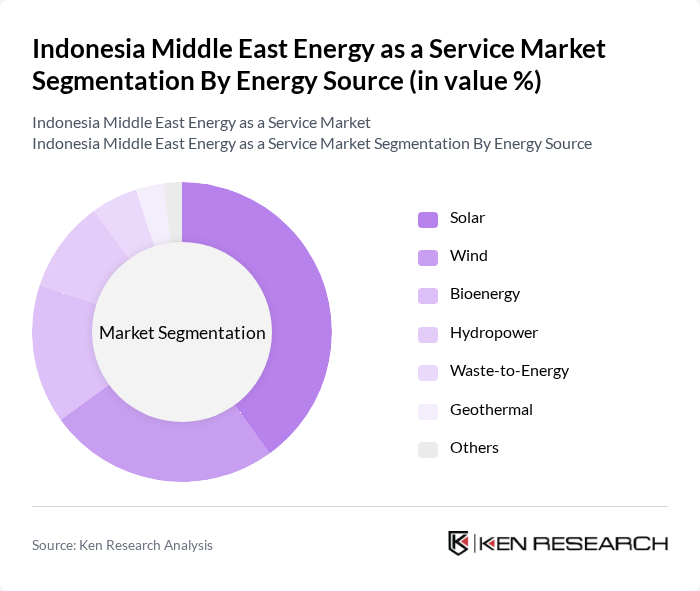
By Energy Source:The energy source segmentation includes Solar, Wind, Bioenergy, Hydropower, Waste-to-Energy, Geothermal, and Others. Solar energy leads the market due to Indonesia’s high solar irradiation and declining technology costs. Wind energy is expanding in regions with favorable wind profiles, while bioenergy and waste-to-energy solutions are gaining traction for their dual role in waste management and renewable power generation. Hydropower and geothermal remain important contributors, leveraging Indonesia’s abundant natural resources .
The Indonesia Middle East Energy as a Service Market is characterized by a dynamic mix of regional and international players. Leading participants such as PT PLN (Persero), Total Eren, Enel Green Power Indonesia, Vena Energy, First Solar, Siemens Gamesa Renewable Energy, JinkoSolar, GE Vernova, Trina Solar, ACWA Power, EDP Renewables, Canadian Solar, SunPower, ENGIE, Schneider Electric contribute to innovation, geographic expansion, and service delivery in this space.
The future of the Indonesia Middle East Energy as a Service market appears promising, driven by increasing investments in renewable energy and technological advancements. As the government continues to support sustainable energy initiatives, the market is likely to witness a surge in EaaS adoption. Furthermore, the integration of smart grid technologies and energy storage solutions will enhance operational efficiency, making EaaS models more attractive to consumers and businesses alike, ultimately fostering a more sustainable energy landscape.
| Segment | Sub-Segments |
|---|---|
| By Service Type | Energy Supply Services Energy Efficiency & Optimization Services Maintenance & Operation Services |
| By Energy Source | Solar Wind Bioenergy Hydropower Waste-to-Energy Geothermal Others |
| By End-User | Residential Commercial Industrial Government & Utilities |
| By Investment Source | Domestic Foreign Direct Investment (FDI) Public-Private Partnership (PPP) Government Schemes |
| By Application | Grid-Connected Off-Grid Rooftop Installations Utility-Scale Projects |
| By Policy Support | Subsidies Tax Exemptions Renewable Energy Certificates (RECs) |
| By Distribution Mode | Direct Sales Online Platforms Distributors |
| By Pricing Strategy | Competitive Pricing Value-Based Pricing Cost-Plus Pricing |
| Scope Item/Segment | Sample Size | Target Respondent Profiles |
|---|---|---|
| Commercial Energy Users | 100 | Facility Managers, Energy Procurement Officers |
| Industrial Energy Consumers | 90 | Operations Managers, Sustainability Coordinators |
| Residential Energy Service Users | 80 | Homeowners, Property Managers |
| Energy Service Providers | 60 | Business Development Managers, Technical Directors |
| Government Energy Policy Makers | 50 | Regulatory Affairs Specialists, Energy Policy Analysts |
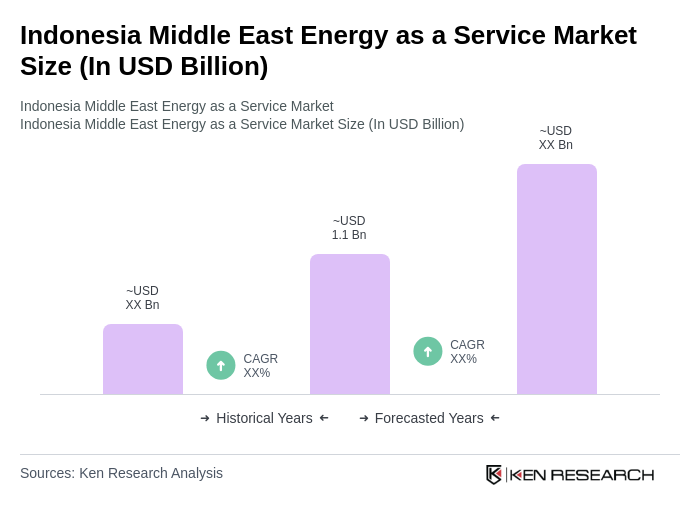
The Indonesia Middle East Energy as a Service Market is valued at approximately USD 1.1 billion, reflecting significant growth driven by the demand for sustainable energy solutions and government initiatives supporting renewable energy adoption.

What makes us stand out is that our consultants follow Robust, Refine and Result (RRR) methodology. Robust for clear definitions, approaches and sanity checking, Refine for differentiating respondents' facts and opinions, and Result for presenting data with story.

We have set a benchmark in the industry by offering our clients with syndicated and customized market research reports featuring coverage of entire market as well as meticulous research and analyst insights.

While we don't replace traditional research, we flip the method upside down. Our dual approach of Top Bottom & Bottom Top ensures quality deliverable by not just verifying company fundamentals but also looking at the sector and macroeconomic factors.

With one step in the future, our research team constantly tries to show you the bigger picture. We help with some of the tough questions you may encounter along the way: How is the industry positioned? Best marketing channel? KPI's of competitors? By aligning every element, we help maximize success.

Our report gives you instant access to the answers and sources that other companies might choose to hide. We elaborate each steps of research methodology we have used and showcase you the sample size to earn your trust.

If you need any support, we are here! We pride ourselves on universe strength, data quality, and quick, friendly, and professional service.













