Region:Asia
Author(s):Dev
Product Code:KRAE3483
Pages:84
Published On:March 2026
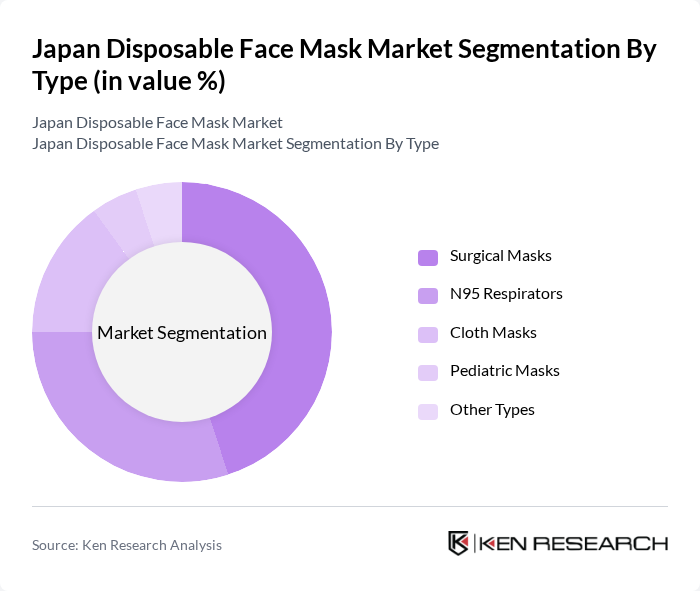
By Type:The market is segmented into various types of disposable face masks, including surgical masks, N95 respirators, cloth masks, pediatric masks, and other types. Surgical masks are widely used in healthcare settings due to their effectiveness in preventing the spread of infections. N95 respirators are preferred for their high filtration efficiency, especially in environments with airborne pathogens. Cloth masks have gained popularity for everyday use, while pediatric masks cater specifically to children's needs. The demand for these masks is influenced by consumer preferences, regulatory requirements, and the ongoing health crisis.
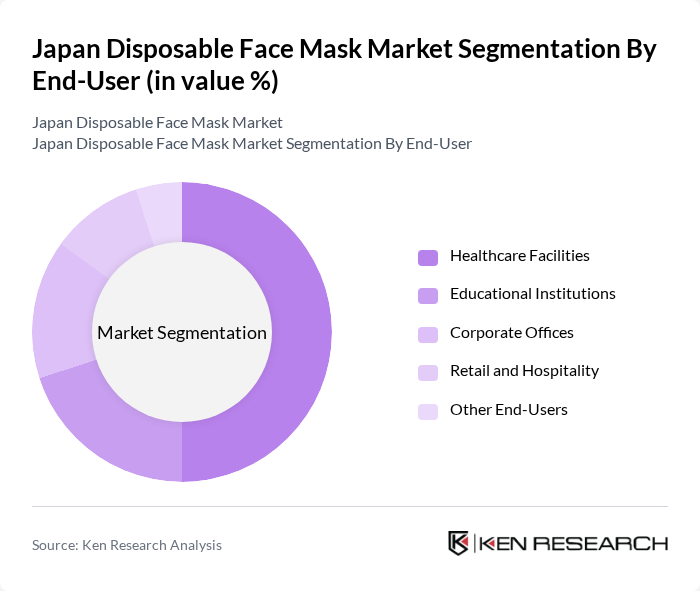
By End-User:The end-user segmentation includes healthcare facilities, educational institutions, corporate offices, retail and hospitality, and other end-users. Healthcare facilities are the largest consumers of disposable face masks due to stringent infection control protocols. Educational institutions have also increased their mask usage to ensure student safety. Corporate offices and the retail sector have adopted masks as part of their health and safety measures, reflecting a broader trend towards workplace safety and public health compliance.
The Japan Disposable Face Mask Market is characterized by a dynamic mix of regional and international players. Leading participants such as 3M Company, Unicharm Corporation, Kowa Company, Ltd., Halyard Health, Inc., Honeywell International Inc., Medline Industries, Inc., Ansell Limited, Kimberly-Clark Corporation, DuPont de Nemours, Inc., Ahlstrom-Munksjö, Alpha Pro Tech, Ltd., Cardinal Health, Inc., Prestige Ameritech, Medtronic plc, B. Braun Melsungen AG contribute to innovation, geographic expansion, and service delivery in this space.
The future of the disposable face mask market in Japan appears promising, driven by ongoing health concerns and environmental factors. As the population continues to prioritize health and safety, the demand for high-quality disposable masks is expected to rise. Additionally, advancements in technology and materials will likely lead to innovative products that cater to consumer preferences, enhancing market competitiveness and sustainability. The focus on eco-friendly options will also shape future developments, aligning with global sustainability trends.
| Segment | Sub-Segments |
|---|---|
| By Type | Surgical Masks N95 Respirators Cloth Masks Pediatric Masks Other Types |
| By End-User | Healthcare Facilities Educational Institutions Corporate Offices Retail and Hospitality Other End-Users |
| By Distribution Channel | Online Retail Offline Retail Direct Sales Wholesale Other Channels |
| By Material | Polypropylene Cotton Non-woven Fabrics Other Materials |
| By Certification | ISO Certified Masks CE Marked Masks FDA Approved Masks Other Certifications |
| By Usage | Single-use Masks Multi-use Masks Other Usage Types |
| By Region | Kanto Region Kansai Region Chubu Region Other Regions |
| Scope Item/Segment | Sample Size | Target Respondent Profiles |
|---|---|---|
| Healthcare Sector Usage | 140 | Doctors, Nurses, Hospital Administrators |
| Retail Consumer Insights | 100 | Retail Managers, Store Owners, Consumers |
| Manufacturing Supply Chain | 80 | Procurement Managers, Supply Chain Analysts |
| Public Health Policy Impact | 70 | Public Health Officials, Policy Makers |
| Consumer Behavior Trends | 110 | General Consumers, Focus Group Participants |
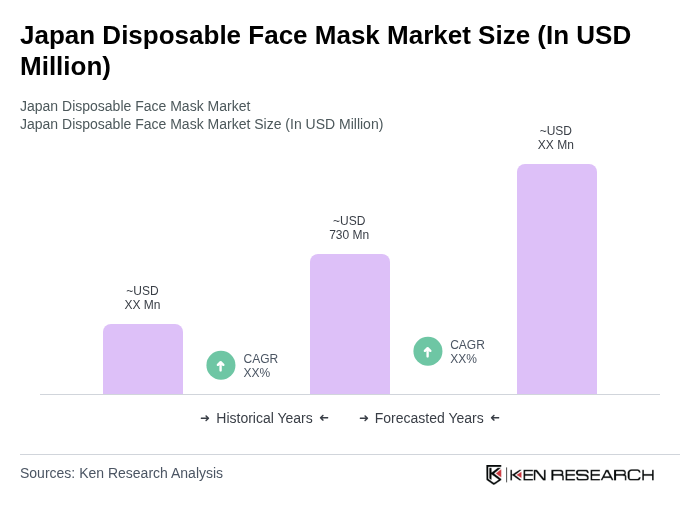
The Japan Disposable Face Mask Market is valued at approximately USD 730 million, reflecting significant growth driven by increased health awareness and the ongoing impact of the COVID-19 pandemic, along with rising pollution levels and respiratory diseases.

What makes us stand out is that our consultants follow Robust, Refine and Result (RRR) methodology. Robust for clear definitions, approaches and sanity checking, Refine for differentiating respondents' facts and opinions, and Result for presenting data with story.

We have set a benchmark in the industry by offering our clients with syndicated and customized market research reports featuring coverage of entire market as well as meticulous research and analyst insights.

While we don't replace traditional research, we flip the method upside down. Our dual approach of Top Bottom & Bottom Top ensures quality deliverable by not just verifying company fundamentals but also looking at the sector and macroeconomic factors.

With one step in the future, our research team constantly tries to show you the bigger picture. We help with some of the tough questions you may encounter along the way: How is the industry positioned? Best marketing channel? KPI's of competitors? By aligning every element, we help maximize success.

Our report gives you instant access to the answers and sources that other companies might choose to hide. We elaborate each steps of research methodology we have used and showcase you the sample size to earn your trust.

If you need any support, we are here! We pride ourselves on universe strength, data quality, and quick, friendly, and professional service.













