Region:Middle East
Author(s):Dev
Product Code:KRAD1659
Pages:100
Published On:November 2025
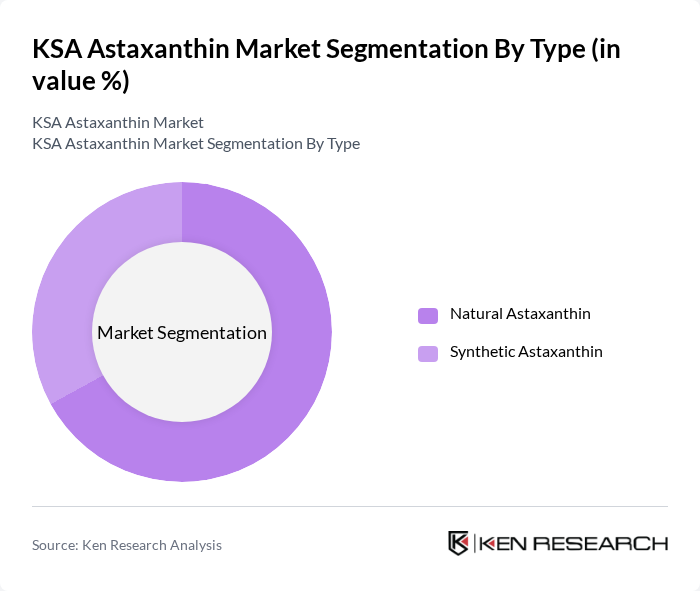
By Type:The market is segmented into two main types: Natural Astaxanthin and Synthetic Astaxanthin. Natural Astaxanthin, derived from microalgae, is gaining traction due to its perceived health benefits, superior safety profile, and strong consumer preference for natural ingredients. Synthetic Astaxanthin, while cost-effective and widely used in animal feed, faces challenges in consumer acceptance for human applications due to concerns over long-term health effects. The natural segment is expected to dominate, supported by increasing health consciousness and demand for organic products.
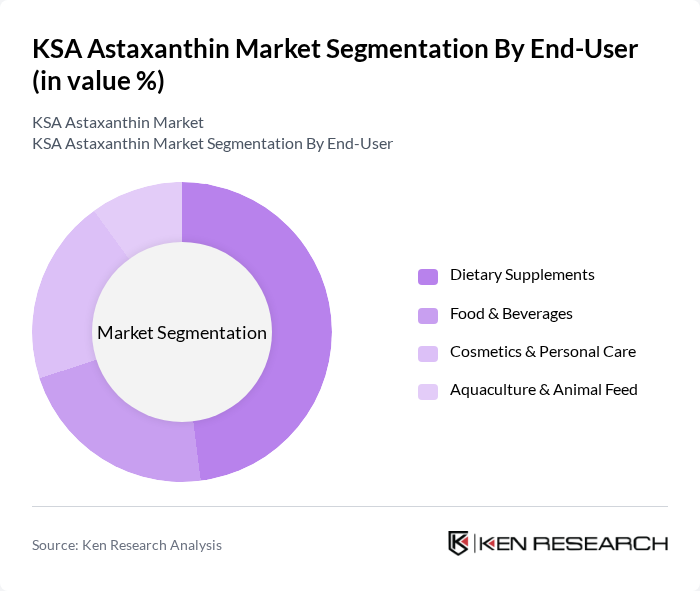
By End-User:This segmentation includes Dietary Supplements, Food & Beverages, Cosmetics & Personal Care, and Aquaculture & Animal Feed. The Dietary Supplements segment is leading the market, driven by the growing trend of preventive healthcare, rising awareness of antioxidant benefits, and the increasing popularity of natural health products. The Cosmetics & Personal Care segment is also witnessing significant growth, fueled by the demand for natural anti-aging and skin-protective ingredients. Aquaculture & Animal Feed is expanding as Saudi Arabia invests in aquaculture capacity, boosting astaxanthin demand for feed formulations.
The KSA Astaxanthin Market is characterized by a dynamic mix of regional and international players. Leading participants such as AstaReal AB, BASF SE, DSM-Firmenich, Cyanotech Corporation, Kemin Industries, Valensa International, Fuji Chemical Industries Co., Ltd., Algatech Ltd. (Algatechnologies), Beijing Gingko Group (BGG), ENEOS Holdings, Inc., Fuxing Industry Co., Ltd., BioAstin (Nutrex Hawaii), AlgaVia (TerraVia Holdings, now part of Corbion), NAQUA (National Aquaculture Group, Saudi Arabia), Supreme Pharmaceuticals (Saudi Arabia) contribute to innovation, geographic expansion, and service delivery in this space.
The KSA astaxanthin market is poised for significant growth, driven by increasing health awareness and a shift towards natural products. As consumers prioritize wellness, the demand for astaxanthin in dietary supplements and cosmetics is expected to rise. Innovations in extraction technologies will likely enhance production efficiency, while collaborations with health institutions can further validate the benefits of astaxanthin. Overall, the market is set to evolve, presenting new opportunities for stakeholders in the coming years.
| Segment | Sub-Segments |
|---|---|
| By Type | Natural Astaxanthin Synthetic Astaxanthin |
| By End-User | Dietary Supplements Food & Beverages Cosmetics & Personal Care Aquaculture & Animal Feed |
| By Source | Microalgae (e.g., Haematococcus pluvialis) Yeast (e.g., Phaffia rhodozyma) Synthetic (Petroleum-derived) |
| By Distribution Channel | Online Retail Pharmacies & Health Stores Direct Sales (B2B) |
| By Application | Nutraceuticals Functional Foods & Beverages Cosmetics & Personal Care Aquaculture & Animal Feed |
| By Region | Central Region Eastern Region Western Region Southern Region |
| By Market Segment | B2B (Manufacturers, Distributors) B2C (Retail Consumers) |
| Scope Item/Segment | Sample Size | Target Respondent Profiles |
|---|---|---|
| Dietary Supplement Retailers | 60 | Store Managers, Product Buyers |
| Health and Wellness Professionals | 50 | Nutritionists, Dietitians |
| Manufacturers of Nutraceuticals | 40 | Production Managers, Quality Control Officers |
| Cosmetic Product Developers | 40 | Formulators, Brand Managers |
| Pharmaceutical Companies | 50 | Research Scientists, Regulatory Affairs Specialists |
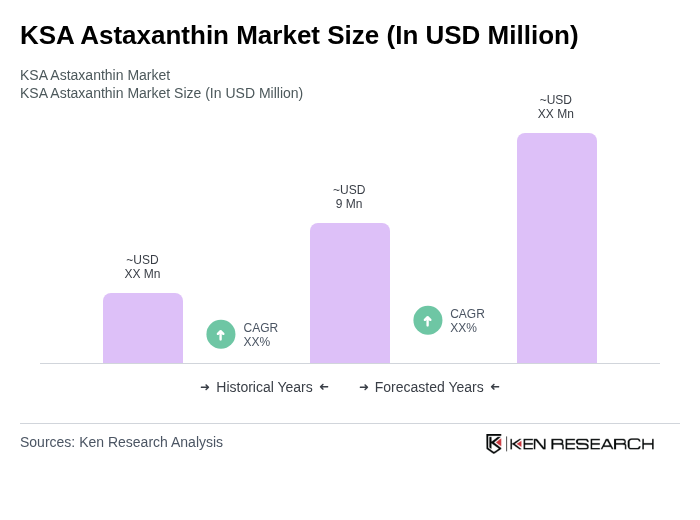
The KSA Astaxanthin Market is valued at approximately USD 9 million, reflecting a growing demand for natural antioxidants in dietary supplements and cosmetics, driven by health awareness and consumer preferences for organic products.

What makes us stand out is that our consultants follow Robust, Refine and Result (RRR) methodology. Robust for clear definitions, approaches and sanity checking, Refine for differentiating respondents' facts and opinions, and Result for presenting data with story.

We have set a benchmark in the industry by offering our clients with syndicated and customized market research reports featuring coverage of entire market as well as meticulous research and analyst insights.

While we don't replace traditional research, we flip the method upside down. Our dual approach of Top Bottom & Bottom Top ensures quality deliverable by not just verifying company fundamentals but also looking at the sector and macroeconomic factors.

With one step in the future, our research team constantly tries to show you the bigger picture. We help with some of the tough questions you may encounter along the way: How is the industry positioned? Best marketing channel? KPI's of competitors? By aligning every element, we help maximize success.

Our report gives you instant access to the answers and sources that other companies might choose to hide. We elaborate each steps of research methodology we have used and showcase you the sample size to earn your trust.

If you need any support, we are here! We pride ourselves on universe strength, data quality, and quick, friendly, and professional service.













