About the Report
Base Year 2024KSA Protein Fortified Food Products Market Overview
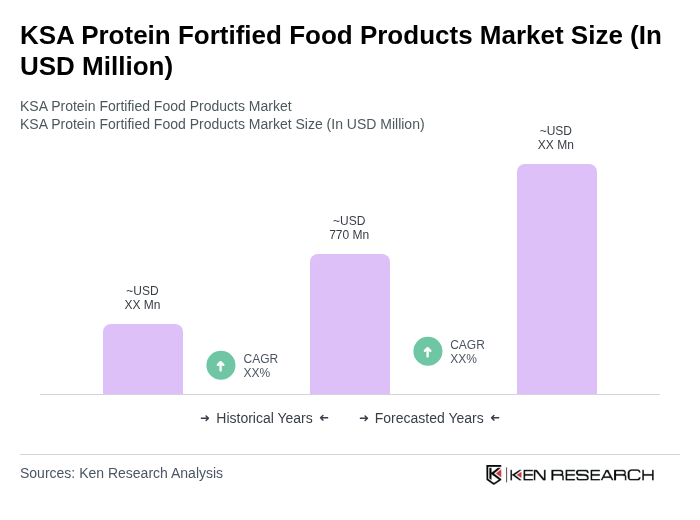
- The KSA Protein Fortified Food Products Market is valued at approximately USD 770 million, based on a five?year historical analysis. This growth is driven by rising health consciousness, increasing interest in high?protein and functional foods, and greater focus on managing obesity, diabetes, and cardiovascular risks through diet.
- Key cities such as Riyadh, Jeddah, and Dammam account for a large share of demand, reflecting higher urbanization, higher disposable incomes, and denser networks of gyms, fitness centers, and modern retail chains that actively stock protein?fortified products. Expansion of e?commerce and quick?commerce delivery from these urban hubs is further improving access to protein powders, RTD beverages, and fortified snacks for younger and more digitally engaged consumers.
- The Saudi Food and Drug Authority (SFDA) has progressively strengthened labeling and nutrition disclosure requirements for packaged and fortified foods, including clear ingredient and nutrient declarations aimed at improving transparency and safety. However, no public, authoritative evidence specifically confirms the introduction of a new, protein?fortified?product?specific labelling regulation in 2023 alone; instead, protein?fortified products fall under broader SFDA nutrition and fortification standards and labelling rules that seek to support healthier dietary choices.
KSA Protein Fortified Food Products Market Segmentation
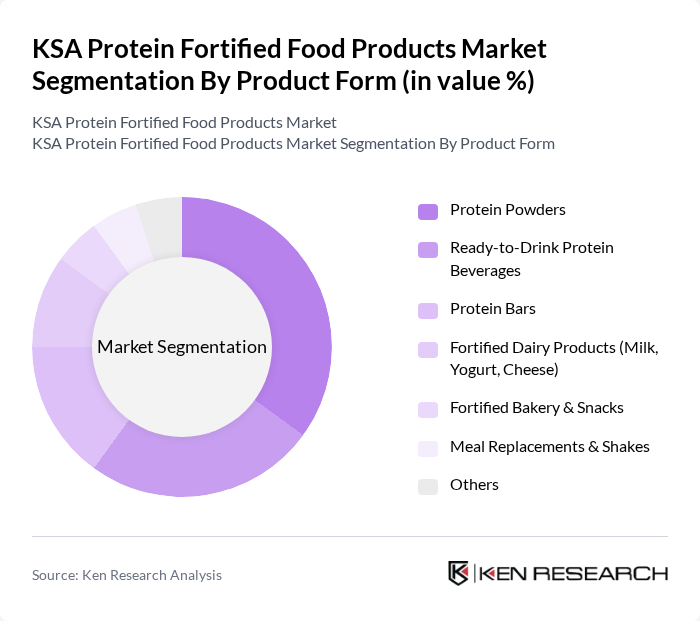
By Product Form:The market is segmented into various product forms, including Protein Powders, Ready-to-Drink Protein Beverages, Protein Bars, Fortified Dairy Products (Milk, Yogurt, Cheese), Fortified Bakery & Snacks, Meal Replacements & Shakes, and Others. Among these, Protein Powders have emerged as the leading subsegment due to their popularity among fitness enthusiasts and athletes seeking convenient protein sources. The increasing trend of home workouts and fitness regimes has further fueled the demand for protein powders, making them a staple in many households.
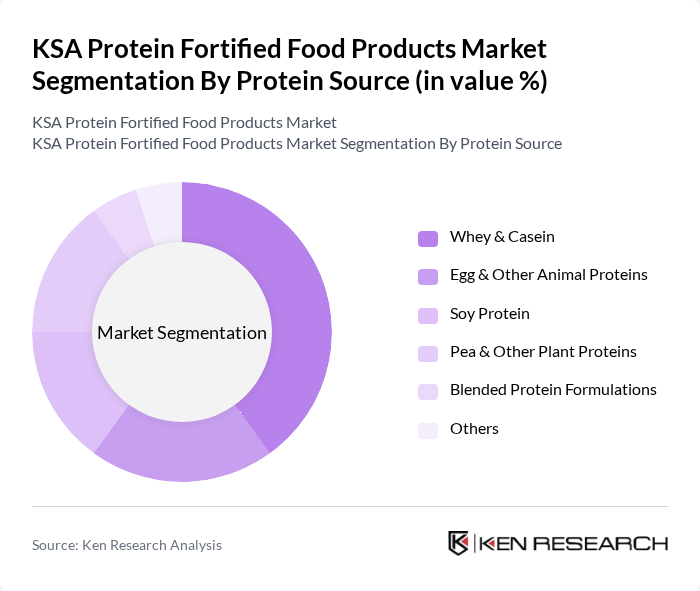
By Protein Source:The market is also segmented by protein source, including Whey & Casein, Egg & Other Animal Proteins, Soy Protein, Pea & Other Plant Proteins, Blended Protein Formulations, and Others. Whey & Casein proteins dominate this segment due to their high biological value and effectiveness in muscle recovery, making them the preferred choice among athletes and bodybuilders. The increasing awareness of the benefits of protein supplementation has led to a significant rise in the consumption of whey and casein-based products.
KSA Protein Fortified Food Products Market Competitive Landscape
The KSA Protein Fortified Food Products Market is characterized by a dynamic mix of regional and international players. Leading participants such as Almarai Company, Saudi Dairy & Foodstuff Company (SADAFCO), Nadec Foods (National Agricultural Development Company), Al Safi Danone, Nestlé Saudi Arabia, Baladna Saudi (Joint Ventures & Imports), Arla Foods Saudi Arabia, United Food Industries Corporation Ltd. (UFIC), Halwani Bros. Co., Savola Foods Company, Abdulla Al Othaim Markets Co. (Private Label Protein Products), Panda Retail Company (Private Label Protein Products), Saudia Dairy & Beverage Company (SDBC), Al Rabie Saudi Foods Co., Gulf Union Foods Co. contribute to innovation, geographic expansion, and service delivery in this space.
KSA Protein Fortified Food Products Market Industry Analysis
Growth Drivers
- Increasing Health Awareness:The Kingdom of Saudi Arabia (KSA) has seen a significant rise in health awareness, with 60% of the population actively seeking healthier food options. This shift is driven by rising obesity rates, which reached 35% in recent years, prompting consumers to prioritize nutritional value. The Ministry of Health's campaigns have further educated the public on the benefits of protein-rich diets, leading to increased demand for fortified food products. This trend is expected to continue as health consciousness grows.
- Rising Demand for Nutritional Products:The demand for nutritional products in KSA is projected to reach SAR 5 billion in the near future, driven by a growing middle class and changing dietary preferences. With 70% of consumers expressing interest in protein-fortified foods, manufacturers are responding by expanding their product lines. This trend is supported by the increasing prevalence of lifestyle diseases, which has led to a greater focus on preventive health measures through nutrition, further fueling market growth.
- Government Initiatives Promoting Healthy Eating:The Saudi government has implemented various initiatives to promote healthy eating, including the "Healthy Food" program, which aims to reduce chronic diseases. In recent years, the government allocated SAR 1.2 billion to support local food producers in developing protein-fortified products. These initiatives are expected to enhance consumer access to nutritious options, thereby driving the growth of the protein fortified food market as awareness and availability increase.
Market Challenges
- High Production Costs:The production costs for protein-fortified food products in KSA are significantly high, averaging SAR 3,000 per ton. This is primarily due to the expensive sourcing of quality protein ingredients and advanced processing technologies. As a result, many manufacturers struggle to maintain competitive pricing, which can limit market penetration and restrict access for price-sensitive consumers, ultimately hindering overall market growth.
- Limited Consumer Awareness:Despite the growing health consciousness, consumer awareness regarding protein-fortified foods remains limited, with only 40% of the population familiar with such products. This lack of knowledge can hinder market growth, as consumers may not fully understand the benefits of protein fortification. Educational campaigns are essential to bridge this gap, but the slow pace of awareness-building poses a significant challenge for market expansion.
KSA Protein Fortified Food Products Market Future Outlook
The KSA protein fortified food products market is poised for significant growth, driven by evolving consumer preferences and increasing health awareness. As the population becomes more health-conscious, the demand for innovative and nutritious food options will rise. Additionally, the government's support for local producers and initiatives promoting healthy eating will further enhance market dynamics. The integration of technology in product development and marketing strategies will also play a crucial role in shaping the future landscape of this market.
Market Opportunities
- Expansion of E-commerce Platforms:The rise of e-commerce in KSA presents a significant opportunity for protein fortified food products. With online grocery sales projected to reach SAR 2 billion in the near future, brands can leverage digital platforms to reach a broader audience. This shift allows for targeted marketing and improved accessibility, catering to the growing demand for convenient shopping options among health-conscious consumers.
- Development of Innovative Product Lines:There is a substantial opportunity for the development of innovative protein-fortified products tailored to local tastes. With 55% of consumers expressing interest in unique flavors and formats, manufacturers can capitalize on this trend by introducing diverse offerings. This innovation can enhance market appeal and attract a wider consumer base, driving growth in the protein fortified food sector.
Scope of the Report
| Segment | Sub-Segments |
|---|---|
| By Product Form | Protein Powders Ready-to-Drink Protein Beverages Protein Bars Fortified Dairy Products (Milk, Yogurt, Cheese) Fortified Bakery & Snacks Meal Replacements & Shakes Others |
| By Protein Source | Whey & Casein Egg & Other Animal Proteins Soy Protein Pea & Other Plant Proteins Blended Protein Formulations Others |
| By Consumer Group | Sports & Fitness Enthusiasts General Health-Conscious Adults Children & Adolescents Clinical & Medical Nutrition Users Elderly Population Others |
| By Distribution Channel | Supermarkets and Hypermarkets Pharmacies & Drugstores Specialty Nutrition & Health Stores Gyms, Fitness Centers & Health Clubs Online Retail & E-commerce Platforms Others |
| By Price Range | Economy Mid-Range Premium Others |
| By Nutritional Positioning | High Protein High Protein & Low Sugar High Protein & Low Fat High Protein & Functional (with Vitamins, Minerals, or Other Actives) Others |
| By Region | Central Region Eastern Region Western Region Southern Region Northern Region |
Key Target Audience
Investors and Venture Capitalist Firms
Government and Regulatory Bodies (e.g., Saudi Food and Drug Authority, Ministry of Health)
Manufacturers and Producers
Distributors and Retailers
Food Safety and Quality Assurance Organizations
Health and Nutrition NGOs
Industry Associations (e.g., Saudi Arabian Food and Drug Association)
Financial Institutions
Players Mentioned in the Report:
Almarai Company
Saudi Dairy & Foodstuff Company (SADAFCO)
Nadec Foods (National Agricultural Development Company)
Al Safi Danone
Nestle Saudi Arabia
Baladna Saudi (Joint Ventures & Imports)
Arla Foods Saudi Arabia
United Food Industries Corporation Ltd. (UFIC)
Halwani Bros. Co.
Savola Foods Company
Abdulla Al Othaim Markets Co. (Private Label Protein Products)
Panda Retail Company (Private Label Protein Products)
Saudia Dairy & Beverage Company (SDBC)
Al Rabie Saudi Foods Co.
Gulf Union Foods Co.
Table of Contents
Market Assessment Phase
1. Executive Summary and Approach
2. KSA Protein Fortified Food Products Market Overview
2.1 Key Insights and Strategic Recommendations
2.2 KSA Protein Fortified Food Products Market Overview
2.3 Definition and Scope
2.4 Evolution of Market Ecosystem
2.5 Timeline of Key Regulatory Milestones
2.6 Value Chain & Stakeholder Mapping
2.7 Business Cycle Analysis
2.8 Policy & Incentive Landscape
3. KSA Protein Fortified Food Products Market Analysis
3.1 Growth Drivers
3.1.1 Increasing Health Awareness
3.1.2 Rising Demand for Nutritional Products
3.1.3 Government Initiatives Promoting Healthy Eating
3.1.4 Growth of Fitness and Wellness Trends
3.2 Market Challenges
3.2.1 High Production Costs
3.2.2 Limited Consumer Awareness
3.2.3 Regulatory Compliance Issues
3.2.4 Competition from Traditional Food Products
3.3 Market Opportunities
3.3.1 Expansion of E-commerce Platforms
3.3.2 Development of Innovative Product Lines
3.3.3 Collaborations with Health Institutions
3.3.4 Increasing Export Potential
3.4 Market Trends
3.4.1 Growth of Plant-Based Protein Products
3.4.2 Customization of Nutritional Products
3.4.3 Rise in Functional Foods
3.4.4 Increased Focus on Sustainable Sourcing
3.5 Government Regulation
3.5.1 Food Safety Standards Compliance
3.5.2 Labeling Regulations for Nutritional Claims
3.5.3 Import Tariffs on Protein Ingredients
3.5.4 Subsidies for Local Protein Fortified Food Producers
4. SWOT Analysis
5. Stakeholder Analysis
6. Porter's Five Forces Analysis
7. KSA Protein Fortified Food Products Market Market Size, 2019-2024
7.1 By Value
7.2 By Volume
7.3 By Average Selling Price
8. KSA Protein Fortified Food Products Market Segmentation
8.1 By Product Form
8.1.1 Protein Powders
8.1.2 Ready-to-Drink Protein Beverages
8.1.3 Protein Bars
8.1.4 Fortified Dairy Products (Milk, Yogurt, Cheese)
8.1.5 Fortified Bakery & Snacks
8.1.6 Meal Replacements & Shakes
8.1.7 Others
8.2 By Protein Source
8.2.1 Whey & Casein
8.2.2 Egg & Other Animal Proteins
8.2.3 Soy Protein
8.2.4 Pea & Other Plant Proteins
8.2.5 Blended Protein Formulations
8.2.6 Others
8.3 By Consumer Group
8.3.1 Sports & Fitness Enthusiasts
8.3.2 General Health-Conscious Adults
8.3.3 Children & Adolescents
8.3.4 Clinical & Medical Nutrition Users
8.3.5 Elderly Population
8.3.6 Others
8.4 By Distribution Channel
8.4.1 Supermarkets and Hypermarkets
8.4.2 Pharmacies & Drugstores
8.4.3 Specialty Nutrition & Health Stores
8.4.4 Gyms, Fitness Centers & Health Clubs
8.4.5 Online Retail & E-commerce Platforms
8.4.6 Others
8.5 By Price Range
8.5.1 Economy
8.5.2 Mid-Range
8.5.3 Premium
8.5.4 Others
8.6 By Nutritional Positioning
8.6.1 High Protein
8.6.2 High Protein & Low Sugar
8.6.3 High Protein & Low Fat
8.6.4 High Protein & Functional (with Vitamins, Minerals, or Other Actives)
8.6.5 Others
8.7 By Region
8.7.1 Central Region
8.7.2 Eastern Region
8.7.3 Western Region
8.7.4 Southern Region
8.7.5 Northern Region
9. KSA Protein Fortified Food Products Market Competitive Analysis
9.1 Market Share of Key Players
9.2 Cross Comparison of Key Players
9.2.1 Company Name
9.2.2 Company Size (Large, Medium, or Small as per industry convention)
9.2.3 Revenue from Protein Fortified Food Products (SAR Million)
9.2.4 Share of Protein Fortified Portfolio in Total Revenue (%)
9.2.5 Historical Revenue Growth Rate in Protein Fortified Segment (%)
9.2.6 Market Share in KSA Protein Fortified Food Products Market (%)
9.2.7 Number of Protein Fortified SKUs (Product Portfolio Breadth)
9.2.8 Average Selling Price Positioning (Economy / Mid-Range / Premium)
9.2.9 Distribution Reach (Number of Retail Outlets / Channels Covered)
9.2.10 Share of Modern Trade & E-commerce in Sales (%)
9.2.11 R&D and Innovation Spend as % of Revenue
9.2.12 New Product Launches in Last 3 Years (Count)
9.3 SWOT Analysis of Top Players
9.4 Pricing Analysis
9.5 Detailed Profile of Major Companies
9.5.1 Almarai Company
9.5.2 Saudi Dairy & Foodstuff Company (SADAFCO)
9.5.3 Nadec Foods (National Agricultural Development Company)
9.5.4 Al Safi Danone
9.5.5 Nestlé Saudi Arabia
9.5.6 Baladna Saudi (Joint Ventures & Imports)
9.5.7 Arla Foods Saudi Arabia
9.5.8 United Food Industries Corporation Ltd. (UFIC)
9.5.9 Halwani Bros. Co.
9.5.10 Savola Foods Company
9.5.11 Abdulla Al Othaim Markets Co. (Private Label Protein Products)
9.5.12 Panda Retail Company (Private Label Protein Products)
9.5.13 Saudia Dairy & Beverage Company (SDBC)
9.5.14 Al Rabie Saudi Foods Co.
9.5.15 Gulf Union Foods Co.
10. KSA Protein Fortified Food Products Market End-User Analysis
10.1 Procurement Behavior of Key Ministries
10.1.1 Ministry of Health
10.1.2 Ministry of Education
10.1.3 Ministry of Commerce
10.1.4 Ministry of Agriculture
10.2 Corporate Spend on Infrastructure & Energy
10.2.1 Corporate Health Initiatives
10.2.2 Investment in Nutritional Programs
10.3 Pain Point Analysis by End-User Category
10.3.1 Health Concerns
10.3.2 Accessibility Issues
10.4 User Readiness for Adoption
10.4.1 Awareness Levels
10.4.2 Willingness to Pay
10.5 Post-Deployment ROI and Use Case Expansion
10.5.1 Measurement of Health Outcomes
10.5.2 Expansion into New Markets
11. KSA Protein Fortified Food Products Market Future Size, 2025-2030
11.1 By Value
11.2 By Volume
11.3 By Average Selling Price
Go-To-Market Strategy Phase
1. Whitespace Analysis + Business Model Canvas
1.1 Market Gaps Identification
1.2 Business Model Development
2. Marketing and Positioning Recommendations
2.1 Branding Strategies
2.2 Product USPs
3. Distribution Plan
3.1 Urban Retail Strategies
3.2 Rural NGO Tie-ups
4. Channel & Pricing Gaps
4.1 Underserved Routes
4.2 Pricing Bands
5. Unmet Demand & Latent Needs
5.1 Category Gaps
5.2 Consumer Segments
6. Customer Relationship
6.1 Loyalty Programs
6.2 After-sales Service
7. Value Proposition
7.1 Sustainability Initiatives
7.2 Integrated Supply Chains
8. Key Activities
8.1 Regulatory Compliance
8.2 Branding Efforts
8.3 Distribution Setup
9. Entry Strategy Evaluation
9.1 Domestic Market Entry Strategy
9.1.1 Product Mix
9.1.2 Pricing Band
9.1.3 Packaging Considerations
9.2 Export Entry Strategy
9.2.1 Target Countries
9.2.2 Compliance Roadmap
10. Entry Mode Assessment
10.1 Joint Ventures
10.2 Greenfield Investments
10.3 Mergers & Acquisitions
10.4 Distributor Model
11. Capital and Timeline Estimation
11.1 Capital Requirements
11.2 Timelines
12. Control vs Risk Trade-Off
12.1 Ownership Considerations
12.2 Partnerships
13. Profitability Outlook
13.1 Breakeven Analysis
13.2 Long-term Sustainability
14. Potential Partner List
14.1 Distributors
14.2 Joint Ventures
14.3 Acquisition Targets
15. Execution Roadmap
15.1 Phased Plan for Market Entry
15.1.1 Market Setup
15.1.2 Market Entry
15.1.3 Growth Acceleration
15.1.4 Scale & Stabilize
15.2 Key Activities and Milestones
15.2.1 Activity Planning
15.2.2 Milestone Tracking
Research Methodology
Phase 1: Approach1
Desk Research
- Analysis of market reports from food and nutrition organizations in KSA
- Review of government publications on food fortification policies and regulations
- Examination of academic journals and articles on protein fortification trends
Primary Research
- Interviews with nutritionists and dietitians specializing in fortified food products
- Surveys with manufacturers of protein-fortified food products in KSA
- Focus groups with consumers to understand preferences and perceptions
Validation & Triangulation
- Cross-validation of findings with industry reports and expert opinions
- Triangulation of data from consumer surveys and sales figures
- Sanity checks through feedback from a panel of food industry experts
Phase 2: Market Size Estimation1
Top-down Assessment
- Estimation of market size based on national health statistics and dietary guidelines
- Analysis of import/export data for protein-rich ingredients used in food products
- Incorporation of demographic trends affecting protein consumption in KSA
Bottom-up Modeling
- Volume estimates based on production capacities of local food manufacturers
- Cost analysis of protein fortification processes and ingredient sourcing
- Sales data from retail channels for protein-fortified food products
Forecasting & Scenario Analysis
- Multi-variable forecasting using population growth and health awareness trends
- Scenario analysis based on potential regulatory changes and market entry of new products
- Baseline, optimistic, and pessimistic projections through 2030
Phase 3: CATI Sample Composition1
| Scope Item/Segment | Sample Size | Target Respondent Profiles |
|---|---|---|
| Retail Market for Protein Fortified Foods | 120 | Store Managers, Category Buyers |
| Manufacturers of Fortified Food Products | 90 | Production Managers, Quality Assurance Heads |
| Health and Nutrition Experts | 60 | Registered Dietitians, Nutrition Researchers |
| Consumer Insights on Fortified Foods | 130 | Health-Conscious Consumers, Parents |
| Regulatory Bodies and Policy Makers | 40 | Food Safety Inspectors, Policy Analysts |
Frequently Asked Questions
What is the current value of the KSA Protein Fortified Food Products Market?
The KSA Protein Fortified Food Products Market is valued at approximately USD 770 million, reflecting a significant growth trend driven by increasing health consciousness and demand for high-protein foods among consumers.
What factors are driving the growth of the KSA Protein Fortified Food Products Market?
Which cities in Saudi Arabia are major consumers of protein-fortified products?
What are the main product forms in the KSA Protein Fortified Food Products Market?
Other Regional/Country Reports
Indonesia Protein Fortified Food Products Market
Malaysia Protein Fortified Food Products Market
APAC Protein Fortified Food Products Market
SEA Protein Fortified Food Products Market
Vietnam Protein Fortified Food Products Market
Other Adjacent Reports
South Korea Health and Wellness Products Market
Brazil Organic Foods Market
Japan Weight Management Products Market
Mexico Vitamin Fortified Foods Market
Singapore Plant-Based Protein Products Market
Vietnam Ready-to-Drink Beverages Market
Why Buy From Us?

What makes us stand out is that our consultants follow Robust, Refine and Result (RRR) methodology. Robust for clear definitions, approaches and sanity checking, Refine for differentiating respondents' facts and opinions, and Result for presenting data with story.

We have set a benchmark in the industry by offering our clients with syndicated and customized market research reports featuring coverage of entire market as well as meticulous research and analyst insights.

While we don't replace traditional research, we flip the method upside down. Our dual approach of Top Bottom & Bottom Top ensures quality deliverable by not just verifying company fundamentals but also looking at the sector and macroeconomic factors.

With one step in the future, our research team constantly tries to show you the bigger picture. We help with some of the tough questions you may encounter along the way: How is the industry positioned? Best marketing channel? KPI's of competitors? By aligning every element, we help maximize success.

Our report gives you instant access to the answers and sources that other companies might choose to hide. We elaborate each steps of research methodology we have used and showcase you the sample size to earn your trust.

If you need any support, we are here! We pride ourselves on universe strength, data quality, and quick, friendly, and professional service.