Region:Middle East
Author(s):Dev
Product Code:KRAB1954
Pages:94
Published On:January 2026
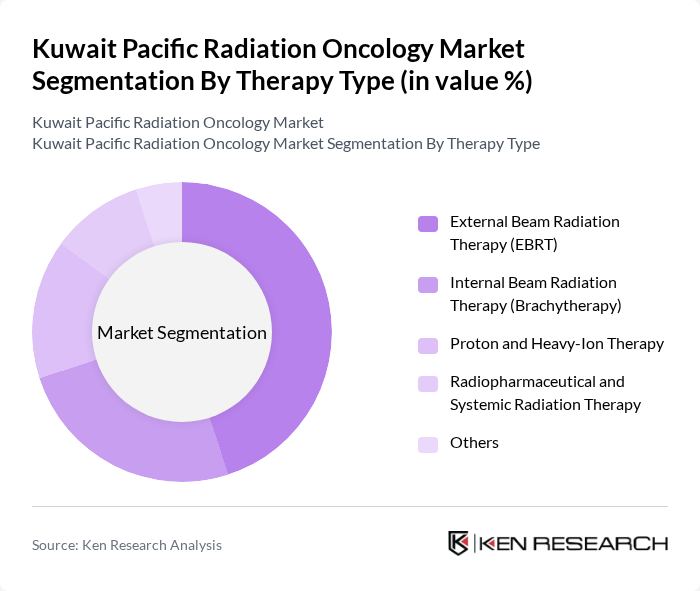
By Therapy Type:The market is segmented into various therapy types, including External Beam Radiation Therapy (EBRT), Internal Beam Radiation Therapy (Brachytherapy), Proton and Heavy-Ion Therapy, Radiopharmaceutical and Systemic Radiation Therapy, and Others. Among these, External Beam Radiation Therapy (EBRT) is the leading sub-segment due to its widespread application in treating various cancer types and its effectiveness in targeting tumors while minimizing damage to surrounding healthy tissues, consistent with global patterns where EBRT accounts for the largest share of radiation oncology procedures.
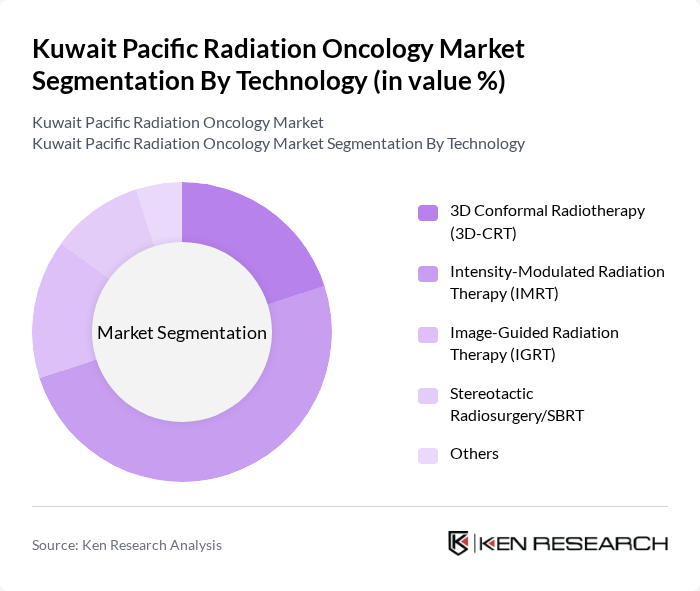
By Technology:The technology segment includes 3D Conformal Radiotherapy (3D-CRT), Intensity-Modulated Radiation Therapy (IMRT), Image-Guided Radiation Therapy (IGRT), Stereotactic Radiosurgery/SBRT, and Others. Intensity-Modulated Radiation Therapy (IMRT) is the dominant technology due to its ability to deliver precise radiation doses to tumors while sparing healthy tissue, making it a preferred choice among oncologists for various cancer treatments and aligning with global adoption trends where IMRT represents the largest technology share within advanced EBRT.
The Kuwait Pacific Radiation Oncology Market is characterized by a dynamic mix of regional and international players. Leading participants such as Kuwait Cancer Control Center (KCCC), Al-Amiri Hospital, Al-Sabah Hospital, Jaber Al-Ahmad Al-Sabah Hospital, Mubarak Al-Kabeer Hospital, Al-Adan Hospital, Farwaniya Hospital, Al-Jahra Hospital, Dar Al Shifa Hospital, Al-Salam International Hospital, Royale Hayat Hospital, New Mowasat Hospital, Taiba Hospital, and Specialized Cancer / Radiotherapy Centers contribute to innovation, geographic expansion, and service delivery in this space.
The future of the Kuwait Pacific Radiation Oncology Market appears promising, driven by ongoing technological advancements and government support. The integration of artificial intelligence in treatment planning is expected to enhance precision and efficiency in radiation therapy. Additionally, the growing trend towards outpatient services will likely improve patient access and satisfaction. As healthcare expenditure continues to rise, investments in innovative treatment modalities will further strengthen the market landscape, ensuring better patient outcomes and increased service availability.
| Segment | Sub-Segments |
|---|---|
| By Therapy Type | External Beam Radiation Therapy (EBRT) Internal Beam Radiation Therapy (Brachytherapy) Proton and Heavy-Ion Therapy Radiopharmaceutical and Systemic Radiation Therapy Others |
| By Technology | D Conformal Radiotherapy (3D-CRT) Intensity-Modulated Radiation Therapy (IMRT) Image-Guided Radiation Therapy (IGRT) Stereotactic Radiosurgery/SBRT Others |
| By Application (Cancer Type) | Breast Cancer Lung Cancer Prostate Cancer Head and Neck Cancer Colorectal Cancer Gynecologic Cancers Other Cancers (e.g., brain, skin, pancreas, rare tumors) |
| By End-User | Public Hospitals Private Hospitals Dedicated Oncology and Radiotherapy Centers Research and University Institutes Others |
| By Patient Demographics | Age Group (Pediatric, Adult, Geriatric) Gender (Male, Female) Insurance Coverage (Public, Private, Self-pay) Others |
| By Treatment Intent | Curative Adjuvant/Neoadjuvant Palliative Others |
| Scope Item/Segment | Sample Size | Target Respondent Profiles |
|---|---|---|
| Oncology Treatment Facilities | 100 | Oncologists, Radiation Therapists |
| Patient Experience in Radiation Therapy | 80 | Cancer Patients, Caregivers |
| Healthcare Administrators | 50 | Hospital Managers, Oncology Department Heads |
| Insurance Providers' Perspectives | 40 | Health Insurance Analysts, Policy Makers |
| Government Health Officials | 40 | Public Health Officials, Policy Advisors |
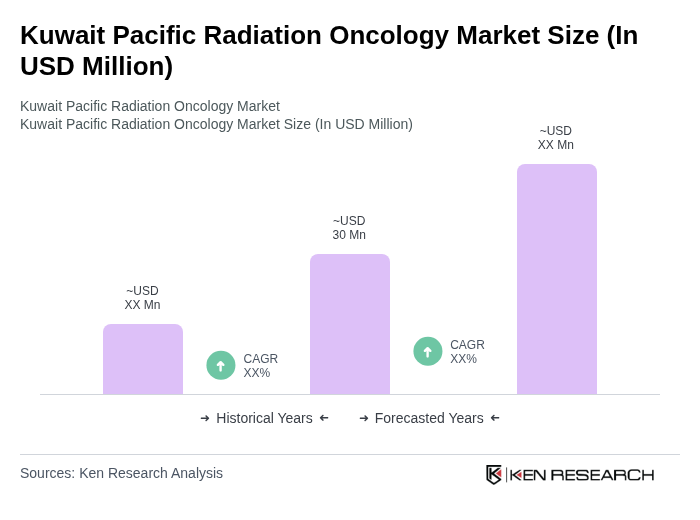
The Kuwait Pacific Radiation Oncology Market is valued at approximately USD 30 million, reflecting the broader trends in the Kuwait cancer treatment facilities market and the significant role of radiation-based services in oncology care.

What makes us stand out is that our consultants follow Robust, Refine and Result (RRR) methodology. Robust for clear definitions, approaches and sanity checking, Refine for differentiating respondents' facts and opinions, and Result for presenting data with story.

We have set a benchmark in the industry by offering our clients with syndicated and customized market research reports featuring coverage of entire market as well as meticulous research and analyst insights.

While we don't replace traditional research, we flip the method upside down. Our dual approach of Top Bottom & Bottom Top ensures quality deliverable by not just verifying company fundamentals but also looking at the sector and macroeconomic factors.

With one step in the future, our research team constantly tries to show you the bigger picture. We help with some of the tough questions you may encounter along the way: How is the industry positioned? Best marketing channel? KPI's of competitors? By aligning every element, we help maximize success.

Our report gives you instant access to the answers and sources that other companies might choose to hide. We elaborate each steps of research methodology we have used and showcase you the sample size to earn your trust.

If you need any support, we are here! We pride ourselves on universe strength, data quality, and quick, friendly, and professional service.













