Region:Middle East
Author(s):Rebecca
Product Code:KRAC4002
Pages:97
Published On:October 2025
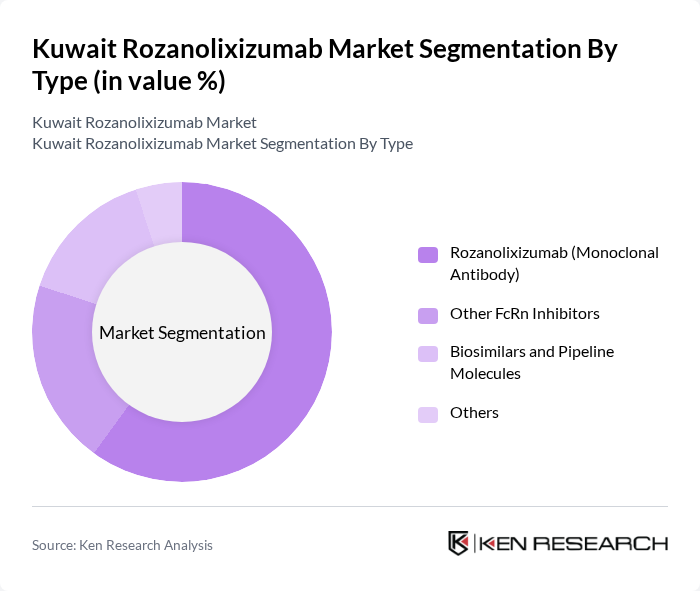
By Type:The Rozanolixizumab market is segmented into four main types: Rozanolixizumab (Monoclonal Antibody), Other FcRn Inhibitors, Biosimilars and Pipeline Molecules, and Others. Rozanolixizumab (Monoclonal Antibody) leads the segment due to its targeted mechanism of action and demonstrated efficacy in autoimmune disease management. The growing clinical acceptance of monoclonal antibodies, supported by robust real-world evidence and increasing physician awareness, further strengthens this segment’s dominance .
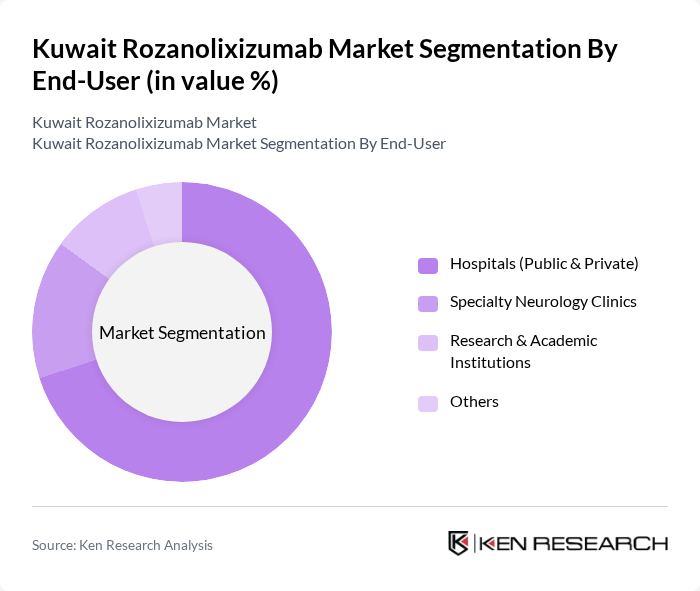
By End-User:The market is segmented by end-users into Hospitals (Public & Private), Specialty Neurology Clinics, Research & Academic Institutions, and Others. Hospitals, especially public institutions, account for the largest share due to their comprehensive care capabilities and access to advanced biologic therapies. The high volume of patients with autoimmune disorders seeking specialized treatment in these facilities continues to drive Rozanolixizumab demand. Specialty neurology clinics and research institutions are also key contributors, reflecting the trend toward subspecialization and clinical research in Kuwait’s healthcare sector .
The Kuwait Rozanolixizumab Market is characterized by a dynamic mix of regional and international players. Leading participants such as UCB S.A., Sanofi S.A., Takeda Pharmaceutical Company Limited, Roche Holding AG, Novartis AG, Pfizer Inc., Johnson & Johnson, AbbVie Inc., Amgen Inc., Bristol-Myers Squibb Company, Eli Lilly and Company, Regeneron Pharmaceuticals, Inc., Astellas Pharma Inc., Genentech, Inc., GSK plc contribute to innovation, geographic expansion, and service delivery in this space.
The future of the Rozanolixizumab market in Kuwait appears promising, driven by a combination of increasing healthcare investments and a growing focus on personalized medicine. As healthcare infrastructure expands, more patients will gain access to advanced therapies. Additionally, the integration of digital health technologies is expected to enhance patient monitoring and treatment adherence, further supporting the adoption of innovative therapies. The market is poised for growth as stakeholders adapt to evolving healthcare needs and regulatory landscapes.
| Segment | Sub-Segments |
|---|---|
| By Type | Rozanolixizumab (Monoclonal Antibody) Other FcRn Inhibitors Biosimilars and Pipeline Molecules Others |
| By End-User | Hospitals (Public & Private) Specialty Neurology Clinics Research & Academic Institutions Others |
| By Distribution Channel | Direct Hospital Procurement Licensed Pharmaceutical Distributors Online Pharmacies Others |
| By Application | Generalized Myasthenia Gravis (gMG) Chronic Inflammatory Demyelinating Polyneuropathy (CIDP) Other Autoimmune Neurological Disorders Others |
| By Patient Demographics | Age Group (Children, Adults, Elderly) Gender Socioeconomic Status |
| By Treatment Setting | Inpatient Outpatient Home Care |
| By Pricing Tier | Premium Mid-range Budget |
| Scope Item/Segment | Sample Size | Target Respondent Profiles |
|---|---|---|
| Rheumatology Clinics | 60 | Rheumatologists, Clinic Managers |
| Pharmaceutical Distributors | 50 | Distribution Managers, Sales Representatives |
| Patient Advocacy Groups | 40 | Patient Leaders, Health Educators |
| Health Insurance Providers | 45 | Policy Analysts, Claims Managers |
| Hospital Pharmacy Departments | 55 | Pharmacists, Pharmacy Directors |
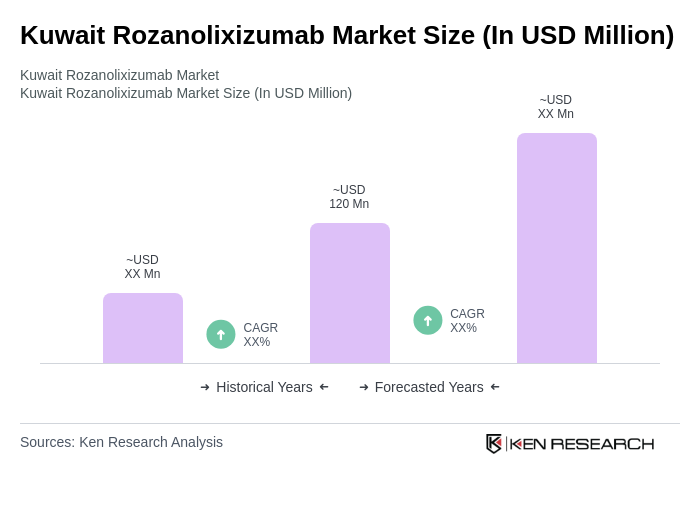
The Kuwait Rozanolixizumab market is valued at approximately USD 120 million, reflecting strong demand for biologics and specialty pharmaceuticals, particularly due to the rising prevalence of autoimmune diseases and the adoption of innovative therapies.

What makes us stand out is that our consultants follow Robust, Refine and Result (RRR) methodology. Robust for clear definitions, approaches and sanity checking, Refine for differentiating respondents' facts and opinions, and Result for presenting data with story.

We have set a benchmark in the industry by offering our clients with syndicated and customized market research reports featuring coverage of entire market as well as meticulous research and analyst insights.

While we don't replace traditional research, we flip the method upside down. Our dual approach of Top Bottom & Bottom Top ensures quality deliverable by not just verifying company fundamentals but also looking at the sector and macroeconomic factors.

With one step in the future, our research team constantly tries to show you the bigger picture. We help with some of the tough questions you may encounter along the way: How is the industry positioned? Best marketing channel? KPI's of competitors? By aligning every element, we help maximize success.

Our report gives you instant access to the answers and sources that other companies might choose to hide. We elaborate each steps of research methodology we have used and showcase you the sample size to earn your trust.

If you need any support, we are here! We pride ourselves on universe strength, data quality, and quick, friendly, and professional service.













