Region:Middle East
Author(s):Shubham
Product Code:KRAC2118
Pages:93
Published On:October 2025
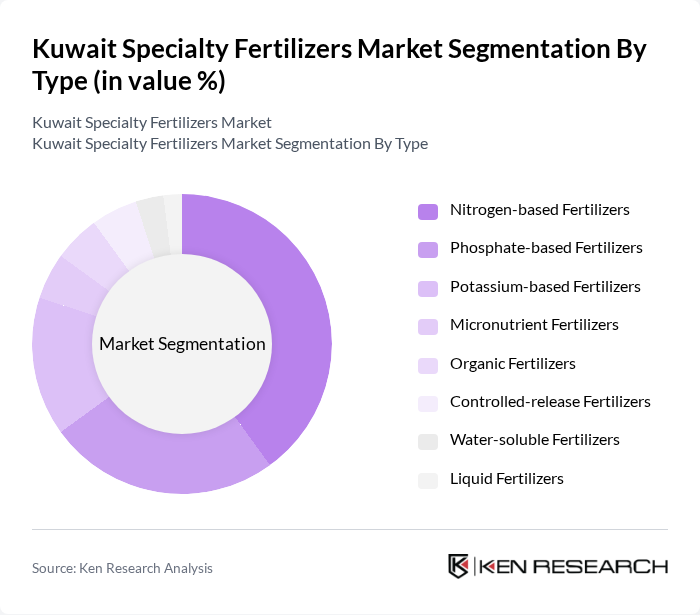
By Type:The market is segmented into various types of specialty fertilizers, including nitrogen-based, phosphate-based, potassium-based, micronutrient, organic, controlled-release, water-soluble, and liquid fertilizers. Each type serves specific agricultural needs, with liquid fertilizers demonstrating particularly strong performance in the regional market due to superior soil penetration capabilities, rapid nutrient absorption by plants, and minimal wastage during application. Controlled-release fertilizers are experiencing robust growth driven by increasing demand for environmentally friendly options, particularly polymer-coated variants that provide sustained nutrient release over extended periods.
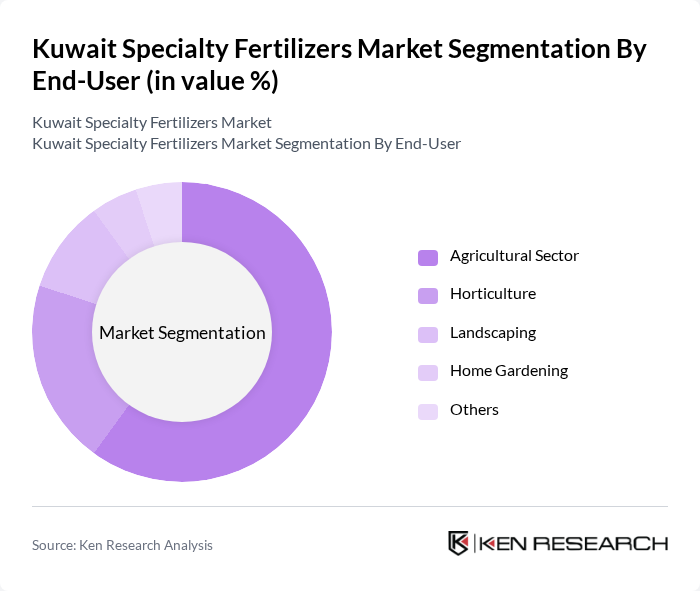
By End-User:The end-user segmentation includes the agricultural sector, horticulture, landscaping, home gardening, and others. The agricultural sector is the largest end-user, driven by the need for enhanced crop productivity and the adoption of modern farming techniques. Field crops dominate the regional specialty fertilizer market, accounting for approximately 62 percent of total market value, attributed to extensive cultivation areas and increasing adoption of controlled-release and slow-release fertilizers. The horticultural crops segment is experiencing the fastest growth, driven by increasing adoption of advanced farming techniques such as greenhouse vegetable cultivation and precision farming, with many regional countries recognizing horticulture as a lucrative export industry.
The Kuwait Specialty Fertilizers Market is characterized by a dynamic mix of regional and international players. Leading participants such as Kuwait Chemical Company, Gulf Fertilizers Company, Al-Bahar Group, National Agricultural Development Company, Kuwait Agro for Agricultural Investment, Al-Fahd Fertilizers, Al-Mansour Group, Al-Khalij Fertilizers, Al-Jazeera Fertilizers, Al-Muhaidib Group, Al-Salam Fertilizers, Al-Qabas Fertilizers, Al-Masafi Fertilizers, Al-Nasr Fertilizers, Al-Rajhi Fertilizers contribute to innovation, geographic expansion, and service delivery in this space.
The future of the Kuwait specialty fertilizers market appears promising, driven by increasing agricultural productivity and a shift towards sustainable practices. As the government continues to invest in agricultural initiatives, the adoption of specialty fertilizers is expected to rise. Furthermore, the growing demand for organic produce will likely encourage innovation in fertilizer formulations. With advancements in technology and a focus on environmental sustainability, the market is poised for significant growth, benefiting both farmers and consumers alike.
| Segment | Sub-Segments |
|---|---|
| By Type | Nitrogen-based Fertilizers Phosphate-based Fertilizers Potassium-based Fertilizers Micronutrient Fertilizers Organic Fertilizers Controlled-release Fertilizers Water-soluble Fertilizers Liquid Fertilizers |
| By End-User | Agricultural Sector Horticulture Landscaping Home Gardening Others |
| By Application | Soil Application Foliar Application Fertigation Others |
| By Distribution Channel | Direct Sales Retail Stores Online Sales Distributors Others |
| By Packaging Type | Bulk Packaging Bagged Packaging Liquid Packaging Others |
| By Price Range | Economy Range Mid-range Premium Range |
| By Brand Loyalty | Brand Loyal Customers Price-sensitive Customers Others |
| Scope Item/Segment | Sample Size | Target Respondent Profiles |
|---|---|---|
| Cereal Crop Fertilization | 50 | Agronomists, Crop Managers |
| Horticultural Specialty Fertilizers | 45 | Greenhouse Operators, Horticulturists |
| Organic Fertilizer Adoption | 40 | Organic Farmers, Sustainability Advocates |
| Fertilizer Distribution Channels | 60 | Distributors, Retail Managers |
| Government Agricultural Policy Impact | 50 | Policy Makers, Agricultural Economists |
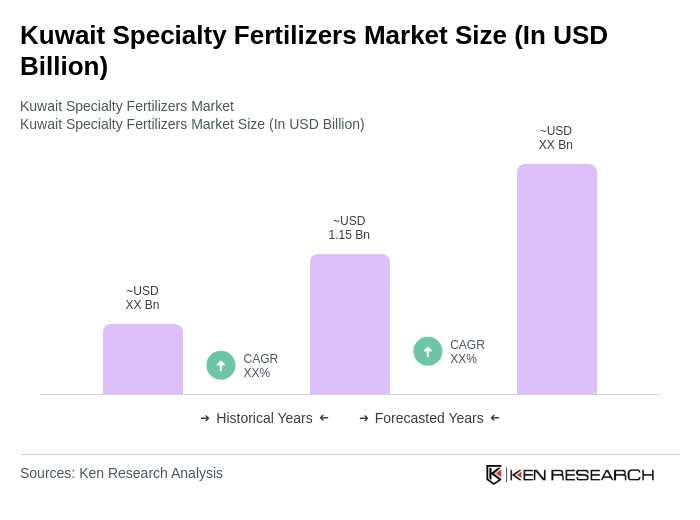
The Kuwait Specialty Fertilizers Market is valued at approximately USD 1.15 billion, reflecting a robust growth trajectory driven by the increasing demand for high-efficiency fertilizers and sustainable agricultural practices among farmers and agricultural businesses.

What makes us stand out is that our consultants follow Robust, Refine and Result (RRR) methodology. Robust for clear definitions, approaches and sanity checking, Refine for differentiating respondents' facts and opinions, and Result for presenting data with story.

We have set a benchmark in the industry by offering our clients with syndicated and customized market research reports featuring coverage of entire market as well as meticulous research and analyst insights.

While we don't replace traditional research, we flip the method upside down. Our dual approach of Top Bottom & Bottom Top ensures quality deliverable by not just verifying company fundamentals but also looking at the sector and macroeconomic factors.

With one step in the future, our research team constantly tries to show you the bigger picture. We help with some of the tough questions you may encounter along the way: How is the industry positioned? Best marketing channel? KPI's of competitors? By aligning every element, we help maximize success.

Our report gives you instant access to the answers and sources that other companies might choose to hide. We elaborate each steps of research methodology we have used and showcase you the sample size to earn your trust.

If you need any support, we are here! We pride ourselves on universe strength, data quality, and quick, friendly, and professional service.













