Malaysia Digital Marketing Software Market Report Size Share Growth Drivers Trends Opportunities & Forecast 2025–2030

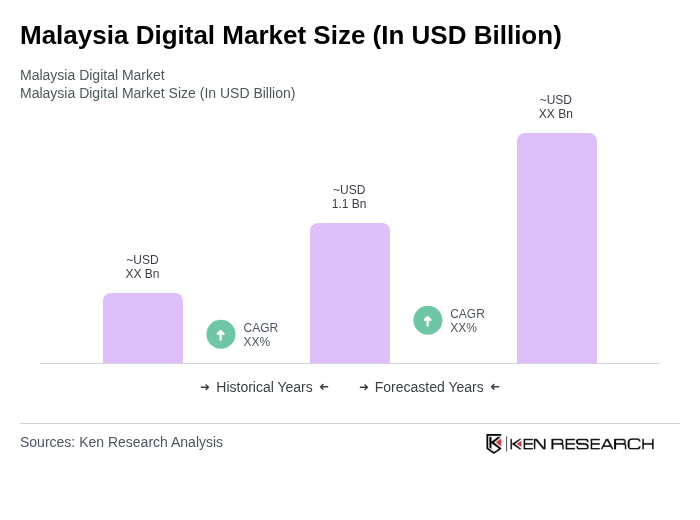
Malaysia Digital Marketing Software Market, valued at USD 1.1 Bn, is growing due to rising e-commerce, social media marketing dominance, and digital transformation in key cities like Kuala Lumpur.

Region:Asia

Author(s):Shubham

Product Code:KRAD2556

Pages:84

Published On:January 2026
About the Report

Base Year 2024

Malaysia Digital Marketing Software Market Overview

  • The Malaysia Digital Marketing Software Market is valued at USD 1.1 billion, based on a five-year historical analysis and its proportion within the broader Malaysia ICT and global digital marketing software markets. This growth is primarily driven by the increasing adoption of digital marketing strategies by businesses, the rise of e-commerce, and the growing importance of data analytics and cloud-based solutions in marketing decisions, supported by strong expansion in Malaysia’s digital economy and ICT investments. The demand for innovative marketing solutions has surged as companies seek to enhance their online presence, leverage omnichannel engagement, and use data-driven tools to engage effectively with consumers.
  • Key cities such as Kuala Lumpur, Penang, and Johor Bahru dominate the Malaysia Digital Marketing Software Market due to their robust economic activities, higher internet and broadband penetration, and a concentration of businesses and service industries undergoing digital transformation. Kuala Lumpur, as the capital and primary ICT hub, serves as a center for technology, telecommunications, and innovation, attracting both local and international companies that invest heavily in cloud, e-commerce, and digital marketing solutions to serve Malaysia and the wider ASEAN region.
  • In 2021, the Malaysian government launched the Malaysia Digital Economy Blueprint (MyDIGITAL) to accelerate digitalisation across the economy, including marketing-related activities, by promoting wider adoption of digital tools, cloud services, and data-driven solutions among businesses. Under this blueprint and related initiatives such as the 12th Malaysia Plan, various incentives, grants, and capacity-building programmes are provided for micro, small and medium enterprises (MSMEs/SMEs) to upgrade their digital capabilities, including e-commerce, online advertising, and marketing analytics, thereby fostering a more competitive digital marketing environment. The Blueprint is complemented on the data and consumer side by instruments such as the Personal Data Protection Act 2010 (PDPA) issued by the Personal Data Protection Commissioner under the Ministry of Communications and Digital, which sets rules for the processing and use of personal data in commercial transactions, requiring digital marketers and software providers operating in Malaysia to comply with consent, notice, security, retention, and data transfer obligations when running campaigns and managing customer information.
Malaysia Digital Marketing Software Market Size

Malaysia Digital Marketing Software Market Segmentation

By Component:

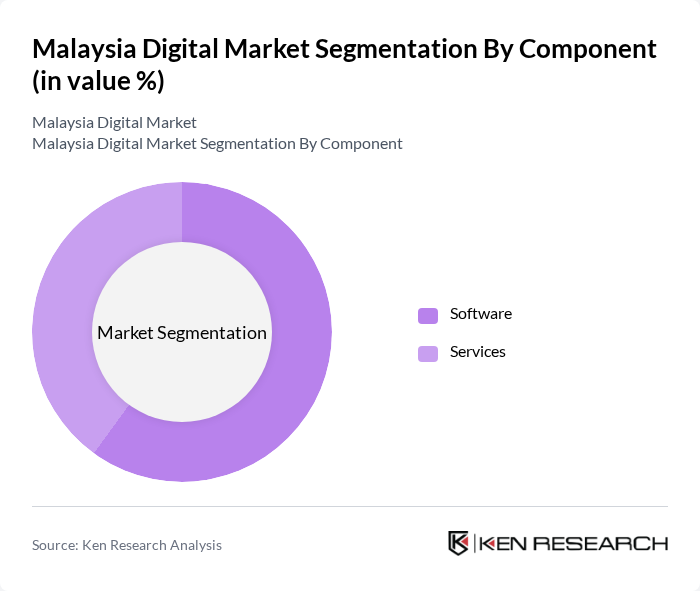
Malaysia Digital Market segmentation by Component.

The components of the Malaysia Digital Marketing Software Market include Software and Services. The Software segment is currently dominating the market due to the increasing demand for automated, cloud-based solutions that enhance marketing efficiency and effectiveness, in line with global trends where digital marketing software platforms account for the majority of spend. Businesses are increasingly investing in software solutions that offer advanced analytics, customer relationship management, campaign management, and marketing automation capabilities, enabling better targeting and measurement across digital channels. The Services segment, while significant and supported by local ICT and telecom providers, is growing at a steadier pace as companies in Malaysia adopt more self-service and in-house platforms to manage digital campaigns, supported by training and enablement programmes under national digital initiatives.

By Solution Type:
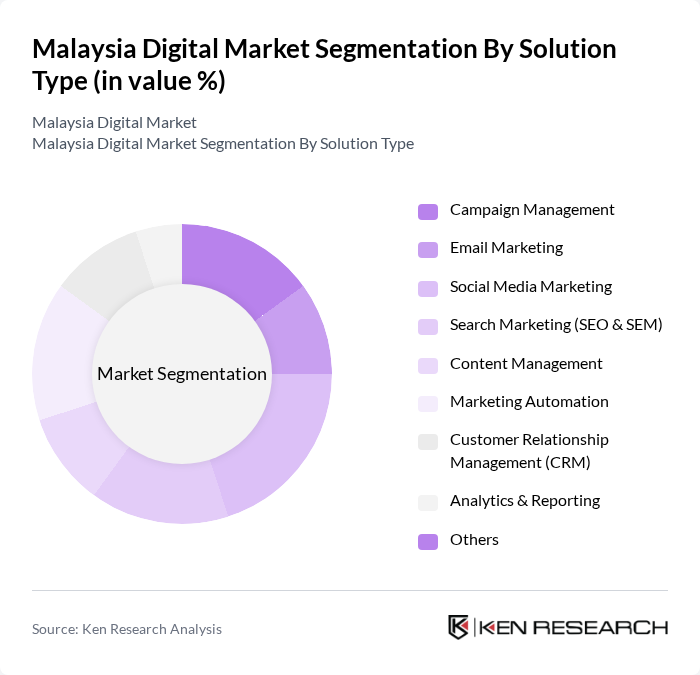
Malaysia Digital Market segmentation by Solution Type.

The Solution Type segmentation includes Campaign Management, Email Marketing, Social Media Marketing, Search Marketing (SEO & SEM), Content Management, Marketing Automation, Customer Relationship Management (CRM), Analytics & Reporting, and Others. Among these, Social Media Marketing is leading the market, driven by the widespread use of platforms such as Facebook, Instagram, TikTok and YouTube for brand engagement, influencer collaborations, and customer interaction across Malaysia and the broader Asia-Pacific region. Businesses are increasingly leveraging social media tools, performance advertising, and social commerce integrations to reach their target audiences effectively, resulting in a significant share of the overall market. Campaign Management and Marketing Automation are also gaining traction as companies seek to orchestrate omnichannel journeys, personalise content at scale, and improve return on investment by using data-driven segmentation, analytics, and AI-enabled optimisation.

Malaysia Digital Marketing Software Market Competitive Landscape

The Malaysia Digital Marketing Software Market is characterized by a dynamic mix of regional and international players. Leading participants such as GHL Systems Berhad, Grab Holdings Ltd., Lazada Malaysia, Shopee Malaysia, Maxis Berhad, Digi Telecommunications Sdn Bhd, Telekom Malaysia Berhad, AirAsia MOVE (formerly AirAsia Super App), Malaysia Digital Economy Corporation (MDEC), Petronas Dagangan Berhad, Malayan Banking Berhad (Maybank), CIMB Group Holdings Berhad, Axiata Group Berhad, Razer Inc., Fave Malaysia contribute to innovation, geographic expansion, and service delivery in this space by enabling e-commerce, digital payments, advertising solutions, cloud-based services, and SME-focused digitalisation programmes that underpin adoption of digital marketing tools.

GHL Systems Berhad

1994

Kuala Lumpur, Malaysia

Grab Holdings Ltd.

2012

Singapore

Lazada Malaysia

2012

Kuala Lumpur, Malaysia

Shopee Malaysia

2015

Kuala Lumpur, Malaysia

Maxis Berhad

1995

Kuala Lumpur, Malaysia

Company

Establishment Year

Headquarters

Group Size (Large, Medium, or Small as per industry convention)

Annual Recurring Revenue (ARR)

Year-on-Year Revenue Growth (%)

Customer Acquisition Cost (CAC)

Customer Lifetime Value (CLV)

Gross Margin (%)

Malaysia Digital Market Industry Analysis

Growth Drivers

  • Increasing Internet Penetration:Malaysia's internet penetration rate reached96.8%in recent periods, with approximately33 millionusers accessing the web. This growth is driven by government initiatives to enhance digital infrastructure, including the National Fiberisation and Connectivity Plan, which aims to provide high-speed internet access to underserved areas. The increasing availability of affordable smartphones further supports this trend, enabling more Malaysians to engage in online activities, thus fueling the digital market's expansion.
  • Rise of E-commerce Platforms:The Malaysian e-commerce sector is projected to generateapproximately RM 60 billion (approximately USD 13 billion)in revenue in future, reflecting a significant increase from an estimatedaround RM 45 billionin earlier recent periods. This growth is attributed to the proliferation of platforms like Shopee and Lazada, which have made online shopping more accessible. Additionally, the COVID-19 pandemic accelerated the shift towards e-commerce, as consumers increasingly prefer online shopping for convenience and safety, further driving market growth.
  • Growing Mobile Usage:Mobile internet usage in Malaysia is expected to reacharound 90% of the population in future, with over30 millionactive mobile internet users. The rise of mobile applications and services has transformed consumer behavior, leading to increased engagement in mobile commerce and digital marketing. This trend is supported by the growing availability of 4G and 5G networks, which enhance user experience and facilitate seamless transactions, thereby contributing to the overall growth of the digital market.

Market Challenges

  • Intense Competition:The Malaysian digital market is characterized by fierce competition, withover 1,000e-commerce platforms vying for market share. This saturation leads to price wars and reduced profit margins, making it challenging for new entrants to establish themselves. Established players like Lazada and Shopee dominate the market, creating barriers for smaller companies. As a result, businesses must innovate continuously to differentiate themselves and capture consumer attention in this crowded landscape.
  • Data Privacy Concerns:With the implementation of the Personal Data Protection Act (PDPA) in the early 2010s, Malaysian consumers are increasingly aware of data privacy issues. In recent surveys,65%of Malaysians expressed concerns about how their personal data is used online, indicating heightened awareness. This heightened awareness poses challenges for digital marketers, as they must navigate stringent regulations while building consumer trust. Failure to comply with data protection laws can result in significant penalties, further complicating marketing strategies in the digital space.

Malaysia Digital Market Future Outlook

The future of Malaysia's digital market appears promising, driven by technological advancements and evolving consumer preferences. As mobile-first strategies gain traction, businesses will increasingly focus on optimizing their digital presence for mobile users. Additionally, the integration of artificial intelligence and data analytics will enhance personalized marketing efforts, allowing companies to tailor their offerings to individual consumer needs. This dynamic environment will foster innovation and create new opportunities for growth across various sectors within the digital landscape.

Market Opportunities

  • Expansion of Digital Payment Solutions:The digital payment market in Malaysia is projected to reachapproximately RM 1 trillion (approximately USD 220 billion) in future, driven by the increasing adoption of e-wallets and contactless payment methods. This growth presents significant opportunities for fintech companies to innovate and offer seamless payment solutions, enhancing consumer convenience and driving e-commerce transactions.
  • Growth in Social Media Marketing:With overaround 28 millionactive social media users in Malaysia, businesses have a unique opportunity to leverage platforms like Facebook and Instagram for targeted marketing. The social media advertising market is expected to grow toRM 3 billion (approximately USD 720 million)in future, providing brands with the potential to engage directly with consumers and enhance brand loyalty through effective digital campaigns.

Scope of the Report

SegmentSub-Segments
By Component

Software

Services

By Solution Type

Campaign Management

Email Marketing

Social Media Marketing

Search Marketing (SEO & SEM)

Content Management

Marketing Automation

Customer Relationship Management (CRM)

Analytics & Reporting

Others

By Deployment Mode

Cloud

On-premise

By Enterprise Size

Large Enterprises

Small and Medium-sized Enterprises (SMEs)

By End-user Industry

Retail & E-commerce

BFSI

IT & Telecom

Media & Entertainment

Healthcare

Travel & Hospitality

Others

By Marketing Channel

Search (Paid & Organic)

Social Media

Display & Video

Email

Mobile & In-app

Others

By Region in Malaysia

Central (Klang Valley)

Northern

Southern

East Coast

East Malaysia (Sabah & Sarawak)

Key Target Audience

Investors and Venture Capitalist Firms

Government and Regulatory Bodies (e.g., Malaysian Communications and Multimedia Commission, Ministry of Communications and Multimedia)

Digital Marketing Agencies

Advertising Firms

Software Development Companies

Telecommunications Companies

Media and Publishing Companies

Retail and E-commerce Businesses

Players Mentioned in the Report:

GHL Systems Berhad

Grab Holdings Ltd.

Lazada Malaysia

Shopee Malaysia

Maxis Berhad

Digi Telecommunications Sdn Bhd

Telekom Malaysia Berhad

AirAsia MOVE (formerly AirAsia Super App)

Malaysia Digital Economy Corporation (MDEC)

Petronas Dagangan Berhad

Malayan Banking Berhad (Maybank)

CIMB Group Holdings Berhad

Axiata Group Berhad

Razer Inc.

Fave Malaysia

Table of Contents

Market Assessment Phase

1. Executive Summary and Approach


2. Malaysia Digital Market Overview

2.1 Key Insights and Strategic Recommendations

2.2 Malaysia Digital Market Overview

2.3 Definition and Scope

2.4 Evolution of Market Ecosystem

2.5 Timeline of Key Regulatory Milestones

2.6 Value Chain & Stakeholder Mapping

2.7 Business Cycle Analysis

2.8 Policy & Incentive Landscape


3. Malaysia Digital Market Analysis

3.1 Growth Drivers

3.1.1 Increasing Internet Penetration
3.1.2 Rise of E-commerce Platforms
3.1.3 Growing Mobile Usage
3.1.4 Demand for Data Analytics Solutions

3.2 Market Challenges

3.2.1 Intense Competition
3.2.2 Data Privacy Concerns
3.2.3 Limited Digital Literacy
3.2.4 Regulatory Compliance Issues

3.3 Market Opportunities

3.3.1 Expansion of Digital Payment Solutions
3.3.2 Growth in Social Media Marketing
3.3.3 Adoption of AI and Automation
3.3.4 Increasing Demand for Personalized Marketing

3.4 Market Trends

3.4.1 Shift Towards Mobile-First Strategies
3.4.2 Integration of Augmented Reality in Marketing
3.4.3 Emphasis on Sustainability in Marketing
3.4.4 Rise of Influencer Marketing

3.5 Government Regulation

3.5.1 Personal Data Protection Act (PDPA)
3.5.2 Digital Economy Blueprint
3.5.3 E-commerce Act
3.5.4 Advertising Standards Authority Guidelines

4. SWOT Analysis


5. Stakeholder Analysis


6. Porter's Five Forces Analysis


7. Malaysia Digital Market Market Size, 2019-2024

7.1 By Value

7.2 By Volume

7.3 By Average Selling Price


8. Malaysia Digital Marketing Software Market Segmentation

8.1 By Component

8.1.1 Software
8.1.2 Services

8.2 By Solution Type

8.2.1 Campaign Management
8.2.2 Email Marketing
8.2.3 Social Media Marketing
8.2.4 Search Marketing (SEO & SEM)
8.2.5 Content Management
8.2.6 Marketing Automation
8.2.7 Customer Relationship Management (CRM)
8.2.8 Analytics & Reporting
8.2.9 Others

8.3 By Deployment Mode

8.3.1 Cloud
8.3.2 On-premise

8.4 By Enterprise Size

8.4.1 Large Enterprises
8.4.2 Small and Medium-sized Enterprises (SMEs)

8.5 By End-user Industry

8.5.1 Retail & E-commerce
8.5.2 BFSI
8.5.3 IT & Telecom
8.5.4 Media & Entertainment
8.5.5 Healthcare
8.5.6 Travel & Hospitality
8.5.7 Others

8.6 By Marketing Channel

8.6.1 Search (Paid & Organic)
8.6.2 Social Media
8.6.3 Display & Video
8.6.4 Email
8.6.5 Mobile & In-app
8.6.6 Others

8.7 By Region in Malaysia

8.7.1 Central (Klang Valley)
8.7.2 Northern
8.7.3 Southern
8.7.4 East Coast
8.7.5 East Malaysia (Sabah & Sarawak)

9. Malaysia Digital Market Competitive Analysis

9.1 Market Share of Key Players

9.2 Cross Comparison of Key Players

9.2.1 Company Name
9.2.2 Group Size (Large, Medium, or Small as per industry convention)
9.2.3 Annual Recurring Revenue (ARR)
9.2.4 Year-on-Year Revenue Growth (%)
9.2.5 Customer Acquisition Cost (CAC)
9.2.6 Customer Lifetime Value (CLV)
9.2.7 Gross Margin (%)
9.2.8 Conversion Rate
9.2.9 Return on Marketing Investment (ROMI)
9.2.10 Churn Rate
9.2.11 Average Revenue Per User (ARPU)
9.2.12 Market Penetration Rate

9.3 SWOT Analysis of Top Players

9.4 Pricing Analysis

9.5 Detailed Profile of Major Companies

9.5.1 GHL Systems Berhad
9.5.2 Grab Holdings Ltd.
9.5.3 Lazada Malaysia
9.5.4 Shopee Malaysia
9.5.5 Maxis Berhad
9.5.6 Digi Telecommunications Sdn Bhd
9.5.7 Telekom Malaysia Berhad
9.5.8 AirAsia MOVE (formerly AirAsia Super App)
9.5.9 Malaysia Digital Economy Corporation (MDEC)
9.5.10 Petronas Dagangan Berhad
9.5.11 Malayan Banking Berhad (Maybank)
9.5.12 CIMB Group Holdings Berhad
9.5.13 Axiata Group Berhad
9.5.14 Razer Inc.
9.5.15 Fave Malaysia

10. Malaysia Digital Market End-User Analysis

10.1 Procurement Behavior of Key Ministries

10.1.1 Digital Marketing Budget Allocation
10.1.2 Preferred Marketing Channels
10.1.3 Decision-Making Process
10.1.4 Vendor Selection Criteria

10.2 Corporate Spend on Infrastructure & Energy

10.2.1 Investment in Digital Tools
10.2.2 Budget Trends Over Time
10.2.3 Impact of Economic Factors
10.2.4 Future Spending Projections

10.3 Pain Point Analysis by End-User Category

10.3.1 Challenges in Digital Adoption
10.3.2 Resource Limitations
10.3.3 Integration Issues
10.3.4 Customer Engagement Difficulties

10.4 User Readiness for Adoption

10.4.1 Training and Support Needs
10.4.2 Technology Familiarity
10.4.3 Attitudes Towards Digital Marketing
10.4.4 Barriers to Entry

10.5 Post-Deployment ROI and Use Case Expansion

10.5.1 Measurement of Success
10.5.2 Case Studies of Successful Implementations
10.5.3 Future Use Cases
10.5.4 Feedback Mechanisms

11. Malaysia Digital Market Future Size, 2025-2030

11.1 By Value

11.2 By Volume

11.3 By Average Selling Price


Go-To-Market Strategy Phase

1. Whitespace Analysis + Business Model Canvas

1.1 Market Gaps Identification

1.2 Business Model Development


2. Marketing and Positioning Recommendations

2.1 Branding Strategies

2.2 Product USPs


3. Distribution Plan

3.1 Urban Retail vs Rural NGO Tie-ups


4. Channel & Pricing Gaps

4.1 Underserved Routes

4.2 Pricing Bands


5. Unmet Demand & Latent Needs

5.1 Category Gaps

5.2 Consumer Segments


6. Customer Relationship

6.1 Loyalty Programs

6.2 After-sales Service


7. Value Proposition

7.1 Sustainability

7.2 Integrated Supply Chains


8. Key Activities

8.1 Regulatory Compliance

8.2 Branding

8.3 Distribution Setup


9. Entry Strategy Evaluation

9.1 Domestic Market Entry Strategy

9.1.1 Product Mix
9.1.2 Pricing Band
9.1.3 Packaging

9.2 Export Entry Strategy

9.2.1 Target Countries
9.2.2 Compliance Roadmap

10. Entry Mode Assessment

10.1 JV

10.2 Greenfield

10.3 M&A

10.4 Distributor Model


11. Capital and Timeline Estimation

11.1 Capital Requirements

11.2 Timelines


12. Control vs Risk Trade-Off

12.1 Ownership vs Partnerships


13. Profitability Outlook

13.1 Breakeven Analysis

13.2 Long-term Sustainability


14. Potential Partner List

14.1 Distributors

14.2 JVs

14.3 Acquisition Targets


15. Execution Roadmap

15.1 Phased Plan for Market Entry

15.1.1 Market Setup
15.1.2 Market Entry
15.1.3 Growth Acceleration
15.1.4 Scale & Stabilize

15.2 Key Activities and Milestones

15.2.1 Activity Timeline
15.2.2 Milestone Tracking

Research Methodology

ApproachModellingSample

Phase 1: Approach1

Desk Research

  • Analysis of government publications and reports on digital economy initiatives in Malaysia
  • Review of industry reports from local and international market research firms focusing on digital market trends
  • Examination of academic journals and white papers discussing digital transformation in Malaysian businesses

Primary Research

  • Interviews with digital marketing experts and consultants operating in Malaysia
  • Surveys targeting small and medium enterprises (SMEs) to understand their digital adoption rates
  • Focus group discussions with consumers to gauge their online shopping behaviors and preferences

Validation & Triangulation

  • Cross-validation of findings through comparison with regional digital market data
  • Triangulation of insights from primary interviews and secondary data sources
  • Sanity checks conducted through expert panel reviews comprising industry veterans

Phase 2: Market Size Estimation1

Top-down Assessment

  • Estimation of total digital market size based on national GDP contribution from the digital sector
  • Segmentation of market size by key digital services such as e-commerce, digital advertising, and fintech
  • Incorporation of growth rates from government forecasts and industry projections

Bottom-up Modeling

  • Collection of revenue data from leading digital service providers in Malaysia
  • Estimation of user base growth rates for various digital platforms and services
  • Analysis of average transaction values and frequency of use across different digital channels

Forecasting & Scenario Analysis

  • Multi-factor regression analysis incorporating economic indicators and consumer behavior trends
  • Scenario modeling based on potential regulatory changes and technological advancements
  • Development of baseline, optimistic, and pessimistic forecasts through 2028

Phase 3: CATI Sample Composition1

Scope Item/SegmentSample SizeTarget Respondent Profiles
E-commerce User Experience120Online Shoppers, UX Designers
Digital Marketing Strategies90Marketing Managers, Brand Strategists
Fintech Adoption Trends80Financial Analysts, Tech Entrepreneurs
Social Media Engagement100Social Media Managers, Content Creators
Mobile App Usage Patterns70App Developers, Product Managers

Frequently Asked Questions

What is the current value of the Malaysia Digital Marketing Software Market?

The Malaysia Digital Marketing Software Market is valued at approximately USD 1.1 billion, driven by the increasing adoption of digital marketing strategies, the rise of e-commerce, and the growing importance of data analytics and cloud-based solutions.

Which cities are key players in the Malaysia Digital Marketing Software Market?

What initiatives has the Malaysian government taken to promote digital marketing?

What are the main components of the Malaysia Digital Marketing Software Market?

Why Buy From Us?

Refine Robust Result (RRR) Framework

What makes us stand out is that our consultants follow Robust, Refine and Result (RRR) methodology. Robust for clear definitions, approaches and sanity checking, Refine for differentiating respondents' facts and opinions, and Result for presenting data with story.

Our Reach Is Unmatched

We have set a benchmark in the industry by offering our clients with syndicated and customized market research reports featuring coverage of entire market as well as meticulous research and analyst insights.

Shifting the Research Paradigm

While we don't replace traditional research, we flip the method upside down. Our dual approach of Top Bottom & Bottom Top ensures quality deliverable by not just verifying company fundamentals but also looking at the sector and macroeconomic factors.

More Insights-Better Decisions

With one step in the future, our research team constantly tries to show you the bigger picture. We help with some of the tough questions you may encounter along the way: How is the industry positioned? Best marketing channel? KPI's of competitors? By aligning every element, we help maximize success.

Transparency and Trust

Our report gives you instant access to the answers and sources that other companies might choose to hide. We elaborate each steps of research methodology we have used and showcase you the sample size to earn your trust.

Round the Clock Support

If you need any support, we are here! We pride ourselves on universe strength, data quality, and quick, friendly, and professional service.

Why Clients Choose Us?

400000+
Reports in repository
150+
Consulting projects a year
100+
Analysts
8000+
Client Queries in 2022