About the Report
Base Year 2024Mexico Sports Apparel & Athleisure Market Overview
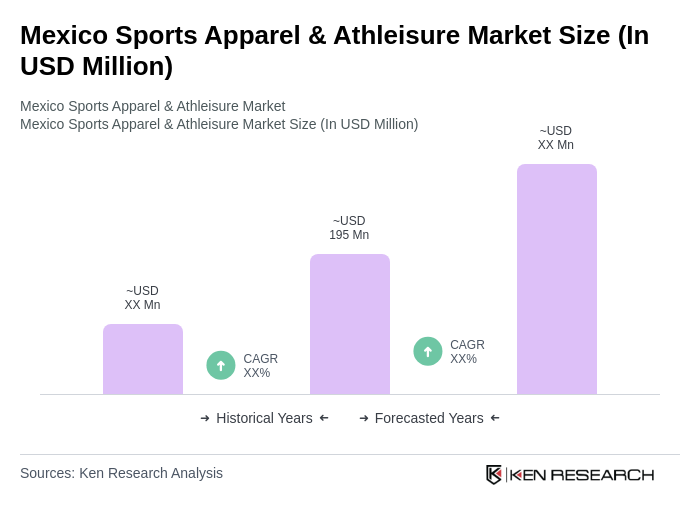
- The Mexico Sports Apparel & Athleisure Market is valued at USD 195 million, based on a five-year historical analysis. This growth is primarily driven by increasing health consciousness, a rise in fitness activities, and the growing trend of athleisure wear among consumers. The market has seen a significant shift towards casual and comfortable clothing, which has been further accelerated by the pandemic and subsequent lifestyle changes. Additional growth drivers include the rising prevalence of obesity, which is prompting more consumers to adopt daily exercise routines and seek comfortable, durable activewear. The adoption of natural fabrics and the casualisation of wardrobes among younger demographics are also fueling market expansion .
- Key cities such as Mexico City, Guadalajara, and Monterrey dominate the market due to their large urban populations and higher disposable incomes. These cities are also hubs for retail and e-commerce, making them attractive locations for sports apparel brands. The concentration of fitness centers, sports events, and a culture that promotes active lifestyles further enhances their market presence .
- In 2023, the Mexican government implemented regulations aimed at promoting sustainable practices within the sports apparel industry. This includes guidelines for manufacturers to reduce waste and increase the use of eco-friendly materials in their products. The initiative is part of a broader strategy to enhance environmental sustainability and encourage responsible consumption among consumers. The most relevant binding instrument is the “Norma Oficial Mexicana NOM-164-SEMARNAT-2023” issued by the Secretaría de Medio Ambiente y Recursos Naturales (SEMARNAT), which sets mandatory requirements for textile manufacturers to minimize environmental impact, including thresholds for recycled content and waste management protocols .
Mexico Sports Apparel & Athleisure Market Segmentation
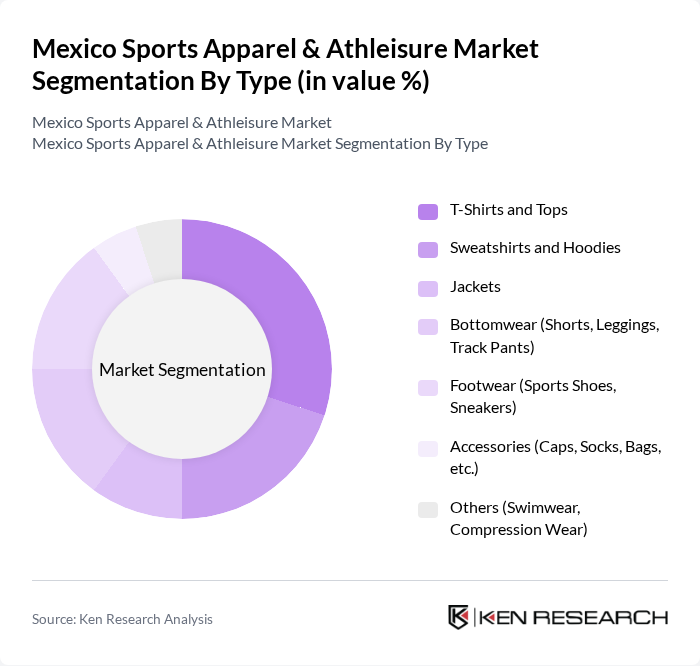
By Type:The market is segmented into various types of products, including T-Shirts and Tops, Sweatshirts and Hoodies, Jackets, Bottomwear (Shorts, Leggings, Track Pants), Footwear (Sports Shoes, Sneakers), Accessories (Caps, Socks, Bags, etc.), and Others (Swimwear, Compression Wear). Among these, T-Shirts and Tops dominate the market due to their versatility and widespread appeal across different demographics. The casual nature of T-shirts makes them a staple in both athletic and everyday wear, driving consistent demand. This segment leads in both revenue and growth rate, reflecting strong consumer preference for multi-purpose apparel .
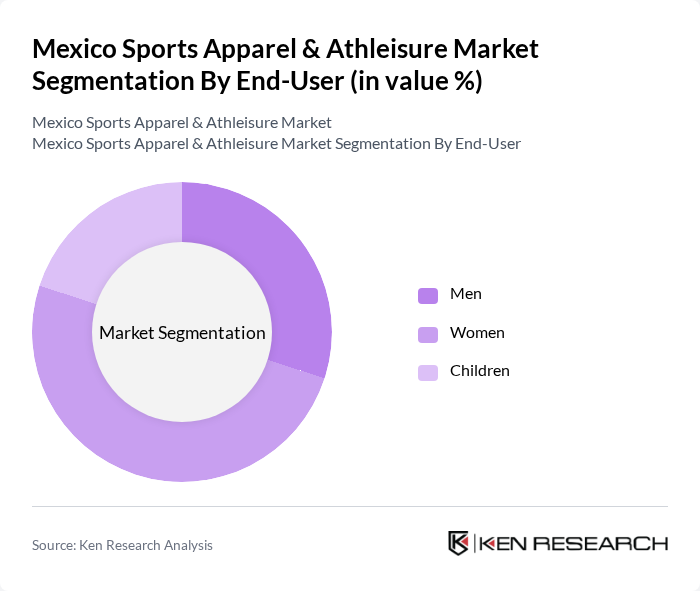
By End-User:The market is segmented by end-user demographics, including Men, Women, and Children. The segment for Women is currently leading the market, driven by the increasing participation of women in sports and fitness activities. Women are also more inclined towards athleisure trends, which combine style and functionality, making this segment particularly robust in terms of growth and consumer engagement. Women’s activewear is the fastest growing and highest revenue segment in Mexico, reflecting broader global trends .
Mexico Sports Apparel & Athleisure Market Competitive Landscape
The Mexico Sports Apparel & Athleisure Market is characterized by a dynamic mix of regional and international players. Leading participants such as Nike, Inc., Adidas AG, Under Armour, Inc., PUMA SE, Reebok International Ltd., Lululemon Athletica Inc., New Balance Athletics, Inc., ASICS Corporation, Columbia Sportswear Company, Skechers USA, Inc., Champion (Hanesbrands Inc.), Fabletics, Inc., Gymshark Ltd., Athleta (Gap Inc.), Decathlon S.A., Charly (Grupo Charly S.A. de C.V.), Innovasport (Grupo Topaz S.A. de C.V.), Li-Ning Company Limited, Lotto Sport Italia S.p.A., Joma Sport S.A. contribute to innovation, geographic expansion, and service delivery in this space.
Mexico Sports Apparel & Athleisure Market Industry Analysis
Growth Drivers
- Increasing Health Consciousness:The Mexican population is increasingly prioritizing health, with 45% of adults engaging in regular physical activity. This trend is supported by the World Health Organization, which reported a 5% rise in fitness club memberships in Mexico from 2020 to 2023. As health awareness grows, demand for sports apparel and athleisure products is expected to surge, driving market growth significantly in future.
- Rise of Athleisure Fashion Trends:Athleisure has become a dominant fashion trend in Mexico, with the market for athleisure apparel growing by 15% annually. According to Statista, the athleisure segment accounted for approximately $1.5 billion in sales in future. This trend is fueled by the blending of comfort and style, appealing to a broader demographic, including young professionals and students, thus enhancing market potential in future.
- Expansion of E-commerce Platforms:E-commerce in Mexico has seen a remarkable growth rate of 20% year-on-year, with online sales of sports apparel reaching $600 million in future. The rise of platforms like Amazon and Mercado Libre has made sports apparel more accessible to consumers. This shift towards online shopping is expected to continue, providing a significant boost to the sports apparel market in future as digital penetration increases.
Market Challenges
- Intense Competition:The sports apparel market in Mexico is characterized by fierce competition, with over 250 brands vying for market share. Major players like Nike and Adidas dominate, holding approximately 35% of the market. This saturation makes it challenging for new entrants to establish themselves, leading to price wars and reduced profit margins, which could hinder overall market growth in future.
- Economic Fluctuations:Mexico's economy is projected to grow at a modest rate of 3% in future, influenced by global economic conditions. Fluctuations in currency exchange rates and inflation, which reached 5% in future, can impact consumer spending on non-essential items like sports apparel. These economic uncertainties pose a significant challenge to market stability and growth in the coming year.
Mexico Sports Apparel & Athleisure Market Future Outlook
The Mexico sports apparel and athleisure market is poised for dynamic growth, driven by increasing health consciousness and the popularity of athleisure fashion. As e-commerce continues to expand, brands will need to adapt to changing consumer preferences, focusing on sustainability and innovation. The integration of technology in fabric development and personalized shopping experiences will likely shape the market landscape. Overall, the outlook for future remains optimistic, with opportunities for brands that can effectively navigate challenges and leverage emerging trends.
Market Opportunities
- Growth in Women's Sports Apparel:The women's sports apparel segment is projected to grow significantly, with sales expected to reach $700 million in future. This growth is driven by increasing female participation in sports and fitness activities, creating a demand for stylish and functional apparel tailored to women’s needs.
- Sustainable and Eco-friendly Products:There is a rising consumer preference for sustainable products, with 60% of consumers willing to pay more for eco-friendly apparel. This trend presents a lucrative opportunity for brands to innovate and offer sustainable sports apparel, potentially capturing a significant share of the market in future.
Scope of the Report
| Segment | Sub-Segments |
|---|---|
| By Type | T-Shirts and Tops Sweatshirts and Hoodies Jackets Bottomwear (Shorts, Leggings, Track Pants) Footwear (Sports Shoes, Sneakers) Accessories (Caps, Socks, Bags, etc.) Others (Swimwear, Compression Wear) |
| By End-User | Men Women Children |
| By Distribution Channel | Online Retail (E-commerce Platforms, Brand Websites) Offline Retail (Department Stores, Specialty Stores, Sports Chains) Direct Sales (Brand Outlets, Pop-up Stores) |
| By Price Range | Budget Mid-range Premium |
| By Brand Loyalty | Brand Loyal Customers Price-sensitive Customers |
| By Occasion | Casual Wear Sports Events Gym and Fitness |
| By Material | Cotton Polyester Blends Sustainable/Eco-friendly Materials Others |
Key Target Audience
Investors and Venture Capitalist Firms
Government and Regulatory Bodies (e.g., Secretaría de Economía, Comisión Federal de Competencia Económica)
Manufacturers and Producers
Distributors and Retailers
Fitness and Sports Organizations
Marketing and Advertising Agencies
Trade Associations (e.g., Asociación Mexicana de la Industria del Deporte)
Financial Institutions
Players Mentioned in the Report:
Nike, Inc.
Adidas AG
Under Armour, Inc.
PUMA SE
Reebok International Ltd.
Lululemon Athletica Inc.
New Balance Athletics, Inc.
ASICS Corporation
Columbia Sportswear Company
Skechers USA, Inc.
Champion (Hanesbrands Inc.)
Fabletics, Inc.
Gymshark Ltd.
Athleta (Gap Inc.)
Decathlon S.A.
Charly (Grupo Charly S.A. de C.V.)
Innovasport (Grupo Topaz S.A. de C.V.)
Li-Ning Company Limited
Lotto Sport Italia S.p.A.
Joma Sport S.A.
Table of Contents
Market Assessment Phase
1. Executive Summary and Approach
2. Mexico Sports Apparel & Athleisure Market Overview
2.1 Key Insights and Strategic Recommendations
2.2 Mexico Sports Apparel & Athleisure Market Overview
2.3 Definition and Scope
2.4 Evolution of Market Ecosystem
2.5 Timeline of Key Regulatory Milestones
2.6 Value Chain & Stakeholder Mapping
2.7 Business Cycle Analysis
2.8 Policy & Incentive Landscape
3. Mexico Sports Apparel & Athleisure Market Analysis
3.1 Growth Drivers
3.1.1 Increasing Health Consciousness
3.1.2 Rise of Athleisure Fashion Trends
3.1.3 Expansion of E-commerce Platforms
3.1.4 Government Initiatives Promoting Sports
3.2 Market Challenges
3.2.1 Intense Competition
3.2.2 Economic Fluctuations
3.2.3 Supply Chain Disruptions
3.2.4 Changing Consumer Preferences
3.3 Market Opportunities
3.3.1 Growth in Women's Sports Apparel
3.3.2 Sustainable and Eco-friendly Products
3.3.3 Technological Innovations in Fabric
3.3.4 Expansion into Rural Markets
3.4 Market Trends
3.4.1 Customization and Personalization
3.4.2 Collaborations with Influencers
3.4.3 Increased Focus on Mental Health and Wellness
3.4.4 Growth of Subscription Models
3.5 Government Regulation
3.5.1 Import Tariffs on Apparel
3.5.2 Labor Laws Affecting Manufacturing
3.5.3 Environmental Regulations
3.5.4 Standards for Product Safety
4. SWOT Analysis
5. Stakeholder Analysis
6. Porter's Five Forces Analysis
7. Mexico Sports Apparel & Athleisure Market Market Size, 2019-2024
7.1 By Value
7.2 By Volume
7.3 By Average Selling Price
8. Mexico Sports Apparel & Athleisure Market Segmentation
8.1 By Type
8.1.1 T-Shirts and Tops
8.1.2 Sweatshirts and Hoodies
8.1.3 Jackets
8.1.4 Bottomwear (Shorts, Leggings, Track Pants)
8.1.5 Footwear (Sports Shoes, Sneakers)
8.1.6 Accessories (Caps, Socks, Bags, etc.)
8.1.7 Others (Swimwear, Compression Wear)
8.2 By End-User
8.2.1 Men
8.2.2 Women
8.2.3 Children
8.3 By Distribution Channel
8.3.1 Online Retail (E-commerce Platforms, Brand Websites)
8.3.2 Offline Retail (Department Stores, Specialty Stores, Sports Chains)
8.3.3 Direct Sales (Brand Outlets, Pop-up Stores)
8.4 By Price Range
8.4.1 Budget
8.4.2 Mid-range
8.4.3 Premium
8.5 By Brand Loyalty
8.5.1 Brand Loyal Customers
8.5.2 Price-sensitive Customers
8.6 By Occasion
8.6.1 Casual Wear
8.6.2 Sports Events
8.6.3 Gym and Fitness
8.7 By Material
8.7.1 Cotton
8.7.2 Polyester
8.7.3 Blends
8.7.4 Sustainable/Eco-friendly Materials
8.7.5 Others
9. Mexico Sports Apparel & Athleisure Market Competitive Analysis
9.1 Market Share of Key Players
9.2 Cross Comparison of Key Players
9.2.1 Company Name
9.2.2 Group Size (Large, Medium, or Small as per industry convention)
9.2.3 Revenue (Mexico, USD Millions)
9.2.4 Revenue Growth Rate (YoY %)
9.2.5 Market Share (%)
9.2.6 Market Penetration Rate (Urban vs Rural)
9.2.7 Customer Retention Rate (%)
9.2.8 Average Selling Price (MXN)
9.2.9 Product Diversification (Number of Categories)
9.2.10 Brand Recognition (Survey Score or Index)
9.2.11 Distribution Network Efficiency (No. of POS/Stores)
9.2.12 Innovation Rate (New Product Launches per Year)
9.2.13 Sustainability Initiatives (Eco-friendly SKUs, Certifications)
9.3 SWOT Analysis of Top Players
9.4 Pricing Analysis
9.5 Detailed Profile of Major Companies
9.5.1 Nike, Inc.
9.5.2 Adidas AG
9.5.3 Under Armour, Inc.
9.5.4 PUMA SE
9.5.5 Reebok International Ltd.
9.5.6 Lululemon Athletica Inc.
9.5.7 New Balance Athletics, Inc.
9.5.8 ASICS Corporation
9.5.9 Columbia Sportswear Company
9.5.10 Skechers USA, Inc.
9.5.11 Champion (Hanesbrands Inc.)
9.5.12 Fabletics, Inc.
9.5.13 Gymshark Ltd.
9.5.14 Athleta (Gap Inc.)
9.5.15 Decathlon S.A.
9.5.16 Charly (Grupo Charly S.A. de C.V.)
9.5.17 Innovasport (Grupo Topaz S.A. de C.V.)
9.5.18 Li-Ning Company Limited
9.5.19 Lotto Sport Italia S.p.A.
9.5.20 Joma Sport S.A.
10. Mexico Sports Apparel & Athleisure Market End-User Analysis
10.1 Procurement Behavior of Key Ministries
10.1.1 Government Contracts for Sports Events
10.1.2 Budget Allocations for Health Initiatives
10.1.3 Partnerships with Local Manufacturers
10.2 Corporate Spend on Infrastructure & Energy
10.2.1 Investment in Sports Facilities
10.2.2 Sponsorship of Local Sports Teams
10.2.3 Funding for Community Sports Programs
10.3 Pain Point Analysis by End-User Category
10.3.1 Quality vs. Price Concerns
10.3.2 Availability of Size and Fit Options
10.3.3 Brand Trust and Authenticity
10.4 User Readiness for Adoption
10.4.1 Awareness of New Brands
10.4.2 Willingness to Try New Products
10.4.3 Feedback Mechanisms for Product Improvement
10.5 Post-Deployment ROI and Use Case Expansion
10.5.1 Measurement of Customer Satisfaction
10.5.2 Analysis of Repeat Purchase Rates
10.5.3 Expansion into New Product Lines
11. Mexico Sports Apparel & Athleisure Market Future Size, 2025-2030
11.1 By Value
11.2 By Volume
11.3 By Average Selling Price
Go-To-Market Strategy Phase
1. Whitespace Analysis + Business Model Canvas
1.1 Market Gaps Identification
1.2 Business Model Framework
2. Marketing and Positioning Recommendations
2.1 Branding Strategies
2.2 Product USPs
3. Distribution Plan
3.1 Urban Retail Strategies
3.2 Rural NGO Tie-ups
4. Channel & Pricing Gaps
4.1 Underserved Routes
4.2 Pricing Bands
5. Unmet Demand & Latent Needs
5.1 Category Gaps
5.2 Consumer Segments
6. Customer Relationship
6.1 Loyalty Programs
6.2 After-sales Service
7. Value Proposition
7.1 Sustainability Initiatives
7.2 Integrated Supply Chains
8. Key Activities
8.1 Regulatory Compliance
8.2 Branding Efforts
8.3 Distribution Setup
9. Entry Strategy Evaluation
9.1 Domestic Market Entry Strategy
9.1.1 Product Mix Considerations
9.1.2 Pricing Band Strategy
9.1.3 Packaging Innovations
9.2 Export Entry Strategy
9.2.1 Target Countries
9.2.2 Compliance Roadmap
10. Entry Mode Assessment
10.1 Joint Ventures
10.2 Greenfield Investments
10.3 Mergers & Acquisitions
10.4 Distributor Model
11. Capital and Timeline Estimation
11.1 Capital Requirements
11.2 Timelines for Market Entry
12. Control vs Risk Trade-Off
12.1 Ownership vs Partnerships
13. Profitability Outlook
13.1 Breakeven Analysis
13.2 Long-term Sustainability
14. Potential Partner List
14.1 Distributors
14.2 Joint Ventures
14.3 Acquisition Targets
15. Execution Roadmap
15.1 Phased Plan for Market Entry
15.1.1 Market Setup
15.1.2 Market Entry
15.1.3 Growth Acceleration
15.1.4 Scale & Stabilize
15.2 Key Activities and Milestones
15.2.1 Milestone Planning
15.2.2 Activity Tracking
Research Methodology
Phase 1: Approach1
Desk Research
- Analysis of market reports from industry associations and government publications on sports apparel trends in Mexico
- Review of consumer behavior studies and demographic data from national statistics agencies
- Examination of online retail platforms and sales data to identify popular athleisure products and brands
Primary Research
- Interviews with key stakeholders in the sports apparel industry, including brand managers and retail executives
- Surveys conducted with consumers to gather insights on purchasing preferences and brand loyalty
- Focus groups with fitness enthusiasts to understand trends in athleisure wear and performance apparel
Validation & Triangulation
- Cross-validation of findings through comparison with international market trends and forecasts
- Triangulation of data from consumer surveys, expert interviews, and sales reports
- Sanity checks through expert panel reviews consisting of industry veterans and market analysts
Phase 2: Market Size Estimation1
Top-down Assessment
- Estimation of the overall market size based on national retail sales data for sports apparel and athleisure
- Segmentation of the market by product type, including footwear, apparel, and accessories
- Incorporation of growth rates from related sectors such as fitness and wellness industries
Bottom-up Modeling
- Collection of sales data from leading sports apparel retailers and e-commerce platforms
- Estimation of average selling prices and volume sold across different product categories
- Analysis of consumer spending patterns and frequency of purchases in athleisure segments
Forecasting & Scenario Analysis
- Utilization of time-series analysis to project future market growth based on historical data
- Scenario modeling based on economic indicators, consumer trends, and potential market disruptions
- Development of multiple growth scenarios (baseline, optimistic, and pessimistic) through 2030
Phase 3: CATI Sample Composition1
| Scope Item/Segment | Sample Size | Target Respondent Profiles |
|---|---|---|
| Consumer Preferences in Sports Apparel | 120 | Active Consumers, Fitness Enthusiasts |
| Retail Insights from Sports Apparel Stores | 85 | Store Managers, Sales Associates |
| Brand Perception and Loyalty | 95 | Brand Loyalists, Casual Buyers |
| Market Trends in Athleisure Wear | 75 | Fashion Influencers, Market Research Analysts |
| Impact of E-commerce on Sports Apparel Sales | 80 | E-commerce Managers, Digital Marketing Specialists |
Frequently Asked Questions
What is the current value of the Mexico Sports Apparel & Athleisure Market?
The Mexico Sports Apparel & Athleisure Market is valued at approximately USD 195 million, reflecting a significant growth trend driven by increasing health consciousness and the popularity of athleisure wear among consumers.
What factors are driving growth in the Mexico Sports Apparel Market?
Which cities are the main hubs for sports apparel in Mexico?
How has the pandemic influenced the sports apparel market in Mexico?
Other Regional/Country Reports
Other Adjacent Reports
Japan Sports Footwear Market
Mexico Fitness Equipment Market
South Africa Health Supplements Market
Bahrain Gym and Fitness Centers Market
Singapore Outdoor Recreation Gear Market
UAE Sustainable Textiles Market
South Africa E-commerce Fashion Market
Vietnam Activewear Accessories Market
South Korea Womens Activewear Market
Brazil Childrens Sportswear Market
Why Buy From Us?

What makes us stand out is that our consultants follow Robust, Refine and Result (RRR) methodology. Robust for clear definitions, approaches and sanity checking, Refine for differentiating respondents' facts and opinions, and Result for presenting data with story.

We have set a benchmark in the industry by offering our clients with syndicated and customized market research reports featuring coverage of entire market as well as meticulous research and analyst insights.

While we don't replace traditional research, we flip the method upside down. Our dual approach of Top Bottom & Bottom Top ensures quality deliverable by not just verifying company fundamentals but also looking at the sector and macroeconomic factors.

With one step in the future, our research team constantly tries to show you the bigger picture. We help with some of the tough questions you may encounter along the way: How is the industry positioned? Best marketing channel? KPI's of competitors? By aligning every element, we help maximize success.

Our report gives you instant access to the answers and sources that other companies might choose to hide. We elaborate each steps of research methodology we have used and showcase you the sample size to earn your trust.

If you need any support, we are here! We pride ourselves on universe strength, data quality, and quick, friendly, and professional service.