Region:Middle East
Author(s):Rebecca
Product Code:KRAA5440
Pages:82
Published On:January 2026
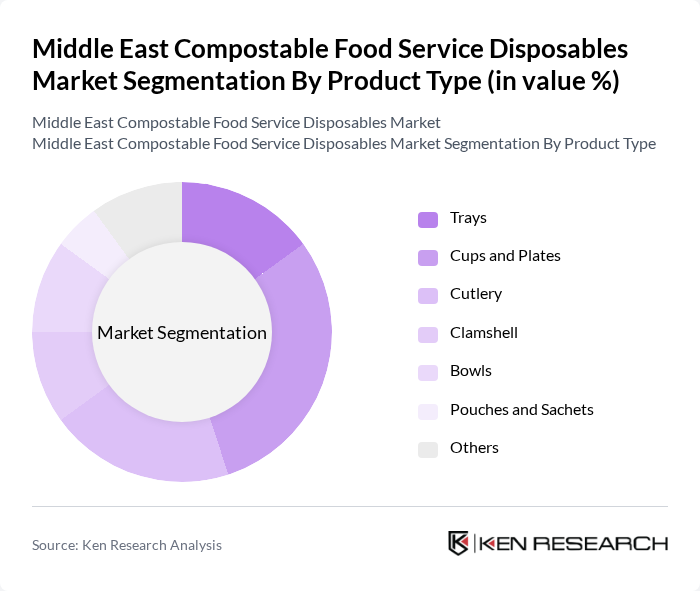
By Product Type:The product type segmentation includes various categories such as trays, cups and plates, cutlery, clamshells, bowls, pouches and sachets, and others. Among these, cups and plates are leading the market due to their widespread use in food service establishments, driven by the growing trend of takeout and delivery services. The convenience and eco-friendliness of these products resonate well with consumers, making them a preferred choice for both businesses and customers.
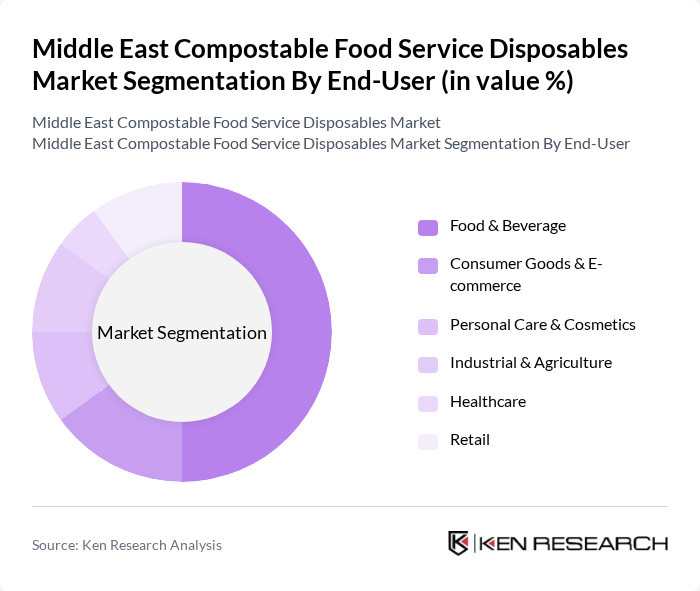
By End-User:The end-user segmentation encompasses various sectors including food & beverage, consumer goods & e-commerce, personal care & cosmetics, industrial & agriculture, healthcare, and retail. The food & beverage sector is the dominant segment, driven by the increasing demand for sustainable packaging solutions in restaurants, cafes, and catering services, with quick-service restaurants and food delivery services adopting compostable cups, trays, cutlery, and films. This trend is further supported by consumer preferences for environmentally friendly products, leading to a significant shift in purchasing behavior.
The Middle East Compostable Food Service Disposables Market is characterized by a dynamic mix of regional and international players. Leading participants such as Biopak, Vegware, Eco-Products, Green Paper Products, World Centric, BioBag, StalkMarket, NatureWorks, TIPA Corp, Packnwood, Aardvark Straws, Greenware, Bionatic, BioFutura, Footprint contribute to innovation, geographic expansion, and service delivery in this space.
The future of the Middle East compostable food service disposables market appears promising, driven by increasing regulatory support and consumer demand for sustainable products. As governments continue to enforce bans on single-use plastics and promote eco-friendly practices, the market is expected to expand significantly. Additionally, advancements in technology will likely lead to more cost-effective production methods, making compostable disposables more accessible to businesses and consumers alike, fostering a greener food service landscape in the region.
| Segment | Sub-Segments |
|---|---|
| By Product Type | Trays Cups and Plates Cutlery Clamshell Bowls Pouches and Sachets Others |
| By End-User | Food & Beverage Consumer Goods & E-commerce Personal Care & Cosmetics Industrial & Agriculture Healthcare Retail |
| By Distribution Channel | E-commerce B2B Specialty Stores Supermarkets/Hypermarkets Convenience Stores |
| By Material Type | PLA (Polylactic Acid) PHA (Polyhydroxyalkanoates) Paper and Paperboard Compostable Plastic (Bio-plastic) Others |
| By Certification Type | ASTM D6400 EN 13432 ISO 17088 Others |
| By Country | Saudi Arabia United Arab Emirates Israel Others |
| By Application | Food Service Food Packaging Retail Others |
| Scope Item/Segment | Sample Size | Target Respondent Profiles |
|---|---|---|
| Restaurants and Cafés | 120 | Owners, Managers, Sustainability Coordinators |
| Food Delivery Services | 80 | Operations Managers, Procurement Officers |
| Event Catering Companies | 50 | Event Managers, Supply Chain Directors |
| Composting Facilities | 40 | Facility Managers, Environmental Compliance Officers |
| Retail Food Outlets | 60 | Store Managers, Product Development Managers |
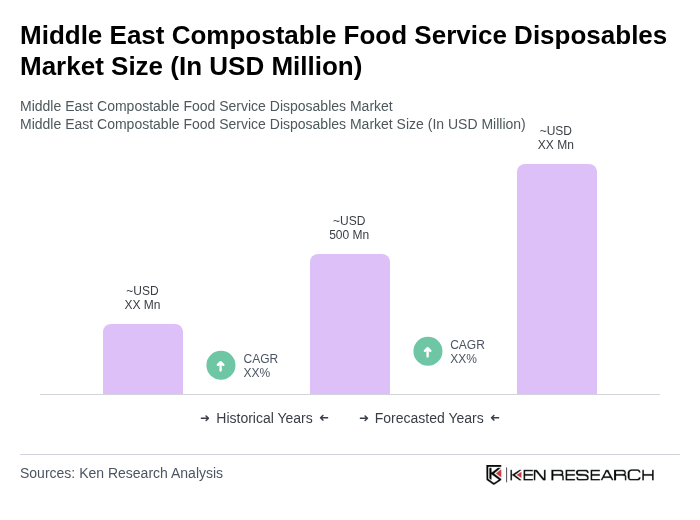
The Middle East Compostable Food Service Disposables Market is valued at approximately USD 500 million, reflecting a growing trend towards eco-friendly packaging solutions driven by consumer awareness and government regulations aimed at reducing plastic waste.

What makes us stand out is that our consultants follow Robust, Refine and Result (RRR) methodology. Robust for clear definitions, approaches and sanity checking, Refine for differentiating respondents' facts and opinions, and Result for presenting data with story.

We have set a benchmark in the industry by offering our clients with syndicated and customized market research reports featuring coverage of entire market as well as meticulous research and analyst insights.

While we don't replace traditional research, we flip the method upside down. Our dual approach of Top Bottom & Bottom Top ensures quality deliverable by not just verifying company fundamentals but also looking at the sector and macroeconomic factors.

With one step in the future, our research team constantly tries to show you the bigger picture. We help with some of the tough questions you may encounter along the way: How is the industry positioned? Best marketing channel? KPI's of competitors? By aligning every element, we help maximize success.

Our report gives you instant access to the answers and sources that other companies might choose to hide. We elaborate each steps of research methodology we have used and showcase you the sample size to earn your trust.

If you need any support, we are here! We pride ourselves on universe strength, data quality, and quick, friendly, and professional service.













