Region:Middle East
Author(s):Rebecca
Product Code:KRAA9407
Pages:95
Published On:November 2025
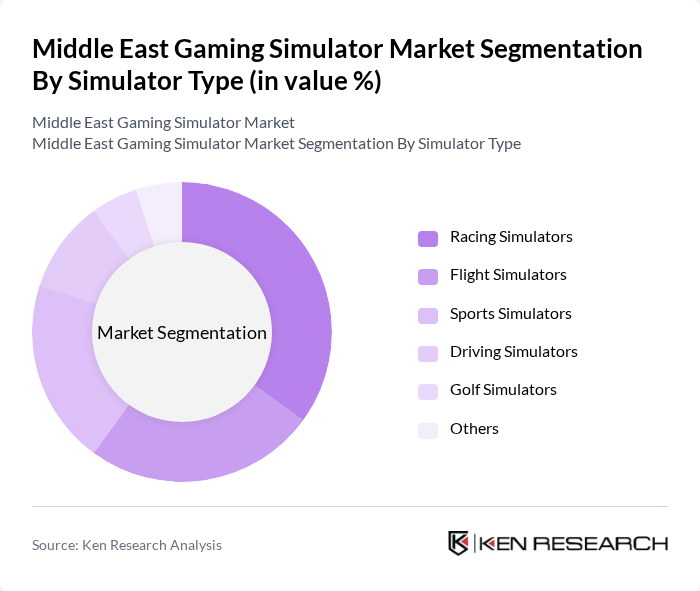
By Simulator Type:The simulator type segmentation includes various categories such as Racing Simulators, Flight Simulators, Sports Simulators, Driving Simulators, Golf Simulators, and Others. Among these,Racing Simulatorsare particularly popular due to the increasing interest in motorsports and competitive racing games.Flight Simulatorsalso see significant usage, especially among aviation enthusiasts and training institutions. The demand forSports Simulatorsis growing as well, driven by the popularity of sports games and virtual sports experiences. The integration of VR and AR technologies is further enhancing the realism and appeal of these simulator types .
By Product Type:The product type segmentation includesPortable SimulatorsandBuilt-in Simulators. Portable Simulators are gaining traction due to their convenience and ease of use, allowing gamers to enjoy simulations on the go. Built-in Simulators, often found in dedicated gaming setups, provide a more immersive experience and are preferred by serious gamers and training institutions. The trend towards high-quality, immersive gaming experiences is driving the demand for both types of simulators. The portable segment is the fastest-growing, supported by increasing demand for flexible and mobile gaming solutions .

The Middle East Gaming Simulator Market is characterized by a dynamic mix of regional and international players. Leading participants such as Razer Inc., Logitech International S.A., Thrustmaster, Fanatec, Playseat, SimXperience, Next Level Racing, Oculus VR (Meta Platforms, Inc.), Sony Interactive Entertainment, Microsoft Corporation, Corsair Gaming, Inc., HP Inc., Dell Technologies, Alienware, HyperX, Virtuix, VRX Simulators, D-BOX Technologies Inc., Simworx, Simul8 Corporation contribute to innovation, geographic expansion, and service delivery in this space.
The future of the Middle East gaming simulator market appears promising, driven by technological advancements and a growing consumer base. As virtual reality and augmented reality technologies continue to evolve, they are expected to enhance the gaming experience significantly. Additionally, the increasing integration of artificial intelligence in gaming will create more personalized and engaging experiences. The region's focus on diversifying its economy away from oil dependency will further support the growth of the gaming industry, making it a key player in the entertainment sector.
| Segment | Sub-Segments |
|---|---|
| By Simulator Type | Racing Simulators Flight Simulators Sports Simulators Driving Simulators Golf Simulators Others |
| By Product Type | Portable Simulators Built-in Simulators |
| By Technology | Virtual Reality (VR) Augmented Reality (AR) Motion Simulation Haptic Feedback Others |
| By End-User/Application | Individual Gamers Gaming Zones & Entertainment Venues Educational Institutions Corporate Training Commercial Spaces Others |
| By Installation | Indoor Outdoor |
| By Region | GCC Countries (Saudi Arabia, UAE, Qatar, Kuwait, Oman, Bahrain) Levant Region (Jordan, Lebanon, etc.) North Africa (Egypt, Morocco, etc.) Others |
| Scope Item/Segment | Sample Size | Target Respondent Profiles |
|---|---|---|
| Mobile Gaming Users | 120 | Casual Gamers, Mobile Game Developers |
| Console Gaming Market | 85 | Console Gamers, Retail Managers |
| PC Gaming Community | 70 | PC Gamers, eSports Organizers |
| Game Development Insights | 50 | Game Developers, Product Managers |
| Gaming Influencers and Streamers | 45 | Content Creators, Social Media Managers |
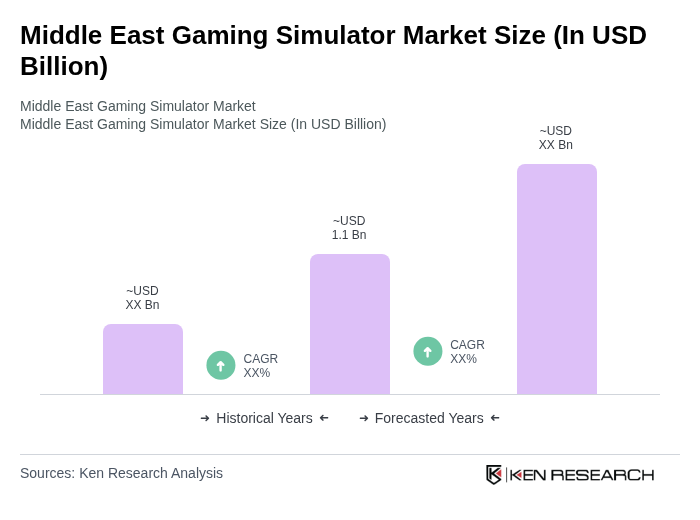
The Middle East Gaming Simulator Market is valued at approximately USD 1.1 billion, driven by the increasing popularity of esports, advancements in gaming technology, and rising consumer spending on entertainment.

What makes us stand out is that our consultants follow Robust, Refine and Result (RRR) methodology. Robust for clear definitions, approaches and sanity checking, Refine for differentiating respondents' facts and opinions, and Result for presenting data with story.

We have set a benchmark in the industry by offering our clients with syndicated and customized market research reports featuring coverage of entire market as well as meticulous research and analyst insights.

While we don't replace traditional research, we flip the method upside down. Our dual approach of Top Bottom & Bottom Top ensures quality deliverable by not just verifying company fundamentals but also looking at the sector and macroeconomic factors.

With one step in the future, our research team constantly tries to show you the bigger picture. We help with some of the tough questions you may encounter along the way: How is the industry positioned? Best marketing channel? KPI's of competitors? By aligning every element, we help maximize success.

Our report gives you instant access to the answers and sources that other companies might choose to hide. We elaborate each steps of research methodology we have used and showcase you the sample size to earn your trust.

If you need any support, we are here! We pride ourselves on universe strength, data quality, and quick, friendly, and professional service.













