Region:Middle East
Author(s):Dev
Product Code:KRAE0211
Pages:94
Published On:December 2025
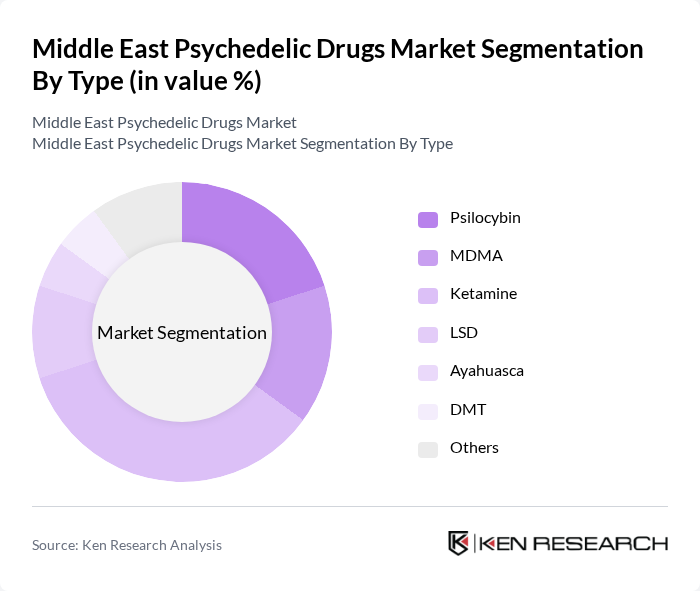
By Type:The market is segmented into various types of psychedelic drugs, including Psilocybin, MDMA, Ketamine, LSD, Ayahuasca, DMT, and others. Among these, Ketamine is currently the leading sub-segment due to its established use in treating depression and anxiety disorders, along with its growing acceptance in clinical settings. Psilocybin and MDMA are also gaining traction as research into their therapeutic benefits expands.
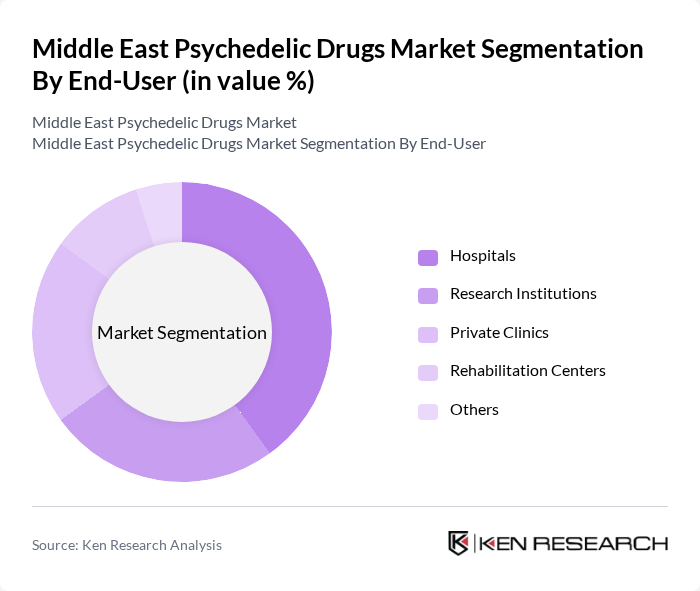
By End-User:The end-user segmentation includes Hospitals, Research Institutions, Private Clinics, Rehabilitation Centers, and others. Hospitals dominate this segment due to their capacity to conduct clinical trials and provide comprehensive treatment options. Research Institutions are also significant as they drive innovation and clinical studies, while Private Clinics and Rehabilitation Centers are increasingly adopting psychedelic therapies to address mental health issues.
The Middle East Psychedelic Drugs Market is characterized by a dynamic mix of regional and international players. Leading participants such as Compass Pathways, MindMed, Atai Life Sciences, Cybin Inc., Field Trip Health, MAPS (Multidisciplinary Association for Psychedelic Studies), Beckley Psytech, Eleusis, Havn Life Sciences, Silo Wellness, Delic Holdings, Numinus Wellness, Psyched Wellness, The Beckley Foundation, Awaken Life Sciences contribute to innovation, geographic expansion, and service delivery in this space.
The future of the Middle East psychedelic drugs market appears promising, driven by increasing acceptance and ongoing research initiatives. As mental health issues continue to rise, the demand for innovative therapies will likely grow. Additionally, collaborations between private companies and healthcare institutions are expected to enhance the credibility and accessibility of psychedelic treatments. With evolving regulations and a shift in public perception, the market is poised for significant developments in the coming years, potentially transforming mental health care in the region.
| Segment | Sub-Segments |
|---|---|
| By Type | Psilocybin MDMA Ketamine LSD Ayahuasca DMT Others |
| By End-User | Hospitals Research Institutions Private Clinics Rehabilitation Centers Others |
| By Application | Treatment of Depression Anxiety Disorders PTSD Substance Abuse Treatment Others |
| By Distribution Channel | Direct Sales Online Sales Distributors Pharmacies Others |
| By Region | GCC Countries Levant Region North Africa Others |
| By Research Phase | Preclinical Trials Phase I Trials Phase II Trials Phase III Trials Others |
| By Consumer Demographics | Age Group Gender Socioeconomic Status Others |
| Scope Item/Segment | Sample Size | Target Respondent Profiles |
|---|---|---|
| Psychedelic Therapy Clinics | 100 | Clinic Directors, Psychiatrists, Therapists |
| Research Institutions | 75 | Researchers, Academics, Clinical Trial Coordinators |
| Patient Advocacy Groups | 50 | Advocacy Leaders, Mental Health Activists |
| Regulatory Bodies | 30 | Policy Makers, Health Regulators |
| Pharmaceutical Companies | 60 | Product Development Managers, Market Analysts |
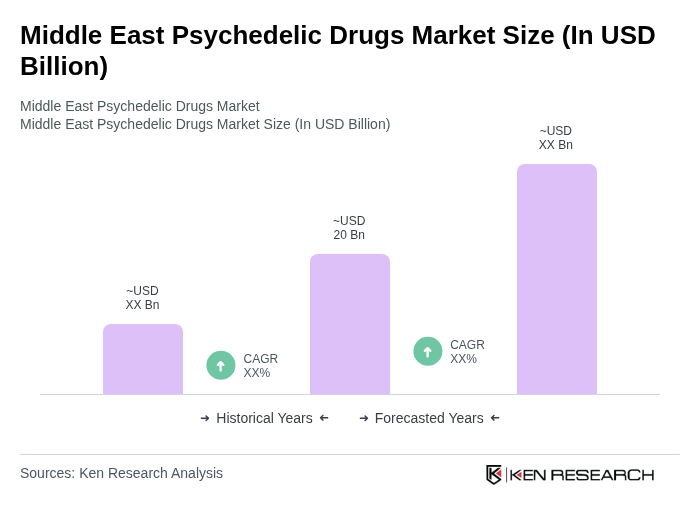
The Middle East Psychedelic Drugs Market is valued at approximately USD 20 billion, driven by increasing clinical trials and the demand for mental health therapies, particularly for treatment-resistant depression and the development of synthetic compounds like ketamine.

What makes us stand out is that our consultants follow Robust, Refine and Result (RRR) methodology. Robust for clear definitions, approaches and sanity checking, Refine for differentiating respondents' facts and opinions, and Result for presenting data with story.

We have set a benchmark in the industry by offering our clients with syndicated and customized market research reports featuring coverage of entire market as well as meticulous research and analyst insights.

While we don't replace traditional research, we flip the method upside down. Our dual approach of Top Bottom & Bottom Top ensures quality deliverable by not just verifying company fundamentals but also looking at the sector and macroeconomic factors.

With one step in the future, our research team constantly tries to show you the bigger picture. We help with some of the tough questions you may encounter along the way: How is the industry positioned? Best marketing channel? KPI's of competitors? By aligning every element, we help maximize success.

Our report gives you instant access to the answers and sources that other companies might choose to hide. We elaborate each steps of research methodology we have used and showcase you the sample size to earn your trust.

If you need any support, we are here! We pride ourselves on universe strength, data quality, and quick, friendly, and professional service.













