Region:Middle East
Author(s):Rebecca
Product Code:KRAC1668
Pages:85
Published On:January 2026
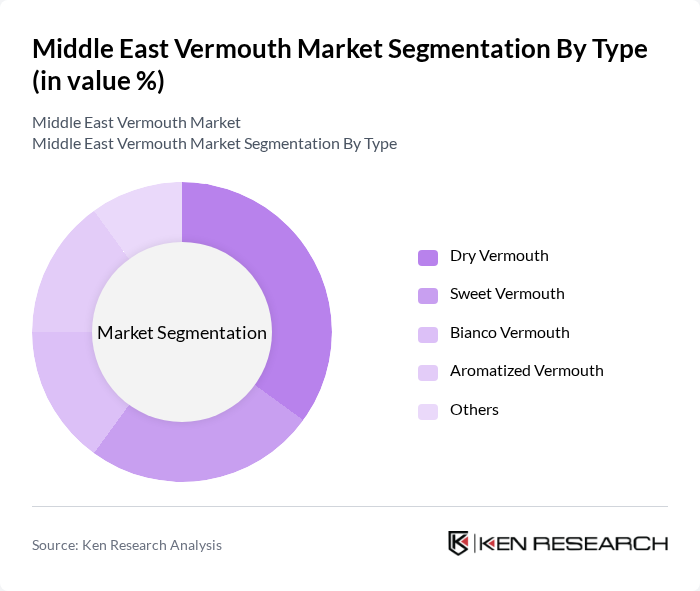
By Type:The market is segmented into various types of vermouth, including Dry Vermouth, Sweet Vermouth, Bianco Vermouth, Aromatized Vermouth, and Others. Among these, Dry Vermouth is currently the leading sub-segment, favored for its versatility in cocktails and aperitifs. The increasing trend of mixology and cocktail culture in urban areas has significantly contributed to the popularity of Dry Vermouth, making it a staple in bars and restaurants.
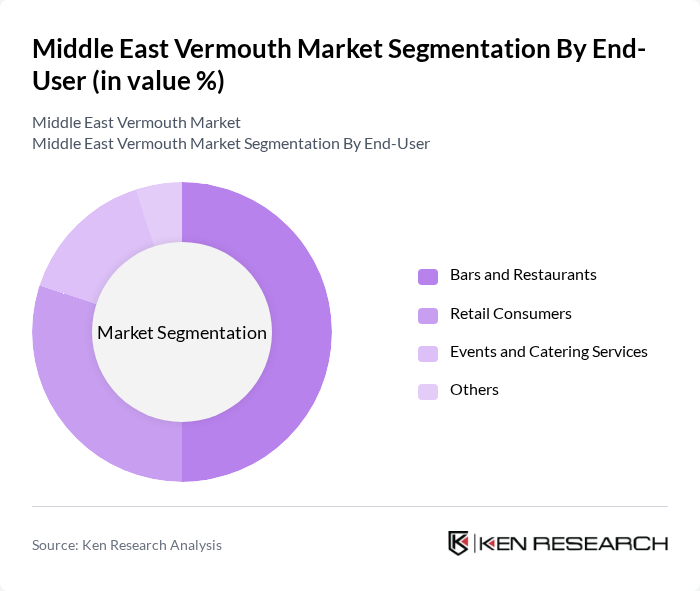
By End-User:The end-user segmentation includes Bars and Restaurants, Retail Consumers, Events and Catering Services, and Others. Bars and Restaurants dominate this segment, driven by the growing trend of cocktail culture and the increasing number of establishments serving premium beverages. The demand for vermouth in these venues is further fueled by the rise of mixology and the preference for high-quality ingredients in cocktails.
The Middle East Vermouth Market is characterized by a dynamic mix of regional and international players. Leading participants such as Martini & Rossi, Cinzano, Noilly Prat, Carpano, Dolin, Antica Formula, Cocchi, Lillet, Pimm's, Aperol, Campari, St-Germain, Luxardo, Dubonnet, and Vermouth del Professore contribute to innovation, geographic expansion, and service delivery in this space.
The future of the Middle East vermouth market appears promising, driven by evolving consumer preferences towards premium and craft products. With over 35% of new vermouth products globally being flavored or craft variants, this trend is likely to influence local markets as well. Additionally, the robust digital infrastructure, exemplified by Egypt's 82 million internet users, supports the growth of e-commerce, enhancing consumer access to vermouth. As tourism rebounds, on-trade consumption in hospitality venues is expected to rise, further bolstering market growth.
| Segment | Sub-Segments |
|---|---|
| By Type | Dry Vermouth Sweet Vermouth Bianco Vermouth Aromatized Vermouth Others |
| By End-User | Bars and Restaurants Retail Consumers Events and Catering Services Others |
| By Packaging Type | Glass Bottles Cans Tetra Packs Others |
| By Distribution Channel | Online Retail Supermarkets and Hypermarkets Specialty Stores Others |
| By Alcohol Content | Low Alcohol (up to 5%) Medium Alcohol (5% - 15%) High Alcohol (above 15%) Others |
| By Region | GCC Countries Levant Region North Africa Others |
| By Consumer Demographics | Age Group (18-24, 25-34, 35-44, 45+) Gender Income Level Others |
| Scope Item/Segment | Sample Size | Target Respondent Profiles |
|---|---|---|
| Retail Distribution of Vermouth | 100 | Retail Managers, Beverage Buyers |
| On-Premise Consumption Insights | 80 | Bar Owners, Restaurant Managers |
| Consumer Preferences Survey | 150 | End Consumers, Cocktail Enthusiasts |
| Market Trends Analysis | 70 | Market Analysts, Industry Experts |
| Distribution Channel Effectiveness | 90 | Logistics Coordinators, Supply Chain Managers |
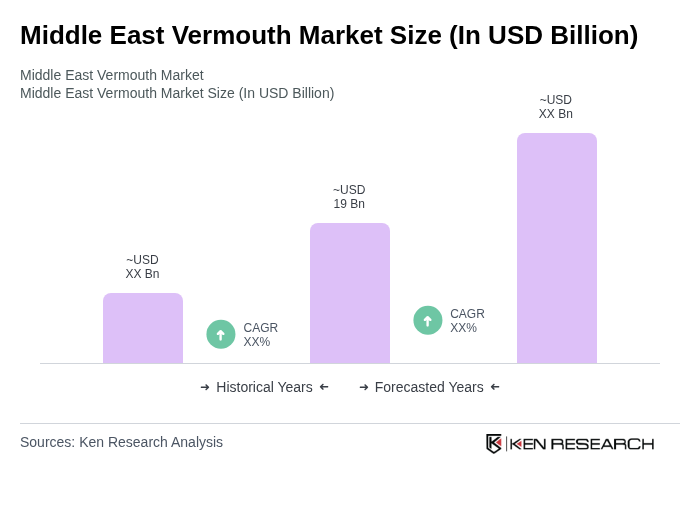
The Middle East Vermouth Market is valued at approximately USD 19 billion, reflecting a significant growth trend driven by increasing demand for premium beverages, expanding tourism, and a rising expatriate population with sophisticated consumption habits.

What makes us stand out is that our consultants follow Robust, Refine and Result (RRR) methodology. Robust for clear definitions, approaches and sanity checking, Refine for differentiating respondents' facts and opinions, and Result for presenting data with story.

We have set a benchmark in the industry by offering our clients with syndicated and customized market research reports featuring coverage of entire market as well as meticulous research and analyst insights.

While we don't replace traditional research, we flip the method upside down. Our dual approach of Top Bottom & Bottom Top ensures quality deliverable by not just verifying company fundamentals but also looking at the sector and macroeconomic factors.

With one step in the future, our research team constantly tries to show you the bigger picture. We help with some of the tough questions you may encounter along the way: How is the industry positioned? Best marketing channel? KPI's of competitors? By aligning every element, we help maximize success.

Our report gives you instant access to the answers and sources that other companies might choose to hide. We elaborate each steps of research methodology we have used and showcase you the sample size to earn your trust.

If you need any support, we are here! We pride ourselves on universe strength, data quality, and quick, friendly, and professional service.













