Region:Middle East
Author(s):Geetanshi
Product Code:KRAA3403
Pages:89
Published On:January 2026
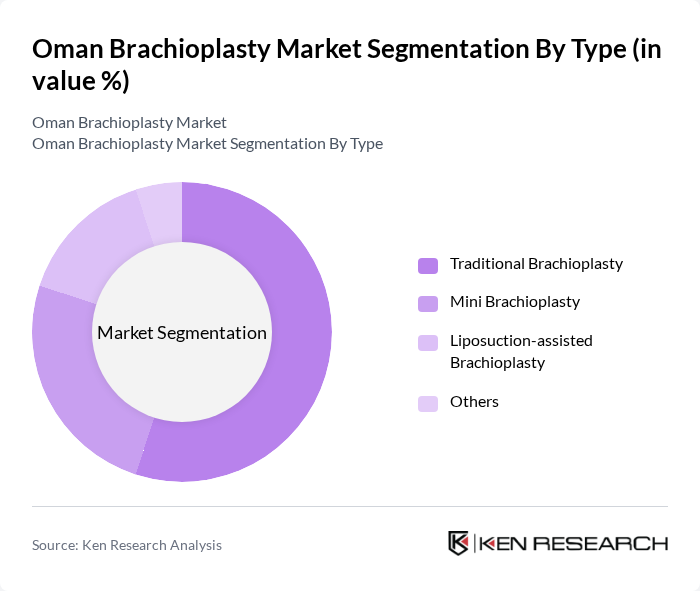
By Type:The market is segmented into various types of brachioplasty procedures, including Traditional Brachioplasty, Mini Brachioplasty, Liposuction-assisted Brachioplasty, and Others. Traditional Brachioplasty is the most common type, favored for its effectiveness in removing excess skin and fat. Mini Brachioplasty is gaining traction among younger patients seeking less invasive options, while Liposuction-assisted Brachioplasty appeals to those looking for a combination of fat removal and skin tightening.
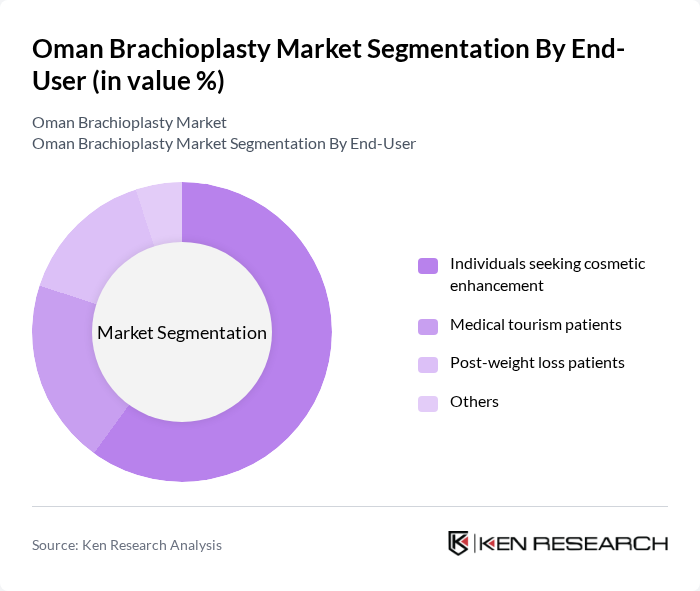
By End-User:The end-users of brachioplasty procedures include individuals seeking cosmetic enhancement, medical tourism patients, post-weight loss patients, and others. Individuals seeking cosmetic enhancement represent the largest segment, driven by societal pressures and the desire for improved aesthetics. Medical tourism patients are increasingly attracted to Oman for its competitive pricing and high-quality healthcare services, while post-weight loss patients often require brachioplasty to address excess skin.
The Oman Brachioplasty Market is characterized by a dynamic mix of regional and international players. Leading participants such as Al Noor Hospital, Muscat Private Hospital, Oman Medical Specialty Board, Aster DM Healthcare, Dr. Sulaiman Al Habib Medical Group, Al Hayat Medical Center, Badr Al Samaa Hospital, KIMS Oman Hospital, Starcare Hospital, Muscat Clinic, Oman International Hospital, Royal Hospital, Al Shifa Hospital, Al Rahba Hospital, NMC Healthcare contribute to innovation, geographic expansion, and service delivery in this space.
The future of the Oman brachioplasty market appears promising, driven by increasing consumer interest in aesthetic procedures and advancements in surgical technology. As disposable incomes rise, more individuals are likely to invest in cosmetic enhancements. Additionally, the integration of telemedicine and virtual consultations is expected to facilitate access to qualified surgeons, thereby expanding the market. The growing trend towards personalized cosmetic solutions will further enhance patient satisfaction and drive demand for brachioplasty procedures in the coming years.
| Segment | Sub-Segments |
|---|---|
| By Type | Traditional Brachioplasty Mini Brachioplasty Liposuction-assisted Brachioplasty Others |
| By End-User | Individuals seeking cosmetic enhancement Medical tourism patients Post-weight loss patients Others |
| By Age Group | 30 years 45 years 60 years Above 60 years |
| By Gender | Female Male Others |
| By Surgical Technique | Open technique Endoscopic technique Others |
| By Geographic Distribution | Urban areas Rural areas Others |
| By Patient Motivation | Aesthetic improvement Health-related reasons Psychological well-being Others |
| Scope Item/Segment | Sample Size | Target Respondent Profiles |
|---|---|---|
| Plastic Surgeons in Oman | 40 | Board-certified plastic surgeons, Clinic owners |
| Patients who underwent Brachioplasty | 100 | Recent patients, Age 25-55, Both genders |
| Healthcare Administrators | 30 | Hospital administrators, Clinic managers |
| Cosmetic Surgery Clinics | 40 | Clinic staff, Marketing managers |
| Health Insurance Providers | 20 | Insurance underwriters, Claims assessors |
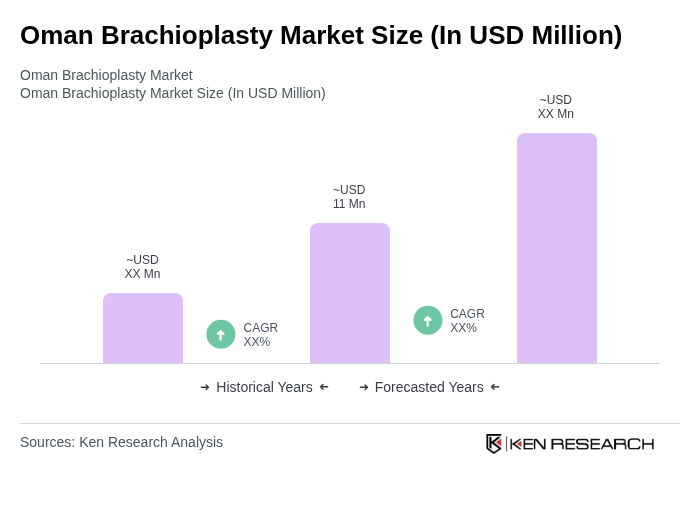
The Oman Brachioplasty Market is valued at approximately USD 11 million, reflecting a significant growth trend driven by increasing awareness of body aesthetics and rising disposable incomes among the population.

What makes us stand out is that our consultants follow Robust, Refine and Result (RRR) methodology. Robust for clear definitions, approaches and sanity checking, Refine for differentiating respondents' facts and opinions, and Result for presenting data with story.

We have set a benchmark in the industry by offering our clients with syndicated and customized market research reports featuring coverage of entire market as well as meticulous research and analyst insights.

While we don't replace traditional research, we flip the method upside down. Our dual approach of Top Bottom & Bottom Top ensures quality deliverable by not just verifying company fundamentals but also looking at the sector and macroeconomic factors.

With one step in the future, our research team constantly tries to show you the bigger picture. We help with some of the tough questions you may encounter along the way: How is the industry positioned? Best marketing channel? KPI's of competitors? By aligning every element, we help maximize success.

Our report gives you instant access to the answers and sources that other companies might choose to hide. We elaborate each steps of research methodology we have used and showcase you the sample size to earn your trust.

If you need any support, we are here! We pride ourselves on universe strength, data quality, and quick, friendly, and professional service.













