CHAPTER 1 - MARKET SUMMARY
Market Overview
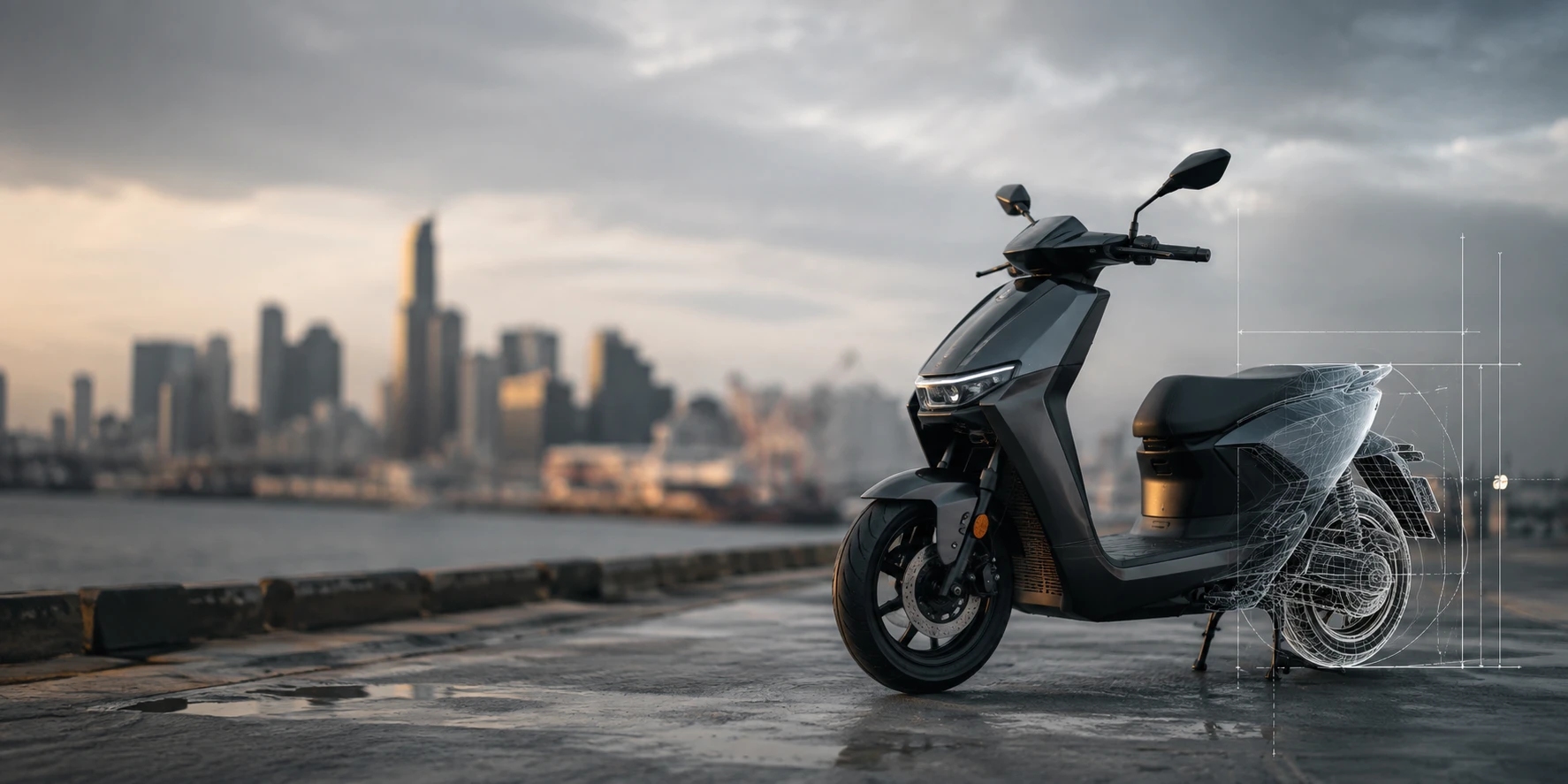
The Philippines Electric Two-Wheeler Market operates through imported and locally assembled electric scooters, motorcycles, mopeds and light electric bicycles sold to commuters and commercial fleets. The underlying addressable base included approximately 8.1 million registered motorcycles and tricycles in 2021, making two-wheelers the country's principal motorized mobility format. Electrification therefore converts an established vehicle category rather than creating an entirely new transport behavior.
Demand and distribution are concentrated in the National Capital Region and adjacent Luzon corridors, where congestion, delivery activity and short-distance commuting improve electric vehicle utilization. The Philippines had 58.9 million urban residents, equivalent to 54.0% of its population in 2020. Metro Manila also added a 66.1-kilometer bicycle-lane network in 2022, strengthening infrastructure compatibility for low-speed electric mobility.
Market Value
USD 126 million
2025
Dominant Region
National Capital Region
2025
Dominant Segment
Electric Scooters
fastest growing
Total Number of Players
88
Future Outlook
The Philippines Electric Two-Wheeler Market is projected to advance from USD 126 million in 2025 to USD 378 million by 2031, reflecting a forecast CAGR of 20.09%. Growth will be driven by declining battery costs, zero-tariff availability, higher fuel-price sensitivity and the increasing use of electric scooters by delivery riders. The historical CAGR of 23.42% during 2020-2025 reflected expansion from a smaller base, rapid brand entry and broader product availability. Forecast growth moderates slightly as the market scales, but annual value additions increase because higher-range lithium-ion and connected models capture a larger share of purchases.
Unit sales are expected to rise from approximately 84,000 vehicles in 2025 to 211,000 in 2031, while average selling prices increase from USD 1,500 to approximately USD 1,791. This reflects a mix shift from entry-level lead-acid products toward lithium-ion, lithium iron phosphate and swappable-battery models. Fleet procurement, consumer financing and dealer-supported aftersales coverage will determine whether demand converts at the projected rate. The strongest upside would arise from formal green-route procurement and battery subscription models, while slower registration harmonization, inconsistent product quality and limited service capacity represent the principal downside risks.
20.09%
Forecast CAGR
$378 Mn
2030 Projection
Base Year
2025
Historical Period
2020-2025
Forecast Period
2026-2031
Historical CAGR
23.42%
CHAPTER 2 - SCOPE OF REPORT
Scope of the Market
CHAPTER 3 - Key Stakeholders
Key Target Audience
Key stakeholders who can leverage from this market analysis for investment, strategy, and operational planning.
Investors
CAGR, fleet economics, battery residual value, capex risk
Corporates
operating cost, fleet uptime, charging, procurement scale
Government
electrification targets, registration, emissions, localization, road safety
Operators
dealer coverage, maintenance, range, utilization, warranty performance
Financial institutions
vehicle leasing, credit risk, residual value, repayment
CHAPTER 4 - Market Size & Growth
Market Size, Growth Forecast and Trends
This section evaluates the historical market size, analyzes year-over-year growth dynamics, and presents forecast projections supported by market performance indicators and demand-side drivers.
Historical & Projected Market Size ($ Million)
Year-over-Year Growth Rate (%)
Market Value vs Volume Growth (%)
Historical Market Performance (2020-2025)
Historical performance accelerated after 2021, with the strongest annual value increase recorded in 2024 at 28.6%. The market's inflection reflected EVIDA implementation, broader tariff relief and the transition from low-cost lead-acid vehicles toward higher-value lithium-ion scooters. Unit sales increased from approximately 36,000 in 2020 to 84,000 in 2025. Demand remained concentrated in high-density commuting and delivery corridors, while rising average selling prices indicated that product quality, range, connectivity and warranty coverage became more important than minimum acquisition cost alone.
Forecast Market Outlook (2026-2031)
Forecast value growth is expected to remain near 20% annually, supported by unit expansion and gradual premiumization. Volume is projected to reach approximately 211,000 units in 2031, representing a 16.59% CAGR from 2025. Average selling prices are expected to rise to approximately USD 1,791 as lithium iron phosphate, swappable-battery and connected fleet models gain adoption. Market expansion should accelerate outside Metro Manila after national dealer coverage, standardized registration procedures and localized servicing improve, while commercial fleets provide recurring replacement, maintenance and battery revenue.
CHAPTER 5 - Market Data
Market Breakdown
The Philippines Electric Two-Wheeler Market combines rapid unit expansion with a transition toward higher-value batteries and road-registered scooters. For CEOs and investors, the central issue is whether distribution, financing and aftersales capacity can scale at the same pace as consumer and fleet demand.
Year | Market Size (USD Mn) | YoY Growth (%) | Unit Sales | Electric Scooter Share (%) | Lithium-ion Battery Share (%) | Period |
|---|---|---|---|---|---|---|
| 2020 | $44 Mn | +- | 36,000 | 58% | Forecast | |
| 2021 | $49 Mn | +11.4% | 40,000 | 59% | Forecast | |
| 2022 | $61 Mn | +24.5% | 49,000 | 60% | Forecast | |
| 2023 | $77 Mn | +26.2% | 60,000 | 62% | Forecast | |
| 2024 | $99 Mn | +28.6% | 72,000 | 63% | Forecast | |
| 2025 | $126 Mn | +27.3% | 84,000 | 64% | Forecast | |
| 2026 | $151 Mn | +19.8% | 98,000 | 65% | Forecast | |
| 2027 | $182 Mn | +20.5% | 115,000 | 66% | Forecast | |
| 2028 | $218 Mn | +19.8% | 135,000 | 66% | Forecast | |
| 2029 | $262 Mn | +20.2% | 158,000 | 67% | Forecast | |
| 2030 | $315 Mn | +20.2% | 183,000 | 67% | Forecast | |
| 2031 | $378 Mn | +20.0% | 211,000 | 68% | Forecast |
Unit Sales
84,000 units, 2025, Philippines. Scale increasingly depends on converting the country's motorcycle-oriented mobility base. The national roadmap recorded approximately 8.1 million motorcycles and tricycles in 2021, indicating a large replacement pool for electrification.
Electric Scooter Share
64%, 2025, Philippines. Scooters lead because step-through designs, automatic operation and removable batteries fit dense urban commuting and delivery use. The domestic product catalog included approximately 27 electric motorcycle models across major brands, demonstrating widening choice.
Lithium-ion Battery Share
61%, 2025, Philippines. Higher energy density supports improved range, lower vehicle weight and stronger lifecycle economics, shifting profit pools toward battery management and replacement services. Fifteen available electric models were listed with ranges below 80 kilometers, highlighting continuing scope for battery-performance differentiation.
CHAPTER 6 - Segmentation
Market Segmentation Framework
Comprehensive analysis across key dimensions providing insights into market structure, consumer preferences, and distribution patterns.
No of Segments
7
Dominant Segment
Vehicle Type
Fastest Growing Segment
Battery Type
Vehicle Type
Battery Type
Customer Type
Sales Channel
Usage Type
Price Tier
Geography
Key Segmentation Takeaways
Comprehensive analysis across all extracted segmentation dimensions providing insights into market structure, consumer preferences, and distribution patterns.
Vehicle Type
Electric scooters represent the principal revenue pool because their automatic operation, compact dimensions and removable-battery configurations align with urban commuting and delivery requirements. Road-registered commuter scooters lead this dimension, while electric motorcycles address riders requiring higher speed and range. Suppliers with broad scooter portfolios can capture both entry-level consumer demand and higher-utilization commercial accounts.
Battery Type
Battery technology is the fastest-changing competitive dimension as buyers move away from heavy, shorter-lived lead-acid systems. Lithium iron phosphate and swappable battery packs are expected to record the strongest growth because they improve thermal stability, usable life and fleet uptime. Competitive advantage will increasingly depend on warranty design, battery diagnostics, replacement availability and lifecycle financing rather than vehicle hardware alone.
CHAPTER 7 - Regional Analysis
Regional Analysis
The Philippines ranked fourth by estimated 2025 electric two-wheeler market value among selected Southeast Asian peers, behind Vietnam, Indonesia and Thailand but ahead of Malaysia. Its smaller installed base is offset by a comparatively strong forecast growth rate, motorcycle-led mobility patterns and a national policy target for substantial electric motorcycle and tricycle penetration by 2030.
Peer Country Ranking
4th
Philippines Market Size (2025)
USD 126 Mn
Philippines CAGR (2026-2031)
20.1%
Peer Country Ranking
4th
Philippines Market Size (2025)
USD 126 Mn
Philippines CAGR (2026-2031)
20.1%
Regional Analysis (Current Year)
Market Position
The Philippines ranks fourth among the five peers, with USD 126 million in estimated 2025 sales and approximately 27 commercially available electric models supporting early market formation.
Growth Advantage
The Philippines' 20.1% forecast CAGR exceeds Thailand's 18.4% and Malaysia's 16.2%, positioning it as a regional growth challenger, although Indonesia remains faster at 22.5%.
Competitive Strengths
Zero tariffs through 2028, an 8.1 million motorcycle and tricycle base and a 50% electrification target for these vehicle categories create a favorable demand-policy combination.
CHAPTER 8 - INDUSTRY ANALYSIS
Growth Drivers, Challenges & Opportunities
Comprehensive analysis of key factors shaping the Philippines Electric Two-Wheeler Market, including growth catalysts, operational challenges, and emerging opportunities across production, distribution, and consumer segments.
Growth Drivers
Zero-Tariff Policy and EVIDA Incentives
- Prior electric motorcycle and bicycle tariffs ranged from approximately 5% to 30% (2024, Philippines); their removal expands distributor gross-margin flexibility and enables lower retail pricing without requiring immediate local manufacturing scale.
- Republic Act No. 11697 introduced registration priority, financing support and potential traffic-management exemptions from 2022 onward (Philippines), increasing the economic value proposition for high-utilization commuters and fleet operators.
- The national roadmap targets approximately 1.48 million battery-electric motorcycles during 2023-2028 (Philippines), creating a policy-backed procurement and localization pipeline for OEMs, assemblers and battery suppliers.
Motorcycle-Led Urban Mobility Structure
- Urban residents represented 54.0% of the national population (2020, Philippines), supporting short-distance trips where electric two-wheelers deliver strong energy-cost and parking advantages.
- Metro Manila's 66.1-kilometer bicycle-lane network (2022, Philippines) supports light electric bicycle and low-speed scooter usage, although infrastructure quality and enforcement remain uneven.
- Road transport generated approximately 80% of transport-sector emissions (2015, Philippines), increasing the policy value of replacing frequently used combustion motorcycles with electric alternatives.
Fleet Electrification and Operating-Cost Savings
- Delivery vehicles accumulate substantially higher daily mileage than private commuter motorcycles, allowing electricity savings to offset acquisition premiums faster and creating attractive leasing economics for vehicles operating six or seven days weekly (2025, Philippines).
- Approximately 27 electric motorcycle models (2025, Philippines) are commercially listed, enabling fleet buyers to compare payload, speed, range and warranty configurations rather than rely on a limited pilot-oriented product set.
- Electric mobility financing is explicitly encouraged under the 2022 national legislation (Philippines), enabling lenders, leasing firms and battery-service providers to convert lower operating costs into affordable monthly payment structures.
Market Challenges
Vehicle Classification and Registration Complexity
- Differences between electric bicycles, light electric vehicles, mopeds and motorcycles affect licensing, registration and permissible-road access, increasing dealer training and compliance costs under the 2024 administrative framework (Philippines).
- Unclear consumer understanding of classifications can lead to non-compliant purchases, limiting resale value and exposing marketplaces to reputational risk; formal registration documentation became increasingly important during 2024-2025 (Philippines).
- Brands must engineer speed, lighting, braking and identification specifications for specific categories rather than sell one regional configuration, reducing scale economies across a market with only 27 listed models (2025, Philippines).
Charging, Service and Battery Support Gaps
- Most electric two-wheelers rely on home or workplace charging, so users without secure parking or reliable electrical access face adoption barriers despite a national target of 65,000 charging stations by 2028 (Philippines).
- Provincial service networks remain less developed than Metro Manila channels, increasing vehicle downtime when proprietary controllers, chargers or battery modules fail during an expected operating life of three to five years (2025, Philippines).
- Battery-swapping systems require sufficient density and standardized interfaces; without recurring utilization, each station's capital recovery weakens, particularly outside major corridors targeted for rollout during 2026-2031 (Philippines).
Wide Product-Quality and Affordability Dispersion
- Entry products compete primarily on acquisition price, but shorter battery life and limited warranty coverage may raise lifecycle costs; approximately 15 models offered ranges below 80 kilometers (2025, Philippines).
- Premium road-registered models can cost several times more than common combustion motorcycles, restricting adoption among households near the national USD 4,470 gross national income per capita level (2024, Philippines).
- Limited residual-value data increases lender risk and financing rates because battery condition can represent a material share of vehicle value after two to four years of usage (2025, Philippines).
Market Opportunities
Fleet Leasing and Battery Subscription Platforms
- Vehicle leasing can convert high upfront costs into monthly operating expenses, allowing investors to earn recurring vehicle, maintenance and insurance revenue across contracts lasting approximately 24 to 48 months (2025, Philippines).
- Delivery platforms, courier operators and independent riders benefit from predictable energy and maintenance costs, particularly where vehicles operate more than 200 working days annually (2025, Philippines).
- Scaled deployment requires battery-health telemetry, standardized repossession procedures and lender confidence in residual values; national policy has encouraged electric mobility financing since 2022 (Philippines).
Local Assembly, Components and Battery Lifecycle Services
- Assemblers can monetize imported component kits through localized frames, wiring harnesses, plastics, software calibration and quality control, capturing value as the market progresses toward the roadmap's 2040 production ambition (Philippines).
- Domestic suppliers, technical institutes and service operators benefit from demand for battery diagnostics, second-life assessment and recycling as the first scaled vehicle cohorts reach replacement age during 2027-2031 (Philippines).
- Localization requires consistent safety testing and sufficient throughput; NWOW reports four production bases in the Philippines and annual capacity above 500,000 units (company network), illustrating the potential scale of regional assembly.
Provincial Dealer and Aftersales Expansion
- Dealers can capture vehicle margin, financing commission, accessories, battery replacement and maintenance revenue by establishing service-capable outlets beyond Metro Manila during the 2026-2031 forecast period (Philippines).
- Consumers in Luzon, Visayas and Mindanao benefit from local warranty fulfillment and spare-parts availability, reducing the downtime risk that currently limits adoption outside established urban hubs in 2025 (Philippines).
- Realization requires technician certification, regional inventory planning and dealer economics that support lower initial volumes; HATASU reported availability through more than 300 stores (2025, Philippines).
CHAPTER 9 - Competitive Landscape
Competitive Landscape Overview
Competition is fragmented across local assemblers, imported mass-market brands and premium global manufacturers. Entry barriers center on regulatory compliance, dealer economics, battery warranties, spare-parts availability and nationwide aftersales execution.
Market Share Distribution
Top 5 Players
Market Dynamics
8 new entrants in the past 5 years, indicating strong market attractiveness and growth potential.
Company Name | Market Share | Headquarters | Founding Year | Core Market Focus |
|---|---|---|---|---|
NWOW International | - | Carmona, Cavite, Philippines | 2017 | Affordable electric scooters, mopeds and provincial dealer distribution |
MotorStar | - | Caloocan, Philippines | 2002 | Mass-market electric scooters and established motorcycle dealership access |
Segway-Ninebot | - | Beijing, China | 2012 | Connected electric scooters, smart security and urban mobility technology |
Honda Philippines | - | Batangas, Philippines | - | Road-registered electric scooters, removable batteries and branded service coverage |
SUNRA | - | Wuxi, China | 1999 | Electric scooters, motorcycles and broad international model portfolio |
HATASU Philippines | - | Pasig, Philippines | 2022 | Affordable personal electric mobility through appliance and retail channels |
Ecooter | - | Beijing, China | - | Premium connected electric scooters and lithium-ion powertrains |
BMW Motorrad | - | Munich, Germany | 1923 | Premium high-performance electric urban motorcycles and scooters |
Gogoro | - | Taoyuan, Taiwan | 2011 | Battery-swapping platforms, connected scooters and fleet energy services |
Star 8 Green Technology | - | Parañaque, Philippines | - | Locally marketed electric motorcycles, light vehicles and green mobility products |
Cross Comparison Parameters
The report provides detailed cross-comparison of key players across 10 performance parameters to identify competitive strengths and weaknesses.
Dealer and Service Coverage
Battery Range and Charging Time
Electric Two-Wheeler Revenue Growth
Gross Margin per Vehicle
Analysis Covered
Market Share Analysis:
Evaluates estimated competitive positions across vehicle and customer segments
Cross Comparison Matrix:
Benchmarks commercial scale, battery performance, distribution and financial outcomes
SWOT Analysis:
Identifies company-specific advantages, limitations, opportunities and market threats
Pricing Strategy Analysis:
Compares acquisition prices, financing structures and lifecycle value propositions
Company Profiles:
Assesses portfolios, geographic reach, operating models and strategic priorities
CHAPTER 10 - REPORT TOC
Market Report Structure
Comprehensive coverage across three strategic phases - Market Assessment, Go-To-Market Strategy, and Survey - delivering end-to-end insights from market analysis and execution roadmap to customer demand validation.
Market Assessment Phase
Supply-side and competitive intelligence covering market sizing, segmentation, competitive dynamics, regulatory landscape, and future forecasts.
Go-To-Market Strategy Phase
15 chapters
Entry strategy evaluation, execution roadmap, partner recommendations, and profitability outlook.
Survey Phase
8 chapters
Demand-side primary research conducted through structured interviews and online surveys with end users across priority metros and Tier 2/3 cities to capture consumption behavior, unmet needs, and purchase drivers.
Complete Report Coverage
201+ detailed sections covering every aspect of the market
143
Assessment Sections
58
Strategy Sections
CHAPTER 11 - Our Approach
Research Methodology
Desk Research
- Electric vehicle registration datasets reviewed
- Motorcycle fleet statistics analyzed
- Model pricing catalogs benchmarked
- Tariff and policy documents assessed
Primary Research
- Country managers and product directors
- Dealer principals and aftersales managers
- Fleet procurement and operations managers
- Battery engineers and financing executives
Validation and Triangulation
- 320 respondent validation sample achieved
- Dealer and fleet volumes reconciled
- Price-volume assumptions independently tested
- Registration and sales trends compared
CHAPTER 12 - FAQ
FAQs
Still have questions?
Our research team is here to help you find the right solution
CHAPTER 13 - Related Research
Explore Related Reports
Expand your market intelligence with complementary research across regions and adjacent markets.
Regional/Country ReportsRelated market analysis across key regions
Related market analysis across key regions
- Egypt Electric Two-Wheeler Market Size, Share & Forecast, By Vehicle Type, Battery Type & Sales Channel, 2025-2032
- Malaysia Electric Two-Wheeler Market Size, Share & Forecast, By Vehicle Type, Battery Type & Technology, 2026–2032
- Nigeria Electric Two-Wheeler Market Size, Share & Forecast, By Vehicle Type, Battery Type, Usage Type & Business Model, 2026-2031
- Vietnam Electric Two-Wheeler Market Size, Share & Forecast, By Vehicle Type, Battery Type & End User, 2026-2031
- Indonesia Electric Two-Wheeler Market Size, Share & Forecast, By Vehicle Type, Customer Type & Powertrain, 2025-2032
Adjacent ReportsRelated markets and complementary research
Related markets and complementary research
- Oman Electric Bicycle Market
- Egypt Bicycle Parts Market
- Global Sustainable Logistics Market Size, Share & Forecast, By Service Type, Mode of Transport & End-Use Industry, 2026–2031
- UK Fleet Management Software Market Size, Share & Forecast, By Solution Type, Deployment Model & Enterprise Size, 2026-2031
- India Lithium-Ion Battery Market Size, Share & Forecast, By Battery Type, Application & End User, 2026–2032
500+
Market Research Reports
50+
Countries Covered
15+
Industry Verticals