About the Report
Base Year 2024Philippines Guillain Barre Syndrome Diagnostics Market Overview
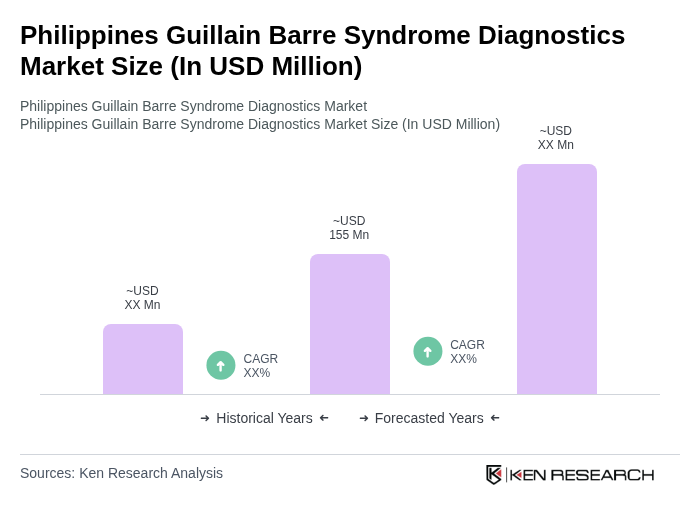
- The Philippines Guillain Barre Syndrome Diagnostics Market is valued at approximately USD 155 million, based on a five-year historical analysis. This growth is primarily driven by the increasing incidence of Guillain Barre Syndrome (GBS) in the region, coupled with advancements in diagnostic technologies and heightened awareness among healthcare professionals regarding early detection and treatment options. The Asia-Pacific region, which includes the Philippines, has demonstrated robust market expansion, with the broader regional market generating USD 149.8 million in 2024 and expected to grow at a CAGR of 7.9% from 2025 onwards.
- Metro Manila, Cebu, and Davao are the dominant regions in the market due to their well-established healthcare infrastructure, availability of specialized medical facilities, and a higher concentration of healthcare professionals. These cities also benefit from better access to advanced diagnostic technologies, which further enhances their market position.
- The Universal Health Care Act, enacted by the Philippine government, aims to provide equitable access to quality healthcare services, including diagnostics for conditions like Guillain Barre Syndrome. This legislative framework mandates that all citizens have access to necessary medical services, thereby increasing the demand for GBS diagnostics across the country and supporting market expansion in both urban and emerging healthcare centers.
Philippines Guillain Barre Syndrome Diagnostics Market Segmentation
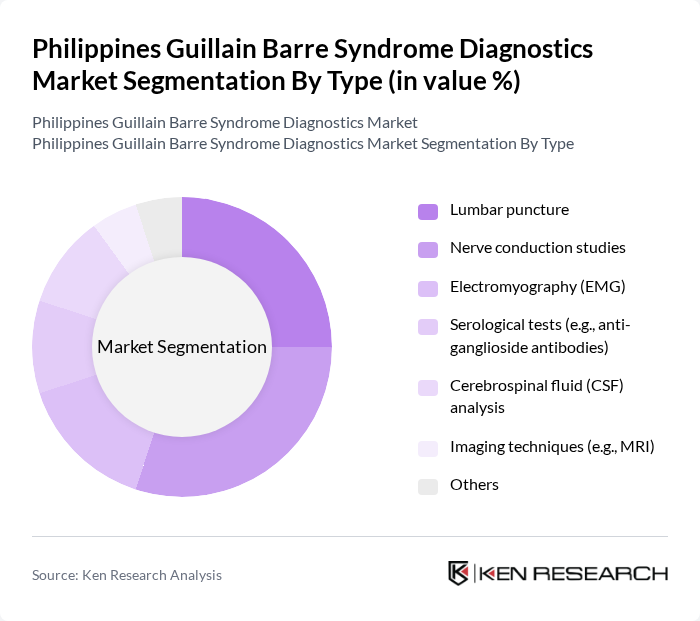
By Type:The market can be segmented into various diagnostic methods used for identifying Guillain Barre Syndrome. The primary types include lumbar puncture, nerve conduction studies, electromyography (EMG), serological tests (e.g., anti-ganglioside antibodies), cerebrospinal fluid (CSF) analysis, imaging techniques (e.g., MRI), and others. Among these, nerve conduction studies and lumbar puncture are the most widely utilized due to their effectiveness in diagnosing GBS.
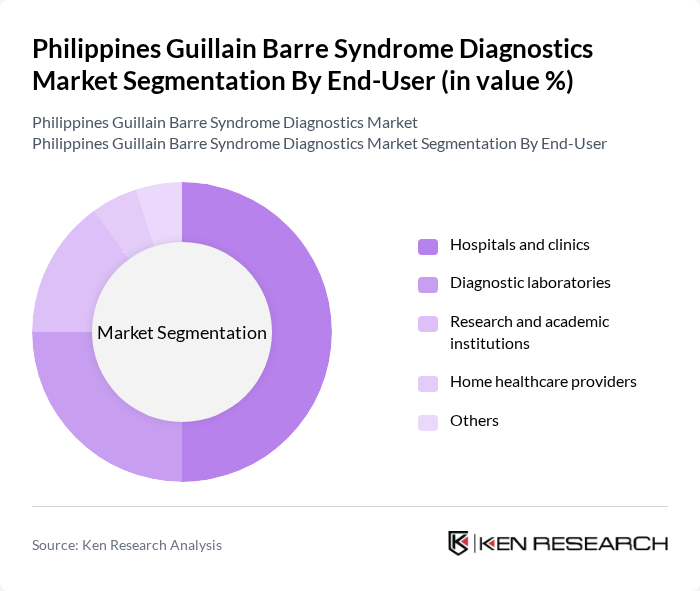
By End-User:The end-users of GBS diagnostics include hospitals and clinics, diagnostic laboratories, research and academic institutions, home healthcare providers, and others. Hospitals and clinics dominate this segment due to their capacity to provide comprehensive diagnostic services and immediate patient care, which is crucial for timely GBS diagnosis and treatment.
Philippines Guillain Barre Syndrome Diagnostics Market Competitive Landscape
The Philippines Guillain Barre Syndrome Diagnostics Market is characterized by a dynamic mix of regional and international players. Leading participants such as Philippine General Hospital, St. Luke's Medical Center, Makati Medical Center, The Medical City, Asian Hospital and Medical Center, Research Institute for Tropical Medicine (RITM), Cardinal Santos Medical Center, Manila Doctors Hospital, Chong Hua Hospital, Cebu Doctors' University Hospital, Davao Doctors Hospital, St. Paul's Hospital Iloilo, San Juan de Dios Hospital, University of the Philippines - National Institutes of Health, Hi-Precision Diagnostics, The Medical City - Clark, Philippine Red Cross Molecular Laboratory, Metro Pacific Hospitals (Metro Pacific Health), Sysmex Philippines Inc., Abbott Laboratories Philippines contribute to innovation, geographic expansion, and service delivery in this space.
Philippines Guillain Barre Syndrome Diagnostics Market Industry Analysis
Growth Drivers
- Increasing Prevalence of Guillain Barre Syndrome:The Philippines has seen a notable rise in Guillain Barre Syndrome (GBS) cases, with approximately 1.5 to 2 cases per 100,000 individuals reported annually. This increase is attributed to factors such as viral infections and environmental triggers. The Department of Health reported over 1,200 new cases recently, highlighting the urgent need for effective diagnostic solutions. As awareness grows, the demand for accurate diagnostics is expected to surge, driving market growth significantly.
- Advancements in Diagnostic Technologies:The Philippine healthcare sector is experiencing rapid advancements in diagnostic technologies, particularly in neurology. Innovations such as electrodiagnostic tests and lumbar punctures have improved the accuracy of GBS diagnoses. The introduction of advanced imaging techniques, like MRI, has also enhanced diagnostic capabilities. In future, the government allocated PHP 6 billion for healthcare technology upgrades, which will further support the adoption of these advanced diagnostic tools, fostering market growth.
- Rising Healthcare Expenditure:The Philippines' healthcare expenditure is projected to reach PHP 1.3 trillion in future, reflecting a 10% increase from the previous year. This rise is driven by government initiatives aimed at improving healthcare access and quality. Increased funding allows for better diagnostic facilities and technologies, which are crucial for GBS detection. As healthcare spending rises, the market for GBS diagnostics is expected to expand, providing more resources for research and development in this area.
Market Challenges
- Limited Access to Healthcare Facilities:Access to healthcare facilities in rural areas of the Philippines remains a significant challenge, with only 30% of the population having access to specialized medical care. This limitation affects timely diagnosis and treatment of Guillain Barre Syndrome. The lack of infrastructure and resources in remote regions leads to delayed diagnoses, which can worsen patient outcomes. Addressing these disparities is essential for improving GBS diagnostic rates and overall healthcare quality.
- High Cost of Advanced Diagnostic Tools:The cost of advanced diagnostic tools for GBS, such as nerve conduction studies and MRI scans, can be prohibitively high, often exceeding PHP 25,000 per test. This financial barrier limits access for many patients, particularly in lower-income demographics. The high costs also deter healthcare facilities from investing in necessary equipment, hindering the overall growth of the diagnostics market. Affordable solutions are needed to overcome this challenge and improve patient access.
Philippines Guillain Barre Syndrome Diagnostics Market Future Outlook
The future of the Guillain Barre Syndrome diagnostics market in the Philippines appears promising, driven by technological advancements and increased healthcare funding. The integration of artificial intelligence in diagnostic processes is expected to enhance accuracy and efficiency. Additionally, the government's commitment to improving healthcare infrastructure will likely facilitate better access to diagnostic services. As awareness of GBS continues to grow, the market is poised for significant developments, fostering innovation and improved patient outcomes in the coming years.
Market Opportunities
- Expansion of Telemedicine Services:The rise of telemedicine in the Philippines presents a unique opportunity for GBS diagnostics. With over 75% of the population having access to mobile phones, telehealth can bridge the gap in healthcare access, allowing remote consultations and early diagnosis. This shift can significantly enhance patient outreach and improve diagnostic rates, particularly in underserved areas.
- Development of Cost-Effective Diagnostic Solutions:There is a growing demand for cost-effective diagnostic solutions for GBS, particularly in low-income regions. Innovations that reduce testing costs while maintaining accuracy can expand access to essential diagnostics. Collaborations with local manufacturers to create affordable tools can significantly impact the market, improving patient outcomes and increasing overall diagnostic rates.
Scope of the Report
| Segment | Sub-Segments |
|---|---|
| By Type | Lumbar puncture Nerve conduction studies Electromyography (EMG) Serological tests (e.g., anti-ganglioside antibodies) Cerebrospinal fluid (CSF) analysis Imaging techniques (e.g., MRI) Others |
| By End-User | Hospitals and clinics Diagnostic laboratories Research and academic institutions Home healthcare providers Others |
| By Region | Luzon Visayas Mindanao |
| By Technology | Immunoassays Molecular diagnostics (e.g., PCR-based tests) Electrophysiological techniques Imaging techniques Others |
| By Application | Clinical diagnostics Research and development Epidemiological surveillance Others |
| By Investment Source | Private investments Government funding International grants Philanthropic organizations Others |
| By Policy Support | Government subsidies Tax incentives Research grants Public-private partnerships Others |
Key Target Audience
Investors and Venture Capitalist Firms
Government and Regulatory Bodies (e.g., Department of Health, Food and Drug Administration)
Manufacturers and Producers of Diagnostic Equipment
Healthcare Providers and Hospitals
Pharmaceutical Companies
Medical Device Distributors
Health Insurance Companies
Non-Governmental Organizations (NGOs) focused on Neurological Disorders
Players Mentioned in the Report:
Philippine General Hospital
St. Luke's Medical Center
Makati Medical Center
The Medical City
Asian Hospital and Medical Center
Research Institute for Tropical Medicine (RITM)
Cardinal Santos Medical Center
Manila Doctors Hospital
Chong Hua Hospital
Cebu Doctors' University Hospital
Davao Doctors Hospital
St. Pauls Hospital Iloilo
San Juan de Dios Hospital
University of the Philippines - National Institutes of Health
Hi-Precision Diagnostics
The Medical City - Clark
Philippine Red Cross Molecular Laboratory
Metro Pacific Hospitals (Metro Pacific Health)
Sysmex Philippines Inc.
Abbott Laboratories Philippines
Table of Contents
Market Assessment Phase
1. Executive Summary and Approach
2. Philippines Guillain Barre Syndrome Diagnostics Market Overview
2.1 Key Insights and Strategic Recommendations
2.2 Philippines Guillain Barre Syndrome Diagnostics Market Overview
2.3 Definition and Scope
2.4 Evolution of Market Ecosystem
2.5 Timeline of Key Regulatory Milestones
2.6 Value Chain & Stakeholder Mapping
2.7 Business Cycle Analysis
2.8 Policy & Incentive Landscape
3. Philippines Guillain Barre Syndrome Diagnostics Market Analysis
3.1 Growth Drivers
3.1.1 Increasing prevalence of Guillain Barre Syndrome
3.1.2 Advancements in diagnostic technologies
3.1.3 Rising healthcare expenditure
3.1.4 Growing awareness and early diagnosis initiatives
3.2 Market Challenges
3.2.1 Limited access to healthcare facilities
3.2.2 High cost of advanced diagnostic tools
3.2.3 Lack of trained healthcare professionals
3.2.4 Regulatory hurdles in product approvals
3.3 Market Opportunities
3.3.1 Expansion of telemedicine services
3.3.2 Collaborations with research institutions
3.3.3 Development of cost-effective diagnostic solutions
3.3.4 Increasing government support for healthcare innovation
3.4 Market Trends
3.4.1 Shift towards personalized medicine
3.4.2 Integration of AI in diagnostics
3.4.3 Growth of point-of-care testing
3.4.4 Emphasis on preventive healthcare
3.5 Government Regulation
3.5.1 Implementation of stricter quality control measures
3.5.2 Introduction of health technology assessments
3.5.3 Regulatory support for innovative diagnostic methods
3.5.4 Enhanced monitoring of medical devices
4. SWOT Analysis
5. Stakeholder Analysis
6. Porter's Five Forces Analysis
7. Philippines Guillain Barre Syndrome Diagnostics Market Market Size, 2019-2024
7.1 By Value
7.2 By Volume
7.3 By Average Selling Price
8. Philippines Guillain Barre Syndrome Diagnostics Market Segmentation
8.1 By Type
8.1.1 Lumbar puncture
8.1.2 Nerve conduction studies
8.1.3 Electromyography (EMG)
8.1.4 Serological tests (e.g., anti-ganglioside antibodies)
8.1.5 Cerebrospinal fluid (CSF) analysis
8.1.6 Imaging techniques (e.g., MRI)
8.1.7 Others
8.2 By End-User
8.2.1 Hospitals and clinics
8.2.2 Diagnostic laboratories
8.2.3 Research and academic institutions
8.2.4 Home healthcare providers
8.2.5 Others
8.3 By Region
8.3.1 Luzon
8.3.2 Visayas
8.3.3 Mindanao
8.4 By Technology
8.4.1 Immunoassays
8.4.2 Molecular diagnostics (e.g., PCR-based tests)
8.4.3 Electrophysiological techniques
8.4.4 Imaging techniques
8.4.5 Others
8.5 By Application
8.5.1 Clinical diagnostics
8.5.2 Research and development
8.5.3 Epidemiological surveillance
8.5.4 Others
8.6 By Investment Source
8.6.1 Private investments
8.6.2 Government funding
8.6.3 International grants
8.6.4 Philanthropic organizations
8.6.5 Others
8.7 By Policy Support
8.7.1 Government subsidies
8.7.2 Tax incentives
8.7.3 Research grants
8.7.4 Public-private partnerships
8.7.5 Others
9. Philippines Guillain Barre Syndrome Diagnostics Market Competitive Analysis
9.1 Market Share of Key Players
9.2 Cross Comparison of Key Players
9.2.1 Company Name
9.2.2 Group Size (Large, Medium, or Small as per industry convention)
9.2.3 Revenue Growth Rate (Philippines diagnostics segment)
9.2.4 Market Penetration Rate (Philippines GBS diagnostics share)
9.2.5 Number of GBS Diagnostic Procedures Performed Annually
9.2.6 Diagnostic Test Portfolio Breadth (number of GBS-related tests offered)
9.2.7 Turnaround Time for GBS Diagnostics
9.2.8 Partnerships with Hospitals/Clinics
9.2.9 Accreditation/Certification Status (e.g., DOH, ISO)
9.2.10 Customer Satisfaction Score (specific to diagnostic services)
9.2.11 Product Innovation Rate (new GBS diagnostics introduced)
9.2.12 Distribution Network Coverage (Philippines regions served)
9.2.13 Pricing Strategy
9.2.14 Brand Recognition
9.3 SWOT Analysis of Top Players
9.4 Pricing Analysis
9.5 Detailed Profile of Major Companies
9.5.1 Philippine General Hospital
9.5.2 St. Luke's Medical Center
9.5.3 Makati Medical Center
9.5.4 The Medical City
9.5.5 Asian Hospital and Medical Center
9.5.6 Research Institute for Tropical Medicine (RITM)
9.5.7 Cardinal Santos Medical Center
9.5.8 Manila Doctors Hospital
9.5.9 Chong Hua Hospital
9.5.10 Cebu Doctors' University Hospital
9.5.11 Davao Doctors Hospital
9.5.12 St. Paul’s Hospital Iloilo
9.5.13 San Juan de Dios Hospital
9.5.14 University of the Philippines - National Institutes of Health
9.5.15 Hi-Precision Diagnostics
9.5.16 The Medical City - Clark
9.5.17 Philippine Red Cross Molecular Laboratory
9.5.18 Metro Pacific Hospitals (Metro Pacific Health)
9.5.19 Sysmex Philippines Inc.
9.5.20 Abbott Laboratories Philippines
10. Philippines Guillain Barre Syndrome Diagnostics Market End-User Analysis
10.1 Procurement Behavior of Key Ministries
10.1.1 Health Department procurement strategies
10.1.2 Budget allocation for diagnostics
10.1.3 Collaboration with private sectors
10.1.4 Evaluation criteria for suppliers
10.2 Corporate Spend on Infrastructure & Energy
10.2.1 Investment in healthcare infrastructure
10.2.2 Spending on diagnostic equipment
10.2.3 Budget for training healthcare professionals
10.3 Pain Point Analysis by End-User Category
10.3.1 Challenges faced by hospitals
10.3.2 Issues in diagnostic laboratories
10.3.3 Needs of research institutions
10.4 User Readiness for Adoption
10.4.1 Awareness of diagnostic options
10.4.2 Training and support requirements
10.5 Post-Deployment ROI and Use Case Expansion
10.5.1 Evaluation of diagnostic effectiveness
10.5.2 Expansion into new applications
11. Philippines Guillain Barre Syndrome Diagnostics Market Future Size, 2025-2030
11.1 By Value
11.2 By Volume
11.3 By Average Selling Price
Go-To-Market Strategy Phase
1. Whitespace Analysis + Business Model Canvas
1.1 Market gaps identification
1.2 Business model development
2. Marketing and Positioning Recommendations
2.1 Branding strategies
2.2 Product USPs
3. Distribution Plan
3.1 Urban retail vs rural NGO tie-ups
4. Channel & Pricing Gaps
4.1 Underserved routes
4.2 Pricing bands
5. Unmet Demand & Latent Needs
5.1 Category gaps
5.2 Consumer segments
6. Customer Relationship
6.1 Loyalty programs
6.2 After-sales service
7. Value Proposition
7.1 Sustainability
7.2 Integrated supply chains
8. Key Activities
8.1 Regulatory compliance
8.2 Branding
8.3 Distribution setup
9. Entry Strategy Evaluation
9.1 Domestic Market Entry Strategy
9.1.1 Product mix
9.1.2 Pricing band
9.1.3 Packaging
9.2 Export Entry Strategy
9.2.1 Target countries
9.2.2 Compliance roadmap
10. Entry Mode Assessment
10.1 JV, Greenfield, M&A, Distributor Model
11. Capital and Timeline Estimation
11.1 Capital requirements
11.2 Timelines
12. Control vs Risk Trade-Off
12.1 Ownership vs Partnerships
13. Profitability Outlook
13.1 Breakeven analysis
13.2 Long-term sustainability
14. Potential Partner List
14.1 Distributors
14.2 JVs
14.3 Acquisition targets
15. Execution Roadmap
15.1 Phased Plan for Market Entry
15.1.1 Market Setup
15.1.2 Market Entry
15.1.3 Growth Acceleration
15.1.4 Scale & Stabilize
15.2 Key Activities and Milestones
15.2.1 Milestone tracking
15.2.2 Activity scheduling
Research Methodology
Phase 1: Approach1
Desk Research
- Analysis of published medical journals and articles on Guillain-Barré Syndrome (GBS) diagnostics in the Philippines
- Review of healthcare market reports and statistics from the Department of Health (DOH) and World Health Organization (WHO)
- Examination of existing diagnostic technologies and methodologies through academic publications and industry white papers
Primary Research
- Interviews with neurologists and healthcare professionals specializing in GBS
- Surveys conducted with laboratory managers and diagnostic equipment suppliers
- Focus group discussions with patients diagnosed with GBS to understand their diagnostic journey
Validation & Triangulation
- Cross-validation of findings through multiple expert interviews to ensure consistency
- Triangulation of data from healthcare providers, patient feedback, and market reports
- Sanity checks through consultations with a panel of medical experts and industry analysts
Phase 2: Market Size Estimation1
Top-down Assessment
- Estimation of the total healthcare expenditure in the Philippines allocated to neurological disorders
- Analysis of the prevalence rates of GBS and its impact on healthcare resource allocation
- Incorporation of government health initiatives and funding for GBS diagnostics
Bottom-up Modeling
- Collection of data on the number of diagnostic tests performed annually for GBS
- Estimation of average costs associated with GBS diagnostic procedures and technologies
- Volume x cost analysis to derive the overall market size for GBS diagnostics
Forecasting & Scenario Analysis
- Multi-factor regression analysis considering factors such as population growth, healthcare access, and disease prevalence
- Scenario modeling based on potential advancements in diagnostic technologies and treatment protocols
- Baseline, optimistic, and pessimistic projections for the GBS diagnostics market through 2030
Phase 3: CATI Sample Composition1
| Scope Item/Segment | Sample Size | Target Respondent Profiles |
|---|---|---|
| Neurologists and Specialists | 45 | Neurologists, GBS Researchers |
| Diagnostic Laboratories | 38 | Laboratory Managers, Technicians |
| Healthcare Providers | 42 | General Practitioners, Hospital Administrators |
| Patient Advocacy Groups | 18 | Patient Representatives, Support Group Leaders |
| Medical Equipment Suppliers | 27 | Sales Representatives, Product Managers |
Frequently Asked Questions
What is the current value of the Philippines Guillain Barre Syndrome Diagnostics Market?
The Philippines Guillain Barre Syndrome Diagnostics Market is valued at approximately USD 155 million, reflecting a significant growth driven by the increasing incidence of Guillain Barre Syndrome and advancements in diagnostic technologies.
What factors are driving the growth of the Guillain Barre Syndrome Diagnostics Market in the Philippines?
Which regions in the Philippines dominate the Guillain Barre Syndrome Diagnostics Market?
How does the Universal Health Care Act impact the Guillain Barre Syndrome Diagnostics Market?
Other Regional/Country Reports
Indonesia Guillain Barre Syndrome Diagnostics Market
Malaysia Guillain Barre Syndrome Diagnostics Market
KSA Guillain Barre Syndrome Diagnostics Market
APAC Guillain Barre Syndrome Diagnostics Market
SEA Guillain Barre Syndrome Diagnostics Market
Vietnam Guillain Barre Syndrome Diagnostics Market
Other Adjacent Reports
Kuwait Infectious Disease Diagnostics Market
Indonesia Electromyography Equipment Market
South Korea Nerve Conduction Study Market
South Africa Cerebrospinal Fluid Analysis Market
Belgium Diagnostic Imaging Market
Brazil Telemedicine Services Market
KSA healthcare it market size, share, growth drivers, trends, opportunities & forecast 2025–2030Oman Clinical Laboratory Services Market Size, Share, Growth Drivers, Trends, Opportunities & Forecast 2025–2030Why Buy From Us?

What makes us stand out is that our consultants follow Robust, Refine and Result (RRR) methodology. Robust for clear definitions, approaches and sanity checking, Refine for differentiating respondents' facts and opinions, and Result for presenting data with story.

We have set a benchmark in the industry by offering our clients with syndicated and customized market research reports featuring coverage of entire market as well as meticulous research and analyst insights.

While we don't replace traditional research, we flip the method upside down. Our dual approach of Top Bottom & Bottom Top ensures quality deliverable by not just verifying company fundamentals but also looking at the sector and macroeconomic factors.

With one step in the future, our research team constantly tries to show you the bigger picture. We help with some of the tough questions you may encounter along the way: How is the industry positioned? Best marketing channel? KPI's of competitors? By aligning every element, we help maximize success.

Our report gives you instant access to the answers and sources that other companies might choose to hide. We elaborate each steps of research methodology we have used and showcase you the sample size to earn your trust.

If you need any support, we are here! We pride ourselves on universe strength, data quality, and quick, friendly, and professional service.