








Ken Research Logo

Philippines Triathlon Clothing Market Report Size, Share, Growth Drivers, Trends, Opportunities & Forecast 2025–2030

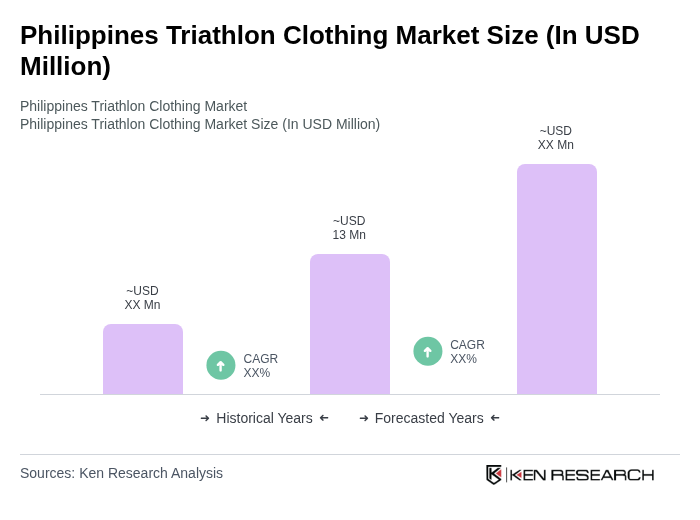
The Philippines Triathlon Clothing Market, worth USD 13 Mn, grows with increasing triathlon participation and government sports support, dominated by triathlon suits and amateur athletes.

Region:Asia

Author(s):Shubham

Product Code:KRAD5517

Pages:97

Published On:December 2025
About the Report

Base Year 2024

Philippines Triathlon Clothing Market Overview

  • The Philippines Triathlon Clothing Market is valued at USD 13 million, based on a five-year historical analysis and its share within the Asia Pacific triathlon clothing market, which generated around USD 329 million in revenue at a regional level. This growth is primarily driven by the increasing popularity of triathlon events, rising health consciousness among the population, and the growing number of fitness enthusiasts participating in multisport activities, in line with global endurance sports and triathlon clothing trends.
  • Metro Manila, Cebu, and Davao are the dominant cities in the Philippines Triathlon Clothing Market. The concentration of major triathlon events, such as Ironman 70.3 races and other multisport competitions, along with a dense network of fitness clubs and active triathlon communities in these urban centers, supports their market dominance and provides a strong consumer base for specialized triathlon apparel.
  • In 2023, the Philippines government strengthened its support for sports participation, including triathlon and endurance events, through the implementation of the Philippine Sports Commission’s grassroots and high-performance development programs under the mandate of Republic Act No. 6847 (The Philippine Sports Commission Act, 1990), which created the Philippine Sports Commission as the primary government agency for sports promotion. These programs promote an active lifestyle, improve sports infrastructure, and provide funding and logistical support for events and national sports associations, indirectly boosting demand for performance sportswear and specialized triathlon clothing.
Philippines Triathlon Clothing Market Size

Philippines Triathlon Clothing Market Segmentation

By Type:The market is segmented into various types of triathlon clothing, including triathlon suits, tri tops, tri shorts, wetsuits, compression wear, footwear, accessories, and others. This is aligned with global triathlon clothing categorization, where tri tops, tri shorts, and tri suits form the core product groups. Among these, triathlon suits, which include both one-piece and two-piece options, dominate the market due to their essential role in providing comfort, aerodynamics, and moisture management during all three race segments, reflecting the leading share of tri suits in regional and global markets. The increasing demand for high-performance gear has led to innovations in fabric technology—such as quick-drying, compression, and drag-reducing materials—making these suits more appealing to both amateur and professional athletes.
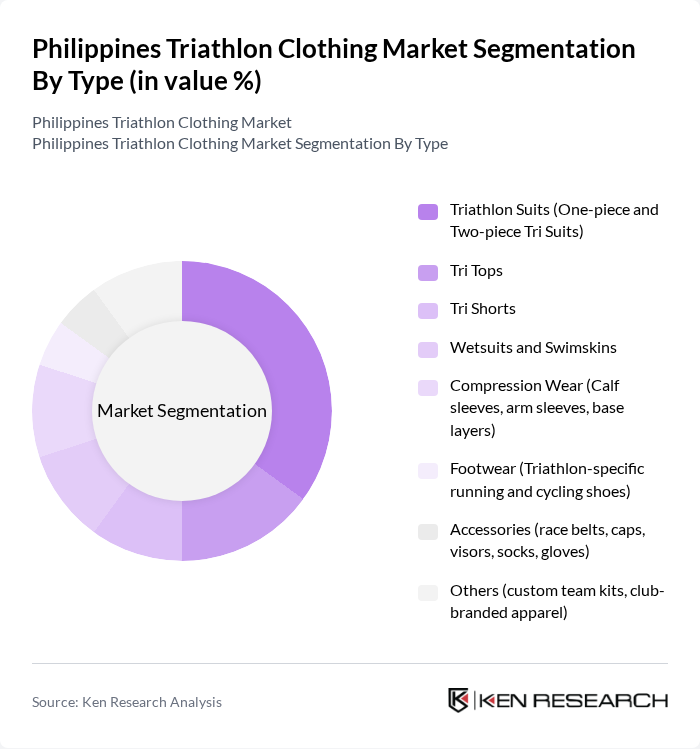
Philippines Triathlon Clothing Market segmentation by Type.

By End-User:The end-user segmentation includes age-group amateur triathletes, elite and professional triathletes, fitness and multisport enthusiasts, triathlon clubs, teams, corporate wellness groups, and event organizers. This structure reflects the typical demand-side split observed in global triathlon and endurance apparel markets, where amateur and recreational athletes represent the largest user base. The age-group amateur triathletes segment is the largest, driven by the increasing number of participants in local and international triathlon events hosted in the Philippines and across Asia Pacific, including Ironman 70.3 and other branded races. This segment's growth is fueled by the rising popularity of fitness activities, the expansion of running, cycling, and multisport clubs, and the accessibility of online training programs and digital coaching platforms, which make triathlons more appealing and achievable for a broader audience.

Philippines Triathlon Clothing Market segmentation by End-User.

Philippines Triathlon Clothing Market Competitive Landscape

The Philippines Triathlon Clothing Market is characterized by a dynamic mix of regional and international players. Leading participants such as 2XU, Zoot Sports, Orca, TYR Sport, ROKA Sports, HUUB Design, Zone3, Sailfish, Santini Cycling & Triathlon Wear, De Soto Sport, Fusion Sportswear, Kiwami Triathlon, NH3 Sport (Philippines), Santeco / Santeco Multisport (local custom tri kits), TriHard Multisport / local club-branded apparel partners contribute to innovation, geographic expansion, and service delivery in this space, mirroring the global competitive landscape of triathlon clothing brands.

2XU

2005

Melbourne, Australia

Zoot Sports

1983

Carlsbad, California, USA

Orca

1992

Auckland, New Zealand

TYR Sport

1985

Los Angeles, California, USA

ROKA Sports

2013

Austin, Texas, USA

Company

Establishment Year

Headquarters

Company Size (Global, Regional, or Local Brand)

Estimated Triathlon Apparel Revenue in the Philippines

3-Year Revenue CAGR in Triathlon Segment

Market Share in Philippines Triathlon Clothing

Average Selling Price Positioning (Economy / Mid-Range / Premium)

Product Portfolio Breadth (tri suits, tops, shorts, wetsuits, accessories)

Philippines Triathlon Clothing Market Industry Analysis

Growth Drivers

  • Increasing Participation in Triathlon Events:The Philippines has seen a surge in triathlon participation, with over 35,000 athletes competing in various events in future. This growth is attributed to the increasing number of local and international triathlon events, which rose by 20% from the previous year to future. The Philippine Sports Commission reported that triathlon events are now held in over 25 locations nationwide, fostering a vibrant community and driving demand for specialized clothing.
  • Rising Health Consciousness Among Filipinos:Health awareness in the Philippines is on the rise, with a reported 65% of the population engaging in regular physical activities as of future. This trend is supported by government initiatives promoting fitness and wellness, leading to increased participation in sports like triathlon. The Department of Health noted a 30% increase in fitness-related events, further driving demand for triathlon apparel as consumers seek quality gear to enhance their performance.
  • Expansion of E-commerce Platforms for Sports Apparel:E-commerce in the Philippines is projected to reach $15 billion in future, with sports apparel being a significant segment. The rise of platforms like Lazada and Shopee has made triathlon clothing more accessible, contributing to a 50% increase in online sales of sports apparel in future. This shift towards online shopping is crucial for reaching a broader audience and catering to the growing demand for specialized triathlon gear.

Market Challenges

  • High Competition from Established Global Brands:The triathlon clothing market in the Philippines faces intense competition from established global brands such as Nike and Adidas, which dominate with a combined market share of over 65%. These brands benefit from strong brand loyalty and extensive marketing budgets, making it challenging for local manufacturers to gain traction. The competitive landscape is further complicated by aggressive pricing strategies employed by these global players, impacting local sales.
  • Limited Awareness of Specialized Triathlon Gear:Despite the growing interest in triathlons, there remains a significant gap in consumer awareness regarding specialized triathlon gear. A survey conducted in future indicated that only 40% of potential triathletes are familiar with the specific benefits of triathlon clothing. This lack of awareness hinders market growth, as many consumers still opt for generic sportswear, limiting the potential for specialized brands to thrive in the competitive landscape.

Philippines Triathlon Clothing Market Future Outlook

The future of the Philippines triathlon clothing market appears promising, driven by increasing health consciousness and a growing number of events. As more Filipinos engage in triathlons, the demand for specialized apparel is expected to rise. Additionally, the expansion of e-commerce platforms will facilitate access to a wider range of products. Local brands that focus on innovation and sustainability are likely to capture market share, especially as consumers become more environmentally conscious and seek unique offerings.

Market Opportunities

  • Development of Eco-Friendly Triathlon Clothing:There is a growing consumer preference for sustainable products, with 75% of Filipinos willing to pay more for eco-friendly apparel. This trend presents an opportunity for brands to innovate by using recycled materials and sustainable manufacturing processes, potentially capturing a niche market that values environmental responsibility.
  • Collaborations with Local Athletes for Brand Promotion:Partnering with local athletes can enhance brand visibility and credibility. Collaborations with well-known triathletes can lead to increased consumer trust and engagement, as evidenced by a 60% rise in sales for brands that have successfully executed such partnerships in future, highlighting the effectiveness of athlete endorsements in the sports apparel market.

Scope of the Report

SegmentSub-Segments
By Type

Triathlon Suits (One-piece and Two-piece Tri Suits)

Tri Tops

Tri Shorts

Wetsuits and Swimskins

Compression Wear (Calf sleeves, arm sleeves, base layers)

Footwear (Triathlon-specific running and cycling shoes)

Accessories (race belts, caps, visors, socks, gloves)

Others (custom team kits, club-branded apparel)

By End-User

Age-Group Amateur Triathletes

Elite and Professional Triathletes

Fitness and Multisport Enthusiasts (duathlon, aquathlon, endurance events)

Triathlon Clubs, Teams, and Corporate Wellness Groups

Event Organizers and Race Series (official merchandise and uniforms)

Others

By Gender

Men

Women

Unisex

By Age Group

Youth and Juniors (Under 19)

Adults (19-39)

Masters (40+)

By Price Range

Economy / Entry-Level

Mid-Range

Premium / Performance

Custom and Team Kits

By Distribution Channel

Online Brand Stores (direct-to-consumer)

E-commerce Marketplaces (Lazada, Shopee, Zalora, others)

Specialty Triathlon and Bike Shops

Sporting Goods and Department Stores

Event-based Sales (expo booths at races, pop-up stores)

Others

By Material

Synthetic Performance Fabrics (polyester, nylon, elastane blends)

Recycled and Eco-friendly Synthetics

Natural and Hybrid Fabrics (merino blends, bamboo blends)

Others (coated, water-repellent, UV-protective textiles)

Key Target Audience

Investors and Venture Capitalist Firms

Government and Regulatory Bodies (e.g., Department of Trade and Industry, Department of Tourism)

Manufacturers and Producers

Distributors and Retailers

Event Organizers and Promoters

Sports Associations and Federations

Fitness and Wellness Centers

Online Retail Platforms

Players Mentioned in the Report:

2XU

Zoot Sports

Orca

TYR Sport

ROKA Sports

HUUB Design

Zone3

Sailfish

Santini Cycling & Triathlon Wear

De Soto Sport

Fusion Sportswear

Kiwami Triathlon

NH3 Sport (Philippines)

Santeco / Santeco Multisport (local custom tri kits)

TriHard Multisport / local club-branded apparel partners

Table of Contents

Market Assessment Phase

1. Executive Summary and Approach


2. Philippines Triathlon Clothing Market Overview

2.1 Key Insights and Strategic Recommendations

2.2 Philippines Triathlon Clothing Market Overview

2.3 Definition and Scope

2.4 Evolution of Market Ecosystem

2.5 Timeline of Key Regulatory Milestones

2.6 Value Chain & Stakeholder Mapping

2.7 Business Cycle Analysis

2.8 Policy & Incentive Landscape


3. Philippines Triathlon Clothing Market Analysis

3.1 Growth Drivers

3.1.1 Increasing participation in triathlon events
3.1.2 Rising health consciousness among Filipinos
3.1.3 Growth of local and international triathlon events
3.1.4 Expansion of e-commerce platforms for sports apparel

3.2 Market Challenges

3.2.1 High competition from established global brands
3.2.2 Limited awareness of specialized triathlon gear
3.2.3 Economic fluctuations affecting consumer spending
3.2.4 Supply chain disruptions impacting product availability

3.3 Market Opportunities

3.3.1 Development of eco-friendly triathlon clothing
3.3.2 Collaborations with local athletes for brand promotion
3.3.3 Customization options for triathlon gear
3.3.4 Expansion into untapped regional markets

3.4 Market Trends

3.4.1 Increasing demand for moisture-wicking fabrics
3.4.2 Popularity of athleisure wear among consumers
3.4.3 Growth of online communities and social media influence
3.4.4 Technological advancements in fabric and design

3.5 Government Regulation

3.5.1 Import tariffs on sports apparel
3.5.2 Standards for textile quality and safety
3.5.3 Environmental regulations for manufacturing
3.5.4 Support for local manufacturing initiatives

4. SWOT Analysis


5. Stakeholder Analysis


6. Porter's Five Forces Analysis


7. Philippines Triathlon Clothing Market Market Size, 2019-2024

7.1 By Value

7.2 By Volume

7.3 By Average Selling Price


8. Philippines Triathlon Clothing Market Segmentation

8.1 By Type

8.1.1 Triathlon Suits (One-piece and Two-piece Tri Suits)
8.1.2 Tri Tops
8.1.3 Tri Shorts
8.1.4 Wetsuits and Swimskins
8.1.5 Compression Wear (Calf sleeves, arm sleeves, base layers)
8.1.6 Footwear (Triathlon-specific running and cycling shoes)
8.1.7 Accessories (race belts, caps, visors, socks, gloves)
8.1.8 Others (custom team kits, club-branded apparel)

8.2 By End-User

8.2.1 Age-Group Amateur Triathletes
8.2.2 Elite and Professional Triathletes
8.2.3 Fitness and Multisport Enthusiasts (duathlon, aquathlon, endurance events)
8.2.4 Triathlon Clubs, Teams, and Corporate Wellness Groups
8.2.5 Event Organizers and Race Series (official merchandise and uniforms)
8.2.6 Others

8.3 By Gender

8.3.1 Men
8.3.2 Women
8.3.3 Unisex

8.4 By Age Group

8.4.1 Youth and Juniors (Under 19)
8.4.2 Adults (19-39)
8.4.3 Masters (40+)

8.5 By Price Range

8.5.1 Economy / Entry-Level
8.5.2 Mid-Range
8.5.3 Premium / Performance
8.5.4 Custom and Team Kits

8.6 By Distribution Channel

8.6.1 Online Brand Stores (direct-to-consumer)
8.6.2 E-commerce Marketplaces (Lazada, Shopee, Zalora, others)
8.6.3 Specialty Triathlon and Bike Shops
8.6.4 Sporting Goods and Department Stores
8.6.5 Event-based Sales (expo booths at races, pop-up stores)
8.6.6 Others

8.7 By Material

8.7.1 Synthetic Performance Fabrics (polyester, nylon, elastane blends)
8.7.2 Recycled and Eco-friendly Synthetics
8.7.3 Natural and Hybrid Fabrics (merino blends, bamboo blends)
8.7.4 Others (coated, water-repellent, UV-protective textiles)

9. Philippines Triathlon Clothing Market Competitive Analysis

9.1 Market Share of Key Players

9.2 Cross Comparison of Key Players

9.2.1 Company Name
9.2.2 Company Size (Global, Regional, or Local Brand)
9.2.3 Estimated Triathlon Apparel Revenue in the Philippines
9.2.4 3-Year Revenue CAGR in Triathlon Segment
9.2.5 Market Share in Philippines Triathlon Clothing
9.2.6 Average Selling Price Positioning (Economy / Mid-Range / Premium)
9.2.7 Product Portfolio Breadth (tri suits, tops, shorts, wetsuits, accessories)
9.2.8 Share of Sales from Online Channels
9.2.9 Retail and Club Coverage (number of partner stores and clubs)
9.2.10 Sponsorships and Endorsements (events, teams, elite athletes)
9.2.11 Customer Ratings and Reviews (average score across major platforms)
9.2.12 Innovation & Sustainability Index (use of advanced and eco fabrics)

9.3 SWOT Analysis of Top Players

9.4 Pricing Analysis

9.5 Detailed Profile of Major Companies

9.5.1 2XU
9.5.2 Zoot Sports
9.5.3 Orca
9.5.4 TYR Sport
9.5.5 ROKA Sports
9.5.6 HUUB Design
9.5.7 Zone3
9.5.8 Sailfish
9.5.9 Santini Cycling & Triathlon Wear
9.5.10 De Soto Sport
9.5.11 Fusion Sportswear
9.5.12 Kiwami Triathlon
9.5.13 NH3 Sport (Philippines)
9.5.14 Santeco / Santeco Multisport (local custom tri kits)
9.5.15 TriHard Multisport / local club-branded apparel partners

10. Philippines Triathlon Clothing Market End-User Analysis

10.1 Procurement Behavior of Key Ministries

10.1.1 Budget Allocation for Sports Apparel
10.1.2 Procurement Processes and Regulations
10.1.3 Supplier Selection Criteria
10.1.4 Contract Management Practices

10.2 Corporate Spend on Infrastructure & Energy

10.2.1 Investment in Sports Facilities
10.2.2 Sponsorship of Triathlon Events
10.2.3 Partnerships with Local Brands
10.2.4 Others

10.3 Pain Point Analysis by End-User Category

10.3.1 Quality and Durability Concerns
10.3.2 Availability of Size and Fit Options
10.3.3 Price Sensitivity
10.3.4 Others

10.4 User Readiness for Adoption

10.4.1 Awareness of Triathlon Gear Benefits
10.4.2 Willingness to Invest in Quality Apparel
10.4.3 Access to Information and Resources
10.4.4 Others

10.5 Post-Deployment ROI and Use Case Expansion

10.5.1 Performance Improvement Metrics
10.5.2 Customer Feedback and Adaptation
10.5.3 Market Expansion Opportunities
10.5.4 Others

11. Philippines Triathlon Clothing Market Future Size, 2025-2030

11.1 By Value

11.2 By Volume

11.3 By Average Selling Price


Go-To-Market Strategy Phase

1. Whitespace Analysis + Business Model Canvas

1.1 Market Gaps Identification

1.2 Business Model Development


2. Marketing and Positioning Recommendations

2.1 Branding Strategies

2.2 Product USPs


3. Distribution Plan

3.1 Urban Retail vs Rural NGO Tie-ups


4. Channel & Pricing Gaps

4.1 Underserved Routes

4.2 Pricing Bands


5. Unmet Demand & Latent Needs

5.1 Category Gaps

5.2 Consumer Segments


6. Customer Relationship

6.1 Loyalty Programs

6.2 After-Sales Service


7. Value Proposition

7.1 Sustainability

7.2 Integrated Supply Chains


8. Key Activities

8.1 Regulatory Compliance

8.2 Branding

8.3 Distribution Setup


9. Entry Strategy Evaluation

9.1 Domestic Market Entry Strategy

9.1.1 Product Mix
9.1.2 Pricing Band
9.1.3 Packaging

9.2 Export Entry Strategy

9.2.1 Target Countries
9.2.2 Compliance Roadmap

10. Entry Mode Assessment

10.1 JV

10.2 Greenfield

10.3 M&A

10.4 Distributor Model


11. Capital and Timeline Estimation

11.1 Capital Requirements

11.2 Timelines


12. Control vs Risk Trade-Off

12.1 Ownership vs Partnerships


13. Profitability Outlook

13.1 Breakeven Analysis

13.2 Long-Term Sustainability


14. Potential Partner List

14.1 Distributors

14.2 JVs

14.3 Acquisition Targets


15. Execution Roadmap

15.1 Phased Plan for Market Entry

15.1.1 Market Setup
15.1.2 Market Entry
15.1.3 Growth Acceleration
15.1.4 Scale & Stabilize

15.2 Key Activities and Milestones

15.2.1 Milestone Planning
15.2.2 Activity Tracking

Research Methodology

ApproachModellingSample

Phase 1: Approach1

Desk Research

  • Analysis of industry reports from local sports apparel associations
  • Review of government publications on sports and fitness trends in the Philippines
  • Examination of online retail platforms for consumer preferences and pricing strategies

Primary Research

  • Interviews with key stakeholders in the triathlon clothing supply chain, including manufacturers and retailers
  • Surveys targeting triathletes and fitness enthusiasts to gather insights on purchasing behavior
  • Focus group discussions with local triathlon clubs to understand community needs and preferences

Validation & Triangulation

  • Cross-validation of findings through multiple data sources, including sales data and consumer feedback
  • Triangulation of insights from primary interviews with secondary data trends
  • Sanity checks conducted through expert reviews from industry veterans and sports analysts

Phase 2: Market Size Estimation1

Top-down Assessment

  • Estimation of market size based on national sports participation rates and growth in triathlon events
  • Analysis of demographic data to identify target consumer segments for triathlon clothing
  • Incorporation of economic indicators affecting disposable income and spending on sports apparel

Bottom-up Modeling

  • Collection of sales data from leading triathlon clothing retailers in the Philippines
  • Estimation of average spending per triathlete on clothing and accessories
  • Volume estimates based on participation rates in triathlon events and related activities

Forecasting & Scenario Analysis

  • Multi-factor regression analysis incorporating trends in health consciousness and fitness culture
  • Scenario modeling based on potential impacts of economic fluctuations and consumer behavior shifts
  • Development of baseline, optimistic, and pessimistic market growth projections through 2030

Phase 3: CATI Sample Composition1

Scope Item/SegmentSample SizeTarget Respondent Profiles
Retail Market Insights100Store Managers, Brand Representatives
Consumer Behavior Analysis120Triathletes, Fitness Enthusiasts
Event Participation Feedback80Event Organizers, Participants
Product Development Insights70Designers, Product Managers
Market Trend Evaluation90Industry Analysts, Sports Marketing Experts

Frequently Asked Questions

What is the current value of the Philippines Triathlon Clothing Market?

The Philippines Triathlon Clothing Market is valued at approximately USD 13 million, contributing to the broader Asia Pacific triathlon clothing market, which generated around USD 329 million in revenue. This growth reflects the increasing popularity of triathlon events and health consciousness among Filipinos.

Which cities dominate the Philippines Triathlon Clothing Market?

What factors are driving the growth of the triathlon clothing market in the Philippines?

How has the Philippine government supported the triathlon clothing market?

Other Regional/Country Reports

Indonesia Triathlon Clothing Market

Malaysia Triathlon Clothing Market

KSA Triathlon Clothing Market

APAC Triathlon Clothing Market

SEA Triathlon Clothing Market

Vietnam Triathlon Clothing Market

Other Adjacent Reports

India Sports Apparel Market Outlook to 2030

Oman Endurance Sports Gear Market

Singapore Cycling Clothing Market

UAE Running Apparel MarketKSA swimwear market Size, Share, Growth Drivers, Trends, Opportunities & Forecast 2025–2030

Bahrain Fitness Accessories Market

KSA athletic footwear market Size, Share, Growth Drivers, Trends, Opportunities & Forecast 2025–2030

South Korea Compression Wear Market

South Africa Wetsuit Market

South Africa Multisport Equipment Market

Why Buy From Us?

Refine Robust Result (RRR) Framework

What makes us stand out is that our consultants follow Robust, Refine and Result (RRR) methodology. Robust for clear definitions, approaches and sanity checking, Refine for differentiating respondents' facts and opinions, and Result for presenting data with story.

Our Reach Is Unmatched

We have set a benchmark in the industry by offering our clients with syndicated and customized market research reports featuring coverage of entire market as well as meticulous research and analyst insights.

Shifting the Research Paradigm

While we don't replace traditional research, we flip the method upside down. Our dual approach of Top Bottom & Bottom Top ensures quality deliverable by not just verifying company fundamentals but also looking at the sector and macroeconomic factors.

More Insights-Better Decisions

With one step in the future, our research team constantly tries to show you the bigger picture. We help with some of the tough questions you may encounter along the way: How is the industry positioned? Best marketing channel? KPI's of competitors? By aligning every element, we help maximize success.

Transparency and Trust

Our report gives you instant access to the answers and sources that other companies might choose to hide. We elaborate each steps of research methodology we have used and showcase you the sample size to earn your trust.

Round the Clock Support

If you need any support, we are here! We pride ourselves on universe strength, data quality, and quick, friendly, and professional service.

Why Clients Choose Us?

400000+
Reports in repository
150+
Consulting projects a year
100+
Analysts
8000+
Client Queries in 2022