Region:Middle East
Author(s):Rebecca
Product Code:KRAC8582
Pages:99
Published On:November 2025
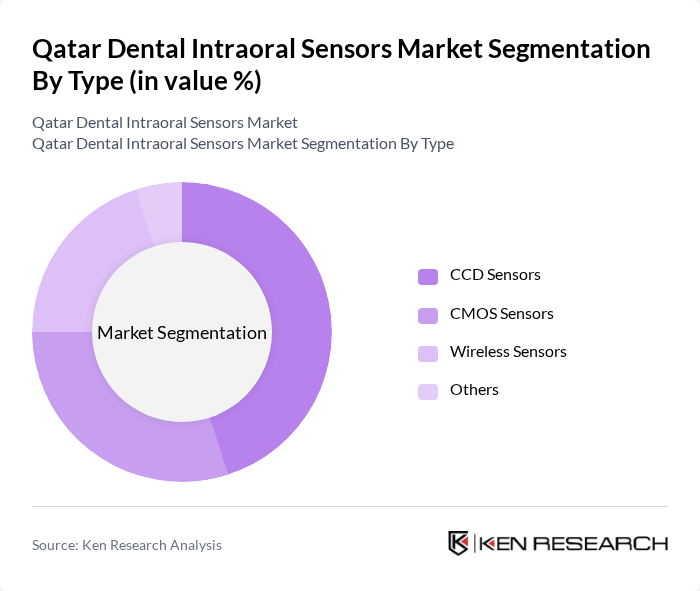
By Type:The market is segmented into various types of sensors, including CCD Sensors, CMOS Sensors, Wireless Sensors, and Others. Among these, CCD Sensors are currently leading the market due to their high image quality and reliability, making them a preferred choice for dental professionals. CMOS Sensors are also gaining traction due to their lower power consumption, cost-effectiveness, and recent advancements in image resolution. Wireless Sensors are becoming increasingly popular for their convenience, ease of use, and compatibility with electronic dental records, particularly in mobile dental units and group practices. The demand for these sensors is driven by the need for accurate diagnostics, workflow efficiency, and enhanced patient comfort .
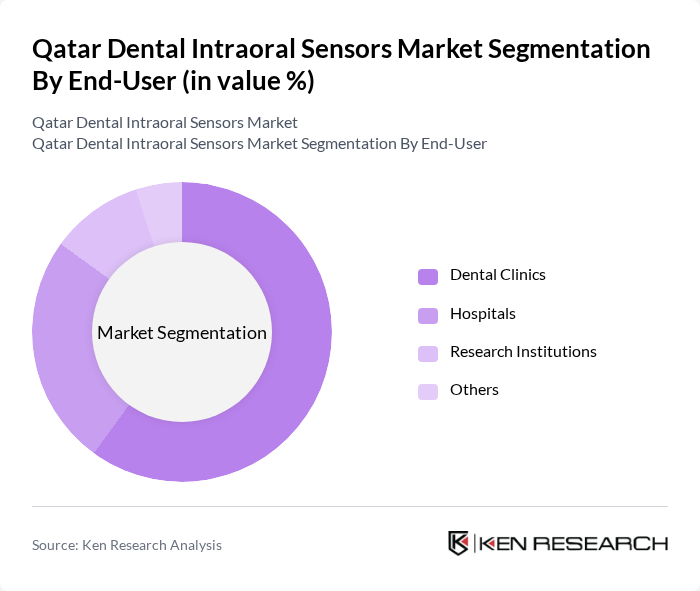
By End-User:The end-user segmentation includes Dental Clinics, Hospitals, Research Institutions, and Others. Dental Clinics dominate the market, accounting for a significant share due to the increasing number of dental practices and the rising demand for advanced diagnostic tools. Hospitals are also substantial users of intraoral sensors, particularly for comprehensive dental care and integration with hospital information systems. Research Institutions utilize these sensors for clinical studies, technology validation, and advancements in dental imaging. The growing focus on preventive care, early diagnosis, and digital workflow integration is driving the demand across all end-user segments .
The Qatar Dental Intraoral Sensors Market is characterized by a dynamic mix of regional and international players. Leading participants such as Carestream Dental, Dentsply Sirona, Planmeca Oy, 3M Health Care, Vatech Co., Ltd., Sirona Dental Systems, Gendex Dental Systems, XDR Radiology, Midmark Corporation, Acteon Group, Imaging Sciences International, Dental Wings, KaVo Kerr, MyRay S.p.A., i-CAT Imaging contribute to innovation, geographic expansion, and service delivery in this space.
The future of the Qatar dental intraoral sensors market appears promising, driven by ongoing technological innovations and a shift towards digital dentistry. As the government continues to promote oral health initiatives, the integration of advanced imaging technologies is expected to gain traction. Additionally, the increasing adoption of tele-dentistry will likely enhance access to dental care, further stimulating demand for intraoral sensors. These trends indicate a robust growth trajectory for the market in the coming years.
| Segment | Sub-Segments |
|---|---|
| By Type | CCD Sensors CMOS Sensors Wireless Sensors Others |
| By End-User | Dental Clinics Hospitals Research Institutions Others |
| By Application | Diagnostic Imaging Treatment Planning Patient Monitoring Others |
| By Distribution Channel | Direct Sales Distributors Online Sales Others |
| By Region | Doha Al Rayyan Umm Salal Others |
| By Technology | Digital Sensors Analog Sensors Hybrid Sensors Others |
| By Price Range | Budget Mid-Range Premium Others |
| Scope Item/Segment | Sample Size | Target Respondent Profiles |
|---|---|---|
| General Dental Practices | 120 | Dentists, Practice Owners |
| Dental Clinics Specializing in Orthodontics | 80 | Orthodontists, Clinic Managers |
| Dental Equipment Distributors | 45 | Sales Managers, Product Specialists |
| Dental Technology Innovators | 50 | R&D Managers, Product Development Leads |
| Dental Associations and Regulatory Bodies | 40 | Policy Makers, Industry Analysts |
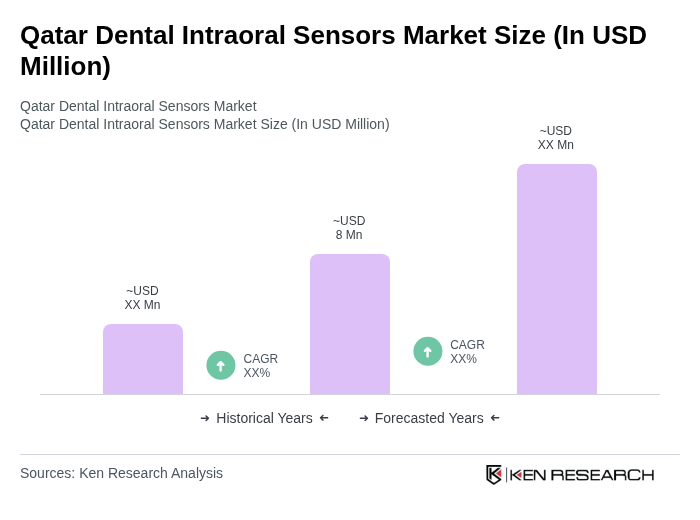
The Qatar Dental Intraoral Sensors Market is valued at approximately USD 8 million, reflecting a significant growth trend driven by advancements in digital dentistry and increased demand for efficient diagnostic tools.

What makes us stand out is that our consultants follow Robust, Refine and Result (RRR) methodology. Robust for clear definitions, approaches and sanity checking, Refine for differentiating respondents' facts and opinions, and Result for presenting data with story.

We have set a benchmark in the industry by offering our clients with syndicated and customized market research reports featuring coverage of entire market as well as meticulous research and analyst insights.

While we don't replace traditional research, we flip the method upside down. Our dual approach of Top Bottom & Bottom Top ensures quality deliverable by not just verifying company fundamentals but also looking at the sector and macroeconomic factors.

With one step in the future, our research team constantly tries to show you the bigger picture. We help with some of the tough questions you may encounter along the way: How is the industry positioned? Best marketing channel? KPI's of competitors? By aligning every element, we help maximize success.

Our report gives you instant access to the answers and sources that other companies might choose to hide. We elaborate each steps of research methodology we have used and showcase you the sample size to earn your trust.

If you need any support, we are here! We pride ourselves on universe strength, data quality, and quick, friendly, and professional service.













