Qatar Opioid Market Size Share Growth Drivers Trends Opportunities & Forecast 2025–2030

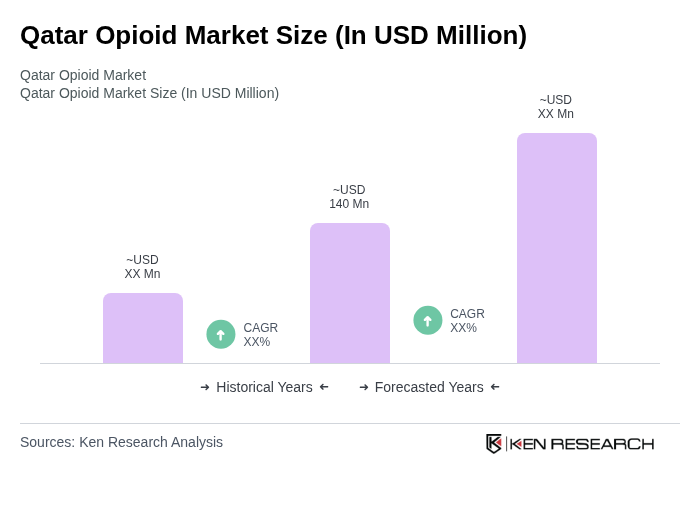
Qatar opioid market, valued at USD 140 million, grows due to rising chronic pain cases, expanding palliative services, and strict regulations ensuring responsible use.

Region:Middle East

Author(s):Geetanshi

Product Code:KRAA4083

Pages:80

Published On:January 2026
About the Report

Base Year 2024

Qatar Opioid Market Overview

  • The Qatar Opioid Market is valued at USD 140 million, based on a five-year historical analysis and the share of Qatar within the wider Middle East and Africa opioids market and global opioids spending. This growth is primarily driven by the increasing prevalence of chronic pain conditions associated with non-communicable diseases, including cancer, musculoskeletal disorders, and post-surgical complications, along with advancements in multimodal pain management therapies and expanded access to specialist pain and palliative care services in tertiary hospitals. The market is also influenced by the growing demand for effective pain relief solutions in both hospital and outpatient settings as Qatar continues to invest in oncology centers, surgical capacity, and integrated palliative care programs.
  • Key players in this market include Qatar Pharma, Qatar Life Pharma, and Julphar Gulf Pharmaceutical Industries – Qatar operations, alongside multinational companies supplying branded and generic opioid formulations through public tenders and private channels. These companies compete based on established distribution networks, strong relationships with Hamad Medical Corporation and private hospitals, and a portfolio of opioid products that support perioperative pain control, oncology-related pain, and palliative care, including oral, injectable, and transdermal formulations aligned with international pain management guidelines.
  • In 2023, the Qatari government further strengthened the controlled medicines framework for opioids through the implementation of electronic prescription and monitoring requirements under the Narcotic Drugs and Psychotropic Substances Law No. 9 of 1987 as amended and its executive regulations, overseen by the Ministry of Public Health and the Ministry of Interior. This framework requires that all narcotic and psychotropic prescriptions, including opioids, are issued on authorized prescription forms, recorded and traceable through licensed facilities, and dispensed only by approved pharmacies and hospitals, enabling tighter monitoring of quantities prescribed, preventing diversion, and promoting responsible prescribing and dispensing practices among healthcare providers.
Qatar Opioid Market Size

Qatar Opioid Market Segmentation

By Drug Class:The drug class segmentation includes Natural opiates (e.g., morphine, codeine), Semi-synthetic opioids (e.g., oxycodone, hydrocodone), Synthetic opioids (e.g., fentanyl, methadone, tramadol), and Others. Synthetic opioids hold a leading share within hospital-based pain management in Qatar, consistent with broader Middle East and global practice where fentanyl, tramadol, and similar agents are widely used for surgical, intensive care, and cancer-related pain because of their potency, titratability, and availability in multiple formulations. The increasing adoption of these drugs in clinical practice is driven by their ability to provide rapid and predictable pain relief, established inclusion in perioperative and oncology protocols, and growing familiarity among healthcare professionals with dosing, monitoring, and risk mitigation strategies.
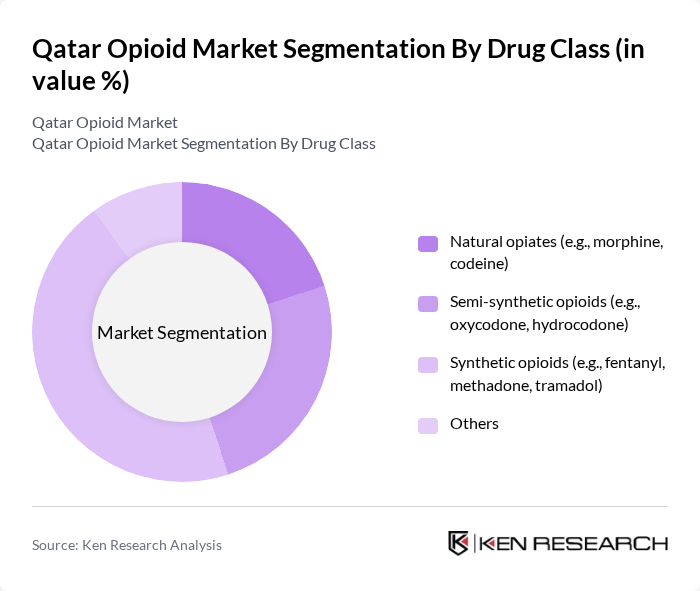
Qatar Opioid Market segmentation by Drug Class.

By Application:The application segmentation includes Cancer pain management, Post-operative pain management, Chronic non-cancer pain, Palliative and end-of-life care, and Others. Cancer pain management is a major application segment, supported by the growing burden of cancer in Qatar and the central role of strong opioids in managing moderate to severe cancer-related pain in line with World Health Organization pain ladders and palliative care standards. The growing focus on improving the quality of life for cancer patients, expansion of specialist oncology and palliative care services, and the emphasis on early integration of pain control into cancer pathways are driving higher demand for opioids in this segment, making it a critical area for sustained market growth.
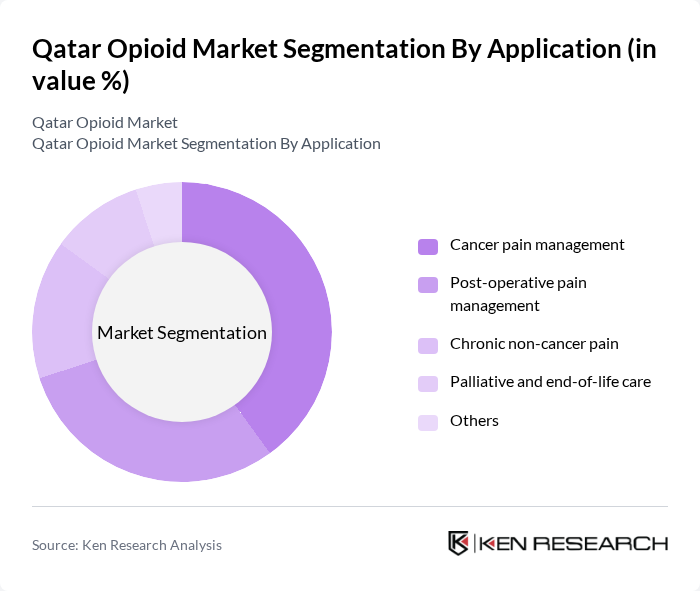
Qatar Opioid Market segmentation by Application.

Qatar Opioid Market Competitive Landscape

The Qatar Opioid Market is characterized by a dynamic mix of regional and international players. Leading participants such as Qatar Pharma, Qatar Life Pharma, Julphar Gulf Pharmaceutical Industries – Qatar operations, Hikma Pharmaceuticals – Qatar operations, Pfizer – Qatar, Novartis – Qatar, Sanofi – Qatar, AstraZeneca – Qatar, Merck Group – Qatar, Teva Pharmaceuticals – regional supply to Qatar, AbbVie – Qatar, GSK – Qatar, Boehringer Ingelheim – Qatar, Bayer – Qatar, Eli Lilly – Qatar contribute to innovation, geographic expansion, and service delivery in this space.

Qatar Pharma

2000

Doha, Qatar

Julphar Gulf Pharmaceutical Industries

1980

Ras Al Khaimah, UAE

Hikma Pharmaceuticals

1978

London, UK

Pfizer

1849

New York, USA

Novartis

1996

Basel, Switzerland

Company

Establishment Year

Headquarters

Qatar opioid revenue (USD) and 3-year CAGR

Share of Qatar opioid revenue in MENA portfolio (%)

Opioid portfolio breadth (number of molecules / SKUs)

Formulation mix (oral vs injectable vs transdermal, % of sales)

Hospital vs retail channel mix (% of sales)

Tender win rate in public hospitals (% of eligible tenders)

Qatar Opioid Market Industry Analysis

Growth Drivers

  • Increasing Prevalence of Chronic Pain:Chronic pain affects approximately 20% of the adult population in Qatar, translating to around 800,000 individuals. This rising prevalence is driven by factors such as an aging population and lifestyle-related diseases. The World Health Organization (WHO) estimates that chronic pain conditions will increase by 10% annually, necessitating effective pain management solutions, including opioids, to address this growing health concern.
  • Rising Demand for Palliative Care:Qatar's healthcare system is witnessing a significant increase in demand for palliative care services, with a reported 15% annual growth in patients requiring such services. The Ministry of Public Health has emphasized the need for comprehensive pain management strategies, which include opioid therapies. This demand is further fueled by the increasing incidence of terminal illnesses, necessitating effective pain relief options for patients and their families.
  • Expanding Healthcare Infrastructure:Qatar's healthcare expenditure is projected to reach QAR 35 billion (approximately USD 9.6 billion) in future, reflecting a 5% increase from the previous period in future. This investment is aimed at enhancing healthcare facilities and services, including pain management programs. The expansion of hospitals and clinics will facilitate better access to opioid prescriptions, thereby supporting the growing need for effective pain management solutions across the country.

Market Challenges

  • Regulatory Restrictions on Opioid Prescriptions:Qatar has implemented stringent regulations on opioid prescriptions, with only 2,000 licensed prescribers authorized to dispense these medications. This limitation poses a significant challenge in addressing the needs of patients suffering from chronic pain. The regulatory framework aims to prevent misuse but inadvertently restricts access for legitimate patients, complicating pain management efforts across the healthcare system.
  • Stigma Associated with Opioid Use:The stigma surrounding opioid use remains a critical challenge in Qatar, with 60% of healthcare providers expressing concerns about prescribing opioids due to fear of addiction and societal judgment. This stigma can deter patients from seeking necessary pain management, leading to untreated chronic pain conditions. Addressing this stigma is essential for improving patient outcomes and ensuring appropriate access to opioid therapies.

Qatar Opioid Market Future Outlook

The future of the Qatar opioid market is poised for transformation, driven by advancements in pain management strategies and a growing emphasis on patient-centered care. As healthcare providers increasingly adopt personalized medicine approaches, the integration of technology in pain management will enhance treatment efficacy. Additionally, the expansion of telemedicine services is expected to improve access to pain management consultations, allowing for timely interventions and better patient outcomes in the coming years.

Market Opportunities

  • Development of Abuse-Deterrent Formulations:The introduction of abuse-deterrent opioid formulations presents a significant opportunity for pharmaceutical companies in Qatar. These formulations can help mitigate the risk of misuse while providing effective pain relief, addressing both patient needs and regulatory concerns. This innovation could lead to increased acceptance of opioids among healthcare providers and patients alike.
  • Expansion of Telemedicine for Pain Management:The rise of telemedicine in Qatar offers a unique opportunity to enhance pain management services. With over 75% of the population having access to the internet, telemedicine can facilitate remote consultations, improving access to pain management specialists. This approach can help overcome geographical barriers and ensure timely treatment for patients suffering from chronic pain conditions.

Scope of the Report

SegmentSub-Segments
By Drug Class

Natural opiates (e.g., morphine, codeine)

Semi-synthetic opioids (e.g., oxycodone, hydrocodone)

Synthetic opioids (e.g., fentanyl, methadone, tramadol)

Others

By Application

Cancer pain management

Post-operative pain management

Chronic non-cancer pain

Palliative and end-of-life care

Others

By Route of Administration

Oral

Injectable

Transdermal

Others

By Distribution Channel

Hospital pharmacies

Retail/community pharmacies

Online pharmacies

Others

By End-User

Public hospitals

Private hospitals

Specialty and pain clinics

Homecare and ambulatory settings

Others

By Patient Demographics

Adult

Geriatric

Pediatric

Others

By Regulatory Control

Controlled narcotic opioids

Non-narcotic opioids

Hospital-only restricted opioids

Others

Key Target Audience

Investors and Venture Capitalist Firms

Government and Regulatory Bodies (e.g., Ministry of Public Health, Qatar Drug Enforcement Administration)

Pharmaceutical Manufacturers and Producers

Healthcare Providers and Hospitals

Distributors and Wholesalers

Pharmacy Chains and Retail Pharmacies

Health Insurance Companies

Non-Governmental Organizations (NGOs) focused on health and addiction

Players Mentioned in the Report:

Qatar Pharma

Qatar Life Pharma

Julphar Gulf Pharmaceutical Industries Qatar operations

Hikma Pharmaceuticals Qatar operations

Pfizer Qatar

Novartis Qatar

Sanofi Qatar

AstraZeneca Qatar

Merck Group Qatar

Teva Pharmaceuticals regional supply to Qatar

AbbVie Qatar

GSK Qatar

Boehringer Ingelheim Qatar

Bayer Qatar

Eli Lilly Qatar

Table of Contents

Market Assessment Phase

1. Executive Summary and Approach


2. Qatar Opioid Market Overview

2.1 Key Insights and Strategic Recommendations

2.2 Qatar Opioid Market Overview

2.3 Definition and Scope

2.4 Evolution of Market Ecosystem

2.5 Timeline of Key Regulatory Milestones

2.6 Value Chain & Stakeholder Mapping

2.7 Business Cycle Analysis

2.8 Policy & Incentive Landscape


3. Qatar Opioid Market Analysis

3.1 Growth Drivers

3.1.1 Increasing prevalence of chronic pain
3.1.2 Rising demand for palliative care
3.1.3 Expanding healthcare infrastructure
3.1.4 Government initiatives for pain management

3.2 Market Challenges

3.2.1 Regulatory restrictions on opioid prescriptions
3.2.2 Stigma associated with opioid use
3.2.3 Risk of addiction and misuse
3.2.4 Limited awareness among healthcare providers

3.3 Market Opportunities

3.3.1 Development of abuse-deterrent formulations
3.3.2 Expansion of telemedicine for pain management
3.3.3 Increased investment in research and development
3.3.4 Collaborations with healthcare providers

3.4 Market Trends

3.4.1 Shift towards personalized medicine
3.4.2 Growth of non-opioid pain management alternatives
3.4.3 Enhanced focus on patient education
3.4.4 Integration of technology in pain management

3.5 Government Regulation

3.5.1 Prescription monitoring programs
3.5.2 Guidelines for opioid prescribing
3.5.3 Restrictions on opioid manufacturing
3.5.4 Public health campaigns on opioid safety

4. SWOT Analysis


5. Stakeholder Analysis


6. Porter's Five Forces Analysis


7. Qatar Opioid Market Market Size, 2019-2024

7.1 By Value

7.2 By Volume

7.3 By Average Selling Price


8. Qatar Opioid Market Segmentation

8.1 By Drug Class

8.1.1 Natural opiates (e.g., morphine, codeine)
8.1.2 Semi-synthetic opioids (e.g., oxycodone, hydrocodone)
8.1.3 Synthetic opioids (e.g., fentanyl, methadone, tramadol)
8.1.4 Others

8.2 By Application

8.2.1 Cancer pain management
8.2.2 Post-operative pain management
8.2.3 Chronic non-cancer pain
8.2.4 Palliative and end-of-life care
8.2.5 Others

8.3 By Route of Administration

8.3.1 Oral
8.3.2 Injectable
8.3.3 Transdermal
8.3.4 Others

8.4 By Distribution Channel

8.4.1 Hospital pharmacies
8.4.2 Retail/community pharmacies
8.4.3 Online pharmacies
8.4.4 Others

8.5 By End-User

8.5.1 Public hospitals
8.5.2 Private hospitals
8.5.3 Specialty and pain clinics
8.5.4 Homecare and ambulatory settings
8.5.5 Others

8.6 By Patient Demographics

8.6.1 Adult
8.6.2 Geriatric
8.6.3 Pediatric
8.6.4 Others

8.7 By Regulatory Control

8.7.1 Controlled narcotic opioids
8.7.2 Non-narcotic opioids
8.7.3 Hospital-only restricted opioids
8.7.4 Others

9. Qatar Opioid Market Competitive Analysis

9.1 Market Share of Key Players

9.2 Cross Comparison of Key Players

9.2.1 Company name
9.2.2 Qatar opioid revenue (USD) and 3-year CAGR
9.2.3 Share of Qatar opioid revenue in MENA portfolio (%)
9.2.4 Opioid portfolio breadth (number of molecules / SKUs)
9.2.5 Formulation mix (oral vs injectable vs transdermal, % of sales)
9.2.6 Hospital vs retail channel mix (% of sales)
9.2.7 Tender win rate in public hospitals (% of eligible tenders)
9.2.8 Average realized price vs market benchmark (%)
9.2.9 Gross margin on opioid portfolio (%)
9.2.10 Days sales outstanding (DSO) in Qatar (days)
9.2.11 Regulatory inspection / pharmacovigilance compliance record
9.2.12 Market access and formulary coverage (share of key institutions)

9.3 SWOT Analysis of Top Players

9.4 Pricing Analysis

9.5 Detailed Profile of Major Companies

9.5.1 Qatar Pharma
9.5.2 Qatar Life Pharma
9.5.3 Julphar Gulf Pharmaceutical Industries – Qatar operations
9.5.4 Hikma Pharmaceuticals – Qatar operations
9.5.5 Pfizer – Qatar
9.5.6 Novartis – Qatar
9.5.7 Sanofi – Qatar
9.5.8 AstraZeneca – Qatar
9.5.9 Merck Group – Qatar
9.5.10 Teva Pharmaceuticals – regional supply to Qatar
9.5.11 AbbVie – Qatar
9.5.12 GSK – Qatar
9.5.13 Boehringer Ingelheim – Qatar
9.5.14 Bayer – Qatar
9.5.15 Eli Lilly – Qatar

10. Qatar Opioid Market End-User Analysis

10.1 Procurement Behavior of Key Ministries

10.1.1 Ministry of Public Health
10.1.2 Ministry of Interior
10.1.3 Ministry of Education
10.1.4 Others

10.2 Corporate Spend on Infrastructure & Energy

10.2.1 Healthcare infrastructure investments
10.2.2 Pain management program funding
10.2.3 Research and development expenditures
10.2.4 Others

10.3 Pain Point Analysis by End-User Category

10.3.1 Hospitals
10.3.2 Clinics
10.3.3 Home healthcare providers
10.3.4 Others

10.4 User Readiness for Adoption

10.4.1 Training programs for healthcare providers
10.4.2 Patient education initiatives
10.4.3 Availability of opioid alternatives
10.4.4 Others

10.5 Post-Deployment ROI and Use Case Expansion

10.5.1 Evaluation of pain management outcomes
10.5.2 Cost-effectiveness analysis
10.5.3 Expansion into new therapeutic areas
10.5.4 Others

11. Qatar Opioid Market Future Size, 2025-2030

11.1 By Value

11.2 By Volume

11.3 By Average Selling Price


Go-To-Market Strategy Phase

1. Whitespace Analysis + Business Model Canvas

1.1 Market Gaps Identification

1.2 Business Model Development


2. Marketing and Positioning Recommendations

2.1 Branding strategies

2.2 Product USPs


3. Distribution Plan

3.1 Urban retail vs rural NGO tie-ups


4. Channel & Pricing Gaps

4.1 Underserved routes

4.2 Pricing bands


5. Unmet Demand & Latent Needs

5.1 Category gaps

5.2 Consumer segments


6. Customer Relationship

6.1 Loyalty programs

6.2 After-sales service


7. Value Proposition

7.1 Sustainability

7.2 Integrated supply chains


8. Key Activities

8.1 Regulatory compliance

8.2 Branding

8.3 Distribution setup


9. Entry Strategy Evaluation

9.1 Domestic Market Entry Strategy

9.1.1 Product mix
9.1.2 Pricing band
9.1.3 Packaging

9.2 Export Entry Strategy

9.2.1 Target countries
9.2.2 Compliance roadmap

10. Entry Mode Assessment

10.1 JV

10.2 Greenfield

10.3 M&A

10.4 Distributor Model


11. Capital and Timeline Estimation

11.1 Capital requirements

11.2 Timelines


12. Control vs Risk Trade-Off

12.1 Ownership vs Partnerships


13. Profitability Outlook

13.1 Breakeven analysis

13.2 Long-term sustainability


14. Potential Partner List

14.1 Distributors

14.2 JVs

14.3 Acquisition targets


15. Execution Roadmap

15.1 Phased Plan for Market Entry

15.1.1 Market Setup
15.1.2 Market Entry
15.1.3 Growth Acceleration
15.1.4 Scale & Stabilize

15.2 Key Activities and Milestones

15.2.1 Milestone Planning
15.2.2 Activity Tracking

Research Methodology

ApproachModellingSample

Phase 1: Approach1

Desk Research

  • Analysis of national health statistics and opioid prescription data from the Qatar Ministry of Public Health
  • Review of market reports and publications from international health organizations and pharmaceutical associations
  • Examination of regulatory frameworks and guidelines from the Qatar Drug Control Department

Primary Research

  • Interviews with healthcare professionals, including pharmacists and pain management specialists
  • Surveys conducted with hospital administrators and procurement officers in the healthcare sector
  • Focus group discussions with patients and advocacy groups to understand opioid usage and perceptions

Validation & Triangulation

  • Cross-validation of findings through multiple data sources, including government reports and industry publications
  • Triangulation of qualitative insights from interviews with quantitative data from surveys
  • Sanity checks through expert panel reviews involving key opinion leaders in the healthcare sector

Phase 2: Market Size Estimation1

Top-down Assessment

  • Estimation of total opioid consumption based on national health expenditure and prescription trends
  • Segmentation of the market by therapeutic categories and patient demographics
  • Incorporation of government initiatives aimed at pain management and opioid regulation

Bottom-up Modeling

  • Collection of sales data from major pharmaceutical distributors and manufacturers operating in Qatar
  • Estimation of market share based on volume and revenue from key opioid products
  • Analysis of pricing strategies and reimbursement policies affecting opioid sales

Forecasting & Scenario Analysis

  • Multi-factor regression analysis incorporating population growth, aging demographics, and chronic pain prevalence
  • Scenario modeling based on potential regulatory changes and shifts in public perception of opioids
  • Development of baseline, optimistic, and pessimistic market projections through 2030

Phase 3: CATI Sample Composition1

Scope Item/SegmentSample SizeTarget Respondent Profiles
Healthcare Providers120Doctors, Pharmacists, Pain Management Specialists
Hospital Administrators90Procurement Officers, Hospital Managers
Patients with Chronic Pain80Chronic Pain Patients, Patient Advocacy Group Members
Regulatory Bodies40Policy Makers, Drug Control Officials
Pharmaceutical Distributors60Sales Managers, Distribution Network Coordinators

Frequently Asked Questions

What is the current value of the Qatar Opioid Market?

The Qatar Opioid Market is valued at approximately USD 140 million, reflecting a historical analysis of the market's growth and its share within the broader Middle East and Africa opioids market.

What factors are driving the growth of the Qatar Opioid Market?

Who are the major players in the Qatar Opioid Market?

What are the main applications of opioids in Qatar?

Other Adjacent Reports

Brazil Pain Management Market

Global analgesics market report Size, Share, Growth Drivers, Trends, Opportunities & Forecast 2025–2030

UAE Oncology Drugs Market

Indonesia Palliative Care Market

Thailand Chronic Pain Treatment Market

Saudi Arabia Pharmaceutical Distribution Market Size, Share, Growth Drivers, Trends, Opportunities & Forecast 2025–2030KSA healthcare it market size, share, growth drivers, trends, opportunities & forecast 2025–2030

Vietnam Drug Formulation Market

South Africa Cancer Therapeutics Market

Singapore Surgical Pain Management Market

Why Buy From Us?

Refine Robust Result (RRR) Framework

What makes us stand out is that our consultants follow Robust, Refine and Result (RRR) methodology. Robust for clear definitions, approaches and sanity checking, Refine for differentiating respondents' facts and opinions, and Result for presenting data with story.

Our Reach Is Unmatched

We have set a benchmark in the industry by offering our clients with syndicated and customized market research reports featuring coverage of entire market as well as meticulous research and analyst insights.

Shifting the Research Paradigm

While we don't replace traditional research, we flip the method upside down. Our dual approach of Top Bottom & Bottom Top ensures quality deliverable by not just verifying company fundamentals but also looking at the sector and macroeconomic factors.

More Insights-Better Decisions

With one step in the future, our research team constantly tries to show you the bigger picture. We help with some of the tough questions you may encounter along the way: How is the industry positioned? Best marketing channel? KPI's of competitors? By aligning every element, we help maximize success.

Transparency and Trust

Our report gives you instant access to the answers and sources that other companies might choose to hide. We elaborate each steps of research methodology we have used and showcase you the sample size to earn your trust.

Round the Clock Support

If you need any support, we are here! We pride ourselves on universe strength, data quality, and quick, friendly, and professional service.

Why Clients Choose Us?

400000+
Reports in repository
150+
Consulting projects a year
100+
Analysts
8000+
Client Queries in 2022








