Region:Middle East
Author(s):Rebecca
Product Code:KRAC9674
Pages:91
Published On:November 2025
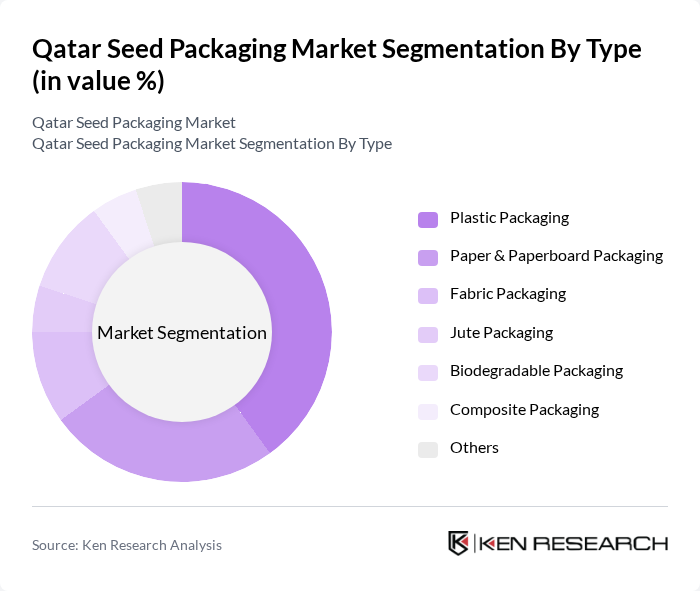
By Type:The segmentation by type includes various packaging materials used for seeds, which are crucial for maintaining seed quality and ensuring effective distribution. The subsegments include Plastic Packaging, Paper & Paperboard Packaging, Fabric Packaging, Jute Packaging, Biodegradable Packaging, Composite Packaging, and Others. Among these, Plastic Packaging is currently the leading subsegment due to its durability, moisture resistance, and cost-effectiveness, making it a preferred choice for many seed producers. However, there is a growing shift towards biodegradable and paper-based packaging, reflecting sustainability trends and regulatory compliance .
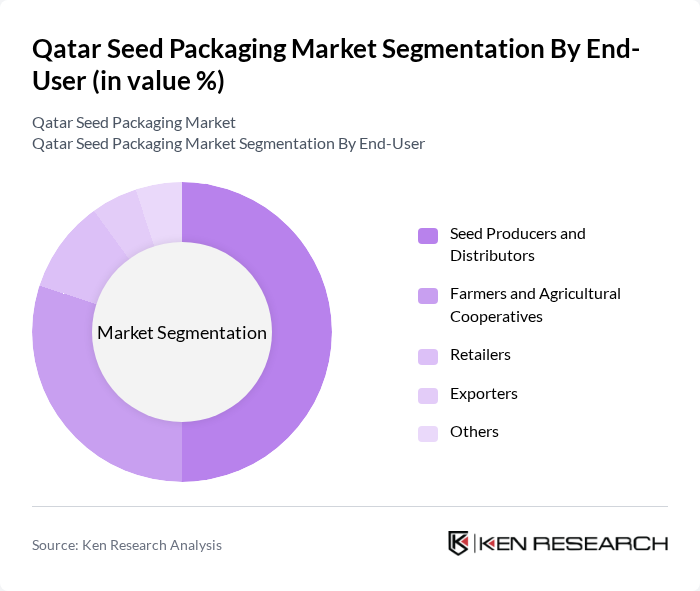
By End-User:The end-user segmentation includes various stakeholders involved in the seed supply chain, such as Seed Producers and Distributors, Farmers and Agricultural Cooperatives, Retailers, Exporters, and Others. The segment of Seed Producers and Distributors is the most significant, as they require efficient packaging solutions to maintain seed quality during storage and transportation, thus driving the demand for innovative packaging options. Farmers and agricultural cooperatives are also key end-users, reflecting the sector’s focus on quality and operational efficiency .
The Qatar Seed Packaging Market is characterized by a dynamic mix of regional and international players. Leading participants such as Baladna Food Industries, Hassad Food Company, Qatar Packaging Company W.L.L., United Development Company (UDC), Al Suwaidi Paper Factory, Al Bayader International, Napco National, Al Jazeera Agricultural Company, Gulf Packaging Industries Limited, Green Packaging Qatar, Doha Plastic Co. W.L.L., Qatar Modern Packaging Co., Al Khalij Holding, Mondi Group (Regional Operations), Amcor (Regional Operations) contribute to innovation, geographic expansion, and service delivery in this space.
The future of the Qatar seed packaging market appears promising, driven by increasing consumer awareness of sustainability and the need for high-quality agricultural products. As the agricultural sector continues to expand, innovations in packaging technology will likely play a crucial role in enhancing seed preservation and traceability. Additionally, the government's support for sustainable practices will further encourage investments in eco-friendly packaging solutions, fostering a more resilient and competitive market landscape.
| Segment | Sub-Segments |
|---|---|
| By Type | Plastic Packaging Paper & Paperboard Packaging Fabric Packaging Jute Packaging Biodegradable Packaging Composite Packaging Others |
| By End-User | Seed Producers and Distributors Farmers and Agricultural Cooperatives Retailers Exporters Others |
| By Packaging Size | Small Packs (up to 1 kg) Medium Packs (1–10 kg) Large Packs (10–25 kg) Bulk Packaging (above 25 kg) Others |
| By Material Type | Polyethylene (PE) Polypropylene (PP) Paper & Paperboard Jute Biodegradable Materials Others |
| By Distribution Channel | Online Retail Offline Retail Direct Sales Distributors Others |
| By Application | Agricultural Seeds Flower Seeds Vegetable Seeds Oilseed Packaging Others |
| By Policy Support | Subsidies for Sustainable Packaging Tax Incentives for Local Manufacturers Grants for Research and Development Others |
| Scope Item/Segment | Sample Size | Target Respondent Profiles |
|---|---|---|
| Seed Packaging Manufacturers | 50 | Production Managers, Quality Control Officers |
| Agricultural Producers | 60 | Farm Owners, Crop Managers |
| Distributors and Retailers | 40 | Supply Chain Managers, Retail Buyers |
| Regulatory Bodies | 40 | Policy Makers, Compliance Officers |
| End-Users (Farmers) | 50 | Smallholder Farmers, Agricultural Cooperatives |
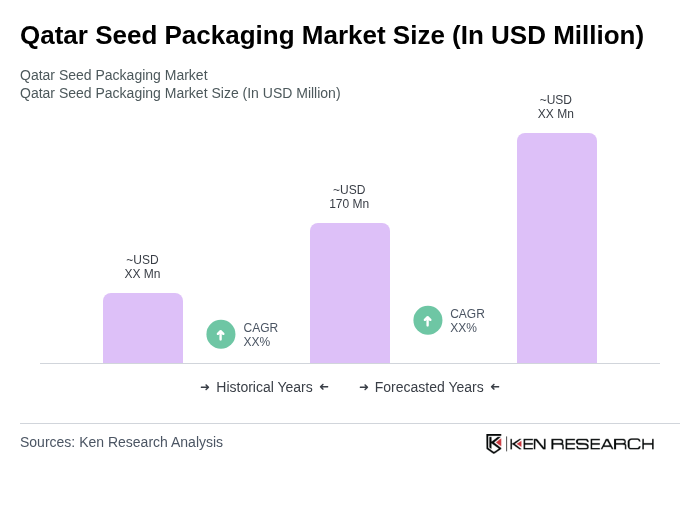
The Qatar Seed Packaging Market is valued at approximately USD 170 million, reflecting a significant growth trend driven by increasing agricultural product demand, hybrid seed adoption, and sustainable packaging solutions.

What makes us stand out is that our consultants follow Robust, Refine and Result (RRR) methodology. Robust for clear definitions, approaches and sanity checking, Refine for differentiating respondents' facts and opinions, and Result for presenting data with story.

We have set a benchmark in the industry by offering our clients with syndicated and customized market research reports featuring coverage of entire market as well as meticulous research and analyst insights.

While we don't replace traditional research, we flip the method upside down. Our dual approach of Top Bottom & Bottom Top ensures quality deliverable by not just verifying company fundamentals but also looking at the sector and macroeconomic factors.

With one step in the future, our research team constantly tries to show you the bigger picture. We help with some of the tough questions you may encounter along the way: How is the industry positioned? Best marketing channel? KPI's of competitors? By aligning every element, we help maximize success.

Our report gives you instant access to the answers and sources that other companies might choose to hide. We elaborate each steps of research methodology we have used and showcase you the sample size to earn your trust.

If you need any support, we are here! We pride ourselves on universe strength, data quality, and quick, friendly, and professional service.













