Region:Middle East
Author(s):Geetanshi
Product Code:KRAA3449
Pages:93
Published On:January 2026
By Type:The biodegradable cutlery market can be segmented into various types, including PLA Cutlery, CPLA Cutlery, Starch-Based Cutlery, Bamboo Cutlery, Palm Leaf Cutlery, and Others. Each type caters to different consumer preferences and applications, with specific materials offering unique benefits in terms of biodegradability and usability.
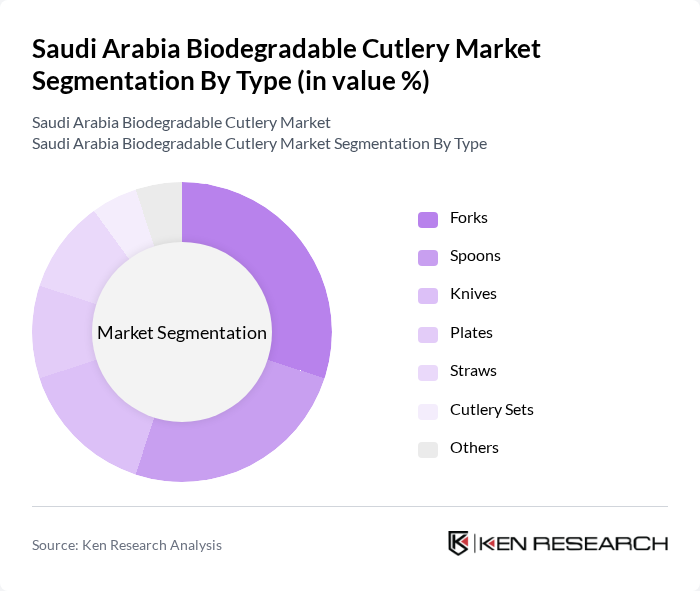
The PLA Cutlery segment is currently dominating the market due to its widespread acceptance and favorable properties, such as being lightweight and compostable. PLA (Polylactic Acid) is derived from renewable resources, making it a popular choice among environmentally conscious consumers. The increasing availability of PLA products in various food service outlets has further solidified its market leadership. Additionally, the growing trend of sustainable dining experiences has led to a higher demand for PLA cutlery, making it the preferred option for many businesses.
By End-User:The market can also be segmented based on end-users, which include the Food Service Industry, Retail, Events and Catering, Households, and Others. Each segment has unique requirements and preferences, influencing the types of biodegradable cutlery used.
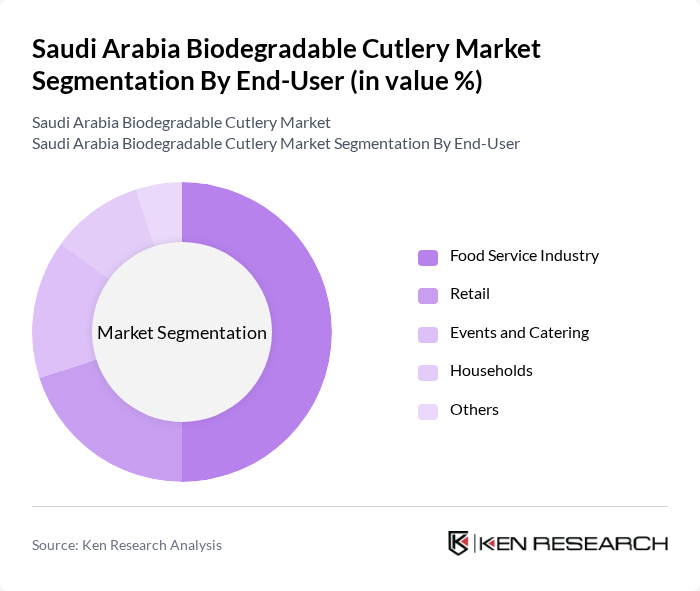
The Food Service Industry is the leading end-user segment, accounting for a significant portion of the market. This dominance is attributed to the increasing number of restaurants, cafes, and catering services that are adopting biodegradable cutlery to meet consumer demand for sustainable practices. The shift towards eco-friendly dining experiences has prompted food service providers to prioritize biodegradable options, thereby driving the growth of this segment.
The Saudi Arabia Biodegradable Cutlery Market is characterized by a dynamic mix of regional and international players. Leading participants such as Biopak, Eco-Products, Vegware, Greenware, World Centric, BioGreen, StalkMarket, Bamboozle, NatureHouse, Eco-Tableware, Green Paper Products, BioPack, Eco-Products, Biodegradable Food Service, Greenware Products contribute to innovation, geographic expansion, and service delivery in this space.
The future of the biodegradable cutlery market in Saudi Arabia appears promising, driven by increasing environmental awareness and supportive government policies. As consumer preferences shift towards sustainable products, the market is likely to witness innovations in biodegradable materials and production techniques. Additionally, the expansion of e-commerce platforms will facilitate greater accessibility to these products, enabling wider consumer adoption. The focus on sustainability will continue to shape the market landscape, fostering growth opportunities for businesses committed to eco-friendly practices.
| Segment | Sub-Segments |
|---|---|
| By Type | PLA Cutlery CPLA Cutlery Starch-Based Cutlery Bamboo Cutlery Palm Leaf Cutlery Others |
| By End-User | Food Service Industry Retail Events and Catering Households Others |
| By Distribution Channel | Online Retail Supermarkets/Hypermarkets Specialty Stores Direct Sales Others |
| By Material Source | Renewable Resources Recycled Materials Bioplastics Others |
| By Application | Takeaway Services Dine-in Services Food Delivery Others |
| By Consumer Segment | Environmentally Conscious Consumers Health-Conscious Consumers Budget-Conscious Consumers Others |
| By Region | Central Region Eastern Region Western Region Southern Region Others |
| Scope Item/Segment | Sample Size | Target Respondent Profiles |
|---|---|---|
| Food Service Industry | 100 | Restaurant Owners, Catering Managers |
| Retail Sector | 80 | Store Managers, Product Buyers |
| Event Management Companies | 60 | Event Planners, Logistics Coordinators |
| Environmental NGOs | 40 | Sustainability Advocates, Policy Makers |
| Manufacturers of Biodegradable Products | 70 | Production Managers, R&D Heads |
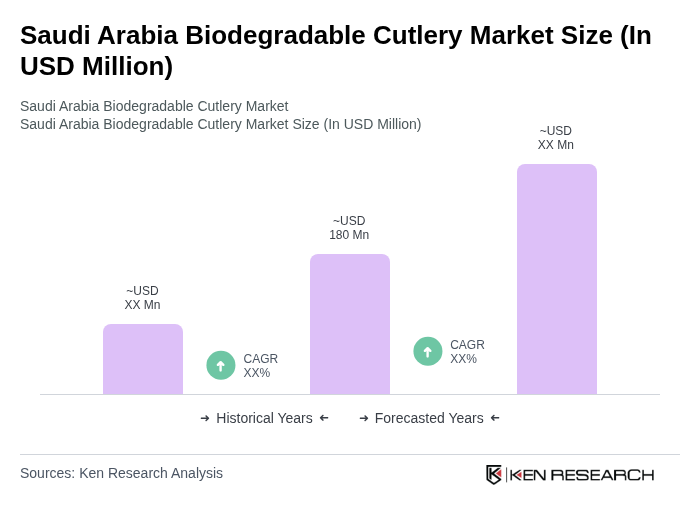
The Saudi Arabia Biodegradable Cutlery Market is valued at approximately USD 180 million, reflecting a significant growth trend driven by environmental awareness and government regulations promoting sustainable products.

What makes us stand out is that our consultants follow Robust, Refine and Result (RRR) methodology. Robust for clear definitions, approaches and sanity checking, Refine for differentiating respondents' facts and opinions, and Result for presenting data with story.

We have set a benchmark in the industry by offering our clients with syndicated and customized market research reports featuring coverage of entire market as well as meticulous research and analyst insights.

While we don't replace traditional research, we flip the method upside down. Our dual approach of Top Bottom & Bottom Top ensures quality deliverable by not just verifying company fundamentals but also looking at the sector and macroeconomic factors.

With one step in the future, our research team constantly tries to show you the bigger picture. We help with some of the tough questions you may encounter along the way: How is the industry positioned? Best marketing channel? KPI's of competitors? By aligning every element, we help maximize success.

Our report gives you instant access to the answers and sources that other companies might choose to hide. We elaborate each steps of research methodology we have used and showcase you the sample size to earn your trust.

If you need any support, we are here! We pride ourselves on universe strength, data quality, and quick, friendly, and professional service.













